VANCOUVER — Sanctuary AI has unveiled a new humanoid robot that it believes is the first in the world ready to be deployed in commercial settings to carry out tasks like cleaning, folding and packing goods.
Skip to content
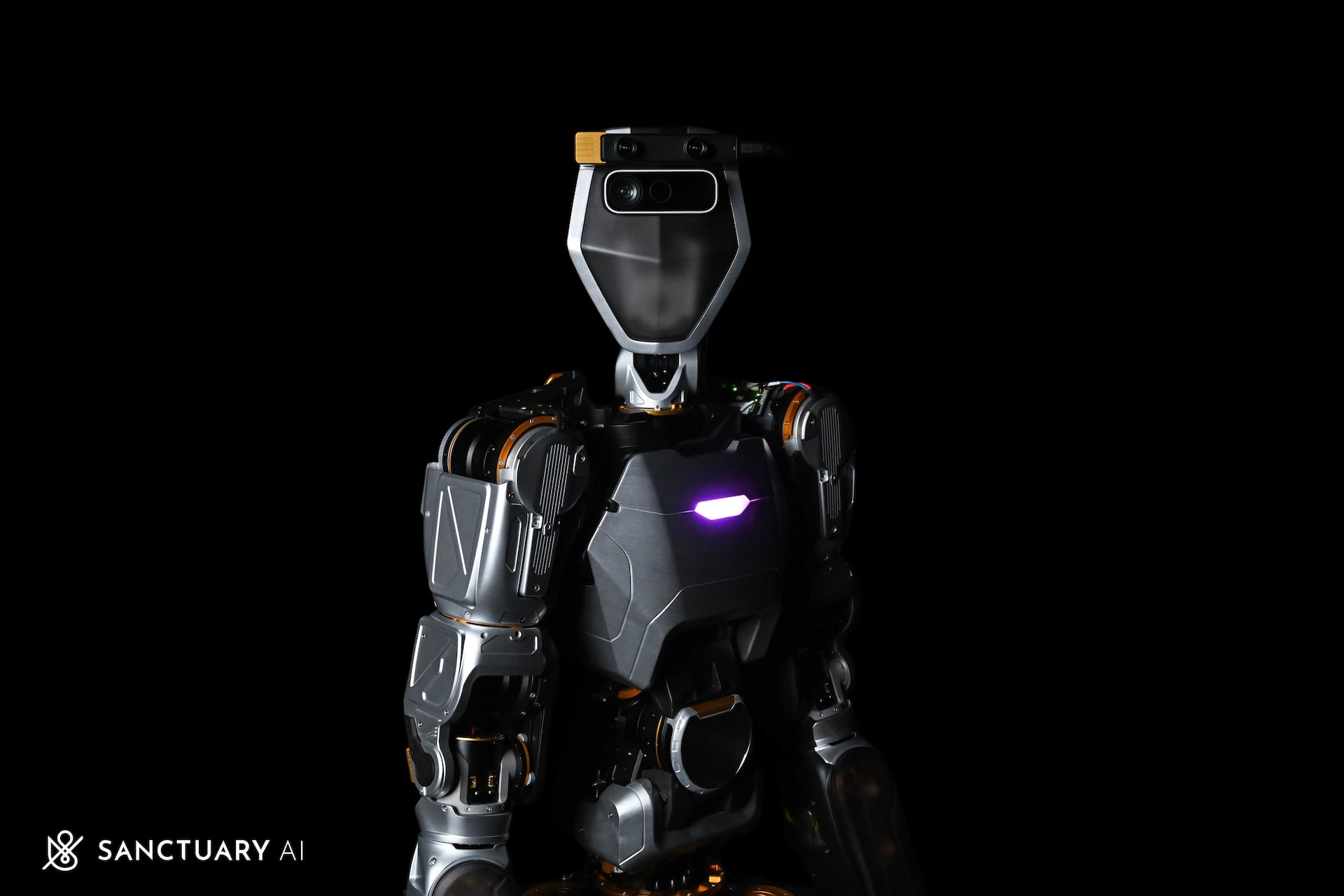 Phoenix already has work experience at a Langley, B.C.-based Mark’s store. Photo: Sanctuary AI/Handout

News
Sanctuary AI unveils humanoid, AI-driven commercial robot
Vancouver company says ‘Phoenix’ is first of its kind, has completed in-store trial
Phoenix already has work experience at a Langley, B.C.-based Mark’s store. Photo: Sanctuary AI/Handout
VANCOUVER — Sanctuary AI has unveiled a new humanoid robot that it believes is the first in the world ready to be deployed in commercial settings to carry out tasks like cleaning, folding and packing goods.
“Our intent is to create the workforce of the future,” said Geordie Rose, co-founder and CEO of the Vancouver-based company.
Hello, Phoenix: The five-foot seven-inches, 155-pound frame is powered by a platform that uses artificial intelligence to make Phoenix think, act and learn. “The AI system is the crown jewel of our technological stack,” said Rose. Phoenix is designed to care only about accomplishing work tasks. It doesn’t get bored. It doesn’t get tired.
The robot is intended to fill a labour gap, said Rose, as many industries now struggle to find enough workers. “It’s not taking jobs from people. It’s doing work that there are no people to do.”
Behind the scenes, a person will always supervise Phoenix. The ratio will change over time from the current state of a lot of people overseeing a few robots to a lot of robots commanded by a few people, he said.
Related Articles

Where to find it: Phoenix has already worked in a Mark’s store in Langley, B.C., in a week-long pilot with Mark’s parent company, Canadian Tire. Sanctuary chose to deploy it in a retail setting first because stores are “a microcosm of the human condition,” and the tasks completed there, such as cleaning, can be transferred easily into other settings.
Although Sanctuary hasn’t named any of its other partners, the firm is working with companies around the world in 15 industries, said Rose, including retail, defence, health care and logistics.
That’s not to say Phoenix can work in any setting. Rose accepts the robot’s limitations, including its lack of super-human strength and human-like empathy. That likely rules out manufacturing jobs that require the ability to move cars or nursing positions that depend on interpersonal skills.
The money: The company has raised more than $100 million so far, including $30 million from the Strategic Innovation Fund in November and a $75.5-million Series A in March 2022 from investors including Bell and Magna. Like all startups, Sanctuary is “raising money all the time,” said Rose. He declined to say how much cash it’s targeting, but its forthcoming Series B will be for “funding the initial growth phase” and getting Phoenix into the market.
What’s next: For Phoenix to be an even better worker, it needs to be able to move around with more ease indoors and outdoors. The current version of the robot sits on a wheeled platform, Rose said, so it makes sense to add legs. “There are certain kinds of work [for which] wheels are not good enough,” he said. There will also be less apparent tweaks, such as improving the robot’s vision, grasp and dexterity.



Loading...
Thanks for sharing!
You have shared 5 articles this month and reached the maximum amount of shares available.
CloseThis account has reached its share limit.
If you would like to purchase a sharing license please contact The Logic support at [email protected].
CloseGift the full article!
You have gifted 0 article(s) this month and have 5 remaining.
Recipients will be able to read the full text of the article after submitting their email address. They will not have access to other articles or subscriber benefits.
Photo: Sanctuary AI/Handout
Most Popular This Week




In-depth, agenda-setting reporting
Great journalism delivered straight to your inbox.
News
Panel decries Canada’s chaotic way of funding world-class science
Briefing
RBC weighs blocking Meta’s AI agent from accessing customer accounts
Feds pledge $15M for U.S. satellite navigation company Xona to expand in Montreal
Inovia raises US$200M for new VC fund as it eyes AI’s impact
Best business newsletter in Canada
Get up to speed in minutes with insights and analysis on the most important stories of the day, every weekday.
Exclusive events
See the bigger picture with reporters and industry experts in subscriber-exclusive events.
Membership in The Logic Council
Membership provides access to our popular Slack channel, participation in subscriber surveys and invitations to exclusive events with our journalists and special guests.





