Listen Now
0:00
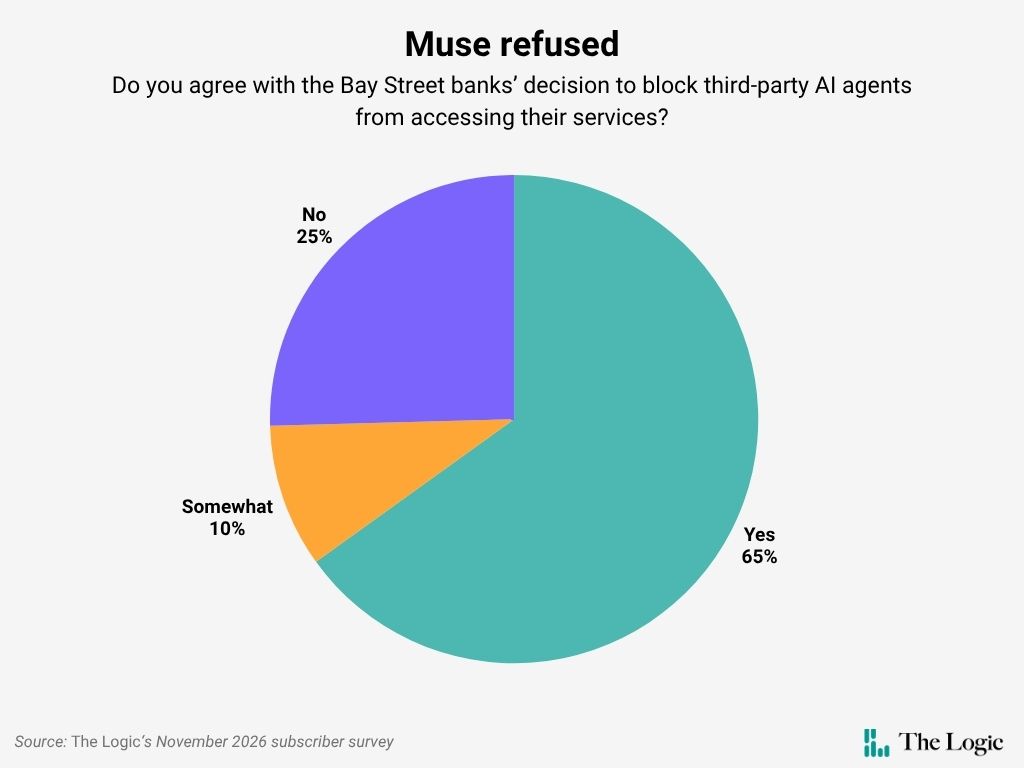
The majority of respondents to The Logic’s latest subscriber survey agree with most Bay Street banks’ decision to block third-party AI agents from accessing their services, but are split on using AI agents for their own money.
AI agents are surging into personal finance, with products like Meta’s Muse requiring users to share their bank credentials to make payments, transfers and trades autonomously. But Canada’s biggest banks announced last month that they would block AI agents, with RBC and BMO warning that safeguards against fraud and other risks haven’t caught up.
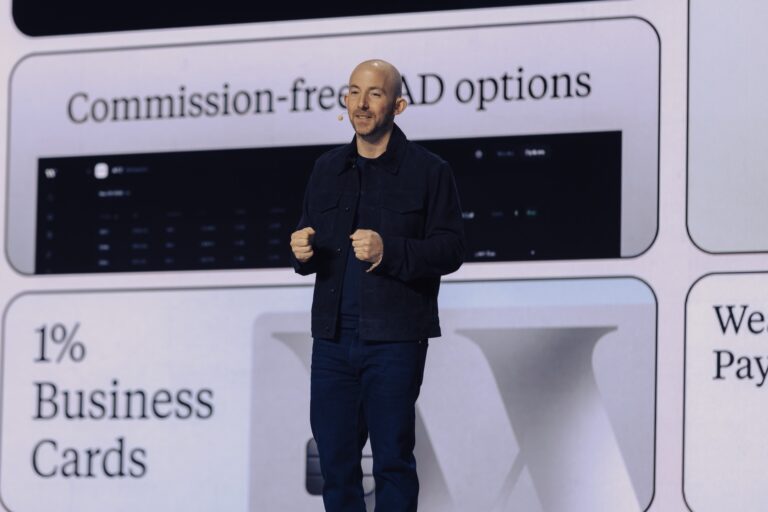
Meanwhile, fintechs are embracing AI agents. Crypto-trading giant Kraken’s co-CEO Arjun Sethi told The Logic that his company would let clients connect their AI agents to collect data and make trades “all day long.” Wealthsimple’s co-founder Brett Huneycutt said banks are making a mistake by resisting them. “I don’t think it’s going to go away,” he said.
Related Articles


Ninety per cent of respondents said they support the banks’ move to block AI agents to some degree, with almost two-thirds for it and 25 per cent somewhat in support. Less than 10 per cent said they do not support it.
One reader said that while they agree with the decision, it should be temporary. “I agree that there is a duty of care and customer safety needs to be paramount,” they wrote. “[But] our banks need to find safe and secure ways to let customers use agents.”
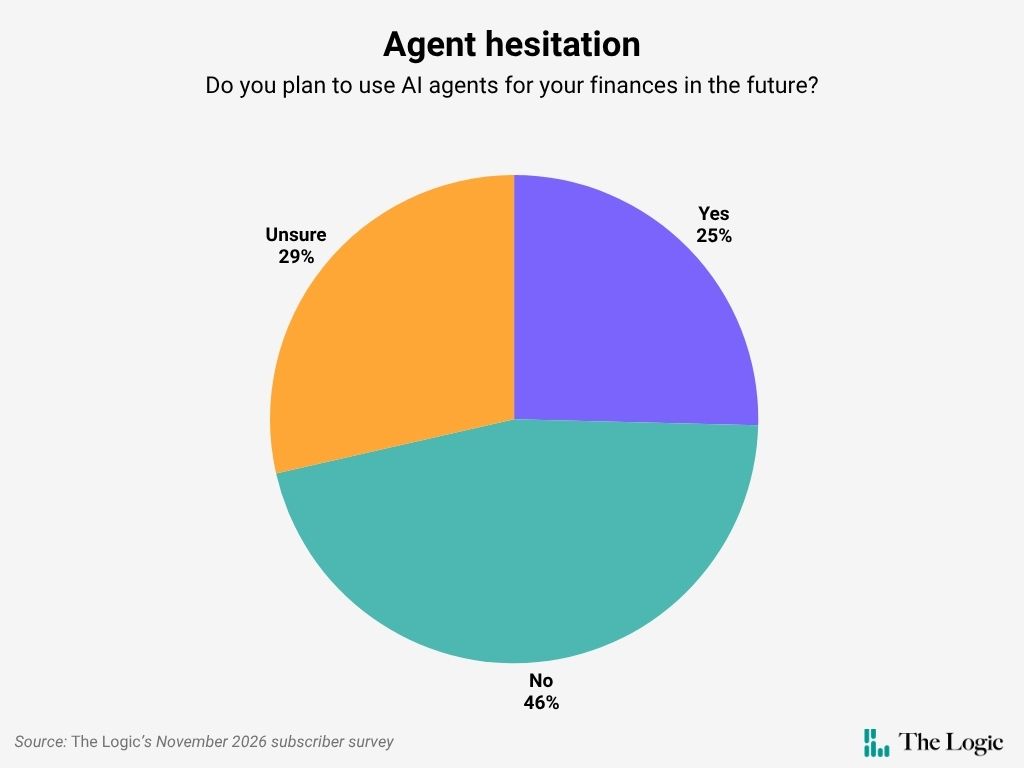
When asked whether they would use an AI agent for their own finances, readers were divided. Roughly one quarter said they plan to use an AI agent for their banking; 46 per cent said they do not plan on it, and 29 per cent were unsure. (Roughly 90 per cent of subscribers said they have never used an AI agent for their finances.)
Multiple readers said they would not trust the popular AI agent Muse with their finances because of the company behind it. “Meta is not known for respecting privacy,” said one reader. Mistrust was not limited to Facebook’s parent firm, though. “I don’t trust any of the tech bros with my finances,” another reader wrote.
Other subscribers said they would be open to using an AI agent for their banking if there were stronger protections in place against fraud, rogue behaviour and privacy risks.
“I am not averse to agents in general, but the bar to allow them to use my personal information is very high and I don’t see any safeguards in place yet that would make me comfortable with it,” said one reader.
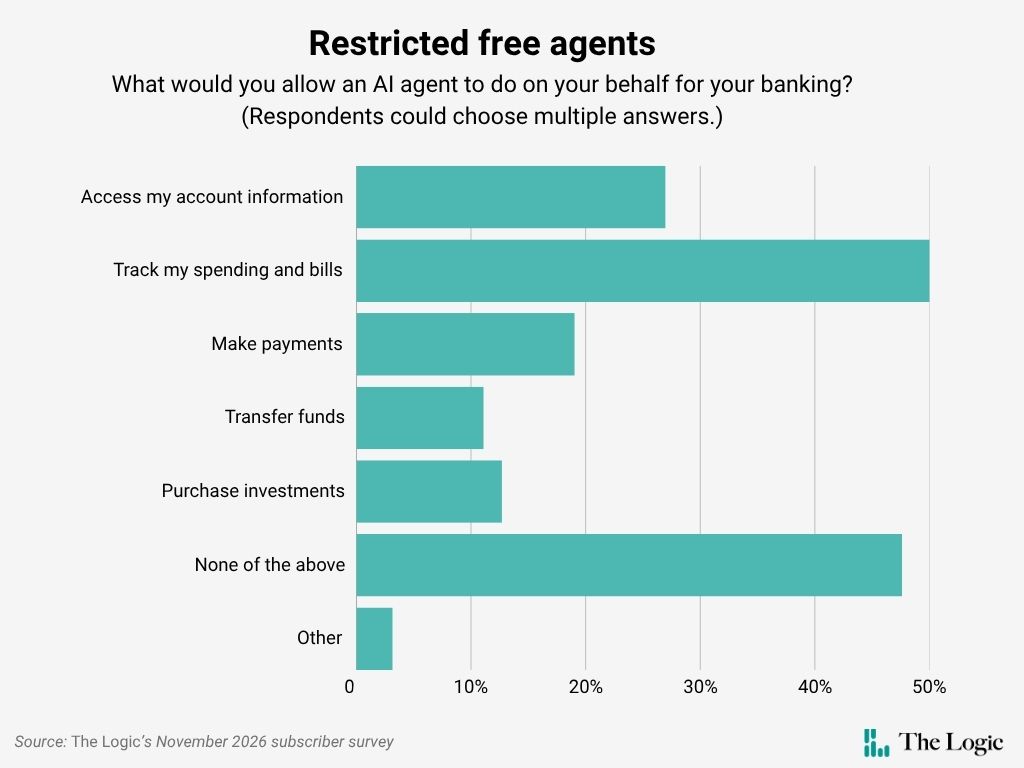
When asked what readers would trust an AI agent to do on their behalf for banking, half said they would allow an agent to track their spending and upcoming bills, though only 27 per cent of all respondents said they would be comfortable giving an AI agent their banking credentials. One reader said they build AI agents for a living but don’t currently use them for their finances, since it’s “currently not possible to avoid fraud” while using them.
Currently, in Canada, the only way for an AI agent to access users’ bank account information is through screen scraping, in which customers provide their banking credentials to bots that log in to their accounts and extract information from them. The federal government has signalled it intends to ban the practice in favour of more secure pathways, but the legislation has faced repeated delays.
Seventy-nine per cent of readers said they believe the federal government should regulate the use of AI agents in banking, with several readers describing the current AI agent environment as “the Wild West.”
“There should be guardrails of some sort to prevent unintended consequences,” said one such reader. “The lack of guidance, rather than regulation, is hampering the growth of the ecosystem,” another wrote.
Several readers said the entrance of AI agents into personal finance will increase competition in Canada’s banking sector. The reader who said they build AI agents for a living believed it will do so “without question,” and by blocking AI agents, the banks “risk losing the next generation of consumers” to fintechs that embrace the service.
Not all readers saw it that way. “The Big Six banks are competitive and have scale, trust and capital,” said one. “Doesn’t mean Wealthsimple shouldn’t exist, but good luck breaking the stranglehold of Canada’s banking oligopoly.”
“I don’t believe it will increase competition but it definitely will increase the systemic risk,” said another reader. “It’s a matter of one agent going rogue before the entire ecosystem pays the price through reduced trust.”