Listen Now
0:00
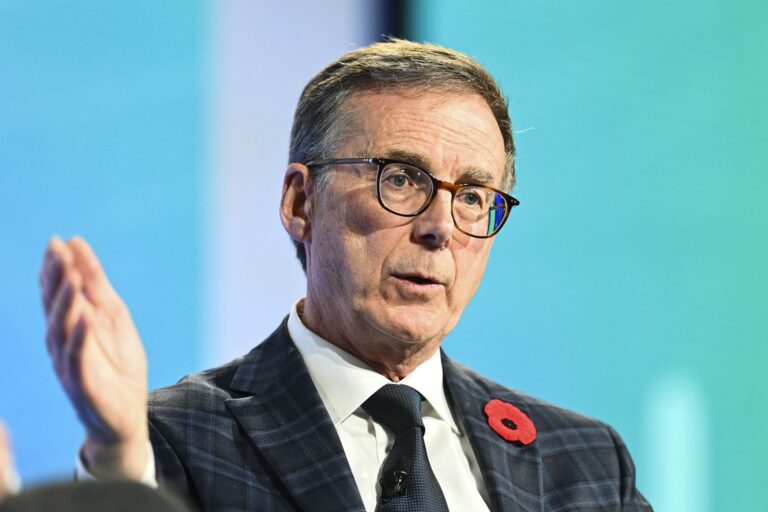
The Bank of Canada raised interest rates for the first time since July 2023, lifting its benchmark a quarter point to 2.5 per cent. Governor Tiff Macklem said the combination of faster-than-expected growth and “higher-for-longer” energy prices left him little choice, given the elevated risk that the central bank could lose its grip on inflation.
Do as I say: The decision was unusually fraught. Forecasters were roughly split on whether Macklem would leave rates unchanged to offset U.S. tariffs, or raise them to counter the effects of triple-digit oil prices. Traders were more convinced. Market bets broke hard in anticipation of an increase earlier this month after Macklem used a Saturday call with reporters from the annual meetings of the International Monetary Fund in Bangkok to emphasize his worries that over elevated oil prices could spread to the rest of the economy. Bond investors wagered that Macklem was trying to tell them something. Those bets were correct.
Related Articles


Year-over-year increases in the consumer price index averaged three per cent in the third quarter, and the Bank of Canada’s new quarterly forecast predicts that number will rise to 3.4 per cent to end 2026. That’s well outside the central bank’s comfort zone and more than a central bank committed to keeping inflation at two per cent can stand.
“While businesses have mostly absorbed higher input costs so far, past experience and bank surveys suggest that cost pass-through will increase over the next year,” Macklem said in a statement on his decision. “The combination of higher energy prices and pass-through increases the persistence of inflation.”
Canada strong: The increase will be controversial. Higher interest rates in Canada will do nothing to open the Strait of Hormuz, deter Houthi attacks on Saudi Arabia’s oil infrastructure or stop Ukraine from defending itself by launching drones at Russian oil refineries. But the supply shock from oil wasn’t the only reason Macklem opted to increase interest rates.
The central bank’s forecast generated a surprisingly positive outlook for economic growth. “Solid” consumer spending, a rebound in business investment and stronger-than-expected exports generated growth at an annual rate of 3.3 per cent in the second quarter and two per cent in the third quarter, compared with previous estimates of 2.5 per cent and 1.5 per cent, respectively, according to the latest Monetary Policy Report.
Growth will slow somewhat in the fourth quarter and into next year, but the central bank nonetheless predicts gross domestic product will increase two per cent in 2027, more than the previous estimate. That means the “slack” that the Bank of Canada assumed existed in the economy will be used up faster as companies rally to keep pace with demand. For the central bank, that’s an unanticipated source of inflationary pressure. “With the economy expected to recover, there is less downward pressure on prices to offset these cost pressures,” Macklem said.
One at a time: The traders who interpreted Macklem’s comments in Bangkok as foreshadowing will be disappointed by the guidance he offered today. The governor said he and his deputies considered leaving rates unchanged, implying that the decision wasn’t a given. And Macklem acknowledged the possibility that they made the wrong choice by stating that they are “mindful that uncertainty is still elevated.” The conflict in the Middle East could ease at any moment. Tensions with the U.S. could worsen, shaking exporters more than tariffs already have.
Or cost pressures could intensify in concert with stronger growth stoked by stimulative fiscal measures such as the federal government’s new tax break on most forms of business investment. “Looking ahead, Governing Council agreed we would take future decisions one meeting at a time,” Macklem said.
“There could be a need to raise the policy rate further, but given the uncertainties, we will proceed carefully.”