Listen Now
0:00
As Canada pours billions of public dollars into its defence sector, companies in all sorts of fields are hurrying to find military uses for their goods—drones, communications equipment, AI systems, navigation tools. And… undergarments?
Yes, if they’re T-shirts from Ontario clothing company Wuxly.
Talking Points
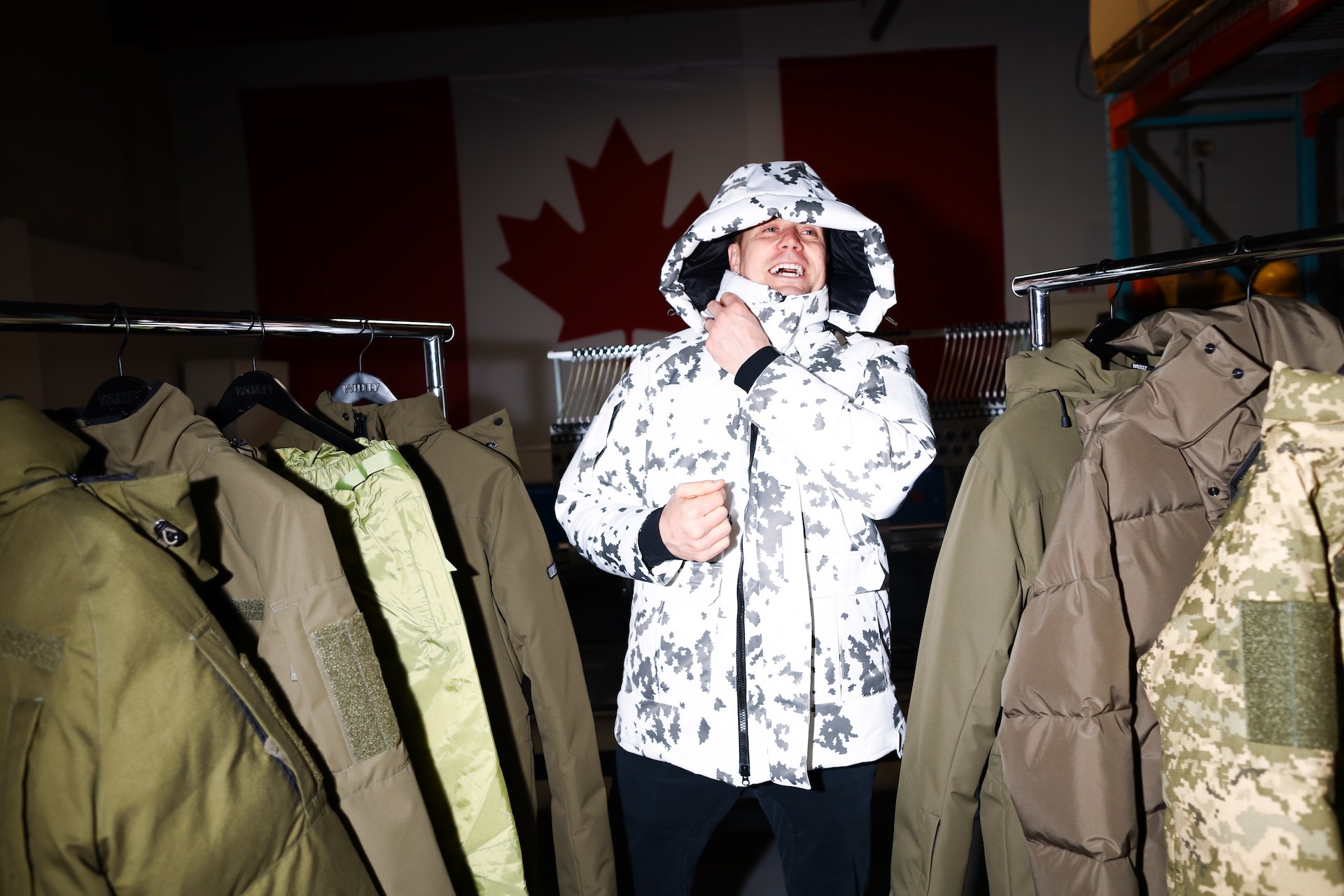
- Toronto-area Wuxly will sell you a fancy coat descended from one its CEO once commissioned for his girlfriend, but it’s also been outfitting Ukrainian troops and NATO allies for years
- Smart textiles that can track soldiers’ vitals in real time are its next big project
“These are… electronically infused textiles,” says co-founder and CEO James Yurichuk. “It’s a bio-monitoring system for soldiers.”
Some serious money is behind things like communication and sensor systems meant to send masses of data to headquarters for AIs to crunch into real-time analysis for commanders. Yurichuk’s goal is to make clothing that adds to that mix vital information about the humans whose lives are on the line.
“If someone’s deployed, say, in the Arctic, you can see if their core temperature is getting too low. You can see if someone may have been in an accident,” he says. “It can triage, in live time, some of these conditions.”
Such readings could also, of course, alert a commander if a combatant has been wounded or killed.
Related Articles

Wearables like watches and rings can gather similar data, but “what we’re using goes around the chest,” says Yurichuk. “It is next to skin, so you can get the best reading possible.” Wuxly’s intent, furthermore, is to gather live information even if troops are under fire, not just data about soldiers’ health and general fitness that gets dumped into a dashboard from time to time.
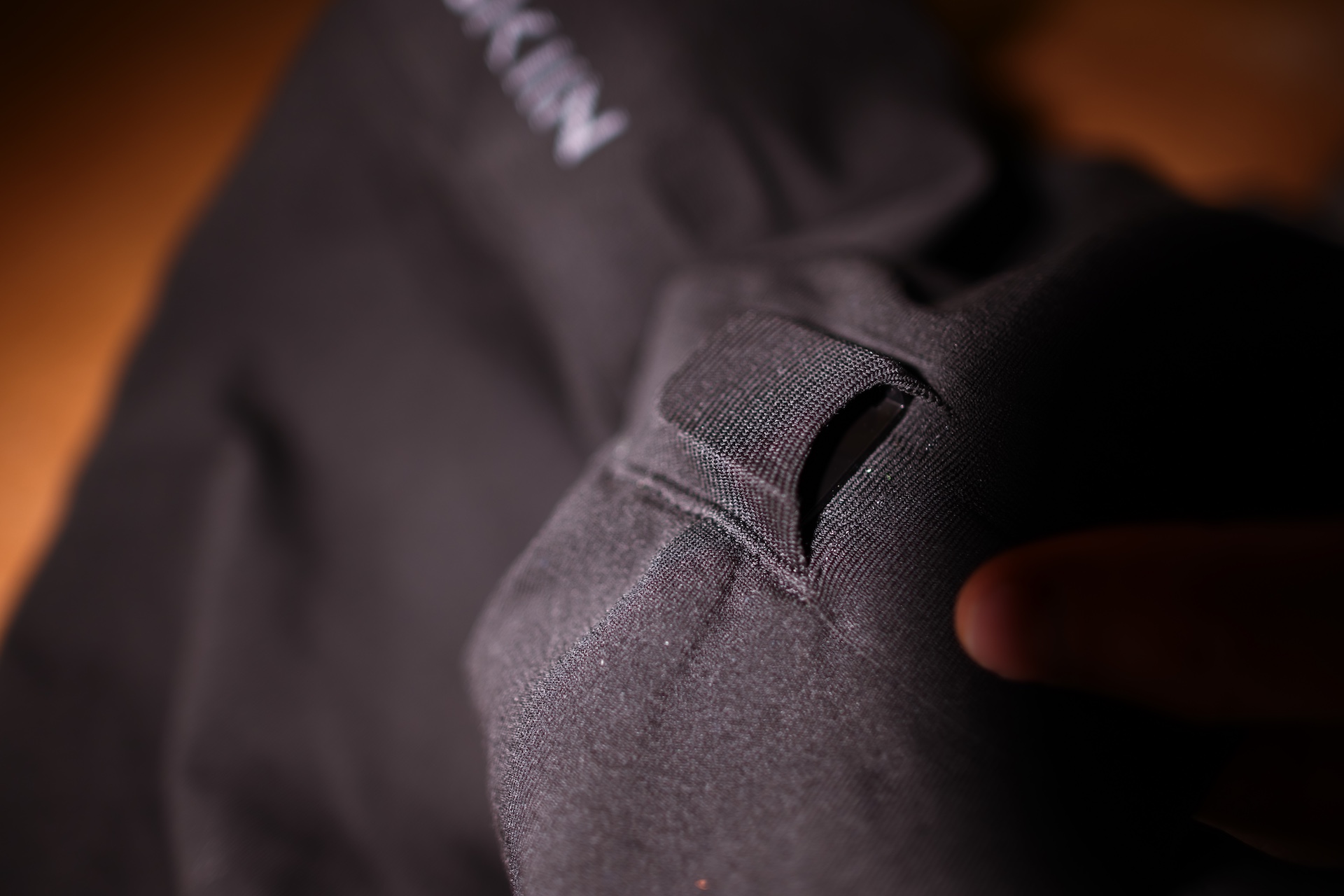
Wuxly is developing the smart clothing with another Toronto-area company, Myant, which makes similar tech for civilian health care, like bands that fit around people’s chests to monitor for heart problems.
The company set out to make something that just feels like an undershirt. It’ll have an insert the size of a key fob for charging, Yurichuk says. “You’ve just got to pull that out and you can throw it into the wash to be laundered, and just air dry.”
Yurichuk spent about a week in March at a “sprint” organized by Vimy Forge, a federally funded defence tech accelerator in Fredericton—down the road from Canadian Forces Base Gagetown. He was there with executives from companies developing things like marine and amphibious robots and AI-driven lie detectors.
“What stood out most was the emphasis on genuinely mission-first thinking—mapping innovation to real operational gaps rather than building in isolation,” he says.
The move into smart clothing is new but Wuxly has had a defence-oriented business for a while. The company’s history dates to 2013, when Yurichuk was a linebacker in the Canadian Football League. He was going from the B.C. Lions, in Vancouver’s mild climate, to the Toronto Argonauts. His girlfriend at the time was from South America and was not equipped for a Toronto winter.
“If we didn’t keep her warm, she was going to fly right back to Brazil,” Yurichuk says. He commissioned a custom jacket for her from a tailor friend.
The jacket worked: James and Daniela Yurichuk are married, with four children.
Wuxly was born as a company, under the name Woolly Mammoth, in 2015. Its winterwear competes with Canada Goose and Moose Knuckles at the luxury end of northern-practical, with parkas retailing for as much as $1,495.
The company has about 25 corporate employees, Yurichuk says. It uses as much Canadian content as it can and does all its cutting and sewing domestically, with a variable workforce of about 200.
That’s been pivotal in putting Wuxly in the position it’s in now.
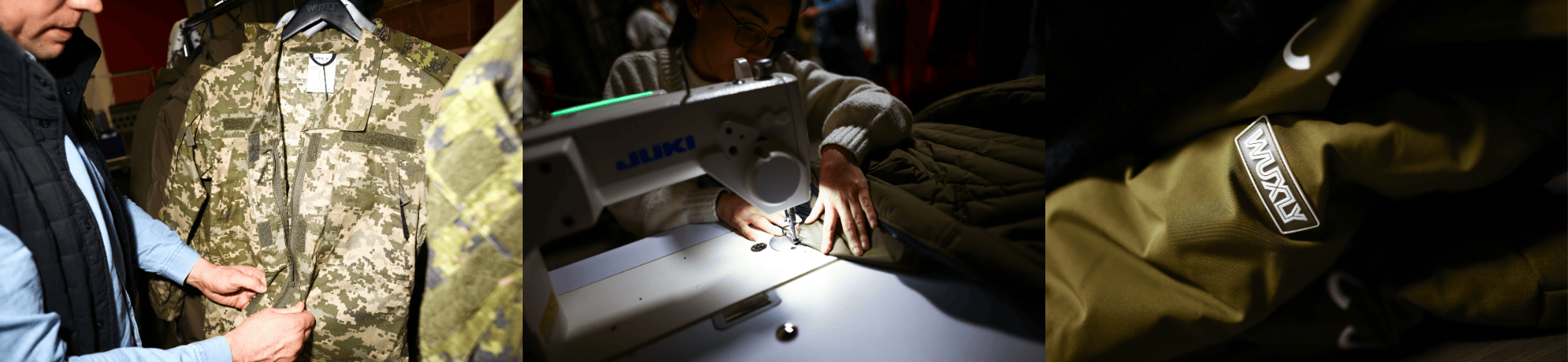
Early in the COVID-19 pandemic, the federal government gave Wuxly contracts—around $100 million worth, Yurichuk says—that had it mobilize multiple other manufacturers to make reusable protective gowns. “There weren’t many Canadian textile producers,” he says.
The company plowed pandemic profits into production capacity and certifications from the International Organization for Standardization, which add credibility when it’s trying to make big sales.
Demand for personal protective equipment waned, however, along with the pandemic emergency. Then, in 2022, Russia invaded Ukraine. Yurichuk, who has Ukrainian ancestry, sent Wuxly-made jackets. That, he says, led to calls for sleeping bags, tents and even tank covers.
“The product was really well-received, and the government started trusting us in some very important, high-profile projects,” he says. When Canada donated uniforms for female Ukrainian soldiers, it enlisted Wuxly.
“They were making their uniforms in the basements of homes in Ukraine,” Yurichuk says. “We ended up making 40,000 female combat uniforms for them.”
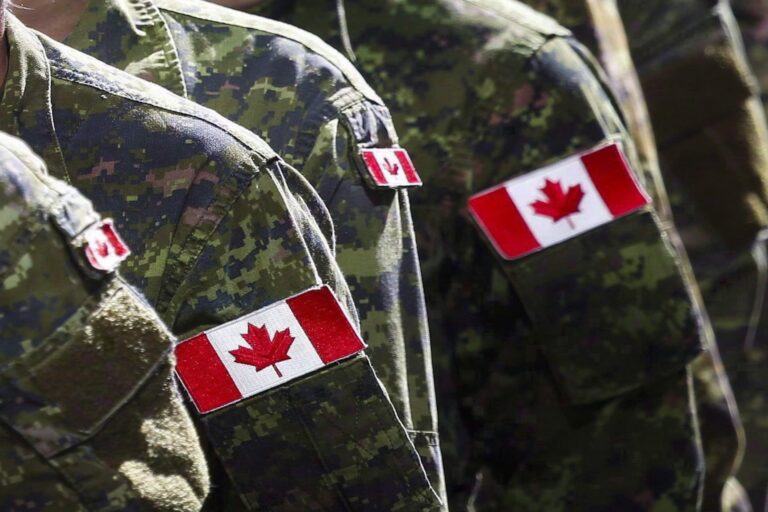
More recently, Wuxly has supplied Nordic countries’ militaries with things like helmet covers, which have to fit particular helmet models and provide warmth, protection and camouflage.
“We’re a classic Canadian company that probably sells more outside Canada than it does inside Canada,” Yurichuk says.
Nearly 40 years after the Canadian military began integrating women into combat roles, the Canadian Forces still issue women combat uniforms designed for male bodies, though they’re working on it. Wuxly aims to land some of that business, Yurichuk says.
He hopes being able to show that Wuxly gear has already been used in combat, and by other NATO countries, will make a difference.
“We’re not just bolting it on the wall that, ‘Hey, we’re in defence! We’re doing military!’” Yurichuk says. “It’s not a sewing machine and a dream that we’re selling here.”