Skip to content
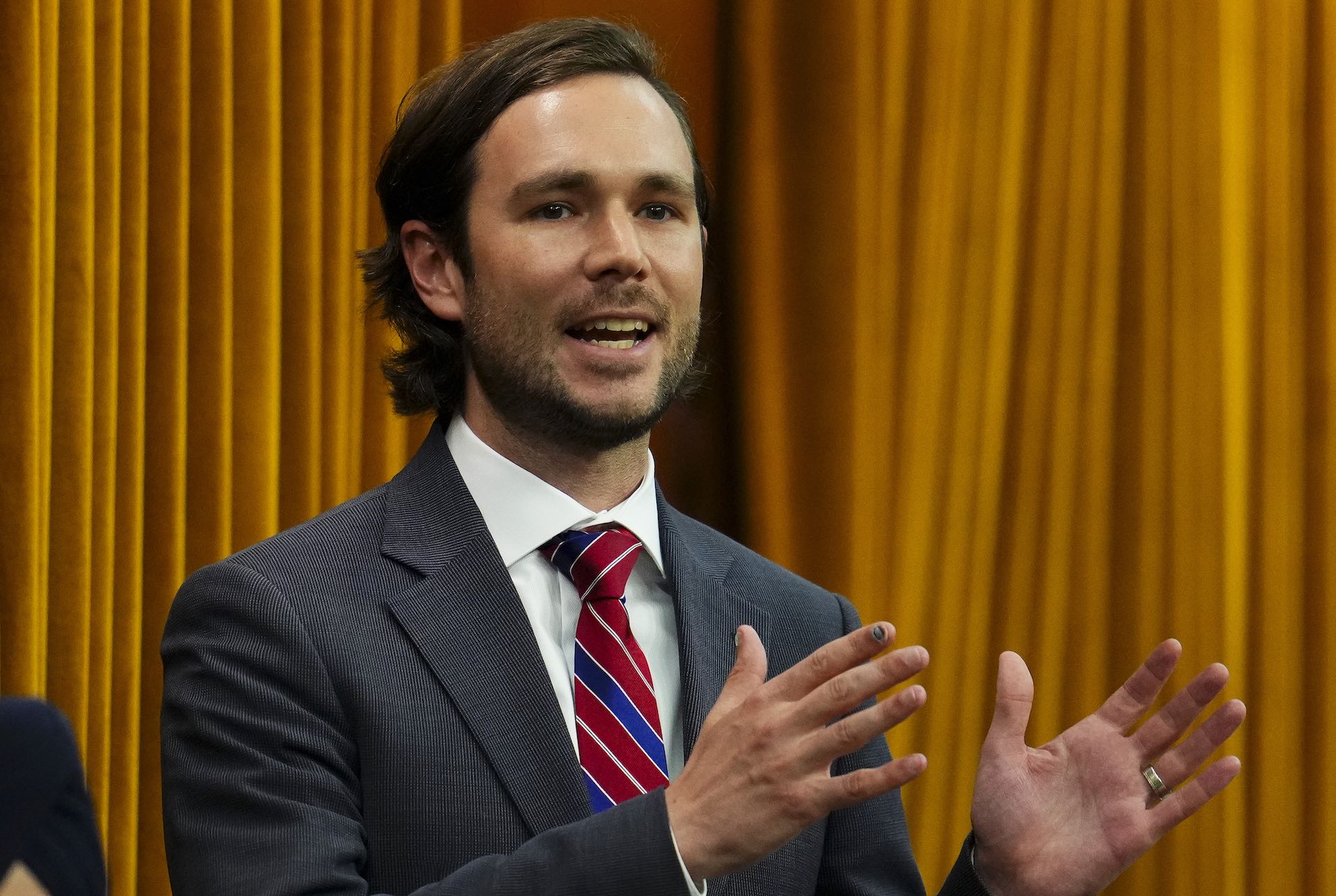 Conservative MP Jacob Mantle is calling for more transparency in Canada's trade consultations with businesses and industry groups. Photo: The Canadian Press/Sean Kilpatrick

News
The fight to make Ottawa’s secret trade consultations public
A Tory MP is pushing to make submissions on the USMCA open to the public, as they are in the United States
Unlike the U.S. Trade Representative's office, Global Affairs Canada has not released submissions it receives on the review of the North American trade pact Photo: The Canadian Press/Nicole Osborne
OTTAWA — A Conservative MP is pushing the federal government to publish what businesses and industry groups say they want from the review of the North American trade pact, arguing that Canadians need transparency to judge the outcome of those talks.
“I think the default position should be transparency for this trade negotiation and for others,” Jacob Mantle, an international trade lawyer elected last year to represent the Toronto-area riding of York-Durham, told The Logic. “But it seems to be that the default position is secrecy and I don’t know why that is, because I don’t think that’s how you engage in good decision-making.”
Talking Points
- The House of Commons trade committee ordered Global Affairs Canada to release the submissions it received through its public consultation process on the USMCA review
- Conservative MP Jacob Mantle says the sparse summaries shared so far make it hard for Canadians to judge whether Ottawa comes out of the review with a good deal
Last September, Global Affairs Canada launched a second round of consultations for the coming review of the United States-Mexico-Canada Agreement (USMCA). The federal government had already held consultations in 2024, but that was before U.S. President Donald Trump returned to the White House, upended the global trading order and started musing about whether the trilateral trade agreement he negotiated during his first term was worth keeping.
The government keeps the submissions confidential, which is standard for most of its public consultations. But it stands in stark contrast to the USMCA consultations south of the border, where the Office of the U.S. Trade Representative publishes every comment online.
Related Articles

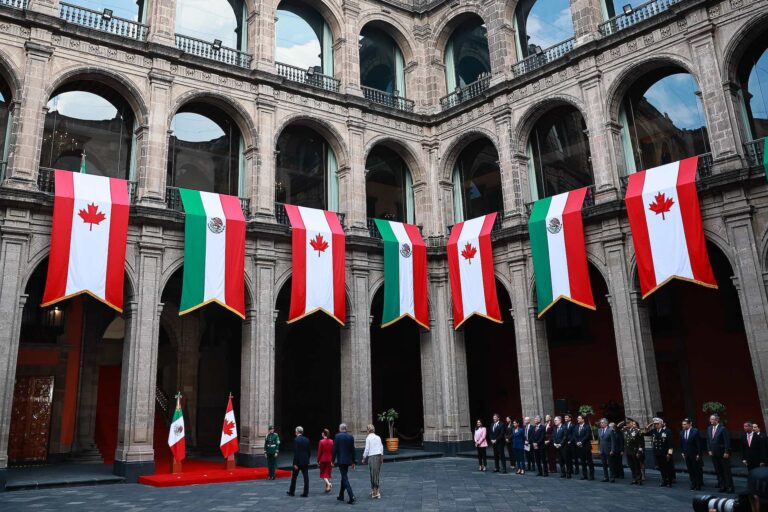
Aaron Fowler, chief trade negotiator at Global Affairs Canada, cited privacy reasons in describing the government’s position to the House of Commons international trade committee, which is studying the review of USCMA. “The Government of Canada is committed to protecting the personal information of Canadians and ensuring that any sensitive company information is handled appropriately,” Fowler wrote to the committee on Sept. 22.
On Nov. 3, Mantle made a motion at the committee ordering Global Affairs Canada to hand the submissions over anyway. The motion, which received unanimous support, says the department can release a redacted version of a document if sharing the original would breach the “alleged confidentiality of its contents,” or, when even that is too much, a summary with enough detail that its substance would be understood. If nothing could be published, the department would still have to share the reason, along with a legal opinion citing the law underpinning that choice.
Since then, Mantle said, Global Affairs Canada has given the committee sparse weekly summaries of what it received, but no actual submissions—redacted or otherwise. The documents released so far contain about as much detail as was in an aggregate summary of the 2024 consultation. Another one is planned for this round. Global Affairs Canada did not respond to The Logic in time for publication, but Mantle said he plans to raise the issue the next time the committee meets.
The summaries do shed light on how the consultations went. The department received a total of 5,136 contributions to the process. That is well above the 137 submissions received during the first round in 2024, but 89 per cent of them came from a campaign by the Dairy Farmers of Canada. David Wiens, president of the lobby group, said its members are “highly motivated” to make their views on the USMCA known to the government. It declined to share its submission with The Logic for this story, but, unsurprisingly, keeping Canada’s system of supply management for eggs, poultry and dairy is one of the dominant themes in the summaries from the department.
One summary says digital trade and intellectual property are emerging priorities for review of the deal, which in Canada is also known as CUSMA. Another says Canada’s digital sovereignty needs protecting—without specifying the nature of the threat, proposed solutions or who shared those concerns.
To get a better sense of what other details might be missing, The Logic compared a detailed submission it obtained from the Canadian Steel Producers Association with what appears in the weekly reports. Right now, the USMCA requires that 70 per cent of the content of an auto must come from North America to qualify for preferred treatment under the deal. The steel association wants that threshold increased and expanded to more vehicle parts, to boost demand for steel from Canada, the U.S. and Mexico. A weekly summary that includes input from the steel sector lists “strengthening domestic manufacturing and resilience” as a takeaway, without touching on the sensitive issue of rules of origin.
Goldy Hyder, president and CEO of the Business Council of Canada, said he did not feel strongly about whether the Canadian consultation should be public. His business advocacy group took part in the American and Mexican processes too, and published its submission online. “It’s quite clear that people have lots of venues and avenues to communicate what their positions are on things,” he said.
Mantle, though, said Canadians—and the parliamentarians tasked with scrutinizing legislation on their behalf—need more than a curated summary of what the federal government thinks is important. “If we’re not getting the information, we won’t get to a place where we can make a fair assessment of whether we think the deal that’s on the table is good, bad, or something else.”



Loading...
Thanks for sharing!
You have shared 5 articles this month and reached the maximum amount of shares available.
CloseThis account has reached its share limit.
If you would like to purchase a sharing license please contact The Logic support at [email protected].
CloseGift the full article!
You have gifted 0 article(s) this month and have 5 remaining.
Recipients will be able to read the full text of the article after submitting their email address. They will not have access to other articles or subscriber benefits.
Photo: The Canadian Press/Nicole Osborne
Conservative MP Jacob Mantle is calling for more transparency in Canada's trade consultations with businesses and industry groups.
Most Popular This Week


In-depth, agenda-setting reporting
Great journalism delivered straight to your inbox.
News
Cohere plans to acquire cyber startup Aisle and set up a new security division
Briefing
Banks should have kill switches, IDs for AI agents, says global finance watchdog
B.C. First Nations decry rushed consultations as Major Projects Office CEO promises to do better
Feds pledge $100M to back Nova Scotia’s plans for offshore wind farms
Best business newsletter in Canada
Get up to speed in minutes with insights and analysis on the most important stories of the day, every weekday.
Exclusive events
See the bigger picture with reporters and industry experts in subscriber-exclusive events.
Membership in The Logic Council
Membership provides access to our popular Slack channel, participation in subscriber surveys and invitations to exclusive events with our journalists and special guests.