Skip to content


News
Carney’s budget clears confidence vote. Now the real work begins
Opposition parties still have power to shape and slow down budget that calls for major tax credits, billions for housing and infrastructure
Prime Minister Mark Carney brandishing the government’s 2025 budget on his way into the House of Commons the day it was tabled, followed by Finance Minister François-Philippe Champagne. Photo: The Canadian Press/Justin Tang
OTTAWA — Prime Minister Mark Carney’s first budget and plan to reorient Canada’s economy passed a key hurdle Monday as the government eked out a win in a nail-biting confidence vote.
The House of Commons approved the Liberals’ budget policy on a 170-168 vote, with the Liberals benefiting from four abstentions: two New Democrats (Nunavut’s Lori Idlout and B.C.’s Gord Johns) and two Conservatives (Alberta’s Matt Jeneroux and Shannon Stubbs) did not vote.
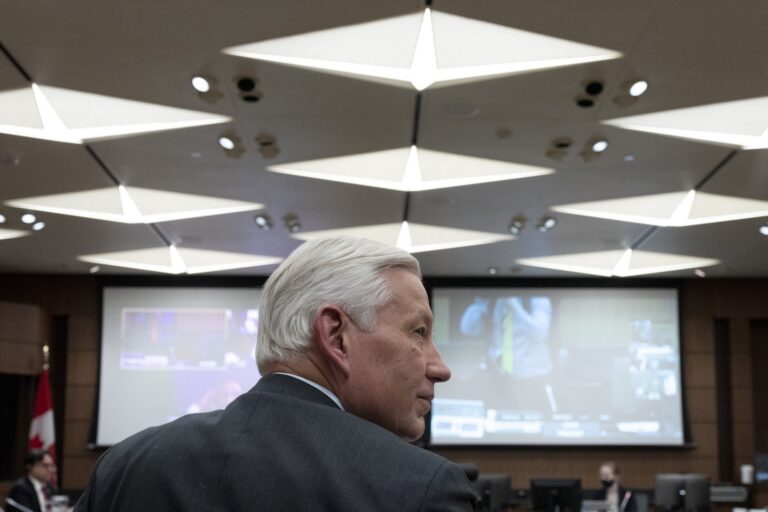
The NDP allowed the budget to pass because the uncertainty and delays caused by an election would have been worse, said interim NDP Leader Don Davies, who voted against it himself. He said his party opposes the Liberals’ planned cuts to the public service, their reversals on climate change and their health care plans.
Related Articles


“The consequence of defeating this budget would not be to improve it or to help Canadians. It would be to plunge the country into an election only months after the last one, and while we still face an existential threat from the Trump administration,” he said.
The vote was in favour of the Nov. 4 budget in principle. Carney and his team must still shepherd its exact economic measures, including $141 billion in new spending, through a divided House of Commons and a contentious parliamentary process.
News that the government won’t be immediately plunged into another election, though, was met with relief from the business community, which has been calling for certainty and steadiness.
“Investors and businesses don’t make long-term plans around election cycles and can’t afford to reset so often,” said Canadian Chamber of Commerce president Candace Laing in a statement.
Passing the budget shouldn’t be the hard part, Council of Canadian Innovators president Benjamin Bergen said in a statement. “The government now needs to buckle down and do the hard work of ensuring that federal government spending is being deployed for the benefit of the Canadian economy.”
That could indeed be a challenge, as parties still have the power to change the budget and slow down its implementation. Getting key measures in the budget over the finish line could require Carney to change his approach and find more willing partners among the opposition parties, said Tim Powers, chair of Summa Strategies and former advisor to several Conservative leaders.
“There’s a difference between being a CEO when you can decree, and being a leader of a parliament in a minority,” he said. “He can’t always count on circumstances being on his side.”
Billions of dollars for infrastructure, including housing and major projects, hang in the balance, as well as tax changes to encourage capital and R&D investments, and plans to lure top-tier tech workers and researchers to Canada.
Carney’s budget represents a big bet that immediate investments in Canadian industries, building and defence can make the country more self-sufficient and reliant on global economic shocks in the long term. It calls for a $78.3-billion deficit this year, even as the Liberals cut day-to-day spending and programs by $60 billion over five years.
Green Party Leader Elizabeth May had initially said she would not support the budget either, unless the government made stronger commitments to fighting climate change. Ahead of the vote, she called on the prime minister to declare those commitments in the House. His response, which included a reaffirmation of Canada’s commitment to the Paris Agreement to limit global warming, convinced her to change her mind, she said.
“Without what I heard from the prime minister today, I would have voted no,” May said on Parliament Hill ahead of the vote on Monday.
Editor’s note: This story was updated to add comment from the NDP.



Loading...
Thanks for sharing!
You have shared 5 articles this month and reached the maximum amount of shares available.
CloseThis account has reached its share limit.
If you would like to purchase a sharing license please contact The Logic support at [email protected].
CloseGift the full article!
You have gifted 0 article(s) this month and have 5 remaining.
Recipients will be able to read the full text of the article after submitting their email address. They will not have access to other articles or subscriber benefits.
Photo: The Canadian Press/Justin Tang
Most Popular This Week



In-depth, agenda-setting reporting
Great journalism delivered straight to your inbox.
News
ApplyBoard was the worst-performing Canadian startup in Fidelity’s portfolio in 2026
Briefing
Defence Investment Agency to be a Crown corporation so it can get deeper into Canada’s military industry
Mark Carney says he’ll work with Quebec separatist premier-to-be on housing, infrastructure, big projects
Mistral claims its new AI model closes the gap with leading Chinese developers
Best business newsletter in Canada
Get up to speed in minutes with insights and analysis on the most important stories of the day, every weekday.
Exclusive events
See the bigger picture with reporters and industry experts in subscriber-exclusive events.
Membership in The Logic Council
Membership provides access to our popular Slack channel, participation in subscriber surveys and invitations to exclusive events with our journalists and special guests.