TORONTO — The Liberal government plans to act swiftly to head off the threat of losing quantum computing companies to the U.S. as Washington goes hunting for cutting-edge technology and talent, AI Minister Evan Solomon told The Logic.
Skip to content

Exclusive
Policies to keep quantum companies in Canada are coming soon, Solomon says
Ottawa is worried that a blockbuster U.S. program will lure promising firms south
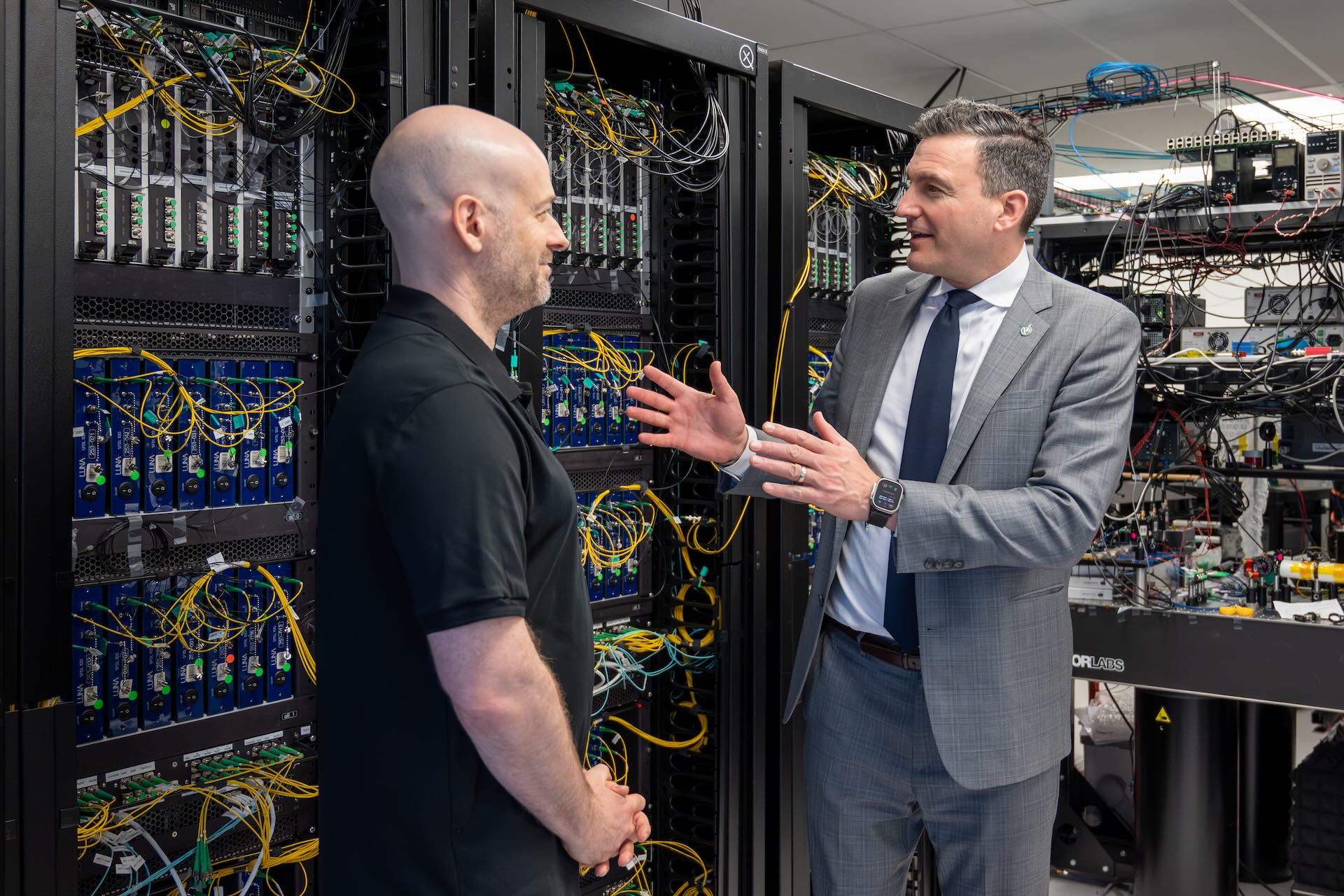
Xanadu CEO and founder Christian Weedbrook (L) with federal AI minister Evan Solomon at the opening of Xanadu’s new $10-million chip packaging line in Toronto on Monday, June 23 2025. Photo: Handout
TORONTO — The Liberal government plans to act swiftly to head off the threat of losing quantum computing companies to the U.S. as Washington goes hunting for cutting-edge technology and talent, AI Minister Evan Solomon told The Logic.
“We need to guard, keep and grow our domestic and sovereign quantum [sector], and we will be taking steps to do that,” Solomon said in an interview on Monday, suggesting an announcement will come “sooner than you think.”
Talking Points
- The Liberal government plans to move forward soon with new measures for the quantum sector, AI Minister Evan Solomon told The Logic
- Ottawa is concerned that the U.S. Defense Advanced Research Projects Agency’s Quantum Benchmarking Initiative could lure Canadian startups south, since it offers companies significant funding and gives the agency a lot of information about their technology
In November, the federal Quantum Advisory Council recommended that Ottawa commit $2 billion to boost the field in Canada and help retain promising firms. That would include the launch of a $1-billion program to match the U.S. Defense Advanced Research Projects Agency’s (DARPA) blockbuster Quantum Benchmarking Initiative (QBI).
The QBI requires participating quantum computing companies to prove that their technology can produce a machine capable of solving real-world industrial problems by 2033. In April, DARPA announced it had picked 18 companies for the program’s first phase, including three Canadian firms: Sherbrooke, Que.-based Nord Quantique, Vancouver-based Photonic and Toronto-based Xanadu.
Companies that make it through all three stages of the QBI could receive up to US$316 million. In a letter to then-innovation minister François-Philippe Champagne, the advisory council warned that later-stage QBI contract terms could force winners to move to the U.S.
On Monday, Solomon did not say whether the new Liberal government under Prime Minister Mark Carney will implement the group’s recommendations specifically. But he said that Ottawa is concerned about the QBI’s effect on the Canadian quantum sector. “This competition is more than just about who’s the best,” Solomon said, calling the program a “strategic threat to a strategic asset for us.”
Related Articles
Tech firms are pursuing several different approaches to quantum computing, so potential investors and customers can find it difficult to decide which to back or buy from. DARPA’s program sets out to do that due diligence for them by analyzing the developers’ scientific advances and R&D plans. Solomon expressed concern that Canadian firms’ IP could be shared during that process in a way that “leaves us at a competitive disadvantage.”
In addition to DARPA funding, the state of Illinois has committed US$300 million for a campus to attract firms participating in QBI. Combined, that’s enough to tempt the boards of Canadian quantum computing companies “to do exactly what we’re trying to avoid, which is [to] have them be bought [and] have them move,” Solomon said.
Other countries are also circling. France has launched a €1.8 billion ($2.87 billion) quantum plan, while the U.K. has committed £2.85 billion ($5.3 billion) through 2033.
Canada has a “leadership position” in the field because researchers here have made and commercialized breakthroughs in the technology, Solomon said. Renewing Canada’s quantum strategy is among the newly appointed minister’s short-term priorities. Ottawa will act quickly to ensure that DARPA “does not end up lifting our quantum industry out, loading it on their container ship and sailing it south,” he said.
The Liberals under then-prime minister Justin Trudeau already rolled out a $360-million plan for the field, first announced in the April 2021 budget, which included new research grants and cash for commercialization. Ottawa has also provided financing to individual quantum computing firms.
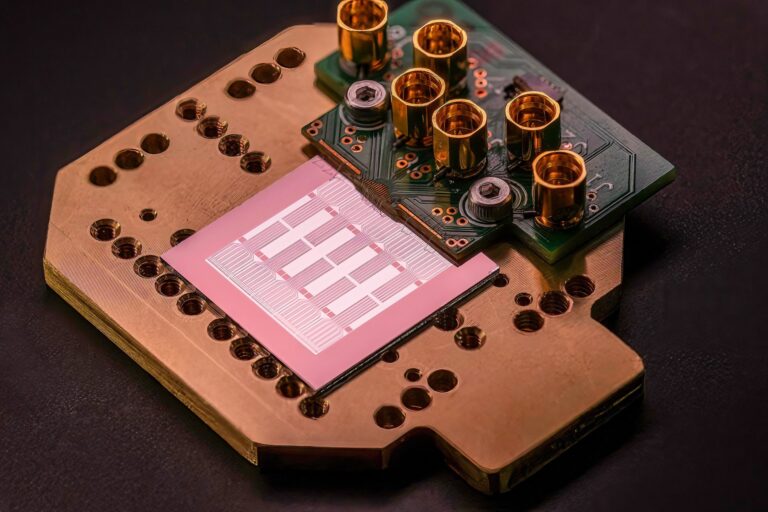
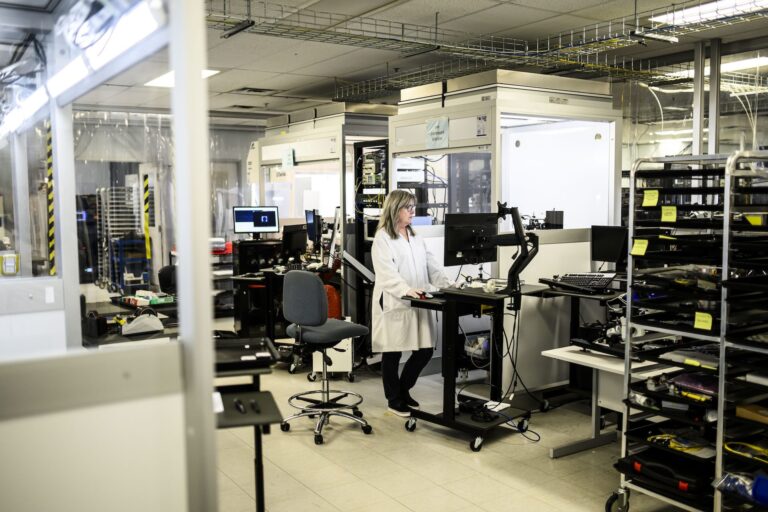
Solomon spoke to The Logic shortly before he attended the opening of Xanadu’s new $10-million chip packaging line. The late-stage manufacturing process adds connectivity and protective material to processors. Xanadu outfitted the lab in part through a $40 million award from the federal Strategic Innovation Fund.
The firm will now process chips for its light-based quantum computer in-house. Xanadu is also in discussions to sell packaging services to other chipmakers, said CEO Christian Weedbrook. Its specialized manufacturing process ensures processors lose very little information as they work, making it a good fit for firms selling hardware for drones or data centres.
“We want to expand” and “keep this sovereign in Canada,” Weedrook said during a tour with Solomon of the line, which is housed in the basement of Xanadu’s office building, between the storeroom for a Dollarama and the bakery of a Farm Boy grocery store.



Loading...
Thanks for sharing!
You have shared 5 articles this month and reached the maximum amount of shares available.
CloseThis account has reached its share limit.
If you would like to purchase a sharing license please contact The Logic support at [email protected].
CloseGift the full article!
You have gifted 0 article(s) this month and have 5 remaining.
Recipients will be able to read the full text of the article after submitting their email address. They will not have access to other articles or subscriber benefits.
Photo: Handout
Most Popular This Week




In-depth, agenda-setting reporting
Great journalism delivered straight to your inbox.
The Big Read
Alberta’s referendum is just the start of the turmoil
Briefing
EverWind plans $10B data centre and wind development in Nova Scotia
Canada ready to force Stelco to sell its Canadian operations, Joly says
Feds plan a 60 MW defence-oriented data centre for Ottawa
Best business newsletter in Canada
Get up to speed in minutes with insights and analysis on the most important stories of the day, every weekday.
Exclusive events
See the bigger picture with reporters and industry experts in subscriber-exclusive events.
Membership in The Logic Council
Membership provides access to our popular Slack channel, participation in subscriber surveys and invitations to exclusive events with our journalists and special guests.






