More than 73 per cent of respondents to The Logic’s latest subscriber survey said that the experience of flying with Canadian airlines is worse now than it was before the COVID-19 pandemic.
Last week the Competition Bureau released a report on Canada’s airline industry, detailing a litany of consumer complaints. The report noted the outsized market share of Air Canada and WestJet—which accounted for 74 per cent of all seats on domestic flights in 2023—and recommended that the government allow for increased foreign ownership of Canadian airlines, among other measures.
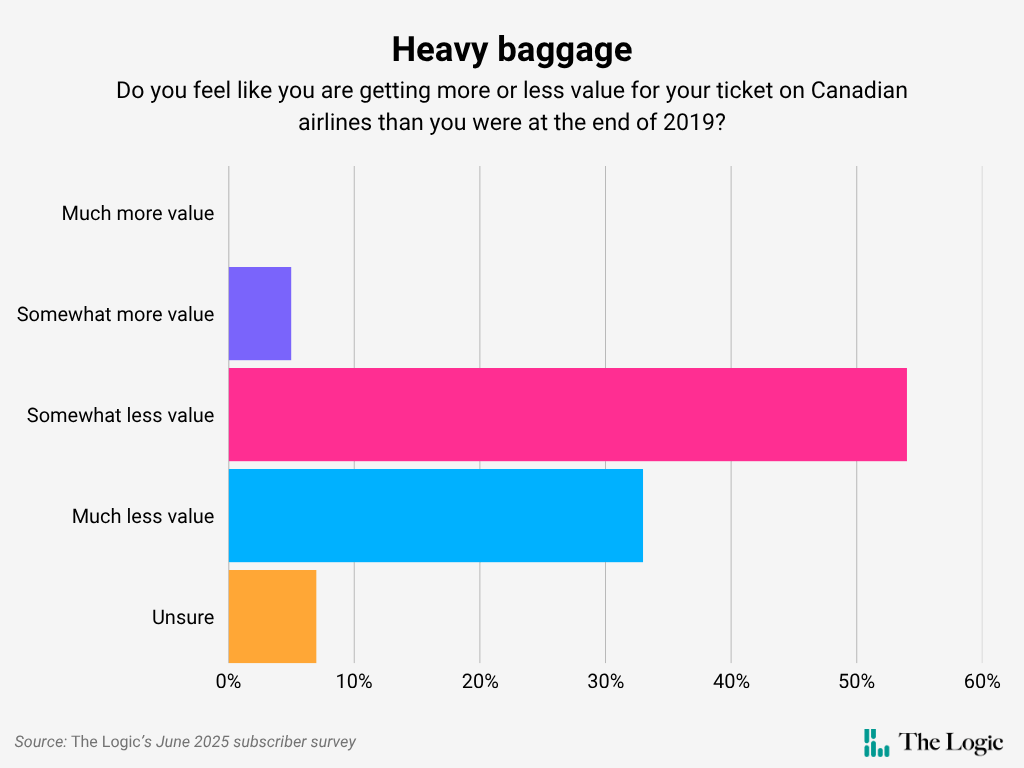
Reader responses mirrored many of the pain points in the Competition Bureau’s investigation, starting with ticket prices. Eighty-eight per cent of readers believed air travel had become more expensive since before the pandemic, with almost the same percentage believing they were getting less value for their money in the process.
A common culprit for this issue, readers said, was the practice of charging extra for things like carry-on baggage and seat selection, options that were once standard. “‘Ultra-basic’ fares have now gated the bare minimum of human dignity behind an additional surcharge,” one respondent said.
Only six per cent of readers said it had gotten less expensive to fly on Canadian airlines, with just five per cent of respondents saying flying was now better value for money.
The experience of flying on Canadian airlines has also degraded since before the pandemic, 73 per cent of respondents said. Fifteen per cent said that amenities like free snacks and alcohol on flights, or new entertainment and accessibility tech on some Air Canada routes, were an improvement.
Multiple readers complained about flights to Atlantic Canada being run with aging planes, while the boarding process was another common pain point made worse by checked baggage fees.
“People are carrying their entire lives on their backs so there is no storage or even space for your coat in winter,” one respondent said, with another adding, “It feels like The Hunger Games sometimes to get luggage onto the plane.”
There was widespread agreement that Canadians lack air travel options, with 86 per cent of respondents saying they don’t believe there’s strong competition or consumer choice for airlines. Air Canada and WestJet have such a hold on the market that one respondent doesn’t even feel comfortable voting with their wallet for better alternatives.
“I won’t book Flair because I expect them to declare bankruptcy by surprise and leave me stranded while keeping my money,” they said. “Happened so many times to Canadian entrants!”
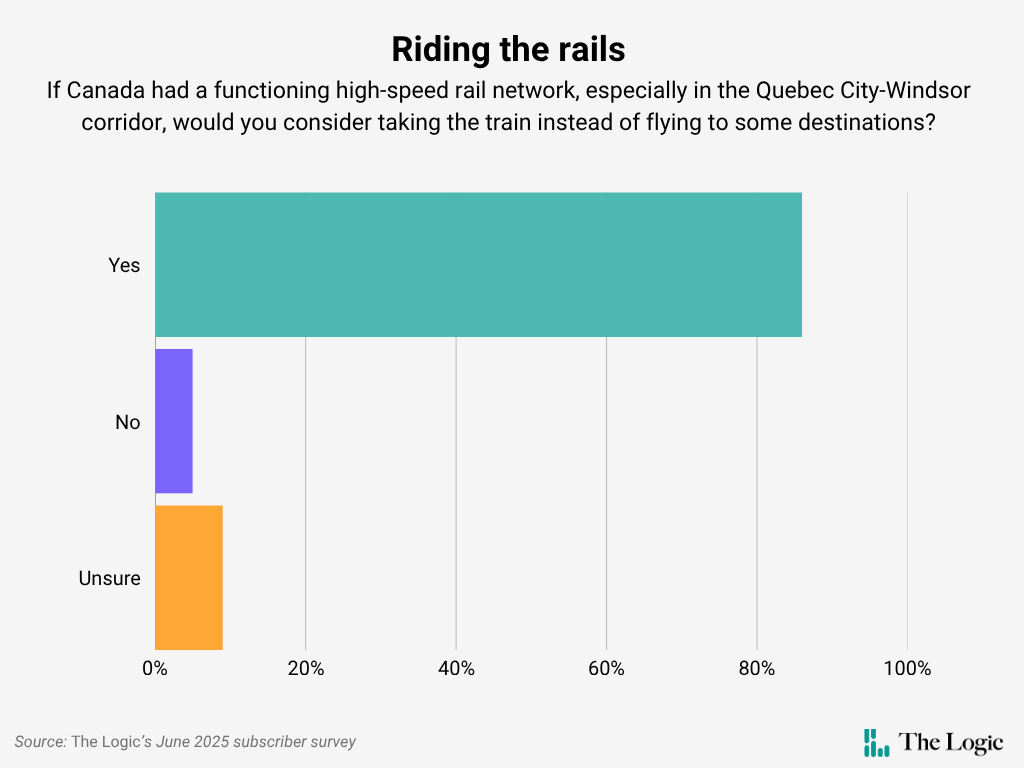
Readers were also enthusiastic about taking a high-speed train as an alternative—if only such an alternative existed in Canada. Eighty-six per cent of respondents said they would consider high-speed rail over flying, with many of them citing positive experiences with such trains in Europe or Japan. A high-speed rail connection in the Windsor-Quebec City corridor is inching forwards, but respondents also made the case for high-speed rail options in Atlantic and Western Canada. Those who were not sold on the idea of high-speed rail expressed concern about reliability in winter weather and the cost to taxpayers.
Respondents were asked who they felt was responsible for the state of Canadian air travel. While many readers said the government, airlines and airports were all to blame, many said the government and airlines were equally responsible, with one respondent noting, “Canada has too many oligopolies and the airline industry is certainly one of them.”