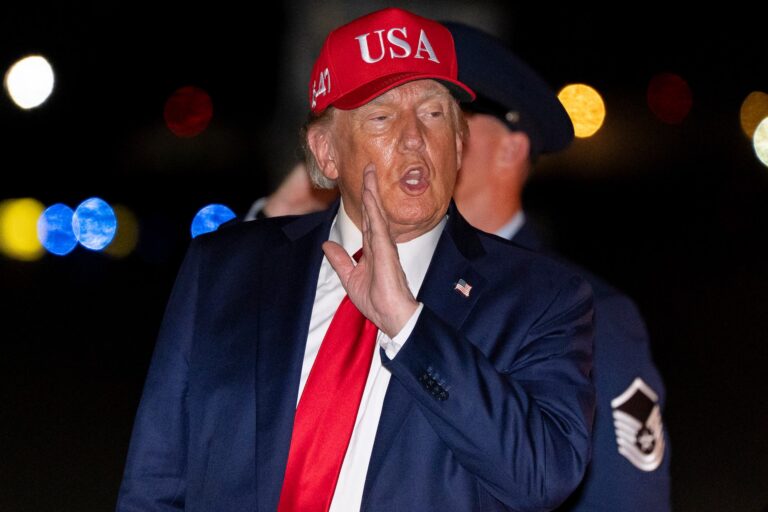
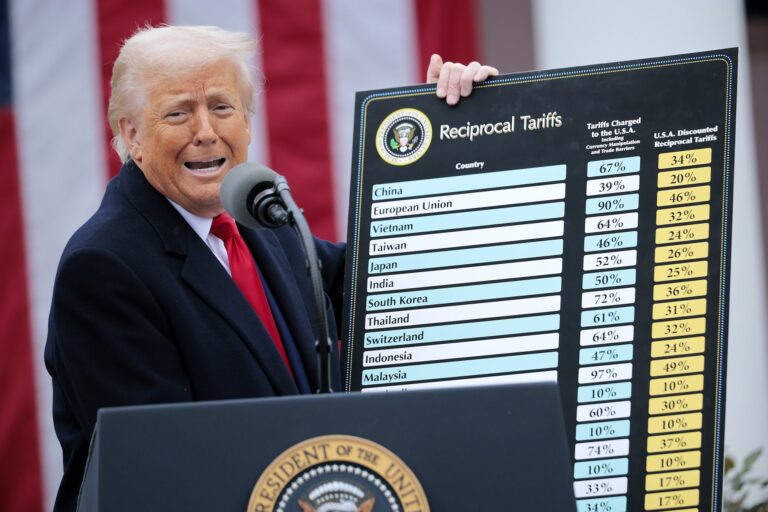
WASHINGTON — U.S. President Donald Trump tried to strike a friendly tone during his first meeting with Prime Minister Mark Carney at the White House on Tuesday, while making clear that damaging tariffs—and the threat to Canada’s sovereignty—are not going anywhere.
Skip to content


News
Carney tells Trump that Canada will ‘never be for sale’ in high-stakes White House meeting
Carney’s first visit as PM was a polite affair, but Trump doubled down on tariffs and clung to his ’51st state’ talk
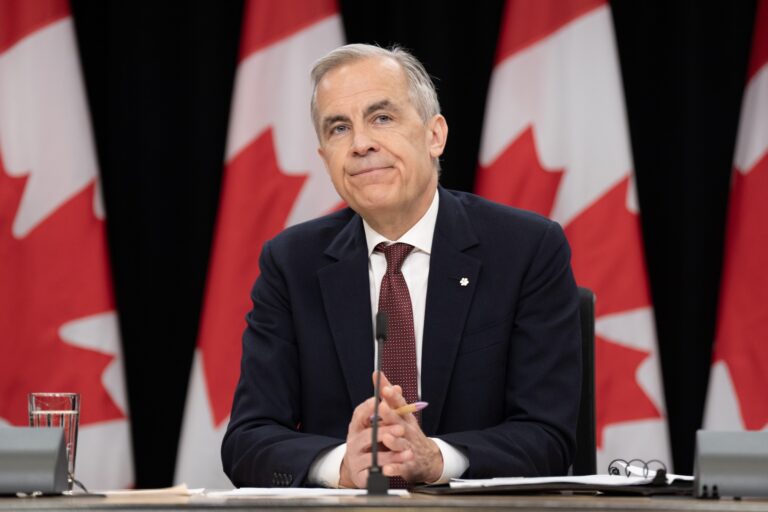
Prime Minister Mark Carney pushed back against Trump's annexation talk during Tuesday's meeting at the White House. Photo: AP Photo/Evan Vucci
WASHINGTON — U.S. President Donald Trump tried to strike a friendly tone during his first meeting with Prime Minister Mark Carney at the White House on Tuesday, while making clear that damaging tariffs—and the threat to Canada’s sovereignty—are not going anywhere.
“No,” Trump said with uncharacteristic brevity when asked whether Carney, seated beside him in the Oval Office, could say anything during the visit to get the tariffs lifted.
Talking Points
- U.S. President Donald Trump said there is nothing Prime Minister Mark Carney could say during their first meeting at the White House to convince him to lift tariffs on Canada
- Trump said goal of tariffs on Canadian autos is for carmakers to stop making them on this side of the border
“It’s just the way it is.”
It has been more than a month since Carney declared the decades-old economic relationship between both countries over, responding to Trump’s decision to impose tariffs on Canadian autos. In their first conversation on March 27, the two leaders agreed to start negotiating a new one immediately after the election.
The president insisted things were cordial—with an economically devastating caveat.
“This is a very friendly conversation, but we want to make our own cars. We don’t really want cars from Canada,” Trump said. “We put tariffs on cars from Canada and at a certain point it won’t make economic sense for Canada to build those cars.” Carney, who had just finished emphasizing the success of the highly integrated North American auto sector, looked on quietly.
Trump did not stop at cars.
“We really don’t want Canadian steel and we don’t want Canadian aluminum and various other things, because we want to be able to do it ourselves,” the president said. “Canada is a place that will have to be able to take care of itself economically. I assume they can.”
Related Articles
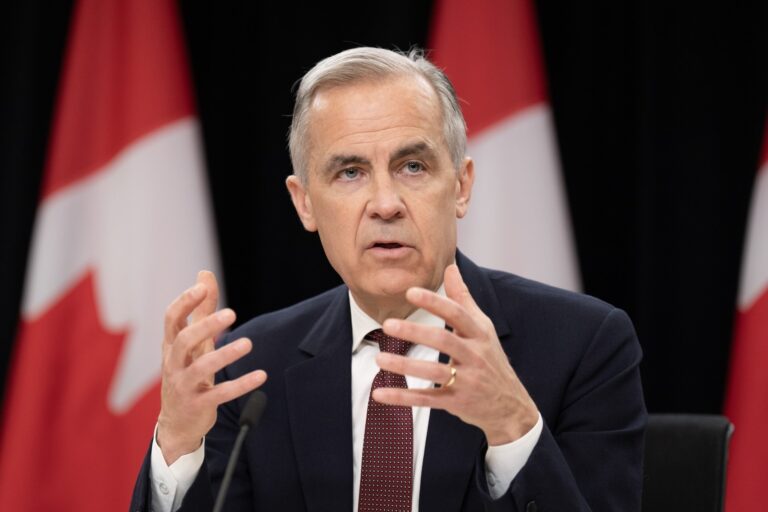
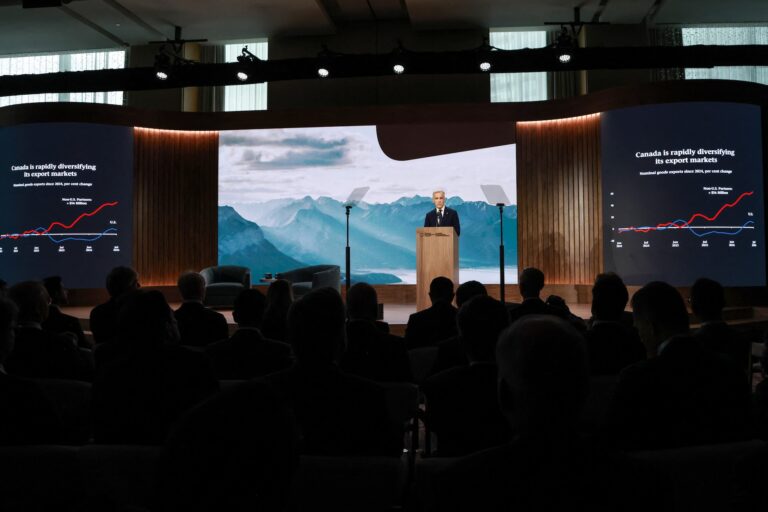
Later Tuesday, Carney told reporters at the Canadian Embassy he and Trump discussed over their working luncheon how to strengthen “the strategic position of the North American auto industry, or, more specifically, the Canadian-U.S. auto industry” in the face of foreign competition, including from Asia. Canada plays a role in that, Carney said he told Trump.
According to a Canadian government official who briefed reporters on the condition they not be named, Trump spoke during the closed-door portion of the meeting about foreign policy, and asked Carney for his views on China, Iran, Russia, Ukraine and the Middle East.
Carney also said he was not surprised to hear Trump say he would not lift the tariffs right away. He pointed out that Trump agreed to negotiate with the goal of reaching a deal. “There’ll be zigs and zags, difficult aspects to it, but the prospect is there,” Carney said.
It remains unclear what the shape of that new deal might take. Trump did suggest there is a future for the United States-Mexico-Canada Agreement (USMCA), the continental trade pact he negotiated to replace the North American Free Trade Agreement (NAFTA) during his first administration. But he also suggested the deal, which is set to undergo a review by July 2026, could be temporary.
“I don’t know that it’s necessary anymore, but it served a very good purpose, and the biggest purpose it served is we got rid of NAFTA,” Trump said in the Oval Office. Later in the meeting, he said the review of USMCA could be to “adjust it or terminate it.” At that point, Carney jumped in to describe USMCA as the “basis for a broader negotiation,” adding that “some things about it are going to have to change.”
Trump held court during the meeting in front of several U.S. cabinet ministers, including Commerce Secretary Howard Lutnick and Secretary of State Marco Rubio, as well as throngs of reporters and the portraits of past presidents on the walls. It was wide-ranging, scattered at times and did not include a formal joint press conference. During the public portion, Trump announced an intention to stop the U.S. air strikes against the Houthis in Yemen, criticized the pace of construction at his predecessor Barack Obama’s presidential centre and at one point directed attention to the gold-plated changes he had made to the Oval Office decor.
There were light moments, but Trump vaporized any hope he is done musing about Canada’s future as a sovereign country, even before the meeting began. About half an hour before Carney’s vehicle pulled up to the entrance of the White House, Trump shared his thoughts on social media. “We don’t need ANYTHING they have, other than their friendship, which hopefully we will always maintain,” he wrote. “They, on the other hand, need EVERYTHING from us!”
When asked by reporters in the Oval Office, he said he still believed Canada should be the 51st state.
“I still believe that, but it takes two to tango, right?” Trump said, before going on about the “artificially drawn border,” which prompted an awkward smile from Carney. Foreign Affairs Minister Mélanie Joly, who was seated between Trade Minister Dominic LeBlanc and Public Safety Minister David McGuinty, wore a strained expression.
“I do feel it’s much better for Canada, but we’re not going to be discussing that unless somebody wants to discuss it,” Trump said.
Carney said Canadians do not.
“As you know, from real estate, there are some places that are never for sale,” Carney said. “That’s true,” Trump interjected. Carney continued, “Having met with the owners of Canada over the course of the campaign’s last several months, it’s not for sale.”
Trump did not consider that the end of the discussion.
“I say never say never. I’ve had many, many things that were not doable, and they ended up being doable,” Trump said. “And only doable in a very friendly way, but if it’s to everybody’s benefit, you know, Canada loves us, and we love Canada, that’s, I think, the number 1 thing that’s important, but we’ll see. I mean, over time, we’ll see what happens.”
Ahead of the meeting, both leaders appeared to be downplaying expectations—one a little more than the other.
Last week, Carney invoked the imagery of a papal conclave to suggest no one should expect him to emerge with a definitive end to Trump’s trade war against Canada: “Do not expect white smoke out of that meeting,” he said.
Trump, though, speculated a few days later as to why Carney made the visit. “I’m not sure what he wants to see me about, but I guess he wants to make a deal. Everybody does,” he said Monday in the Oval Office. “They all want to make a deal because we have something that they all want.”



Loading...
Thanks for sharing!
You have shared 5 articles this month and reached the maximum amount of shares available.
CloseThis account has reached its share limit.
If you would like to purchase a sharing license please contact The Logic support at [email protected].
CloseGift the full article!
You have gifted 0 article(s) this month and have 5 remaining.
Recipients will be able to read the full text of the article after submitting their email address. They will not have access to other articles or subscriber benefits.
Photo: AP Photo/Evan Vucci
Most Popular This Week


In-depth, agenda-setting reporting
Great journalism delivered straight to your inbox.
News
Canada’s landmark ESG case heads to a final decision
Briefing
Matthew Proud-led SPAC threatens to pull out of merger with UniUni
Ottawa awards Mitacs $162M to create AI-focused work placements
Ontario puts $30M into Vector Institute for AI adoption
Best business newsletter in Canada
Get up to speed in minutes with insights and analysis on the most important stories of the day, every weekday.
Exclusive events
See the bigger picture with reporters and industry experts in subscriber-exclusive events.
Membership in The Logic Council
Membership provides access to our popular Slack channel, participation in subscriber surveys and invitations to exclusive events with our journalists and special guests.