Skip to content


News
Yoshua Bengio says betting on safer AI systems will pay off
LawZero wants the backing of more countries and donors as it tries to show rule-following systems can compete with ChatGPT and Claude
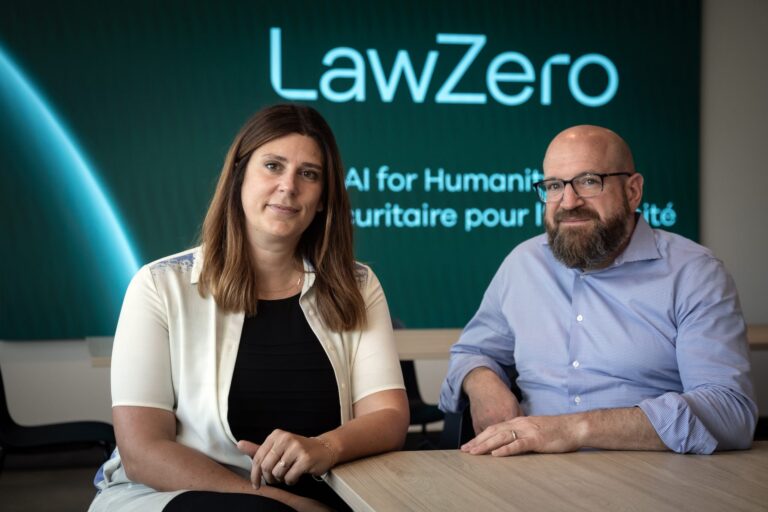
Yoshua Bengio called for more Canadian philanthropists to back LawZero’s efforts and similar AI safety initiatives. Photo: Christinne Muschii/The Canadian Press
MONTREAL — Pioneering AI researcher Yoshua Bengio says more countries need to bet on what he considers to be safer AI systems like the one he’s developing at LawZero, and nations that do so will see real economic returns.
On Wednesday, the Canadian and German governments announced up to $300 million in combined funding for LawZero to build Scientist AI, a system designed to always be honest and stay aligned with its users’ goals. The Montreal-based non-profit is seeking additional funding from other democracies as well as donors.
“You can think of these kinds of bets as buying a bit of insurance,” Bengio told The Logic, citing the risk of Canada losing economic competitiveness and sovereignty if it doesn’t have control over its own AI.
Talking Points
- AI pioneer Yoshua Bengio says countries need to make more bets on what he considers safer AI systems, as his non-profit AI lab LawZero sets out to prove that the technology can compete with frontier models
- LawZero is working to build Scientist AI over the long term, but will release products including technological guardrails
LawZero will use the new funding for research, development and processing power. For commercial AI developers building foundation models, improving performance relies heavily on the amount of scientific talent, data and compute they’re able to buy; firms like OpenAI and Anthropic building the most advanced, so-called frontier systems have raised hundreds of billions of dollars.
LawZero, which has a team of just under 50, is currently trying to build a prototype of Scientist AI, not a final product. According to Bengio, this means it needs fewer of those resources. The project’s goal, Bengio said, is to “show that, at equal resources in terms of compute, we can do better in terms of safety and not lose anything in capability.” He added that building such a prototype didn’t require the same scale of investment as for frontier models.
That mission is more urgent than ever, Bengio said. OpenAI and Anthropic have warned that their latest frontier models have strong coding capabilities and can find and exploit software vulnerabilities. Systems from both companies—and one from Meta—have hacked other organizations during testing. Researchers from the frontier AI labs have also once again warned that AI could pose an existential risk to humanity.
Related Articles

The Canadian and German grants for LawZero are significant, Bengio acknowledged. Ottawa’s Strategic Response Fund, which is providing the Canadian half of the funding, typically issues repayable financing for large-scale industrial projects that promise lots of jobs, like steel and aluminium plants or chip packaging facilities.
Bengio said the new funding for LawZero will create a different kind of benefit. “The bulk of the money is for compute in Canada,” he said. “So that’s going to be useful whatever happens.” Under the deal, Montreal-based Hypertec and its subsidiary 5C will build a dedicated data-centre cluster for LawZero. The federal government says the project will create 360 jobs.
LawZero will also contribute to Canada’s larger plan to develop its AI sector and compete at the frontier of the field, Bengio said. The federal AI strategy, released in June, identifies the non-profit as one of Canada’s two developers of foundation models, along with Cohere. It proposes to treat such systems as strategic assets, and to help export them to countries “actively seeking trusted alternatives.”
Governments also recognize the price of ensuring they’re not beholden to countries with better technology and larger economies, that they keep some of the profits of AI, and that their citizens are safe, Bengio said. “The kind of bets that we’re talking about today will look like small change in comparison to what they will do to protect themselves.”
LawZero does plan to release products over time, starting with technological guardrails that businesses and governments can apply to their existing AI applications. And Bengio sees a lot of future demand for the organization’s version of AI. “In the future, if the American and the Chinese companies don’t figure out—and they don’t seem to be really having a plan—how to build AI that will be aligned, having the technology to do that is going to be worth a lot,” he said.
Still, LawZero needs more money to build Scientist AI. Bengio said the organization has been in discussions with other countries for funding, with support from Ottawa. The Canadian and German governments have also asked LawZero to raise more philanthropic funds—about a quarter of the funding must be matched, although the organization has already secured most of that money.
LawZero had previously received US$36 million in commitments from backers including the Gates Foundation and groups funded by former Google CEO Eric Schmidt and Skype co-founder Jaan Tallinn.
“It’s a non-profit, so we can’t take investments, at least in the current structure,” Bengio said. “All of our donors are from outside Canada.” He called for more Canadian philanthropists to back LawZero’s efforts and similar AI safety initiatives. “I don’t think rich Canadians have internalized the magnitude of what’s going on,” he said. “They tend to give much smaller amounts of money, and now we’re entering in a game where we’re talking about big amounts of money.”



Loading...
Thanks for sharing!
You have shared 5 articles this month and reached the maximum amount of shares available.
CloseThis account has reached its share limit.
If you would like to purchase a sharing license please contact The Logic support at [email protected].
CloseGift the full article!
You have gifted 0 article(s) this month and have 5 remaining.
Recipients will be able to read the full text of the article after submitting their email address. They will not have access to other articles or subscriber benefits.
Photo: Christinne Muschii/The Canadian Press
Most Popular This Week




In-depth, agenda-setting reporting
Great journalism delivered straight to your inbox.
News
Trump steps up effort to block Canadian goods from U.S. procurement—but his order leaves a lot untouched
Briefing
Mila and Mozilla launch project to make it easier to use open source AI
Alberta will revise its oil royalty regime to encourage new production
Toronto-based AI health firm Altis Labs raises US$25M
Best business newsletter in Canada
Get up to speed in minutes with insights and analysis on the most important stories of the day, every weekday.
Exclusive events
See the bigger picture with reporters and industry experts in subscriber-exclusive events.
Membership in The Logic Council
Membership provides access to our popular Slack channel, participation in subscriber surveys and invitations to exclusive events with our journalists and special guests.