At Ubisoft Montreal there is an office known by some as the Sad Room. The Sad Room is a limbo, of sorts, where the company puts people who have finished work on one project but aren’t yet needed on another. Some employees linger in the Sad Room for just days, some for months. Some only leave when they quit or are fired.
Skip to content

 Ubisoft’s office in Montreal in Sept. 2021. At the peak of the pandemic, the studio employed more than 4,000 people in the city. Photo: Getty Images/JHVEPhoto
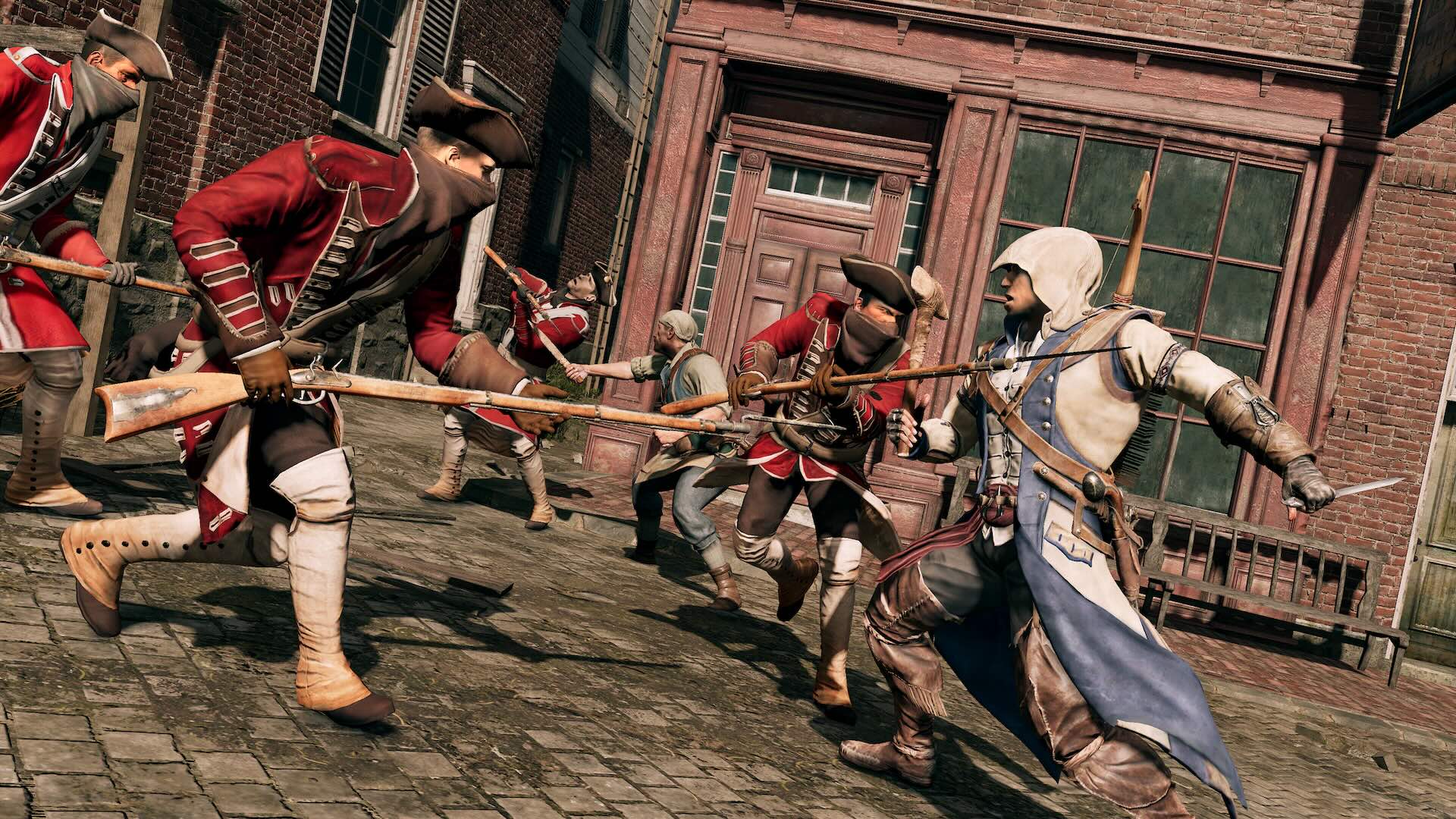 Ubisoft Montreal was lead developer on the first two Assassin’s Creed games, both of which were huge critical and commercial successes. Photo: Ubisoft | Handout
 In its most recent financial results, Ubisoft said first-half net bookings were down 22 per cent year-on-year. Star Wars: Outlaws was one of the major releases that fell short of commercial expectations. Photo: Ubisoft | Handout
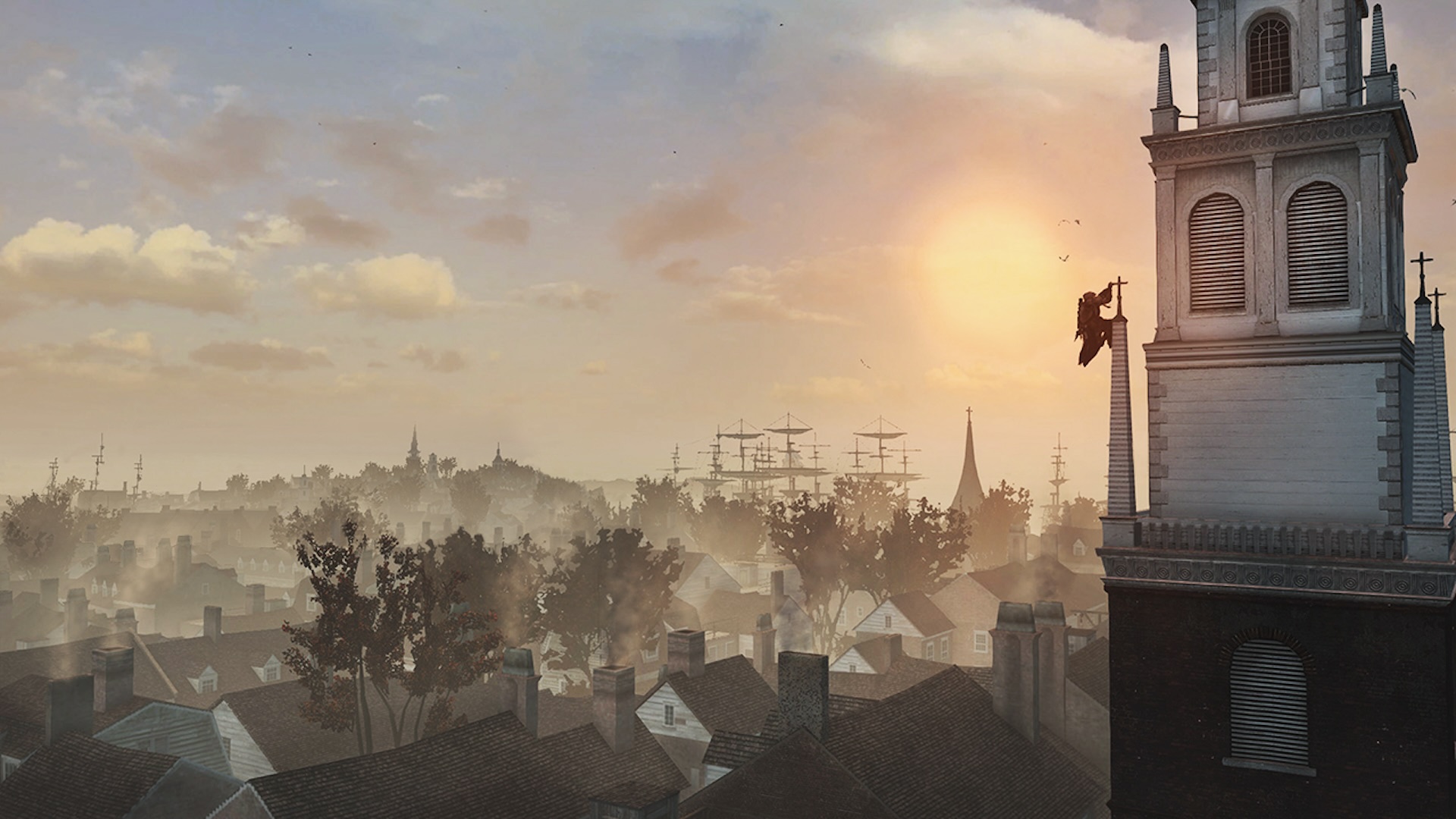 “Challenging yourself to do something no one has ever seen before that’s driven by creativity," a current developer told The Logic, adding that as Ubisoft Montreal’s star has dimmed, it’s become harder to attract the best people. Photo: Ubisoft | Handout

The Big Read
The strange, sad story of Ubisoft’s Sad Room
Ubisoft Montreal, once the jewel in the gaming giant’s crown, is struggling. Sources say talent dilution and retention are partly to blame. And then there’s the Sad Room.
The Sad Room, which is formally known as Interprojet in Montreal, isn’t a punishment, sources say, but rather a place of transition and uncertainty. Photo: Illustration by Paul Kim for The Logic
The Sad Room, which is formally known as Interprojet in Montreal, isn’t a punishment, sources say, but rather a place of transition and uncertainty. Photo: Illustration by Paul Kim for The Logic
At Ubisoft Montreal there is an office known by some as the Sad Room. The Sad Room is a limbo, of sorts, where the company puts people who have finished work on one project but aren’t yet needed on another. Some employees linger in the Sad Room for just days, some for months. Some only leave when they quit or are fired.
While in the Sad Room, employees don’t have specific tasks. They may spend their time training or looking for other roles within the company. Some, sources say, secretly spend their time in the Sad Room watching movies and surfing the web. Some employees are quickly assigned to new projects; others languish for months before finally being shown the door.
Talking Points
- Ubisoft’s games, including those made by its star Montreal studio, are struggling. Sources told The Logic that talent retention, dilution and the fallout from a toxic workplace scandal are to blame.
- Ubisoft has struggled to create a big-budget hit in recent years as the output of its Montreal office, the largest game development studio in the world, has waned
Those in the Sad Room may be coming off a commercial hit, a flop or a project that got cancelled before release. The Sad Room, which is formally known as Interprojet in Montreal and as XP at Ubisoft Toronto, isn’t a punishment, sources say, but rather a place of transition and uncertainty.
Transition and uncertainty are common themes at Ubisoft these days. The French publisher, a pillar of Canadian game development since 1997, is having a rough time.
In its most recent financial results, Ubisoft said first-half net bookings were down 22 per cent year-on-year, with both Star Wars: Outlaws and XDefiant falling short of commercial expectations. In a statement released alongside the financial results, CEO Yves Guillemot said that work was continuing to “deeply transform” the company to “restore the level of creativity and innovation that built Ubisoft’s success.”
Ubisoft has publicly cancelled nine projects since 2022, while major releases like Mario + Rabbids: Sparks of Hope and Just Dance 2023 were commercial disappointments. Less than a year ago, the company’s share price was trading over 30 euros; these days it’s less than half that. In October, reports surfaced that Ubisoft’s founders were talking with Chinese tech giant Tencent about taking the company private, prompting the publisher to release a statement saying it “regularly reviews all its strategic options.”
Related Articles


Ubisoft is not the only games company struggling. As hardware has become more powerful and games have become bigger and more complex, the size of the teams and budgets needed to make blockbuster titles has ballooned. Those outlays made sense when games were a commercial success. But, in recent years, Ubisoft’s output, including that of its Montreal studio, has faltered.
The Logic spoke to three veteran developers who have worked in leadership positions at Ubisoft in Montreal and Toronto, including one current employee in Montreal. They all pointed to three major issues at the company. As Ubisoft has ballooned in size, they said, talent which was once concentrated in small teams, has become diluted. The company has also struggled to retain key talent, and, in recent years, it has been rocked by a toxic workplace scandal that resulted in the departure of several senior executives. Ubisoft spokesperson Antoine Leduc-Labelle declined to comment but claimed The Logic’s reporting was based on “inaccurate information and speculation.”
Ubisoft might be headquartered in France, but the Montreal studio is arguably its beating heart. It has created some of the company’s biggest franchises, including Assassin’s Creed and Tom Clancy’s Splinter Cell, and produced landmark iterations of others like Prince of Persia and Far Cry.
Ubisoft Montreal touts itself as the largest game development studio in the world, reaching a headcount of more than 4,000 people during the pandemic. But even a group that size isn’t big enough to produce the kind of games for which Ubisoft is known.
“Ubisoft has a particular way of working which I think is foreign to most game developers,” said a former developer at Ubisoft Montreal. “It’s very process heavy, very production heavy. The flipside is they know how to massively parallelize development in a way that other studios don’t.” Or, simply put, Ubisoft does a good job of splitting up development tasks for teams around the world and then bringing them all together into a final product.
Ubisoft has offices in dozens of countries, seven in Canada alone, which allows one studio to lead a project with numerous others in supporting roles. Star Wars: Outlaws, for example, was led by Ubisoft’s Massive Entertainment in Sweden, with support from teams in Romania, China, Italy, Canada, France, Finland, Spain, Germany and Ukraine.
To help oversee these sprawling projects, Ubisoft also has its editorial team. This group of veteran developers provides high-level feedback to each of the publisher’s projects and, in some cases, mandates changes to give the games the best chance for success in the market.
The company’s expertise with large development teams and the editorial team’s influence proved particularly beneficial a couple decades ago, when demand took off for narratively rich titles with vast environments to explore and plenty of side quests to keep players busy for hours on end.
As a former Ubisoft Toronto developer explained, the company’s ability to split up development duties between disparate teams made it uniquely well-positioned to supersize games and keep people playing for longer.
Assassin’s Creed II is one example of how that worked. The sequel was originally intended to be developed in 20 months with no major changes to the gameplay, just a new setting and story campaign to get it done and out the door. But then major competitor Take-Two Interactive launched Grand Theft Auto IV to immense acclaim, and suddenly the corporate directive changed. “Overnight, they were like, ‘You have to make something competitive with Grand Theft Auto IV,'” the Ubisoft Montreal veteran said. “Our response was to ask if we get more time, and they said, ‘No, but you can have infinite money.’”
Released in 2007, Assassin’s Creed lists 883 people in the credits, according to game industry database MobyGames. Assassin’s Creed II, released two years later, has 1,366. Assassin’s Creed II hit it big, and the scale of Ubisoft’s tentpole blockbusters has only continued growing. 2020’s Assassin’s Creed: Valhalla has 5,714 people in the credits. This year’s Star Wars: Outlaws lists 6,592 people. “If a problem could be solved by adding more people to it, that’s how they would solve it,” the Toronto veteran claimed.
Big credits cost big money. As of Sept. 30, Ubisoft had almost 18,700 employees, and that’s after aggressive cuts that trimmed headcount by more than 2,000 people in the last two years. Electronic Arts and Take-Two, two of its biggest competitors, have about 13,700 and 12,400, respectively. Despite having a significantly larger workforce, Ubisoft’s full-year revenues of €2.3 billion (US$2.49 billion) pale in comparison to EA’s US$7.56 billion, or Take-Two’s US$5.35 billion.
To support the scope of such productions, Ubisoft has been busy setting up new studios in markets with game development tax incentives, lower-cost workforces or direct government investment. Quebec has a multimedia production tax credit for 37.5 per cent for labour costs while Ontario has its own tax credit that goes up to 40 per cent for qualifying productions.
For most of its history, Ubisoft Montreal was a hit factory. Between 2002 and 2009, the studio was lead developer on Tom Clancy’s Splinter Cell, Tom Clancy’s Splinter Cell: Chaos Theory, Prince of Persia: The Sands of Time, Assassin’s Creed, Tom Clancy’s Rainbow Six: Vegas, Far Cry 2 and Assassin’s Creed II, all of which were huge commercial and critical successes.
Buoyed by hit after hit, Ubisoft expanded its studio system around the world, with Montreal veterans often dispatched to take up key positions. New studios in Quebec City, Saguenay, Singapore, Sherbrooke, Toronto and Winnipeg were all started with Ubisoft Montreal veterans in key positions.
Several of those studios have since taken the lead on major Ubisoft projects, with Ubisoft Montreal in some cases serving a supporting role on franchises it once led, like Far Cry and Watch Dogs.
A current Ubisoft developer told The Logic this hurt the quality of output from the Montreal studio, which in turn made it harder to attract strong talent to ramp up the new studios and replenish the ranks in Montreal.
“I think one of the big drivers of working at Ubisoft in the past was that you’re going to be doing the best artistic work,” the current developer said. “Challenging yourself to do something no one has ever seen before that’s driven by creativity.” But, he added, as Ubisoft Montreal’s star has dimmed, it’s become harder to attract the best people.
Dilution of talent has been exacerbated by the quality of the new people being hired, the Toronto and Montreal veterans said. While AAA publishers often insist on candidates having several years of experience working on blockbuster games, the Toronto veteran said Ubisoft was more willing to take on students and build them up into AAA-quality developers over a couple years.
The Montreal veteran put that tendency in a less positive light. “There were programmers hired who literally couldn’t program, with tasks that they literally never completed and had to be taken over by other people,” he claimed. “I was of the opinion toward the end of Assassin’s Creed II that they could have lost maybe 400 employees and development times would have sped up.”
“They overcorrected, and they were forced to overcorrect because of what they had not dealt with.”
As talent at Ubisoft became more diluted, keeping hold of star employees also became more difficult. The current Ubisoft employee claimed the company had been nicknamed “Ubi University,” a place for new talent to spend a few years before finding a better-paid job elsewhere. All three developers said pay at Ubisoft skews lower than competitors, while two noted a lack of opportunities for advancement. “One of the big jokes for a lot of us was that it was easier to leave Ubisoft and come back to a promotion than it was to get promoted internally,” the Montreal veteran said.
Those who wanted to leave also had more options for local employment thanks to a thriving development scene created in part by Ubisoft Montreal’s success. The game development industry in Quebec has grown tenfold since 2002, according to data from Investissement Québec, with competing publishers and indies alike frequently building new studios around former Ubisoft Montreal talent.
While the stars were being wooed away by new studio offers internally and externally, the Montreal veteran said the company’s reliance on the Sad Room was driving away a chunk of the rank and file. “I think that’s what caused a lot of turnover at Ubisoft,” the Montreal veteran said. “They generally expect that between projects you just get reassigned, and you don’t have agency in that.”
The current employee said it wasn’t uncommon for people to have joined Ubisoft to work on a franchise like Assassin’s Creed, only to find themselves later assigned to a very different project like Just Dance.
With the advent of working from home during the pandemic, talented developers based in Montreal and elsewhere in Canada could suddenly work remotely for companies based anywhere in the world. The Toronto veteran said Ubisoft did raise its salaries as a result, but not enough to fully address the problem. Ubisoft declined to comment.
The timing of the pandemic was particularly difficult for Ubisoft. The company’s various studios were in the home stretch of development on a packed slate of major releases including Assassin’s Creed: Valhalla, Watch Dogs: Legion and Immortals: Fenyx Rising, racing to have them all ready for the November 2020 debuts of new consoles from Sony and Microsoft. As the company was busy navigating a global catastrophe, it suddenly found itself facing a second major crisis, this one of its own making.
In June of 2020, numerous past and present employees took to social media to accuse Ubisoft of habitually ignoring misconduct, including allegations of physical assault and rape. In the weeks that followed, a stream of key Ubisoft employees at various studios either left the company, resigned or were placed on leave, culminating with a series of Libération reports that detailed a culture of impunity at the company and laid the blame for it at the feet of Ubisoft’s chief creative officer, Serge Hascoët.
The accusations against Hascoët spanned a range of misogynistic, homophobic and dangerous behaviour, from holding company events at strip clubs to giving baked goods containing marijuana to colleagues without warning them of the drug. In February, Solidaires Informatique, a French trade union, announced police had chosen to prosecute Hascoët and two other former executives for sexual harassment, with a trial set for March 2025. Hascoët has denied wrongdoing.
Hascoët resigned in the wake of the reporting. Cécile Cornet, Ubisoft’s global head of HR, and Yannis Mallat, the managing director of Ubisoft’s Canadian studios, also stepped down. A number of senior developers also departed, including multiple members of the editorial team that had creative oversight over the company’s projects. Other developers left rather than continue being associated with Ubisoft in light of the scandal.
The current Ubisoft employee said the departures collectively had “a hugely detrimental effect” on the company. He believes the company went overboard in cleaning house, getting rid of not just criminal abusers but also those whose behaviour fell somewhere between holding people to high standards and outright bullying.
“They overcorrected, and they were forced to overcorrect because of what they had not dealt with,” he claimed. “If they had dealt with the people who were severe problems the minute they were aware of that, then they could have kept the passionate weirdos.”
He saw the departure of Mallat as particularly meaningful, and argued Ubisoft Montreal hasn’t been the same since.
“There were programmers hired who literally couldn’t program, with tasks that they literally never completed.”
“The team of producers under him was very cutthroat,” he said. “It felt like a team of wolves, but they made those successful games. Something about him and the team he created, he made some kind of magic that’s gone now. And in their absence, nothing has emerged in their place.”
The Toronto developer pointed to a similar problem with Hascoët’s departure, saying he was an important liaison between creative teams and executive leadership with strong opinions on what games should be. “His opinion was very important, and that was just gone,” he said.
The Toronto developer saw Hascoët, who had been with Ubisoft since the 1980s, as a strong voice in the company whose opinion carried significant weight with Guillemot, who is not just CEO of the company but also its co-founder.
The other developers spoke about a shift in how the editorial team dealt with the teams underneath them, and whether their decisions were guided by creativity and passion or market research and money.
The Montreal veteran said that when working on Assassin’s Creed, the editorial team’s feedback was seen more as a suggestion than a mandate. If the developers pushed back to keep their original vision, the editorial team would be more inclined to accept their judgement, with the understanding that consequences for any resulting failure would fall more heavily on the people behind that decision.
That had changed by the pandemic, though the Montreal veteran was unsure if the editorial team was growing more conservative in the face of escalating development costs or project leaders were less willing to fight for their decisions. Either way, he claimed, Ubisoft now seems unwilling to give people “the space to actually come up with something great.”
The current employee said that as Ubisoft Montreal’s stars have been shuffled elsewhere or left entirely, the company’s appetite for taking risks has largely gone with them. “There was a feeling early on at Ubisoft Montreal that we were on an adventure to make something that no one had made before. And we were all very proud to be doing that,” he said. “I think that feeling has dissipated.”



Loading...
Thanks for sharing!
You have shared 5 articles this month and reached the maximum amount of shares available.
CloseThis account has reached its share limit.
If you would like to purchase a sharing license please contact The Logic support at [email protected].
CloseGift the full article!
You have gifted 0 article(s) this month and have 5 remaining.
Recipients will be able to read the full text of the article after submitting their email address. They will not have access to other articles or subscriber benefits.
Photo: Illustration by Paul Kim for The Logic
Ubisoft’s office in Montreal in Sept. 2021. At the peak of the pandemic, the studio employed more than 4,000 people in the city.
Ubisoft Montreal was lead developer on the first two Assassin’s Creed games, both of which were huge critical and commercial successes.
In its most recent financial results, Ubisoft said first-half net bookings were down 22 per cent year-on-year. Star Wars: Outlaws was one of the major releases that fell short of commercial expectations.
“Challenging yourself to do something no one has ever seen before that’s driven by creativity," a current developer told The Logic, adding that as Ubisoft Montreal’s star has dimmed, it’s become harder to attract the best people.
Most Popular This Week




In-depth, agenda-setting reporting
Great journalism delivered straight to your inbox.
News
Canada faces a satellite-launch crunch as SpaceX retires its workhorse rocket
Briefing
Cohere says it caught an Alibaba model trying to send data to a server in China
Feds and First Nations to work on sharing resource revenue, with a sovereign wealth fund one option
Zafin buys U.S. fintech Naehas in nine-figure deal
Best business newsletter in Canada
Get up to speed in minutes with insights and analysis on the most important stories of the day, every weekday.
Exclusive events
See the bigger picture with reporters and industry experts in subscriber-exclusive events.
Membership in The Logic Council
Membership provides access to our popular Slack channel, participation in subscriber surveys and invitations to exclusive events with our journalists and special guests.