Artisan Bio wasn’t meant to be a Canadian company. When CEO Ryan Gill launched the cell-engineering firm in 2019, he imagined his chief development officer, Nick Timmins, would soon relocate from his Toronto home base to the firm’s headquarters in Louisville, Colo. Instead, Timmins convinced Gill to establish a permanent office in Canada, where they could hire from the deep local pool of health and engineering talent.
Less than three years later, Artisan is questioning its decision to put down roots in Toronto. While the talent was as Timmins promised—the company now has 15 employees in the city, many of them working on the firm’s custom engineered cells to be used in therapeutics, and plans to double its staff—Artisan has outgrown its lab space, and hasn’t been able to find more. It’s one of dozens of biotech companies facing this problem, and the possibility of their growth in Canada being stunted. With nowhere to expand in Toronto, Artisan is now considering scaling up its operations in the U.S. after all.
“There’s a significant cap on growth potential in Toronto,” Timmins said in an interview with The Logic. “There’s no lab space to put people or equipment, which means there’s just work you can’t get done here.”
Talking Point
Lack of available lab space in Toronto and other major Canadian cities is hobbling a biotech sector otherwise enjoying a turn in the spotlight. With more than three million square feet of unmet demand for the specialized infrastructure in the Toronto area alone, real estate experts estimate that leaves more than 130 companies in the lurch, with some planning moves to the U.S.
Laboratories—whether wet, where chemicals, drugs and biological matter can be tested and analyzed; or dry, with a focus on computers, electronics and other such instruments—can’t operate just anywhere. According to Daniel Lacey, practice lead for life sciences at real estate services firm CBRE in Toronto, they need specialized infrastructure. They need much more electricity to power lab equipment, and backup generators to protect samples in the event of a power outage. They need powerful ventilation systems that cycle air at about double the rate of a standard office building. There is the cost of additional plumbing, and planning permits to consider. “The costs are huge,” he said. “They’re more than any other real estate asset.”
While life-science hubs like Montreal, Vancouver and Kitchener-Waterloo are also pinched, Lacey said the Greater Toronto Area’s shortfall is the most severe in the country, with more than three million square feet of unmet need for biomanufacturing and R&D lab space. He estimates that leaves about 130 companies in the region in the lurch.
Lacey said real estate investors in Canada have long shied away from the asset class because of its high risk. In Toronto, real estate investors have subsisted on fervent demand for traditional offices—vacancy rates for which reached a meager 1.1 per cent before the pandemic—with little incentive to veer into riskier spaces.
In the U.S., though, waning interest in office real estate has fuelled investments in labs. The Boston metropolitan area, already one of the biggest biotech hubs in the world, has 62 million square feet of life-science space proposed or under construction, according to a February report by Colliers. If it all gets built, it will triple the region’s current inventory. In the Bay Area, there’s 17.7 million square feet of life-science infrastructure proposed or being built, adding to the existing 34 million square feet. In the Greater Golden Horseshoe—the cluster of municipalities surrounding and including Toronto—there’s about 4.3 million square feet of existing lab inventory, said Colliers senior sales representative Richard Shouldice, with just over two million square feet of new lab space planned or under construction.
The tight market is especially challenging for scaling companies that have raised some money but aren’t associated with research hospitals or universities, said Alex Muggah, director of Synapse, a life-science industry coalition focused on supporting the sector in and around Hamilton, Ont. “Once you have achieved a certain size and scale of capital raise, your company is able to build out its own facility,” he said. “But most life-science companies in Canada are startups.” Muggah said venture capital investors don’t have the appetite to wait 18 to 24 months for a company they’ve just funded to build a lab space. “They want to be hitting performance milestones in 18 months, not to start working.”
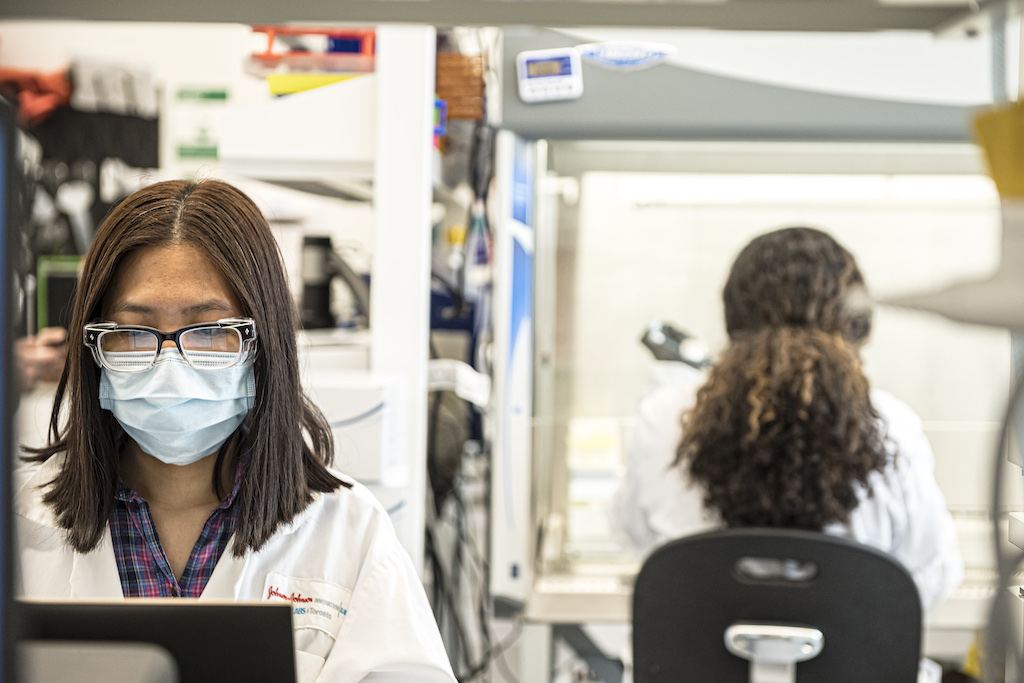
Scientists work in JLabs in the MaRS Discovery District in Toronto.
Lucas Siow, the founder of drug-discovery startup ProteinQure, estimated it would cost $2.6 million to rent an existing lab in Boston for five years, compared to $4 million in Toronto, after factoring in the cost of retrofitting the lab themselves. “For all of our investors, myself included, the price isn’t the biggest thing,” said Siow, whose company designs protein-based drugs out of its space at MaRS for now. “The challenge here for us is, even if we can get 1,000 square feet, there’s no guaranteed place to grow, so it’s hard to commit to building here. I suspect there will be change, but we’re talking three, five years out from now and for us, that’s too late.”
The lack of space could hobble a biotech sector otherwise enjoying a turn in the spotlight. Since the start of the COVID-19 pandemic, supply-chain crunches and an interest in drug development have fuelled public and private investment in homegrown biomanufacturing. In March, the Ontario government announced a strategy to grow the province’s life-science sector by investing in health technologies, medicines and vaccine manufacturing. It aims to increase the sector’s workforce by 25 per cent by 2030. And the federal government announced $2.2 billion in 2021 for a national biomanufacturing and life-science strategy.
Recognizing the surge in demand, Intellijoint Surgical founder Armen Bakirtzian founded the Medical Innovation Xchange in Kitchener, Ont. The hub serves early-stage, scaling companies that are often left with few options after leaving incubator programs at the region’s universities. “When those companies graduate from Velocity Labs, where are they supposed to go? There’s no other lab space,” said Bakirtzian. “Given the struggle with access to capital, and with founders knowing that generally their customers are not going to be in Canada, and then losing access to a free lab, that’s the triple threat that encourages people to leave.”
Lacey said he’s seeing more investors explore building labs as demand for conventional office space eases amid the shift to remote and hybrid work. Quebec is experiencing the most activity in the country. California-based life-science real estate giant Alexandria is building more than 5,000 square feet of lab space in Laval’s Biotech City. Local development firm HarveyCorp is adding 200,000 square feet to its 300,000-square-foot life-science inventory in the province.
Harvey began dabbling in lab conversions five years ago, when a friend of Hugues Harvey, the firm’s president, needed a place for his biotech company, NuChem, to expand. Harvey conceded that converting buildings into labs is expensive—the company typically buys properties for $100 to $200 per square foot and retrofitting them for labs then costs anywhere from $300 to $800 per square foot. But he said the demand has ensured the investments pay off. “If one of my tenants leaves, I’ll have someone to rent the space in one month,” said Harvey. He now gets calls every week from investors with questions about getting into the space or partnering with his firm on deals. “Everybody is looking at life-science [real estate] right now, but not many are stepping in.”
Toronto-based Oxford Properties made its first investment in Canadian lab real estate in 2021, four years after its first foray into the market with an investment in Boston, said Randy Hoffman, the company’s senior vice-president for Canada. Hoffman said he knew there was potential in Canada because he’d seen firms leaving the country to access space in the U.S. “We’ve seen the brain drain when we’re in Boston, and we hear from Canadians who had to go there, because it was the only ecosystem that existed,” he said. “We feel like that’s a shame. As a proud Canadian, that’s a loss for us, that our best and brightest researchers and doctors have to leave to find success. So we’re taking the learnings and we’re trying to bring them to this side of the border.”
Hoffman said Oxford’s total North American life-science portfolio is worth US$6 billion across 10 markets—including Vancouver, Toronto, Montreal and Quebec City—with the goal to grow its Canadian holdings alone to US$5 billion. (He wouldn’t say what they’re currently worth.)
With investors like Oxford just starting to consider lab inventory in Canada, Timmins said it’s still been a hard sell internally to spend the company’s capital on lab retrofits in Toronto. “It’s a question of where do you want to spend your money. If you look at the real estate pricing and availability, Louisville, Colo., just south of Boulder, is substantially cheaper [than Toronto],” he said. “Where I’ve been able to make a compelling argument is with respect to the talent that’s based in Toronto. By and large, people want to stay in Canada and aren’t keen on relocating to the U.S.”
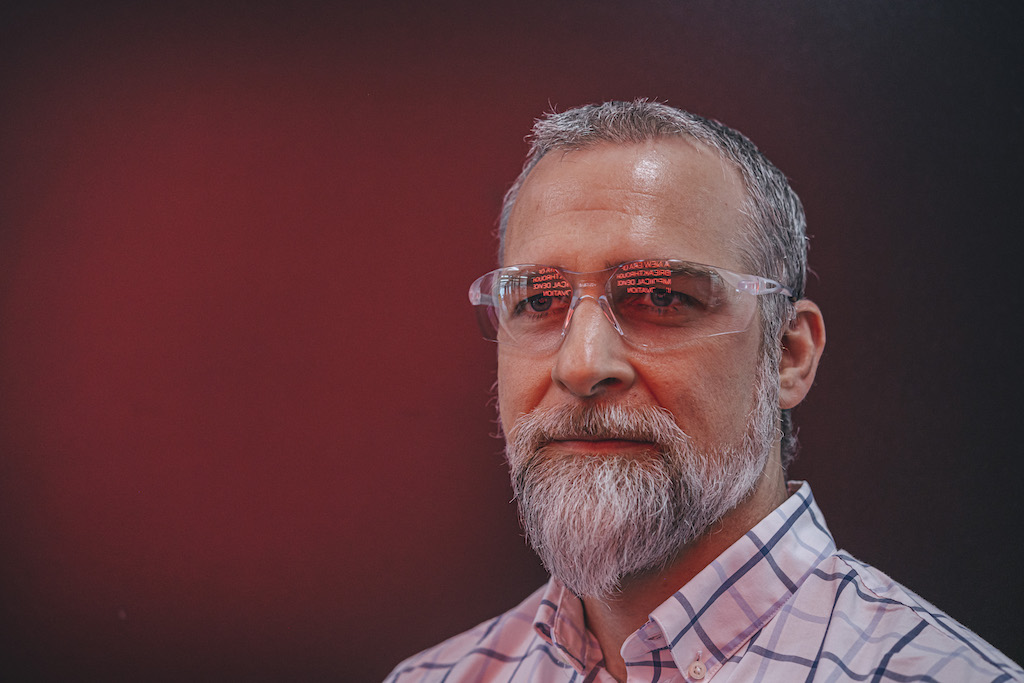
Nick Timmins, chief development officer of Artisan Bio, at the company’s location at JLabs in the MaRS Discovery District.
In the meantime, companies in the GTA have few options. The McMaster Innovation Park in Hamilton has begun a “mega hub” expansion that will host 1.3 million square feet of new labs.
“McMaster Innovation Park is the only real game in town right now,” said Lacey. “There are projects planned in Toronto, but there’s nothing under construction.”
The MIP is described as a hub for “innovation, commercialization and entrepreneurship,” a description like the vision for Toronto’s MaRS Discovery District, where Artisan rents space in JLabs. Having launched its own expansion in the midst of the 2008 financial crisis, MaRS struggled for years to attract tenants, ultimately leasing much of its space to corporates, like Microsoft, RBC and Samsung. The building has been full since 2016, with all of its original lab space leased to life-science tenants and more being built.
Companies that need space now can’t wait for the MIP mega hub, let alone labs closer to downtown still at the approval and planning stages. The first of MIP’s new lab inventory won’t be available until 2024 at the earliest, a spokesperson for the project told The Logic. “We don’t have that kind of time,” said Timmins. As a stopgap, Artisan has leased some extra lab space near Toronto Pearson Airport, about a 25-kilometre drive from its downtown facility. But Timmins said it’s not a permanent solution. “It’s still not big enough to accommodate our growth,” he said. “It’s certainly not what we’d choose if we had a choice.”