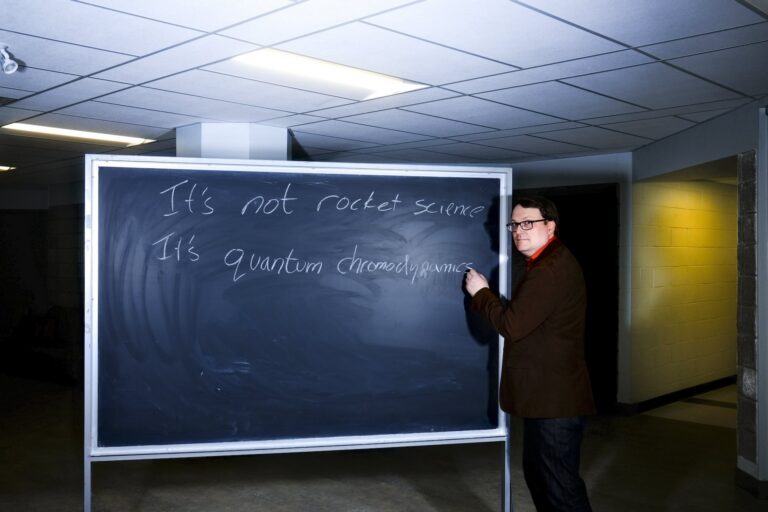
OTTAWA — Gobbling their way through thousands of litres of dairy waste each week, the yeast in Omid McDonald’s tanks are accustomed to helping make an unusual kind of booze. If all goes according to plan, much the same fungi will be making fuel for vehicles in Michigan by early 2025.
Skip to content

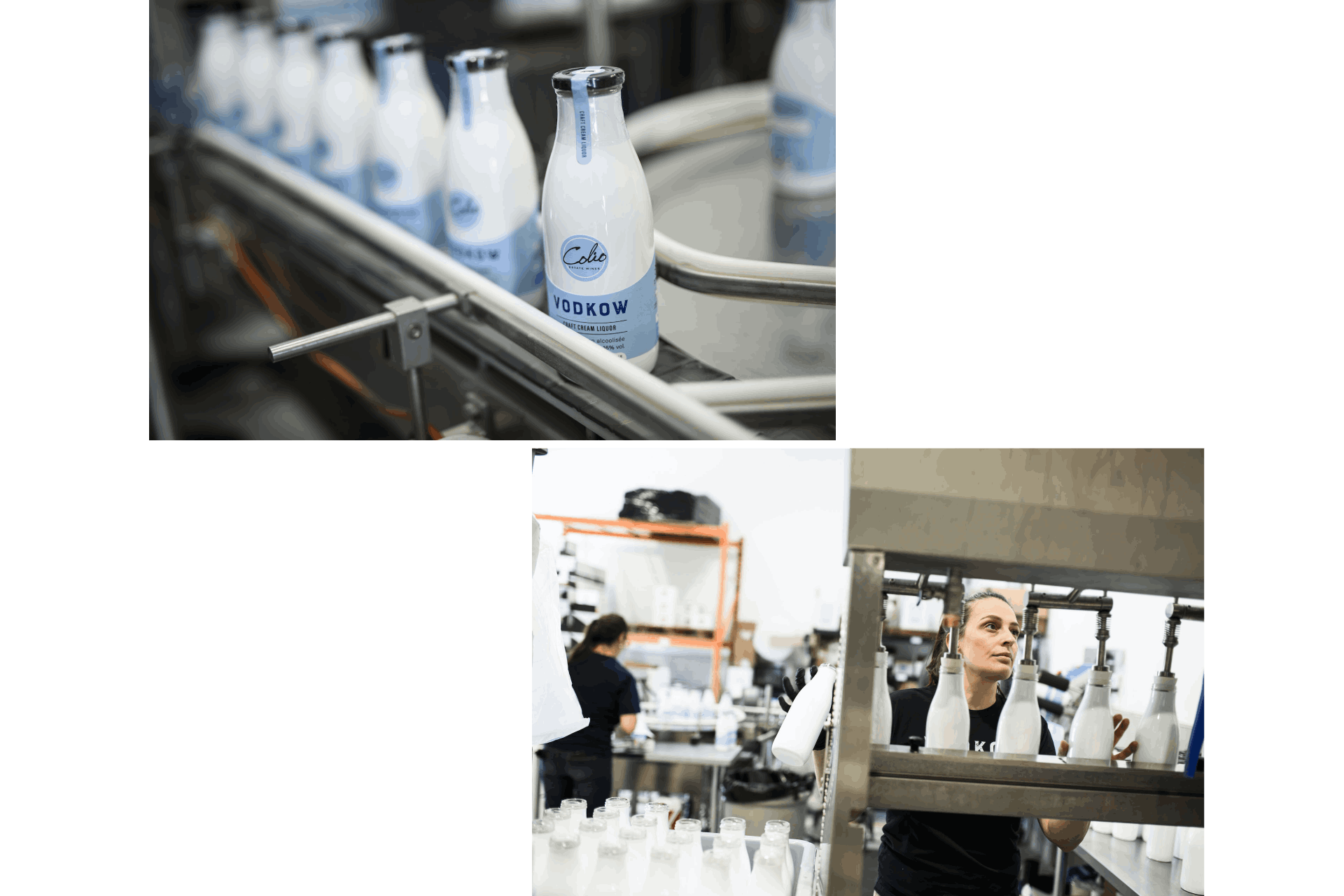 Left photo: A Vodkow cream liqueur produced as a white label for Colio Estate Wines is ready to be packaged for shipment at the production room at Dairy Distillery. Right: Christina Alves fills bottles at a hopper in the production room. Photo: Justin Tang for The Logic
 Distiller Sujith Naveen, right, and QA manager Grace Damsbaek mix a milk protein powder as they make a vanilla cream liqueur at Dairy Distillery. Photo: Justin Tang for The Logic
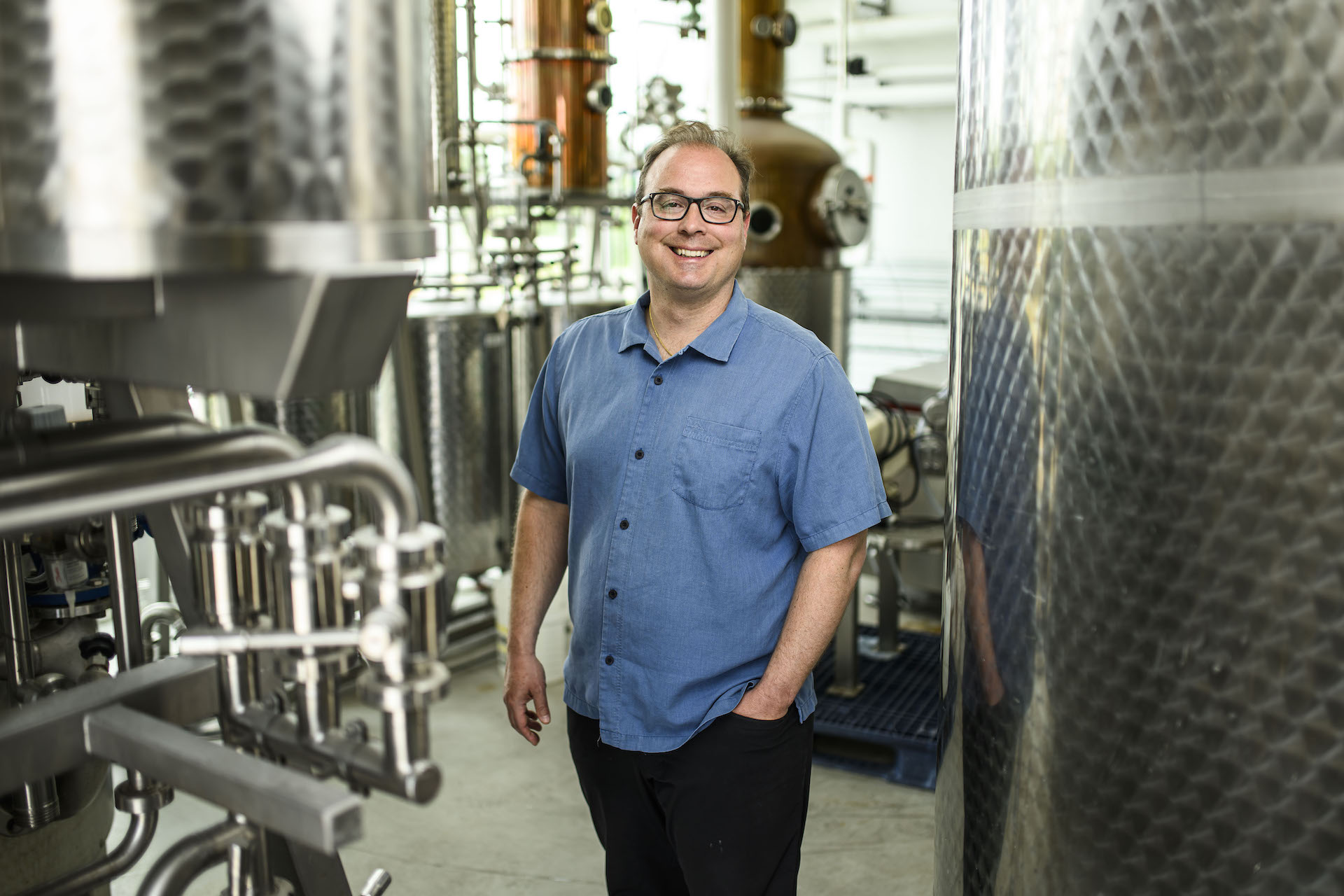 Omid McDonald is shown in the distillery. Photo: Justin Tang for The Logic
The Big Read
From milk to vodka to fuel: Ontario’s Dairy Distillery to make ethanol in Michigan
Inflation Reduction Act incentives lure company that got only mild interest from Canadian dairy producers
Omid McDonald, CEO and founder of Dairy Distillery, is shown behind the Vodkow bar at the distillery in Almonte, Ont., in June 2023. Photo: Justin Tang for The Logic
OTTAWA — Gobbling their way through thousands of litres of dairy waste each week, the yeast in Omid McDonald’s tanks are accustomed to helping make an unusual kind of booze. If all goes according to plan, much the same fungi will be making fuel for vehicles in Michigan by early 2025.
The former software entrepreneur distills vodka from a byproduct of butter, milk and cheese production, in a 20-person operation in Almonte, Ont., just west of Ottawa. His Dairy Distillery’s flagship Vodkow product, and sweet creamy drinks spiked with it, are in liquor stores across much of the country.
Talking Points
- Ontario’s Dairy Distillery has been making vodka from a milk byproduct for about five years in the small town of Almonte, near Ottawa
- It’s moving into making fuel ethanol using substantially the same process—in Michigan, thanks to the Inflation Reduction Act
The ethyl alcohol people drink and the ethyl alcohol that’s blended into gasoline—ethanol—are the same chemical. Once you have yeast that can turn lactose into alcohol, you can do more than one thing with it. Typical yeast won’t work, but Dairy Distillery’s will, thanks to research done at the University of Ottawa.
Now McDonald’s distillery has a deal with the Michigan Milk Producers Association, one of the larger dairy co-ops in the United States, to open an ethanol plant attached to the association’s processing facility in Constantine, Mich., by 2025.
The U.S. Inflation Reduction Act is why Dairy Distillery’s first one is south of the border.
“All dairies want to do what’s right and improve their environmental footprint. But all dairies have to do it in a profitable way or else they can’t survive,” McDonald said. “That’s where government comes in, [to] change the economics to make it work.”
The Michigan project, if it succeeds, will change the balance of Dairy Distillery’s business significantly. For the moment, its primary product is its vodka.
Related Articles

McDonald was drawn to spirit-making because of the potential to build something that would last. “The ultimate value of what we’re building here is whether we can build Vodkow into a brand that, 100 years from now, people will still know,” he said. “I’ve built three software companies and I wanted something a bit more permanent.”
He thought of making alcohol from milk when a member of his extended family, a dairy farmer, talked about dumping skim milk because there was no buyer for it.
People have been making alcoholic drinks out of milk forever, McDonald points out: “Genghis Khan would drink fermented mare’s milk at the end of the day.”
Genghis didn’t get it from copper-clad stills within sight of the town water tower in Almonte. You see those right up front at Dairy Distillery, between a curtain wall of windows and the distillery’s three fermentation tanks.
“We originally were going to call this ‘Holy Cow Vodka,’ and there was a church for sale just down the street. So I went to go look at it, and I didn’t buy the church, but I just fell in love with Almonte. And they had this business park here, which had all the right zoning,” McDonald said.
Each Friday, a tanker pulls in with a 30,000-litre load from the Lactalis dairy in Winchester, about as far south of Parliament Hill as Almonte is west of it.
The tanker is full of a fluid called milk permeate, which is what’s left after all the valuable stuff in milk, the butterfat and the protein, has been extracted. It turns out that producers and processors don’t dump all that much milk, but the industry makes a whole lot of milk permeate.
“It’s essentially sugar water—lactose,” McDonald said. “You can use it for a sugar substitute in certain applications, but there’s just so much of it.” A lot of the milk permeate produced in the world becomes animal feed.
At Dairy Distillery, the milk permeate becomes food for the company’s “magic” yeast, the results of a year and a half of laboratory work at the University of Ottawa.
In 2016, McDonald had turned to his alma mater, where biology professor Alexandre Poulain and student Jessica Gaudet tested a dozen types and worked on the best conditions for the winning candidate to ferment in.
“We had some samples from the lab and it wasn’t very tasty, but it was enough to say, ‘OK, let’s build this,’” McDonald said.
A couple of days before the dairy tanker arrives, a small quantity of yeast comes in from a freezer at the university and gets put through a growth cycle. Then the yeast and the milk permeate go into the fermentation tanks. By Monday, the tanks hold a “wine” that’s seven to eight per cent alcohol, ready for the stills.
The tangy smell of yeasty digestion fills the air in the hot distilling room on a sunny day in late spring. The stills boil alcohol out of the mix, concentrating it up to 96 per cent. They’re warm to the touch, like enormous radiators.
Thirty thousand litres of milk permeate produces about 1,500 litres of alcohol, before it’s filtered and watered down to the standard 40 per cent for hard liquor.
The fermentation does leave waste of its own, called stillage. Gaudet, back at the University of Ottawa for a graduate degree, is working on converting it into plant fertilizer.
Behind the distilling room—through a door and mercifully cooler—is a bottling and warehousing facility. The vodka is sold in wide-mouthed bottles imported from Italy, where they’re manufactured mainly for pasta sauces, but which are reminiscent of old-time milk bottles.
The warehouse is newer than the distilling room, the product of a government grant from early in the COVID-19 pandemic when Dairy Distillery switched to making hand sanitizer, another ethanol-based product.
Tucked away to one side is an open office the size of a school classroom for McDonald and other non-production staff. A tasting bar with a couple of tables and a small patio—and a taco truck nearby—offers samples.
Vodkow looks completely clear and it tastes like vodka, not categorically different from the potato- or grain-based standards. A skilled taster might detect a note of dairy, but it doesn’t stand out.
“I find Vodkow doesn’t work well in a vodka soda,” McDonald concedes. “But with the cream liqueurs, it works perfect.”
Dairy Distillery uses only a tiny proportion of the milk permeate from the one dairy processor. So it wasn’t long before McDonald got to thinking about other possibilities.
In 2019, Dairy Distillery hired David Geros from Iogen, an Ottawa-based company that has worked for decades on turning wood and farm wastes into fuel ethanol. Geros spent nearly two years working out how to scale the distillery model up to industrial production, McDonald said.
Dairy Distillery has shopped the idea around to Canadian dairy processors and received interest, but no hard bites.
“Allocating capital projects to a green initiative that’s not going to pay back within two years is very difficult,” he said.
Then, the Michigan Milk Producers Association came knocking. The co-op had built an ultra-filtration plant in Constantine and found itself with a lot of milk permeate on its hands.
“We just said, ‘Look, we’ve got to find a way to continue to add value to our members,’” recalled Joe Diglio, the association’s CEO. “One of the team members made some connections with Dairy Distillery because we thought, ‘Well, geez, you can actually create vodka out of this stuff.’”
The problem: The Constantine plant’s milk permeate would yield about 47 million bottles of vodka a year, a great lake of liquor.
“Let’s look at the ethanol application,” McDonald suggested.
The U.S. dairy industry has set a collective goal of carbon neutrality by 2050. Major dairy buyers like Nestlé and Unilever want to sell consumers on lower-carbon products, Diglio said.
If the environmental value of displacing fossil fuels with milk ethanol is applied to the Constantine plant’s production, it will offset about five per cent of the carbon emissions from the milk handled there, about 14,500 tonnes.
The ethanol plant is a US$41-million project, the costs of which (less US$2.5 million from the state of Michigan) are to be split between the dairy producers and Dairy Distillery.
“What really got us over the hurdle was the incentives that were designated by the Inflation Reduction Act,” Diglio said. The law offers a tax credit of up to a dollar a gallon for clean-fuel production. “It just put this project way over the top.”
Since the big dairy co-op and the little distiller put out the word about their deal, Diglio’s phone has been ringing, with other dairy producers wanting to know more about what they’re up to in Michigan.
“We have four or five other processors that we’re talking to,” said McDonald, including one in Ontario and one in Quebec. “Obviously getting the first one off the ground will make it easier to move forward with others.”
McDonald said he hopes to have another fuel project secured by the end of the year. If everything works as he hopes, Dairy Distillery’s vodka business and its fuel business will be roughly equal parts of the enterprise. While Canada has first crack at the booze, Michigan will get first crack at the carbon-friendlier fuel.
“Canadians are very good at applying propaganda to themselves and thinking, ‘Oh yeah, we’re Canada, of course we’re ahead on the environment.’ The Americans have put their money where their mouth is,” McDonald said.



Loading...
Thanks for sharing!
You have shared 5 articles this month and reached the maximum amount of shares available.
CloseThis account has reached its share limit.
If you would like to purchase a sharing license please contact The Logic support at [email protected].
CloseGift the full article!
You have gifted 0 article(s) this month and have 5 remaining.
Recipients will be able to read the full text of the article after submitting their email address. They will not have access to other articles or subscriber benefits.
Photo: Justin Tang for The Logic
Left photo: A Vodkow cream liqueur produced as a white label for Colio Estate Wines is ready to be packaged for shipment at the production room at Dairy Distillery. Right: Christina Alves fills bottles at a hopper in the production room.
Distiller Sujith Naveen, right, and QA manager Grace Damsbaek mix a milk protein powder as they make a vanilla cream liqueur at Dairy Distillery.
Omid McDonald is shown in the distillery.
Most Popular This Week


In-depth, agenda-setting reporting
Great journalism delivered straight to your inbox.
Commentary
Carmichael: What Finland can teach Canada about sleeping next to an elephant
Briefing
Financing instability is slowing down Ottawa’s housing agency, CEO says
Cleveland-Cliffs CEO says federal lawsuit would be a bad business decision for Canada
BoC shows off its new forecasting model, Prima
Best business newsletter in Canada
Get up to speed in minutes with insights and analysis on the most important stories of the day, every weekday.
Exclusive events
See the bigger picture with reporters and industry experts in subscriber-exclusive events.
Membership in The Logic Council
Membership provides access to our popular Slack channel, participation in subscriber surveys and invitations to exclusive events with our journalists and special guests.