When he was an undergraduate at Laurentian University, Juan Carlos Reyes would tell his professors he intended to retire by his 30s—and he did, thanks in part to an early investment in bitcoin. But now, in his 40s, he’s back to work, in charge of El Salvador’s pioneering regulator for digital assets, part of President Nayib Bukele’s attempt to turn the Central American country into a global crypto powerhouse.
Skip to content
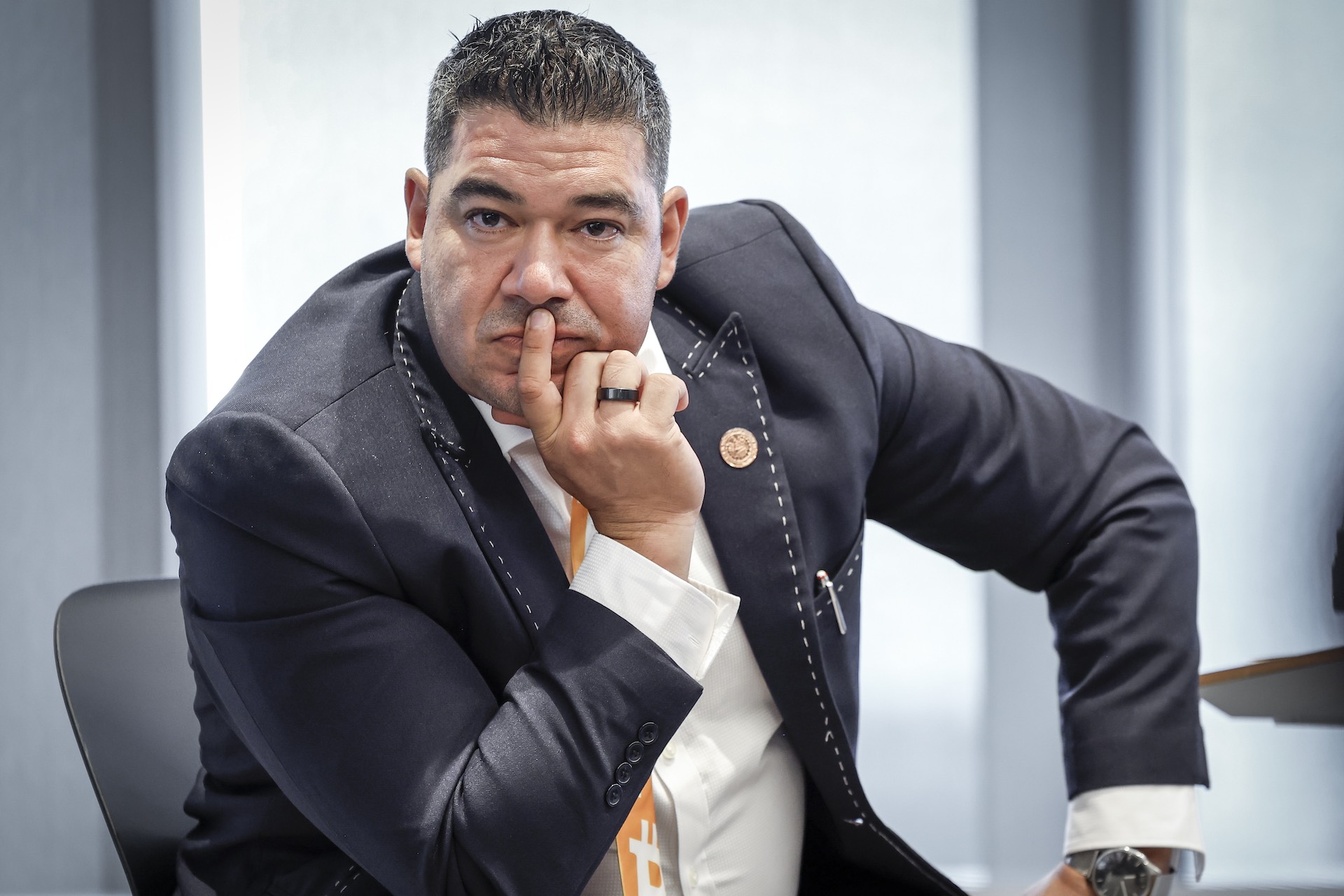
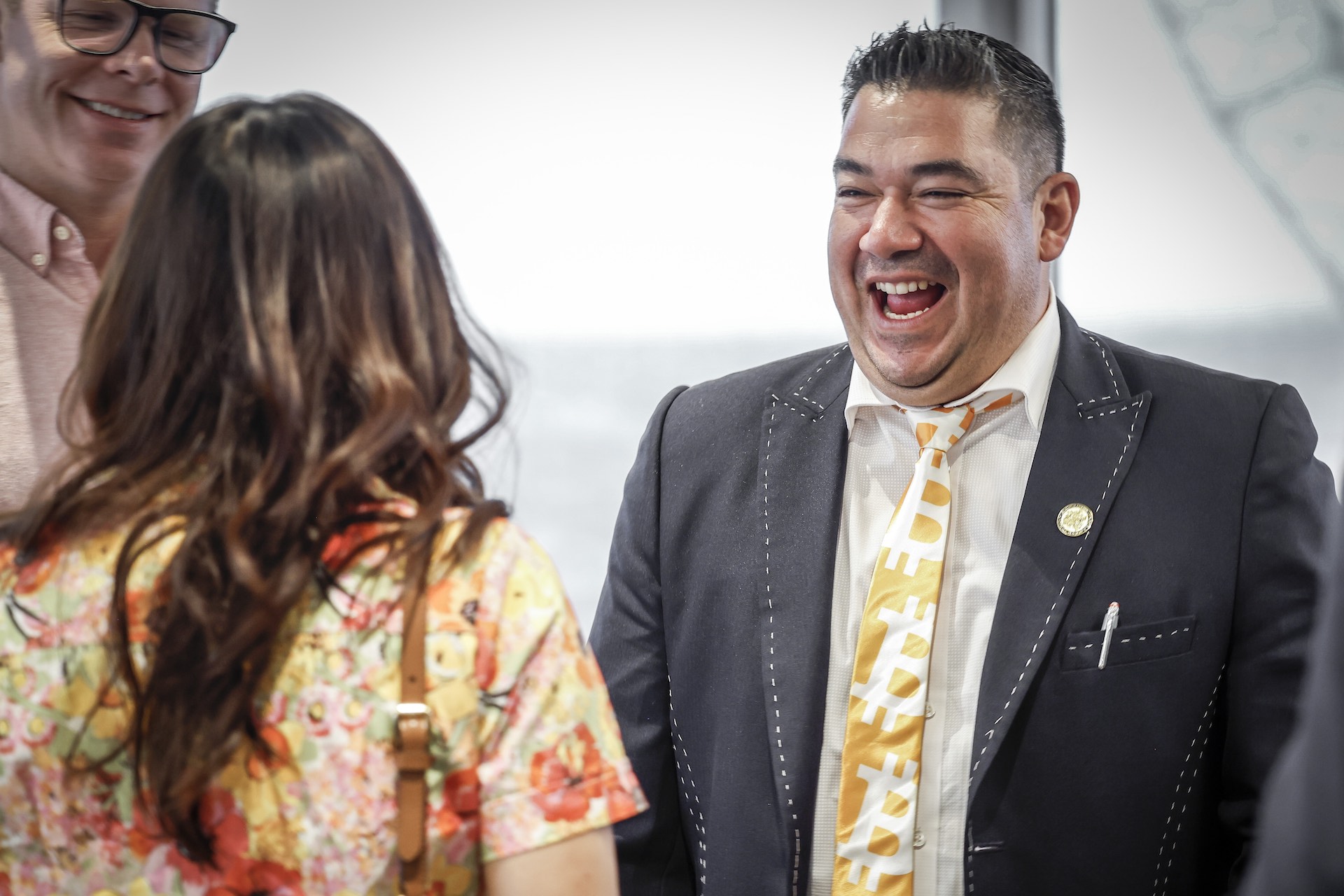 Reyes is a genial evangelist for El Salvador's crypto experiment. Photo: Jeff McIntosh for The Logic
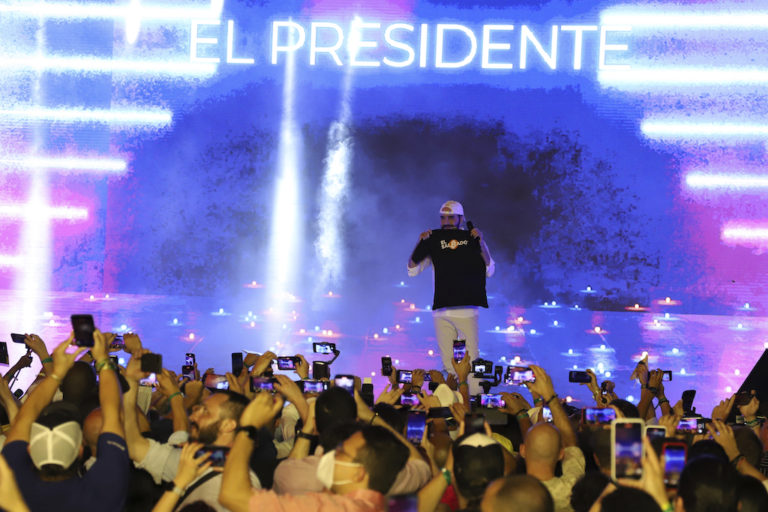
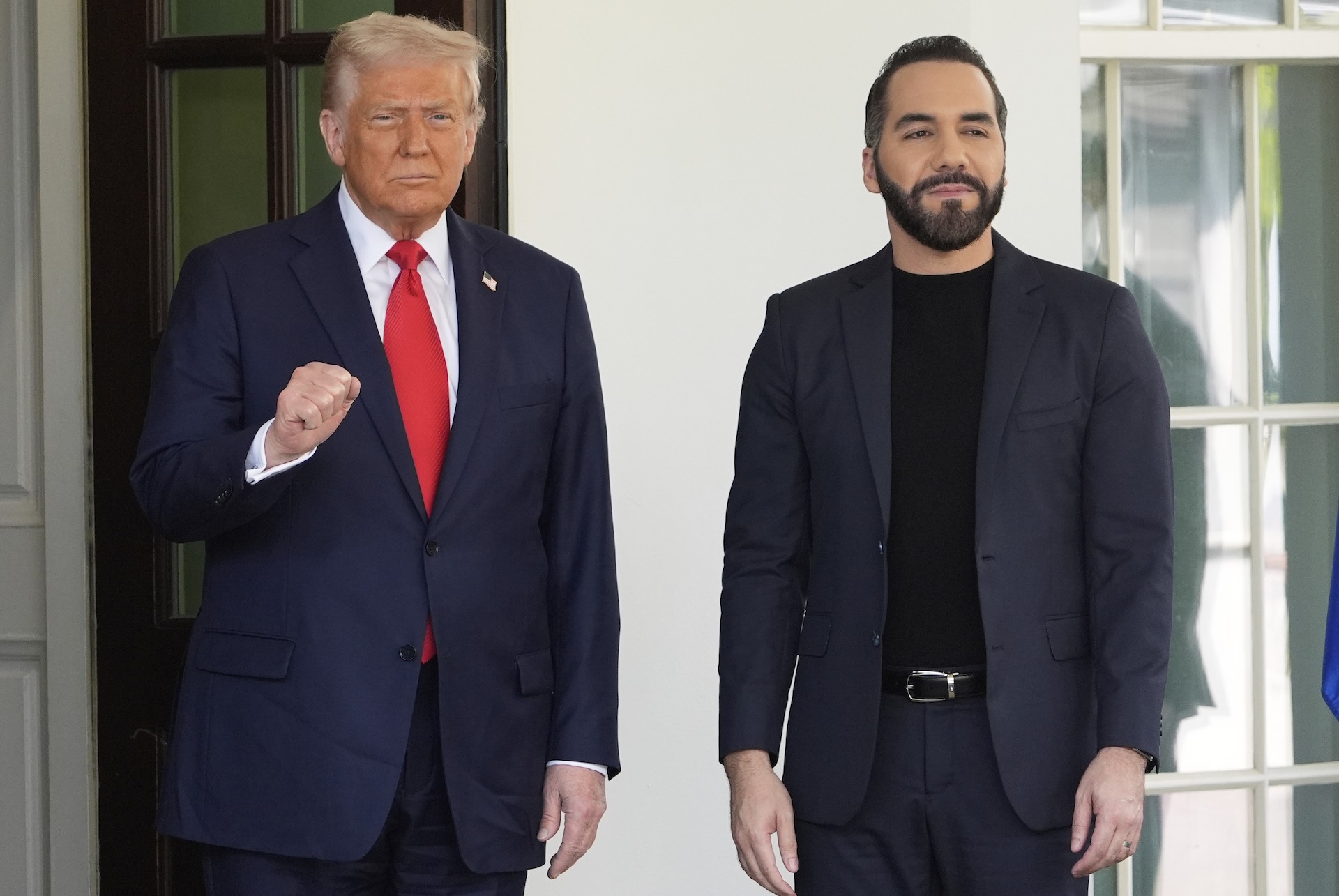 On crypto policy, Reyes is an unapologetic fan of U.S. President Donald Trump, whom Salvadoran President Nayib Bukele visited in April. Photo: AP Photo/Manuel Balce Ceneta
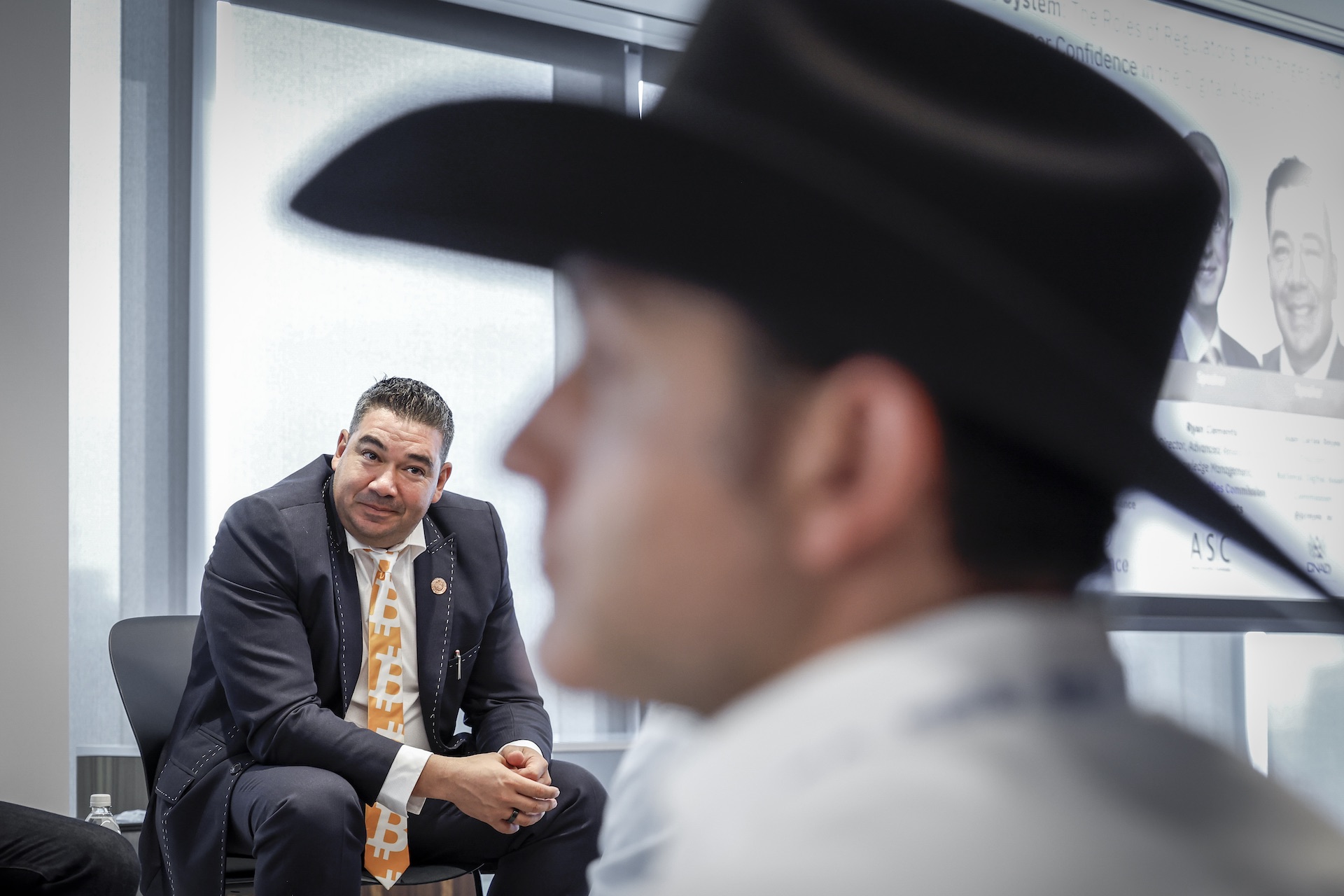 El Salvador's crypto regime has a low risk tolerance, and rejects many companies that try to register there, Reyes says. Photo: Jeff McIntosh for The Logic

The Big Read
The little-known Canadian behind El Salvador’s wild bet on crypto
Juan Carlos Reyes is leading El Salvador’s crypto revolution as head of its digital asset regulator. He says Canada should follow suit.
Juan Carlos Reyes, the head of El Salvador's regulator for digital assets, spoke at a Canadian Blockchain Consortium event in Calgary. Photo: Jeff McIntosh for The Logic
Juan Carlos Reyes, the head of El Salvador's regulator for digital assets, spoke at a Canadian Blockchain Consortium event in Calgary. Photo: Jeff McIntosh for The Logic
When he was an undergraduate at Laurentian University, Juan Carlos Reyes would tell his professors he intended to retire by his 30s—and he did, thanks in part to an early investment in bitcoin. But now, in his 40s, he’s back to work, in charge of El Salvador’s pioneering regulator for digital assets, part of President Nayib Bukele’s attempt to turn the Central American country into a global crypto powerhouse.
“I’m as much Canadian as I am Salvadorian. I grew up in Canada, so it’s important to put that first,” Reyes said in a recent panel discussion in Ottawa.
Talking Points
- The lead regulator for El Salvador’s groundbreaking private crypto sector, Juan Carlos Reyes, spent his formative years in Sudbury, Ont., after his family fled the bloody Salvadoran civil war
- Canada is missing an opportunity with digital assets, Reyes argues, and needs a strong leader who will champion the sector
Sitting on a stage in the National Gallery at the Canadian Blockchain Consortium’s annual policy summit, Reyes was a genial evangelist for El Salvador’s crypto experiment. The Central American country was the first in the world to make bitcoin legal tender in 2021 and has encouraged crypto activities that other jurisdictions have rejected.
He’d laugh and even slap his knee at jokes from his fellow panellists—including veteran Conservative MP and crypto fan Ben Lobb, and crypto-curious rookie Liberal Fares Al Soud—between warnings that Canada is missing a boat.
Related Articles

“It is the members of Parliament, it is our prime minister, that has to grab the bull by the horns and say, ‘You know what, it’s time to turn Canada into a real industry player in this sector,’” Reyes exhorted.
Changpeng “CZ” Zhao, co-founder of giant crypto exchange Binance, is a Canadian. So’s Vitalik Buterin, a co-founder of Ethereum. Canadians have been key contributors to tech enterprises from eBay to OpenAI, and mostly outside the country.
And then there’s Reyes, who’s trying to lead a crypto revolution to empower El Salvador and ultimately all of Latin America. In a country that relies heavily on U.S. banks and the U.S. dollar, crypto presents an opportunity for economic independence, Reyes said.
Like Buterin and Zhao, Reyes was born elsewhere but spent formative years under the maple leaf. “I still consider myself someone from Sudbury,” he told The Logic in a subsequent interview. He spoke via a video call from San Salvador, where he’d just finished addressing a gathering of financial regulators from Spanish- and Portuguese-speaking countries; he wore a suit, and a necktie dotted with Bitcoin logos the size of golf balls.
Reyes left El Salvador toward the bloody end of a civil war that lasted from 1979 to 1992. His mother had been working with a leftist political party, he said, but the family’s plans changed abruptly in a spasm of violence. “On the 6 p.m. news, the guy that my mom used to work for was dead.”
That same night, he said, a rock flew through the window of the family home with a message: “Leave today or die tomorrow.”
They left, heading across the border to Guatemala. Before long, a teenage Reyes was living in London, Ont., where a refugee program had settled the family.
He was always a tech-head, he said, and went north to Laurentian to pursue mining engineering before switching to physics, and then getting a second bachelor degree in computer science. (He’d later add a master’s in management from Harvard.) As an assistant network administrator in the university IT department, before Wi-Fi was as common in public buildings as washrooms, Reyes worked on Laurentian’s efforts to become the first “wireless university” in the country.
He went on to work for the City of Sudbury and for a First Nation in Northern Ontario, and started a consulting firm. Its circa-2020 website is still online, at efficiency.ca, as is one for an inn-type property Reyes owns in Nicaragua.
“By the age of 30, when my firstborn came, I pretty much decided, ‘You know what? I’ve done enough, and I won’t be the wealthiest person in the world, but I’m also not going to die of hunger,’” he said, explaining the decision to retire early.
But also, in 2013, Reyes had by his own account been orange-pilled, the crypto world’s term for a conversion experience to the gospel of cryptocurrency. At the time, one bitcoin could be had for around US$100. Now, the price is a thousand times higher. “I do have a decent bitcoin treasury,” Reyes said.
“When Bitcoin was adopted in El Salvador, my family were like, ‘Isn’t this the same crap you talk to us about every Christmas?’”
“Like every new religion person, we try to preach,” Reyes said. “So in 2021 when Bitcoin was adopted here in El Salvador, my family were like, ‘Isn’t this the same crap you talk to us about every Christmas and every Thanksgiving?’”
Reyes’ family urged him to reach out to the government. He booked meetings with officials and a ticket to San Salvador, with plans to offer whatever help he could based on his crypto knowledge and Canadian experience.
“I worked in blockchain technology, but I also have been part of regulated companies. I mean, in Canada, pretty much everything is bureaucracy and regulations,” he said.
Within two years, El Salvador created one of the first dedicated regulators for digital assets and Bukele appointed Reyes its leader.
The National Digital Assets Commission (CNAD is its Spanish acronym) is a regulator that deals only with goods that live on blockchains. Its staff of about 40 oversees over US$300 billion in assets. That’s more than eight times El Salvador’s gross domestic product.
The flock CNAD shepherds includes big names like stablecoin giant Tether International (which announced in January it would move to El Salvador from the British Virgin Islands) and crypto platform OKX, as well as regional subsidiaries of global players, like Binance Services El Salvador.
It also includes more experimental ventures like e-Grains, issuer of a crypto token called $ESOY, which it bills as “the first digital asset backed by soy in the world.”
Welcoming such firms is a high-risk, high-reward gambit for El Salvador. Tether has for years faced questions about whether it has the reserves to back the nearly US$160 billion in circulation of its eponymous stablecoin, a digital asset whose value is pegged to the U.S. dollar. OKX has faced enforcement action in the U.S., Thailand and Ontario for anti-money laundering failures and securities law violations.
The Bahamas serves as an example of how things could go wrong. Crypto giant FTX made the island nation its headquarters after officials welcomed it with open arms and a light regulatory touch. When it collapsed in 2022, locals had to contend with vacant apartments, job losses and a tarnished national reputation.
Reyes maintains things are different in El Salvador. He said he’s been to see Tether’s gold reserves during a surprise visit as part of a recent audit. The $ESOY token is actually based on soy futures contracts, not directly on soy, so he has not had to inspect bushels in warehouses.
CNAD has carried out no enforcement actions on registered companies, though Reyes touts its high rejection rate—84 per cent—for crypto companies that want to register in El Salvador as a sign of its caution.
“We have a very low risk tolerance. We’re a very small country. We’re not a hotbed of innovation like the U.S., like Argentina is, like Mexico is,” Reyes said. “What we want is to create a regulated ecosystem for those players that are looking to be in the industry for the long term.”
In the audience at the Ottawa event sat Félix Ulloa, El Salvador’s vice-president, who was in Canada on a personal trip and stopped in. A law professor who played a key role in re-establishing democratic institutions after the civil war, Ulloa has brought gravitas to the younger, slicker Bukele’s presidential tickets.
“Juan Carlos is the most outstanding person in this sector,” Ulloa told The Logic. “He has the background from Harvard, and then he has a PhD in this sector, so he’s the most qualified person.”
For the record, Reyes has a master’s degree in management from Harvard, but no PhD. He started a doctoral program at Russia’s Peoples’ Friendship University—better known as Patrice Lumumba University, which the Soviet Union established to draw bright minds from formerly colonized countries—but didn’t get far.
The COVID-19 pandemic got in the way and then Russia’s invasion of Ukraine definitively put an end to his studies there: “Now it’s like Russia doesn’t exist.”
Reyes’s positive impression of the place remains intact, however.
“I just went back about a month ago, and it was still the same, still very, very impressive,” Reyes said.
Besides his cryptocurrency advocacy, Bukele is known for his fierce crackdown on El Salvador’s gangs. Human Rights Watch says Bukele has imprisoned tens of thousands of people while he and his allies have “systematically dismantled democratic checks and balances.” Two prominent Bukele critics have been arrested. U.S. President Donald Trump has paid El Salvador to hold U.S. detainees offshore, far from American courts’ oversight.
What is a Canadian doing in such close orbit around the self-described “world’s coolest dictator”? Praising his record.
“What this president did was freed 95 per cent of the population that were imprisoned by less than 1.5 per cent of the population,” Reyes said. “People did not have freedoms in this country. Nobody could go out. You didn’t feel safe anywhere.”
Human Rights Watch, amid its criticisms of Bukele’s methods, acknowledges that El Salvador’s “longstanding high levels of gang violence, including homicides and extortion, have significantly decreased in the past two years.”
“I don’t feel as safe in Canada as I do here,” Reyes said.
Still, the status of El Salvador’s Bitcoin experiment is … iffy. A long-promised national “volcano bond,” US$1 billion in borrowing to be paid off with bitcoin mined using geothermal energy, has yet to be issued. Progress on a crypto centre dubbed Bitcoin City is slow. Few Salvadorans are using bitcoin, and in exchange for a fiscal lifeline from the International Monetary Fund, the government scrapped its legal-tender status in January.
Reyes said Bitcoin was never meant to become the currency for every routine transaction,and that adopting it did open the country to a new option for doing business.
“That instantaneously created access to a new financial system that wasn’t in existence before, for every Salvadorian,” Reyes said, and led to the creation of CNAD, whose imprimatur is bringing in the (tokenized) bucks.
Canadian regulators’ skepticism of crypto assets means the country hasn’t had a catastrophic failure like FTX, he said on the Ottawa stage, but it also means it hasn’t raised up a Binance. If Canada wants such companies, he argued, it needs leadership to champion crypto. That could be an appointed task force, or a small political movement, or a singular Bukele or Trump figure, he said.
If Canada finds such a motivator, El Salvador will be eager to help.
“We’re the world’s leaders,” Reyes told the crowd. “Our doors are wide open.”



Loading...
Thanks for sharing!
You have shared 5 articles this month and reached the maximum amount of shares available.
CloseThis account has reached its share limit.
If you would like to purchase a sharing license please contact The Logic support at [email protected].
CloseGift the full article!
You have gifted 0 article(s) this month and have 5 remaining.
Recipients will be able to read the full text of the article after submitting their email address. They will not have access to other articles or subscriber benefits.
Photo: Jeff McIntosh for The Logic
Reyes is a genial evangelist for El Salvador's crypto experiment.
On crypto policy, Reyes is an unapologetic fan of U.S. President Donald Trump, whom Salvadoran President Nayib Bukele visited in April.
El Salvador's crypto regime has a low risk tolerance, and rejects many companies that try to register there, Reyes says.
Most Popular This Week




In-depth, agenda-setting reporting
Great journalism delivered straight to your inbox.
The Big Read
Alberta’s referendum is just the start of the turmoil
Briefing
EverWind plans $10B data centre and wind development in Nova Scotia
Canada ready to force Stelco to sell its Canadian operations, Joly says
Feds plan a 60 MW defence-oriented data centre for Ottawa
Best business newsletter in Canada
Get up to speed in minutes with insights and analysis on the most important stories of the day, every weekday.
Exclusive events
See the bigger picture with reporters and industry experts in subscriber-exclusive events.
Membership in The Logic Council
Membership provides access to our popular Slack channel, participation in subscriber surveys and invitations to exclusive events with our journalists and special guests.






