OTTAWA — Canadian telecom companies like Iristel have spent years preparing to take Huawei-made equipment out of their networks, getting ready for the cybersecurity bill that Prime Minister Justin Trudeau killed when he prorogued Parliament last week.
Skip to content
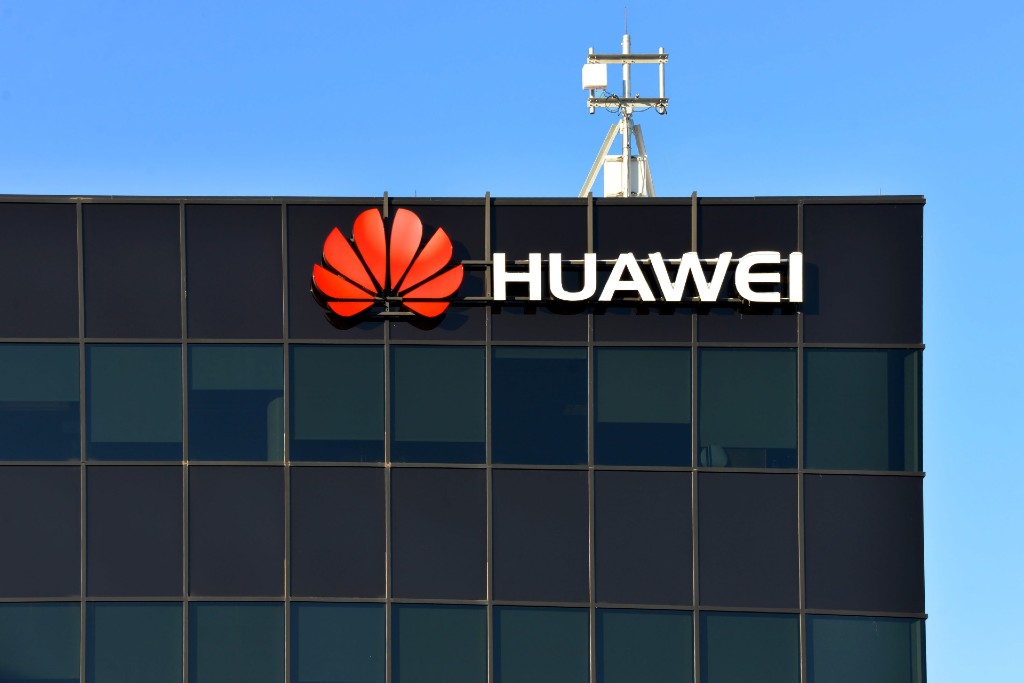 Huawei's research and development centre in Kanata, Ont. Photo: Shutterstock

News
Telcos removing Huawei equipment left in the lurch after Trudeau kills cyber bill
Prorogation killed Bill C-26, the law that would’ve forced companies to tear the gear out
Huawei's research and development centre in Kanata, Ont. Photo: Shutterstock
OTTAWA — Canadian telecom companies like Iristel have spent years preparing to take Huawei-made equipment out of their networks, getting ready for the cybersecurity bill that Prime Minister Justin Trudeau killed when he prorogued Parliament last week.
Not passing the law means that equipment will stay longer, despite federal government assertions that the Chinese government could use it to get access to Canadian data and systems.
Talking Points
- When Innovation Minister François-Philippe Champagne called Huawei equipment a security risk and told Canadian telecom companies to start removing it from their networks, he promised legislation to enforce that instruction was coming
- Prime Minister Justin Trudeau killed that bill when he prorogued Parliament last week, after telcos spent years preparing for it
“In Canada, we always fall short of taking anything … to full completion mostly due to government lack of fundamental understanding of the issues at play,” an irate Samer Bishay, CEO of Iristel, wrote in an email to The Logic.
Innovation Minister François-Philippe Champagne gave telecom companies instructions in May 2022: We think equipment from China-based Huawei is a security risk, so stop buying it by the end of this summer. Any Huawei gear you already have must come out of 5G wireless networks before July 2024 and older 4G networks by the end of 2027.
Champagne didn’t have the authority to enforce those expectations, but he said legislation would follow to give him that power.
The promised law, Bill C-26, never got through Parliament. Introduced in June 2022, it spent more than two years drifting through votes and committees—not actively held up but not prioritized, either.
Nevertheless, the final version was inches from the finish line when Trudeau announced his resignation, awaiting only MPs’ approval of simple amendments that senators made this past December.
Related Articles


Proroguing Parliament, as Trudeau did, annihilates incomplete bills, and being close to royal assent didn’t save this one.
Bishay told The Logic that Iristel had nevertheless been complying with the government’s earlier instructions. He had once said the cost to his company would be in the tens of millions of dollars. Iristel had opted for Huawei equipment to expand coverage in remote areas as late as 2019, after a federal security review OK’d it.
“While we haven’t fully replaced our Huawei equipment, we have been exploring alternative vendors and planning for a phased replacement strategy,” he said in an email.
Iristel has taken Huawei gear out of the spine of its network and has been readying to remove Huawei-made wireless equipment from the towers that deliver its service in rural, remote and Arctic locations, he wrote.
Without a legal requirement to incur the costs, Iristel will slow down, putting new non-Huawei equipment in only when existing gear breaks or goes obsolete.
In the United States, a similar order came with compensation for the companies affected, albeit not enough to cover all the expenses.
Telus and Bell, both of which used Huawei equipment in their older systems, had each written to the government in 2021, seeking compensation if they were ordered to pull it out. As written, Bill C-26 ruled out any such payments. Both companies had been gradually complying with Champagne’s order anyway.
“When we upgrade sites that previously had only 4G equipment, we replace that equipment with new hardware from other vendors. This new equipment supports both 4G and 5G,” Telus spokesperson Athyu Eleti told The Logic.
The cost of fully expunging Huawei equipment “could be material,” Telus warned investors in its 2023 annual report..
Bell had been doing likewise. The company “has already begun replacing Huawei network equipment in its 4G network as part of our normal upgrade life cycle, in compliance with the government’s timeline,” spokesperson Jacqueline Michelis said by email.
The premise for barring Huawei and ZTE from telecom networks was that, as China-based companies, they “could be compelled to comply with extrajudicial directions from foreign governments in ways that would conflict with Canadian laws or would be detrimental to Canadian interests,” according to Champagne’s 2022 statement.
Huawei retains a substantial presence in Canada, with active job postings, and has strenuously denied being a tool of Chinese espionage.
Champagne’s office did not respond by deadline to questions about the consequences of failing to pass Bill C-26, including whether telecom companies should now be compensated for costs they have incurred.
A spokesperson for the Conservative party likewise didn’t respond to questions about whether a potential Tory government would reintroduce a version of Bill C-26, which also would have let the government supervise the cybersecurity plans of companies that operate other critical infrastructure.
In the 2019 election campaign, however, then-leader Andrew Scheer said if he became prime minister, he’d enact the ban that the Liberals were then only contemplating.



Loading...
Thanks for sharing!
You have shared 5 articles this month and reached the maximum amount of shares available.
CloseThis account has reached its share limit.
If you would like to purchase a sharing license please contact The Logic support at [email protected].
CloseGift the full article!
You have gifted 0 article(s) this month and have 5 remaining.
Recipients will be able to read the full text of the article after submitting their email address. They will not have access to other articles or subscriber benefits.
Photo: Shutterstock
Most Popular This Week




In-depth, agenda-setting reporting
Great journalism delivered straight to your inbox.
Commentary
Carmichael: Canadian ignorance about India is a strategic weakness
Briefing
Aritzia shares pop after earnings rise 204%
First Nation in Alberta goes to court over fast-tracked oil pipeline
Chinese EV maker Geely Auto Group to launch in Canadian market in 2027
Best business newsletter in Canada
Get up to speed in minutes with insights and analysis on the most important stories of the day, every weekday.
Exclusive events
See the bigger picture with reporters and industry experts in subscriber-exclusive events.
Membership in The Logic Council
Membership provides access to our popular Slack channel, participation in subscriber surveys and invitations to exclusive events with our journalists and special guests.