Skip to content

Canada's Business and Tech Newsroom

  • Professional Subscription
  • Partnerships & Advertising
  • Licensing & Syndication
Log In Subscribe
Welcome,
  • My Account
  • Log Out
  • Business
  • Tech
  • National
  • The Big Read
  • Briefings
  • Commentary
Search
Log In Subscribe
Welcome,
  • My Account
  • Log Out
Special Report

Ottawa’s superclusters unlikely to hit goals for job creation, GDP growth: Budget watchdog

The federal government’s superclusters program is underspending and will miss its ambitious targets for job creation and GDP growth, according to a report released Tuesday morning by the Office of the Parliamentary Budget Officer (PBO). 

The Liberal government announced the program in the 2017 federal budget, pledging $950 million over five years for organizations it said would help forge strong links between firms and research institutions, develop more skilled talent and share the risks involved in developing disruptive technologies. In February 2018, Innovation Minister Navdeep Bains announced the five successful consortia, focused on digital technology, proteins, advanced manufacturing, AI and oceans. 

But protracted contract negotiations between Ottawa and the new organizations meant the first projects were only unveiled in March 2019. ISED has already pushed back its superclusters targets by a year, citing the time it took to evaluate applications. The PBO’s report offers the first independent look at how the program is proceeding. Here’s what you need to know.

Special Report

Ottawa’s superclusters unlikely to hit goals for job creation, GDP growth: Budget watchdog

By Murad Hemmadi
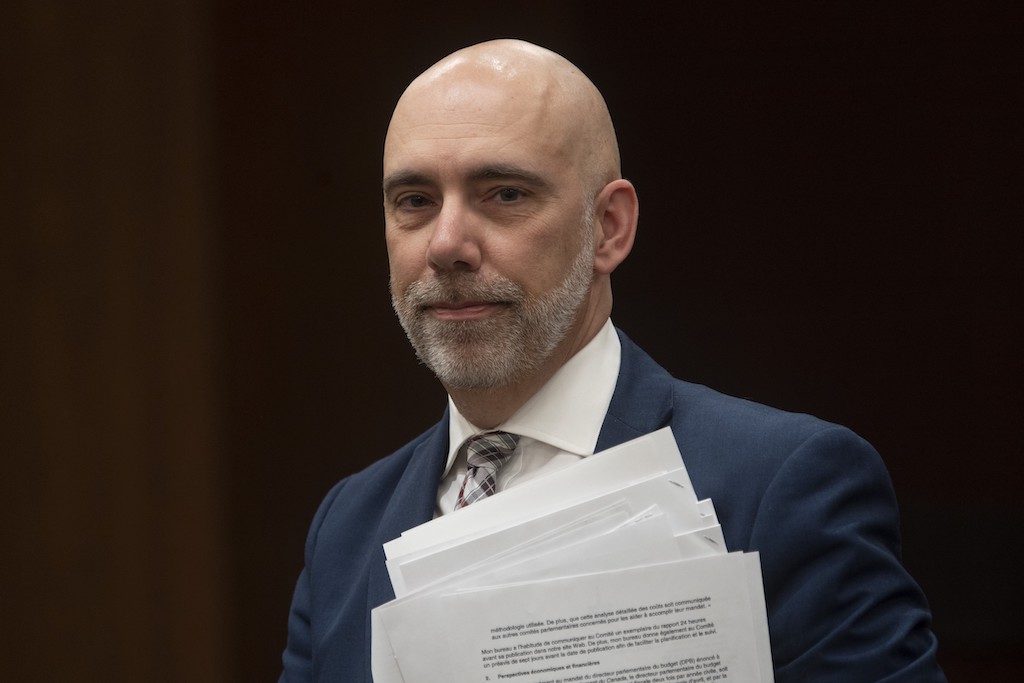
Parliamentary budget officer Yves Giroux in Ottawa in March 2020. Photo: The Canadian Press/Adrian Wyld
Oct 6, 2020
A A
A Small A Medium A Large
Share

Gift

Share

The federal government’s superclusters program is underspending and will miss its ambitious targets for job creation and GDP growth, according to a report released Tuesday morning by the Office of the Parliamentary Budget Officer (PBO). 

The Liberal government announced the program in the 2017 federal budget, pledging $950 million over five years for organizations it said would help forge strong links between firms and research institutions, develop more skilled talent and share the risks involved in developing disruptive technologies. In February 2018, Innovation Minister Navdeep Bains announced the five successful consortia, focused on digital technology, proteins, advanced manufacturing, AI and oceans. 

But protracted contract negotiations between Ottawa and the new organizations meant the first projects were only unveiled in March 2019. ISED has already pushed back its superclusters targets by a year, citing the time it took to evaluate applications. The PBO’s report offers the first independent look at how the program is proceeding. Here’s what you need to know.

The money: Innovation, Science and Economic Development Canada (ISED) had paid out just $30 million as of Mar. 6, 2020, compared to a projected outlay of $104 million. The superclusters and private-sector partners have pledged another $97 million to the projects announced to that point. 

The jobs: The PBO report estimated the program will directly generate 27,000 jobs if both Ottawa and private-sector partners fulfill their spending commitments. Ottawa had promised over 50,000. The PBO extrapolated from data for 24 announced projects, which ISED expects will create 2,594 jobs, a rate of 14 positions for every $1 million in joint government and partner spend. “The department’s current projections suggest [the superclusters] are on track to exceed their target of 50,000 jobs over a 10-year horizon,” said John Power, spokesperson for Innovation Minister Navdeep Bains. He claimed they’ve already created over 6,100 net new jobs to date.

Missing the target: The PBO found it “highly unlikely that the government will meet its objective of increasing GDP by $50 billion over 10 years,” citing comparable initiatives in other countries. Hitting the target would require every dollar of the $2 billion Ottawa and private-sector members are putting up to generate $25 for the economy, but the watchdog noted that somewhere between a three- or eight-fold return is more common. Even a multiplier effect of 8.82 seen in some U.S. examples, which the report called “optimistic,” would only generate a GDP lift of about $18 billion.  

The data gap: Per the report, ISED said it’ll track things like productivity increases and the creation of new products and processes, but the PBO didn’t find “quantifiable objectives for any of these metrics.” The department did disclose some new program objectives in March, setting the superclusters a collective goal of creating 150 new companies and roping in 100 large “anchor” firms by the end of the 2022–2023 fiscal year. 

The pandemic effect: The PBO’s study cuts off before the pandemic, at which time the five superclusters had announced a collective 45 projects. At Ottawa’s direction, each subsequently dedicated a portion of its budget to COVID-19 measures. The Vancouver-based Digital Technology Supercluster, for example, set up a $60-million program that has backed 35 projects, including platforms for virtual mental health, addiction treatment and telework for youth and health-care workers. They’ve also been involved in other parts of the pandemic response. Hamilton, Ont.-based Next Generation Manufacturing Canada linked StarFish Medical, a Victoria-based device-design and contract-manufacturing firm, with a Winnipeg firm that had commercialized a ventilator created by a former University of Manitoba professor; the federal government subsequently ordered 7,500 units.  

The government responds: “We are seeing the five superclusters live up to their promise in terms of leveraging industry contributions, and supporting collaborative projects with small and medium-sized enterprises which are having a national impact,” Bains said in a statement. He said Canada needs to back areas where they have knowledge clusters, existing economic activity and research expertise, and the program is designed to break down silos between sectors. Power said the superclusters have approved 219 projects valued at more than $800 million so far, and its non-pandemic undertakings attracted “$1.5 of industry investment for each $1 of government investment.”

Gift the full article

The opposition perspective: “There should be widespread anger from the science and research and innovation community about what’s taken place,” said NDP innovation critic Brian Masse. “This is lost years during an age of innovation.” He has previously criticized the government for failing to hit program-spending targets following major announcements. Masse called the superclusters “a very poor return of job numbers for our investments,” and suggested they were set up at the expense of other, potentially more effective strategies. Ottawa has continued to provide R&D and business support through other programs such as the regional development agencies and the Strategic Innovation Fund.

#Parliamentary Budget Officer #superclusters

Sponsored Content

The road to risk-smart regulation

By Deborah Aarts

Why cybersecurity needs to match pace with AI

By Jessica Aftimus Rosa

How to shift your workforce from AI experimentation to adoption

By Jessica Aftimus Rosa
Paid promotional content

Loading...

Thanks for sharing!

You have shared 5 articles this month and reached the maximum amount of shares available.

Close
This account has reached its share limit.

If you would like to purchase a sharing license please contact The Logic support at [email protected].

Close
Want to share this article?

Upgrade to all-access now

Close
Gift the full article!

You have gifted 0 article(s) this month and have 5 remaining.

Copy link and gift
Copy Link
Email to a friend
Send Email
Gift on Social Media

Recipients will be able to read the full text of the article after submitting their email address. They will not have access to other articles or subscriber benefits.

Photo: The Canadian Press/Adrian Wyld

Most Popular This Week

A shot of a freight truck passing beneath a gantry that bears signs directing traffic through the Port of Belfast.
News

A tech firm born from post-Brexit trade chaos sets its sights on Canada

By Joanna Smith
News

Norway’s Vianode eyes Canadian backers as it mulls a partnership or sale

By Anita Balakrishnan
A low-angle photo of the cooling tower of a nuclear power station. There are tree fronds and an Indian flag in the foreground.
News

India wants to buy less Canadian uranium. Canada’s nuclear lab is helping

By David Reevely
News

EDC wants to help sell the full stack of Canadian technology abroad

By Murad Hemmadi

In-depth, agenda-setting reporting

Great journalism delivered straight to your inbox.

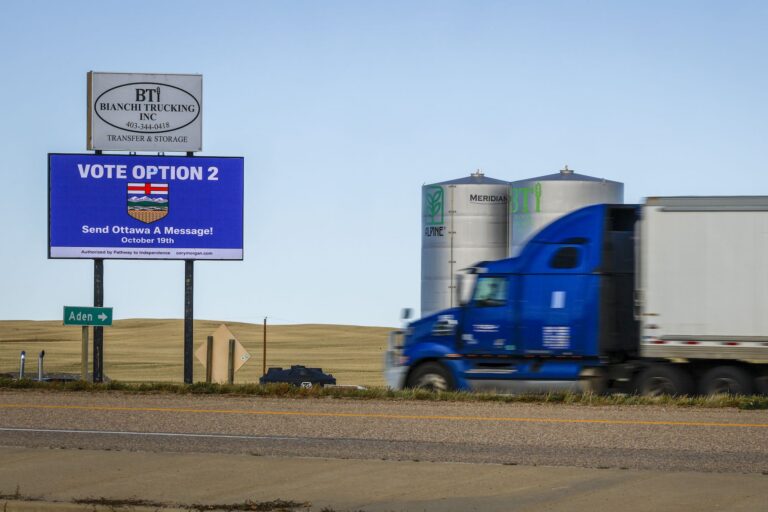
A photo of a blue roadside billboard taken in the rolling country of southern Alberta. The sign says, "Vote Option 2; Send Ottawa a Message." There is a transport truck speeding into the right side of the frame, with two grain silos beyond it.
The Big Read

Alberta’s referendum is just the start of the turmoil

By Meghan Potkins

Briefing

EverWind plans $10B data centre and wind development in Nova Scotia

By Catherine McIntyre   |   Oct 16, 2026 | 3:39 PM ET

Canada ready to force Stelco to sell its Canadian operations, Joly says

By Joanna Smith   |   Oct 16, 2026 | 3:36 PM ET

Feds plan a 60 MW defence-oriented data centre for Ottawa

By David Reevely   |   Oct 16, 2026 | 3:24 PM ET

Best business newsletter in Canada

Get up to speed in minutes with insights and analysis on the most important stories of the day, every weekday.

Exclusive events

See the bigger picture with reporters and industry experts in subscriber-exclusive events.

Membership in The Logic Council

Membership provides access to our popular Slack channel, participation in subscriber surveys and invitations to exclusive events with our journalists and special guests.

Recent Popular Stories

News

India wants to buy less Canadian uranium. Canada’s nuclear lab is helping

By David Reevely   |   Oct 9, 2026
A low-angle photo of the cooling tower of a nuclear power station. There are tree fronds and an Indian flag in the foreground.
News

ApplyBoard was the worst-performing Canadian startup in Fidelity’s portfolio in 2026

By Claire Brownell   |   Oct 6, 2026
Commentary

Carmichael: Canadian ignorance about India is a strategic weakness

By Kevin Carmichael   |   Oct 10, 2026
News

Tech firms want AI models to create better versions of themselves

By Murad Hemmadi   |   Oct 14, 2026
News

A tech firm born from post-Brexit trade chaos sets its sights on Canada

By Joanna Smith   |   Oct 13, 2026
A shot of a freight truck passing beneath a gantry that bears signs directing traffic through the Port of Belfast.
News

Canada’s banking regulator weighs new rules for AI risks

By Chaimae Chouiekh   |   Oct 7, 2026

Canada's most influential executives and policymakers are reading The Logic

  • CPP Investments
  • Sun Life Financial
  • C100
  • Amazon
  • Telus
  • Mastercard
  • bdc
  • Shopify
  • Rogers
  • RBC
  • General Motors
  • MaRS
  • Government of Canada
  • Uber
  • Loblaw Companies Limited
logic-logo

Canada's Business and Tech Newsroom

100% human-crafted journalism

Newsroom

  • News Tips
  • AI Policy
  • Editorial Disclosures
  • Story Pitches

Company

  • About Us
  • Terms of Service
  • Privacy Statement
  • Corporate Information

Contact

  • Contact Us
  • Advertise
  • FAQs
  • Work at The Logic

© 2026 The Logic Inc. All Rights Reserved.

Trusted by leaders

Error

Account creation failed.

Please email us at [email protected].

Create Account

[wppb-register form_name=”cozmo-registration-form-for-modal”]

I do have an account
Login
or

[wppb-login]

I don’t have an account