The federal government’s biggest R&D agency wants to help mining-industry startups use AI to test potential breakthroughs in battery technology.
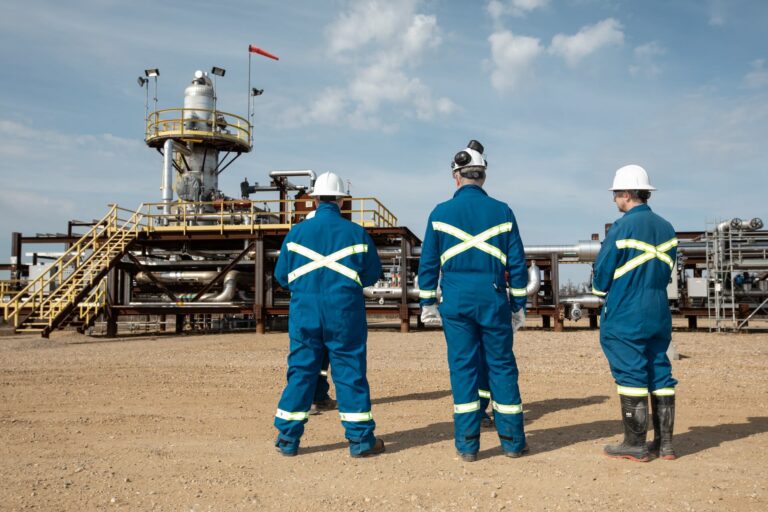
The National Research Council, the main federal agency for research and development, is overseeing a four-year, $40-million push to help solve “technical challenges” in the critical minerals sector on which the growing battery sector depends.
The challenge program—outlined in a March 2023 briefing memo that my colleague Murad Hemmadi obtained via access-to-information request—brings researchers at federal labs together with those from academia and the private sector to “enhance the capabilities of small and medium enterprises (SMEs).”
Robert Black, an associate research officer at NRC’s energy, mining and environment office in Mississauga, Ont., said that the work to distribute the AI platform is still in the early stages. But the goal is to use AI to help run experiments more quickly, and commercialize new materials faster, Black said in an interview. The platform will resemble what’s called a “self-driving lab.” With such an operation, instead of a scientist spending years at the lab bench trying to generate and validate ideas based on their individual knowledge, computers can help test different hypotheses with simulations.
“Over the last five years, we’ve really seen a surge in the use of AI for what is science, essentially … to shrink that timeline in which we can discover these new materials, and ultimately bring them to market,” Black said, adding that it’s a trend that has “very clearly caught on in the world of battery materials.”
The NRC effort mirrors others gaining ground in the private sector. KPI Mining Solutions announced last year it would be working with the Quebec AI institute Mila to use AI and machine learning to find more sustainable and efficient ways to mine metals for EVs. Volkswagen is working with Toronto quantum computing firm Xanadu to run simulations identifying better battery chemistries.
The Creative Destruction Lab, which started its first specialized AI stream in 2015, launched a new stream last year focused on commercializing mineral technologies. There are many crossovers between the two sectors, including using AI for imaging and seeking deposits, mineral sorting and classification, digital twin simulations and autonomous vehicles and drillers, said CDL executive director Sonia Sennik.
“We have focused AI streams, but we also see AI integrated across the network of streams. So whether it’s in our health streams … the energy stream, our agriculture stream, minerals will be no different,” Sennik said in an interview last year, ahead of its inaugural minerals conference in October.
“A key focus area and topic area is AI in mining. It’s really getting the community rallied around the potential.”
Read Shift—The Logic’s authoritative weekly newsletter on automotive technology industry news—for more; and if you know someone who should be reading it, they can sign up here.