Edmonton AI pioneer Richard Sutton wins Turing Award
In an AI industry fixated on maximizing how much a machine can know, Richard Sutton has long contemplated a more fundamental question: how it learns.
On Wednesday, the Association for Computing Machinery named Sutton its 2024 Turing Award winner, along with his former co-author Andrew Barto, for their research on that fundamental question. The pair wrote the foundational texts and algorithms behind a method of AI training that remains relevant decades after their publication—ideas that, while simple at their core, continue to influence the broader artificial intelligence industry.
News
Edmonton AI pioneer Richard Sutton wins Turing Award
The founder of reinforcement learning believes current LLMs ‘aren’t on the path to true intelligence’
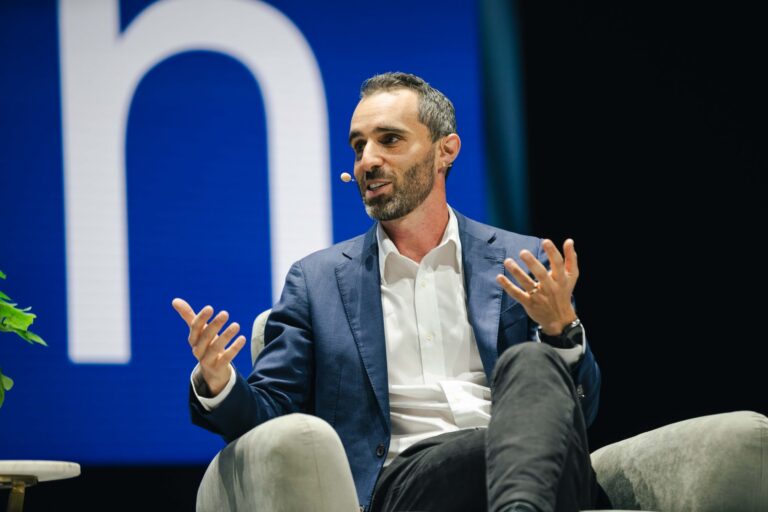
Sutton, a University of Alberta researcher since 2003, was part of the team that wrote the first algorithms underpinning reinforcement learning in AI. Photo: Amii/Handout
In an AI industry fixated on maximizing how much a machine can know, Richard Sutton has long contemplated a more fundamental question: how it learns.
On Wednesday, the Association for Computing Machinery named Sutton its 2024 Turing Award winner, along with his former co-author Andrew Barto, for their research on that fundamental question. The pair wrote the foundational texts and algorithms behind a method of AI training that remains relevant decades after their publication—ideas that, while simple at their core, continue to influence the broader artificial intelligence industry.
Talking Points
Richard Sutton, a pioneer in the study of AI reinforcement learning, has won the 2024 Turing Award
The award is recognition of Sutton’s decades of work toward understanding how machines learn, a fundamental approach to artificial intelligence that remains relevant to this day
“You have to start small,” said Sutton, explaining his approach to research. “It’s a foundational research, it’s not going to give you improvement on the latest thing.”
Sutton, a University of Alberta researcher since 2003, as well as a lead researcher at Dallas-based Keen Technologies and a fellow at the Edmonton-based Alberta Machine Intelligence Institute, began his work alongside Barto in the early 1980s. They wrote some of the first algorithms underpinning reinforcement learning, a type of AI training whereby machines gain knowledge through repeated trial and error, much the way humans or animals do.
By 1998, Sutton and Barton co-authored Reinforcement Learning: An Introduction, a book that is still considered the foundational text of the field.
The approach has won Sutton acclaim, but has also put him somewhat at odds with the presiding theories behind the highly popular large language models (LLMS) currently being built by major firms like Google, Microsoft and OpenAI. Those technologies, he said, only “mimic” human behaviour rather than truly recognize their actions and learn from them.
“I don’t think they’re on the path to full intelligence,” Sutton said.
Core to reinforcement learning is ensuring that machines “learn from experience,” as Sutton puts it, or interpret feedback and learn from their mistakes. LLMs, he said, draw from massive pools of the historical data to genera te responses, and are therefore only as smart as the size of their neural networks at any given time—a “silly weakness” inherent in those models, according to Sutton. They can alter their answers to written questions, but their main goal is to simply determine the next output in a chain of text.
“Many of our AI systems that you see in practice nowadays are of the sort that they absolutely do not learn when you’re interacting with them,” Sutton said. “ChatGPT doesn’t change any of its weights based on its experience. It is left uncaring and really unknowing. It’s not surprised by anything that happens, because it doesn’t have an expectation about what will happen.”
Michael Bowling, one of the lead researchers at Google’s DeepMind Edmonton hub alongside Sutton before the company closed the office in 2023, said Sutton’s contributions to reinforcement learning are likely to remain important as people seek out AI systems that respond to human interaction.
While much of the AI world has piled into developing AI products, he said, Sutton has remained focused on the core principles underlying reinforcement learning, and how they can be used.
“Rich is holding that torch high when the rest of the world is flocking to what LLMs can do,” Bowling said.
Reinforcement learning’s prominence has also grown in the last five years, Bowling said. Some LLM developers, including the Chinese startup DeepSeek, whose release of its large language model earlier this year caused a jolt in western AI circles, used reinforcement learning to train its AI with positive feedback loops.
Bowling said he was “ecstatic” when he heard Sutton would receive the Turing Award.
Cam Linke, head of Edmonton-based Amii, called Sutton a “humble and unassuming” professional who eschews the traditional hierarchies or politics that often come with the sciences, as with other professional fields. Linke said that, for Sutton, the scientific process is key.
“Everything should be thought through really deeply,” Linke said, “that’s how we drive forward understanding intelligence really deeply.”
The Turing Award, named after British mathematician Alan Turing, is sometimes referred to as the Nobel Prize in computing.
Sutton is the latest Canada-based researcher to win the award, after Geoffrey Hinton and Yoshua Bengio won in 2018 alongside Yann LeCun for their contribution to the study of deep neural networks. Barto is a U.S. computer scientist currently working out of University of Massachusetts Amherst.
Sutton said he was “kind of stunned” when he was told he would receive the award. And, after decades in the field of reinforcement learning and spreading his ideas about learning from experience, Sutton said he’s learned to apply some of that wisdom to his own life.
“I think of myself as a reinforcement learning agent,” he said. “You know, stubbing my toe and changing my walking policies, or taking a job and enjoying it. Learning at all levels, by experience.”
Recipients will be able to read the full text of the article after submitting their email address. They will not have access to other articles or subscriber benefits.
Great journalism delivered straight to your inbox.
News
Ottawa is softening its ban on stablecoin yield
By
Claire Brownell
Briefing
Rio Tinto gets nearly $165M in additional federal funds for Quebec aluminum
By Anita Balakrishnan |
U.S. to lift tariffs on some Canadian products crucial to Maine: Collins
By Joanna Smith |
Carney warns of tech dependence after Starlink disruptions in Ukraine
By Catherine McIntyre |
Best business newsletter in Canada
Get up to speed in minutes with insights and analysis on the most important stories of the day, every weekday.
Exclusive events
See the bigger picture with reporters and industry experts in subscriber-exclusive events.
Membership in The Logic Council
Membership provides access to our popular Slack channel, participation in subscriber surveys and invitations to exclusive events with our journalists and special guests.