Listen Now
0:00
SAINT-JÉRÔME — Lion Electric once had as many as 1,500 employees manufacturing six models of trucks and buses, as well as the batteries and software within them. The once publicly traded company could build 5,000 vehicles a year from factories in Canada and the U.S., and had an agreement to sell as many as 2,500 of its “all-electric urban truck” to Amazon by 2030. Business was seemingly booming.
Then, in December 2024, faced with over $400 million in debt, Lion filed for bankruptcy protection.
Talking Points
- Lion Electric’s new owners have downsized the once-troubled EV firm, which now produces just one bus model from one manufacturing facility in Quebec
- The company plans to expand again in the future, but says its current focus is on quality control and the Quebec market
Today, Lion’s pride is decidedly smaller. The company operates entirely out of its original 200,000-square-foot manufacturing plant in Saint-Jérôme, about 60 kilometres north of Montreal, where 200 employees produce just one thing: a version of the school bus it has built since 2015, with BMW-sourced batteries powering it.
The downsizing followed the May 2025 acquisition of the company by a group of Quebec-based investors that paid just $6 million, a pittance for a company that commanded a valuation of nearly $4.7 billion as recently as 2021.
The bargain-basement price meant many creditors and investors were left in the lurch, with then-Quebec premier François Legault saying the province stood to lose $140 million in investments in Lion. Quebec public pension fund manager La Caisse also invested $15 million in the venture between 2022 and 2024.
Related Articles

Led by former Lion board director Pierre Wilkie and Vincent Chiara, president of Montreal real estate developer Groupe Mach, the investors have effectively returned the company to what it was a decade ago, before its massive, IPO-driven growth spurt: a Quebec-based electric bus company selling its wares exclusively in Quebec. Lion’s U.S. operations, which included its service centres across the country and a production facility in Illinois, were shuttered as part of its downsizing. Lion’s new owners claim the company is now turning a profit for the first time in its history.
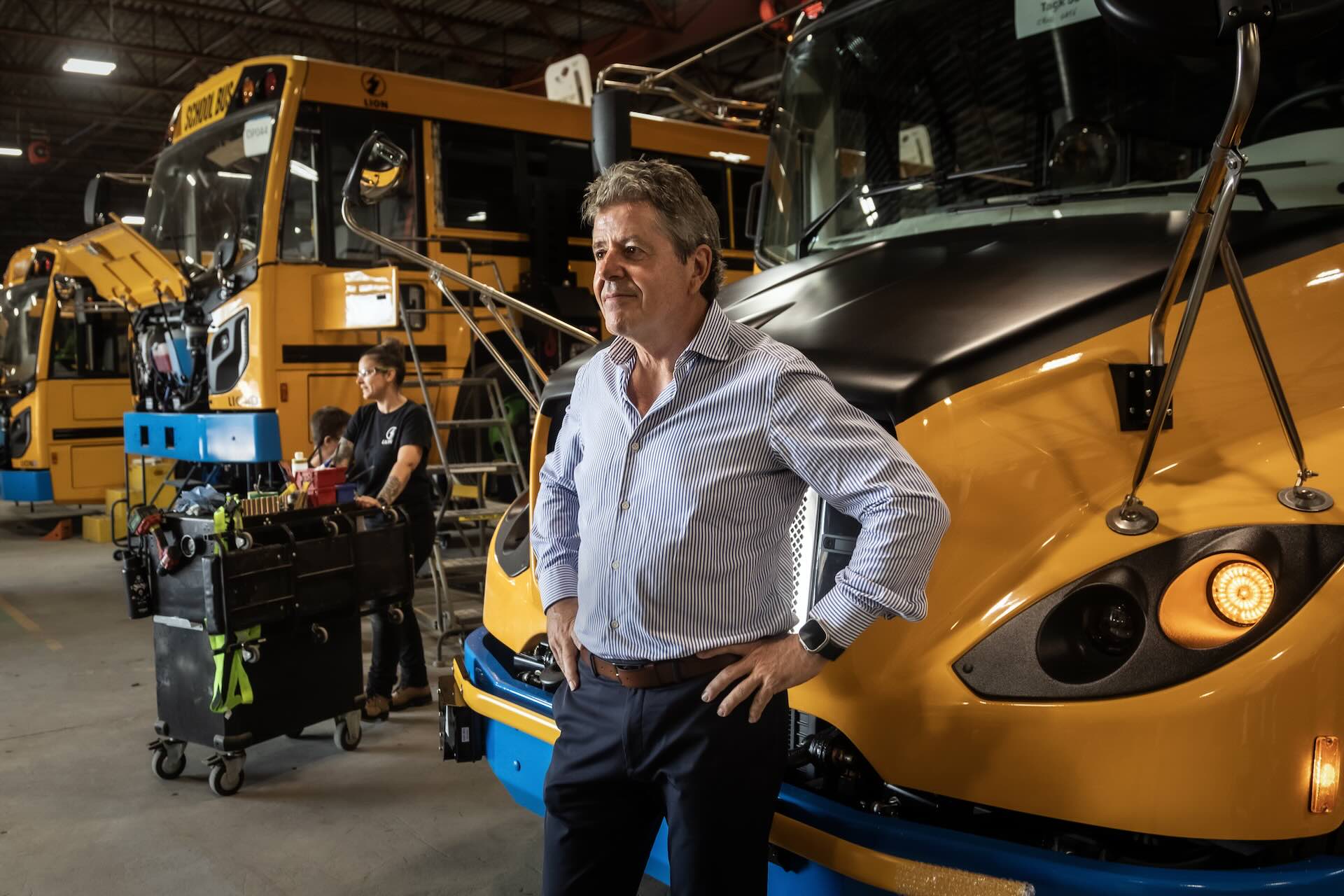
“We wanted to simplify everything. One building, one operation, one production line, one product,” said Lion Electric chairman Luc Sabbatini, who is also one of eight shareholders in the scaled-down entity.
Founded in 2008, Lion scaled at breakneck speed following its initial public offering via a special-purpose acquisition company in 2021. “The company had gone public, there was a board of directors and decisions were made,” Lion founder Marc Bédard, who is no longer involved with the company, told The Logic. “There was enormous pressure to put out the truck, but we were ahead of the market, probably too fast to the market.”
Having acquired the company last year, the new owners promptly retrenched. Sabbatini, Chiara and other members of the investment group came to know Lion through their own investments in the company in 2023. “We lost money,” Sabbatini said. “We kept in touch with the company, and when it went up for sale we said, ‘Why not?’ The product was good, and we thought maybe we could do something with it.”
Sabbatini has a track record of turning around troubled entities. In 2015, the former Bell and Astral executive became CEO of PBSC Urban Solutions, which acquired the debt-ridden international arm of Montreal’s Bixi bike sharing platform. Sabbatini brought PBSC to solvency by expanding Bixi’s model to dozens of international markets before the company was acquired by ride-hailing service Lyft in 2022.
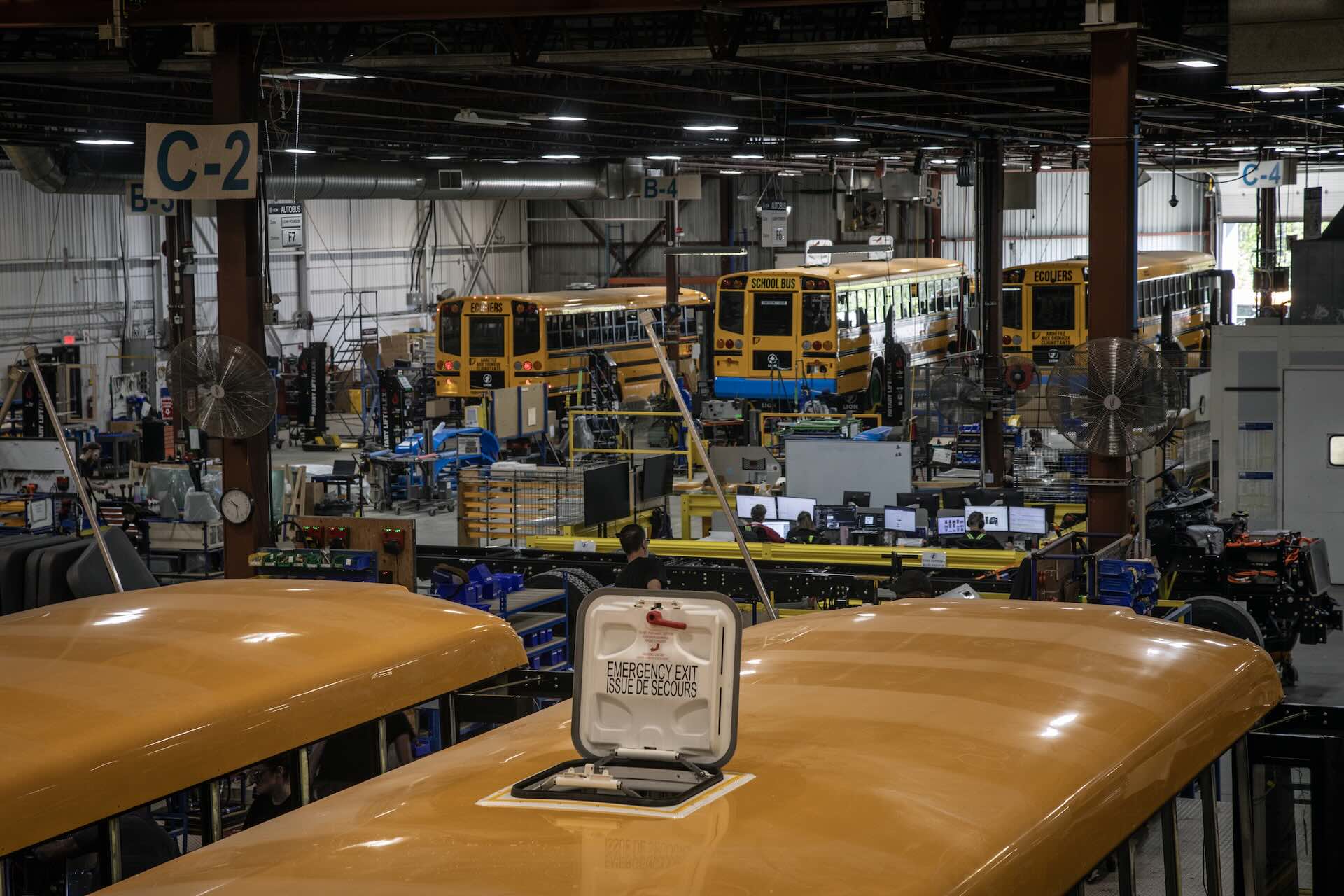
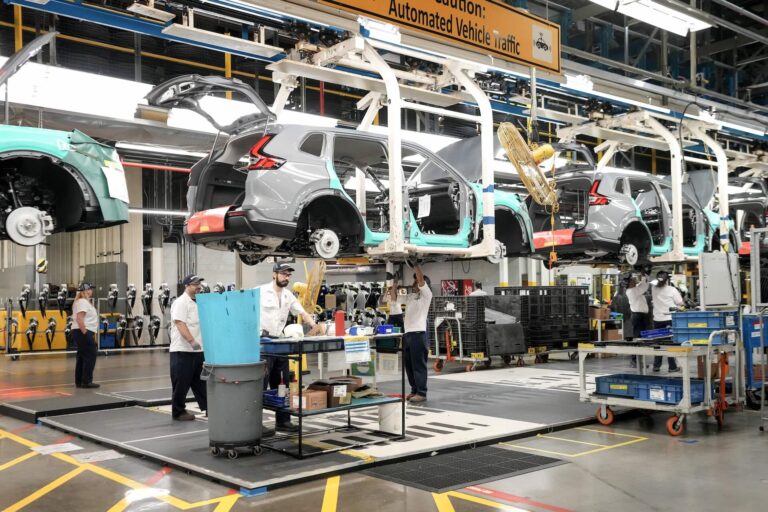
Today, Sabbatini and Wilkie, the sole holdover from Lion’s former board, oversee Lion’s day-to-day operations. The production line in Saint-Jérôme is much as it was before, housed in a brightly lit, hangar-sized space teeming with workers and hulks of buses in various stages of completion. The difference, Sabbatini pointed out, was the output: a single school bus a day, as opposed to multiple buses and vehicles spread across multiple factories and production lines.
The new owners hired quality control experts from Bombardier and Pratt and Whitney to consult on the production line revamp, Sabbatini said, in order to address a nagging issue with Lion’s wares of yore. Between 2013 and 2025, Lion electric vehicles were the subject of 35 recalls in Canada and several more in the U.S. Last fall, the company issued an inspection bulletin after one of its school buses caught fire.
Some Lion customers put off by the company’s quality control issues have already seen results under the new management, according to the Fédération des transporteurs par autobus (FTA), the province’s public transport operator industry group. “I won’t hide that some operators were burned in the past, and there’s still trust that needs to be regained. But it is clearly going in the right direction,” said FTA president Luc Fortin.
Electric bus manufacturers got a timely boost in Quebec last year when the province increased its electric school bus subsidy by as much as 60 per cent, to $240,000 per vehicle—putting the upfront cost of traditionally more expensive electric buses on par with their diesel-powered equivalents, Fortin said. Most of the estimated 2,400 electric buses on Quebec roads are Lion, Fortin added.
Lion’s new owners say they plan to expand beyond Quebec again in the future, but there is no set timeline. “We will return to English Canada one day. We will return to the United States one day. But we have to learn how to walk before we run,” Sabbatini said.