Japan’s KDDI bought the nerve centre of the Canadian internet nearly a year ago and now has expansion on its mind.
Skip to content

 Satoshi Adachi, the CEO of Telehouse. Photo: Handout/Telehouse

News
Japanese buyer of Canada’s internet nerve centre plans to expand
New business for its Canadian operations coming from remote broadband, global telcos and AI
Telehouse Canada CEO Satoshi Adachi says the company's red-brick-sided data centre in downtown Toronto will be ground zero of an expansion plan. Photo: Handout/Telehouse Canada
Japan’s KDDI bought the nerve centre of the Canadian internet nearly a year ago and now has expansion on its mind.
Growing business within its three tightly linked data centres in downtown Toronto, then to a fourth or fifth site in Toronto, and then to other major Canadian cities, is in the plans, said Satoshi Adachi, the CEO of the subsidiary KDDI formed for its investment in this country.
Talking Points
- Telecom conglomerate KDDI bought Canada’s critical “carrier hotel” from real estate company Allied REIT nearly a year ago, an asset its CEO in Canada compares to one it’s long owned in London’s Docklands
- The company plans to expand first within Toronto, then to other major Canadian cities
- AI is changing needs in data centres everywhere, and KDDI expects widespread adoption will be great for its business
With occasional shorter stints in Tokyo, Adachi has spent most of his recent career in the United States. He moved to Toronto from Dallas, keeping his title as vice-president of KDDI America as he took on responsibilities for Canada. The telecom conglomerate owns the Canadian operation through Telehouse, a global subsidiary that operates data centres and related digital infrastructure.
In an interview with The Logic, Adachi said Telehouse and KDDI both plan to nearly double their revenue by 2030 and its new Canadian operation is part of the strategy.
“This is a really important business portfolio of KDDI as a whole, and Telehouse as a whole,” he said.
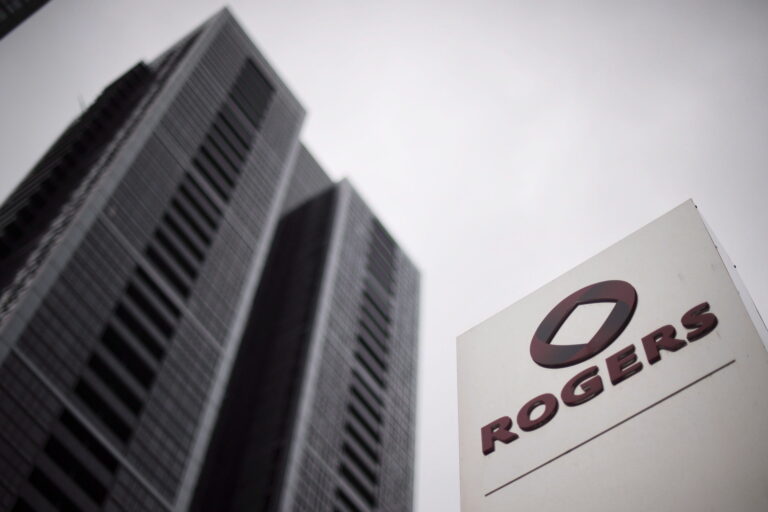
The core of Telehouse’s Toronto properties is 151 Front St. W., a “carrier hotel” where multiple telcos and giant bandwidth users link their networks. Tenants include Bell, Rogers and Telus, banks, insurance companies, Amazon, Akamai, Blizzard and Tencent.
“It’s the hub of everything that hits all the eyeballs on the internet in Canada,” said Andy Fenton, Telehouse Canada’s director of sales and marketing.
Related Articles
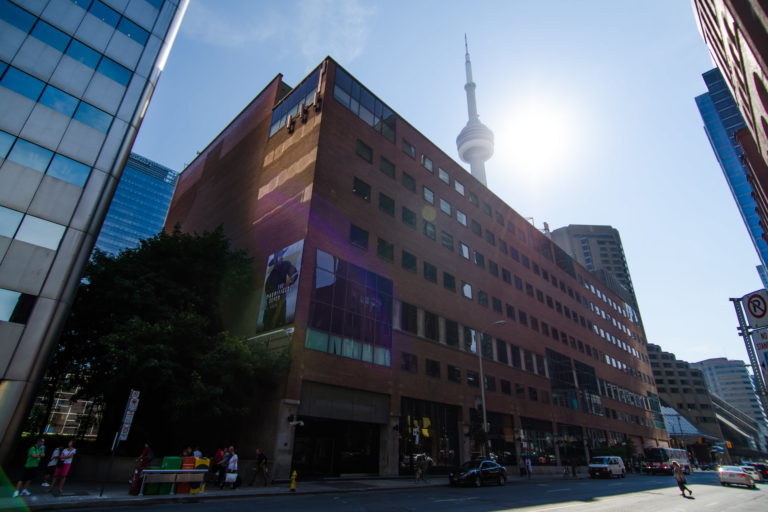
There and in nearby facilities at 250 Front St. W. and 905 King St. W., tenants also pay for more typical data-centre services, installing racks of servers under Telehouse’s care when the clients want their processing power to be as close to their interchange points as it can be.
Telehouse acquired the three sites from Allied REIT in a $1.35-billion deal. Allied is primarily in the office realty business and decided to offload the facilities to pay down debt; Telehouse specializes in data centres.
Adachi compared the Toronto properties to Telehouse’s campus in London’s Docklands district, where it hosts the London Internet Exchange and affiliated data centres in four sites.
“That’s currently similar to the Toronto assets. There are three assets [here] already. This is really appealing to me,” he said.
Canadian domestic business is increasing as governments spend on extending broadband internet connections to more remote parts of the country, said Fenton.
Beyond that, the short-term plan is to pitch U.S. and Asian telcos and content companies on the value of connecting more directly to Canadian customers via Toronto, Adachi said. “They are really interested in our assets.”
And then there’s artificial intelligence.
“We’ve been doing this a long time,” said Fenton, a veteran of Cogeco and Bell. “I go back to the ’90s, pre–dot-com meltdown era in this space. I haven’t seen anything quite like it in terms of the significant, technical revolution that’s driving the industry in a certain direction.”
For now, he said, much of the demand AI puts on the data-centre industry is served by facilities in suburban or more remote areas. The computing power needed to develop and train AI models can be practically anywhere, and the companies doing it will naturally favour cheaper sites. As AI becomes more widely used, though, speed and responsiveness will be more important.
“They’re not feeding eyeballs and queries at this point,” Fenton said. “As that flips, I think we’re going to start to see much more demand at the edge, which is where our properties are going to be.”
But getting those properties ready for mass adoption of AI will take some work, he acknowledged. A typical server cabinet today might need 10 kilowatts of electricity and equivalent cooling capacity to keep the circuits from frying. AI chips are much more demanding.
“We’re hearing requests for 45 kilowatts per cabinet. We’re hearing requests for 125 kilowatts per cabinet, liquid-cooled,” Fenton said.
Telehouse’s Toronto facility is connected to a multi-building cooling system that draws cold water from Lake Ontario, so it has a leg up, but keeping up with demand for both power and cooling will be a job for just about everybody in the data-centre business, he said. “Generally speaking, you’ve got requirements that these properties that were built some time ago just weren’t ready for.”
When Allied REIT put the Front Street carrier hotel on the market, tenants such as indie internet provider Beanfield worried that a buyer might favour certain customers or even compete with them itself.
Telehouse has a varied array of tenants, who compete with each other but also need to work together, and Telehouse has to maintain good relations with them. “It’s unique, being a carrier-neutral data-centre business operator,” Adachi said. “We are both participating in the creation of a digital economy. So our stance is to keep being neutral.”



Loading...
Thanks for sharing!
You have shared 5 articles this month and reached the maximum amount of shares available.
CloseThis account has reached its share limit.
If you would like to purchase a sharing license please contact The Logic support at [email protected].
CloseGift the full article!
You have gifted 0 article(s) this month and have 5 remaining.
Recipients will be able to read the full text of the article after submitting their email address. They will not have access to other articles or subscriber benefits.
Photo: Handout/Telehouse Canada
Satoshi Adachi, the CEO of Telehouse.
Most Popular This Week




In-depth, agenda-setting reporting
Great journalism delivered straight to your inbox.
News
A tech firm born from post-Brexit trade chaos sets its sights on Canada
Briefing
Dozens of Canadian researchers join chorus of scientists calling for a global AI oversight
TC Energy strikes deal with Indigenous groups for ownership stake in Coastal GasLink pipeline
Canada’s Tailscale taps Google Moonshot alum to lead sovereign AI push
Best business newsletter in Canada
Get up to speed in minutes with insights and analysis on the most important stories of the day, every weekday.
Exclusive events
See the bigger picture with reporters and industry experts in subscriber-exclusive events.
Membership in The Logic Council
Membership provides access to our popular Slack channel, participation in subscriber surveys and invitations to exclusive events with our journalists and special guests.





