Canada can lead the world on the biomedical technology needed to keep astronauts healthy on a mission to Mars, according to a government report set to be released in the coming weeks by the Canadian Space Agency (CSA).
The Logic obtained an early copy of the report—written by some of Canada’s leading scientists, physicians and two former astronauts—through an access-to-information request. The authors detail their vision for how Canadian companies and research institutions can dominate the budding deep-space healthcare industry, inspire a generation and potentially reap billions in return.
Talking Point
As the space race to Mars heats up, a soon-to-be released government report outlines how Canadian companies and research institutions can dominate the budding deep-space healthcare industry, inspire a generation and potentially reap billions in return.
“No space-faring nation has extensive experience with deep space healthcare,” reads the report, which was submitted to the Canadian Space Agency in February 2018. “We could lead the planet.”
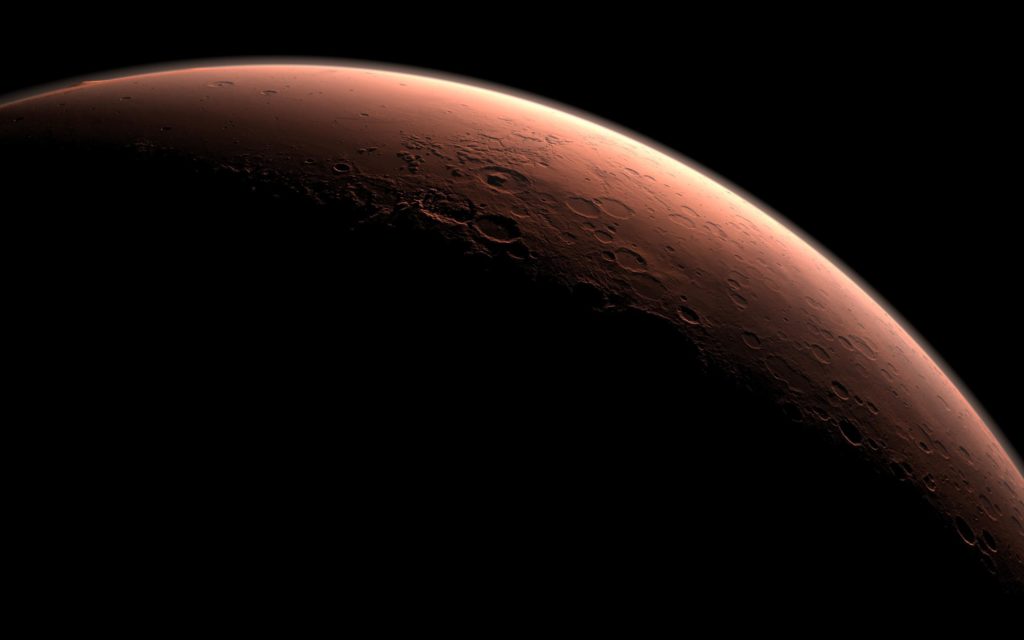
International space agencies and private companies have shown increasing interest in Mars missions in recent years. China intends to launch a probe to the red planet by 2020, while NASA aims to send humans to Mars by the 2030s. Elon Musk’s SpaceX is more ambitious: it’s set a goal of 2024 for a manned mission to Mars.
Canada’s participation on the International Space Station (ISS), including the Canadarm2 system, is worth about $6 billion in economic benefits, according to the CSA.
For all manned missions, developing healthcare applications that work in space will be critical. A Mars mission is a two-and-a-half-year round trip, and the distance from Earth to deep space means crew members can’t communicate with ground control or quickly return in an emergency, according to Robert Thirsk, former astronaut and chair of the expert group that authored the report.
“Astronauts are going to have to endure the effects of space flight, the effects of weightlessness on your heart, your bones, your blood vessels, your muscles,” said Thirsk. “And isolation and confinement is not just going to be six months away from your family and friends on the International Space Station. It’s going to be severe.”
Leveraging Canada’s AI and healthcare advantages
Canada has a rich talent pool for AI—it has the third-most AI researchers in the world—and the report noted research clusters in Toronto’s Vector Institute, the Montreal Institute for Learning Algorithms and Edmonton’s Alberta Machine Intelligence Institute. The report recommended exploring AI-based diagnosis and decision-making tools for astronauts in deep space who can’t send samples back to earth for testing, and non-invasive surgery techniques for emergencies like appendicitis.
The report notes that any space healthcare initiatives would build on the robotic capacity the CSA already has from ISS and space-shuttle programs, and include its microgravity research. Virtual consultation and training exercises can help astronauts stay up-to-date on their healthcare knowledge; minimally-invasive surgery using remote-controlled robots has already been performed on the ISS.
Canadian astronaut David Saint-Jacques, currently aboard the ISS, is wearing a smart shirt developed by Montreal-based Hexoskin; it monitors EKG, heart rate and number of steps. The data will be used to understand how space impacts the body. The CSA started working with Hexoskin in 2011 and, this year, renewed contracts to deploy the smart shirt to the ISS for the next five years. Gilles Leclerc, CSA space-exploration director, told The Logic that the agency hopes to test blood and saliva samples in real time on the ISS.
The report also stresses Canada’s several centres of excellence related to health—such as McMaster University’s Centre for Surgical Invention and Innovation, which used technology developed from the Canadarm to create a robot that detects breast cancer. Thirsk also said the Universities of Saskatchewan and Calgary do research in medical robotics that could be useful in deep space.
That research work is already getting started. Several Canadian academics are organizing a space-health research symposium at the University of Calgary for fall 2019, which will bring together “international leaders” who will “plan the future of our Canadian space health research community,” according to a January tweet from the organization.
On January 14, the agency awarded four deep-space health contracts worth a little over $110,000 each to Quebec City-based Thales Canada; Montreal-based Photon Etc.; Thunder Bay, Ont.-based Lunar Medical; and Montreal-based Carré Technologies.
The four companies must come up with concepts for computer-based diagnostic systems that can work in space, as well as monitor astronauts’ sleep, nutrition and fitness. The tech must relay all that information while considering the approximately 40-minute communications delay between Mars and earth.
The benefits beyond space exploration
The report notes that these technologies could also transform healthcare for remote communities and Canada’s aging population. They could also encourage a new generation to pursue STEM careers.
“Canada’s north and the remote parts of it are not that dissimilar to space,” said Thirsk. Tech developed to provide virtual healthcare in space could help patients in Canada access doctors remotely, according to the report. It notes that geriatric care could benefit from space innovations for deteriorating bones, and the military could learn from innovations designed to deal with emergency situations in space.
The authors highlighted that the CSA could help Canada’s medical industry spin its high-quality research into commercialization. That’s something the industry currently struggles with, according to Linda Maxwell, executive director of Toronto-based medtech incubator Biomedical Zone and a member of the expert group. “The medtech space, when it comes to innovation and entrepreneurship, is in its infancy,” said Maxwell.
A deep-space healthcare program at the CSA would need managers, engineers and healthcare practitioners. That would create new job opportunities and spur post-secondary programs to cater to young people interested in the industry, according to the report.
The expert group referenced a 2017 report commissioned by ISED that recommended re-establishing the CSA’s outreach program to encourage more youth to pursue STEM careers. “Severe cutbacks for space science and educational programs have reduced the country’s capacity to capitalize on the allure of space,” that report reads.
The 2018 report suggests that Canadian universities could model themselves after—or create satellite programs of—international programs, like the University of Tasmania’s course in expedition medicine and the University of Texas’ aerospace medicine residency program.
“We need to inspire this generation in the same way that the Baby Boomers were inspired by the audacious dreams and the R&D investments of the Apollo era,” the report reads.
Asked if the CSA will implement the report’s recommendations, spokesperson Marie-André Malouin highlighted the contracts or space health technology concepts issued in January. “These contracts will facilitate the early development, testing and validation of prototypes,” she said.
Canada’s space strategy
The Canadian government has yet to reveal its long-term space strategy, and the clock is ticking: NASA is seeking partners for its Lunar Gateway Mission—which, set to begin in 2022, will build a space station orbiting the Moon—that will be an outpost before moving on to Mars.
“The main challenge, obviously, [is] will we have the means to support our ambitions to become a leader in health research?” said Gilles Leclerc, director general of space exploration at the CSA.
Thirsk said the CSA’s response to the initial report was positive; Thirsk and fellow astronaut Dave Williams will start work on a second report in the coming weeks.
Leclerc indicated that the agency’s work complements that of more well funded agencies like NASA, which received US$20.8 billion in funding in 2018. In comparison, Canada’s 2016 budget had $379 million over eight years for the CSA. Those funds were set aside to secure the country’s participation in the ISS until 2024, while $30 million was earmarked for a four-year project with the European Space Agency.
Danielle Keenan, press secretary to Innovation Minister Navdeep Bains, did not directly respond when asked whether a space strategy would be announced in the government’s 2019 budget.
“We believe in a long-term vision for space, and the Minister has publicly stated that a space strategy will be launched before the end of our mandate,” said Keenan.