CALGARY — A major biotechnology institute in Alberta, led by a Nobel Prize-winning researcher, is seeking federal funding to develop potentially breakthrough vaccines and drugs, documents obtained by The Logic show, in an investment proposal that proponents say could fetch lucrative rewards despite the pharmaceuticals sector’s high-risk nature.
Skip to content

Exclusive
As Alberta seeks to grow biotech sector, research lab led by Nobel winner makes pitch for millions in government cash
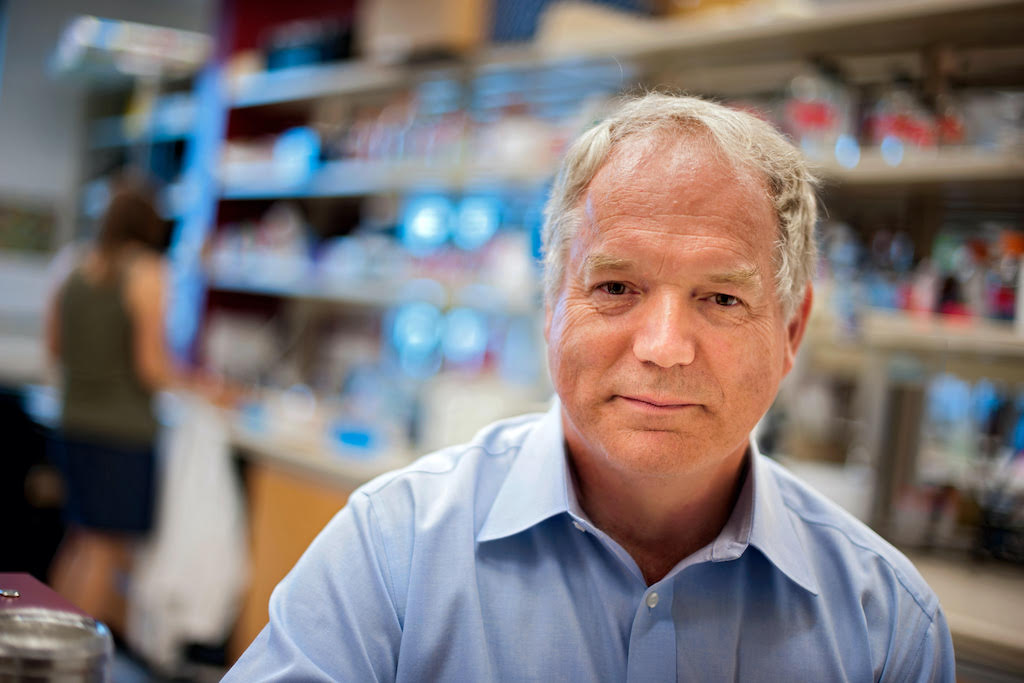
Michael Houghton in his lab at the University of Alberta’s Li Ka Shing Institute of Virology. Photo: University of Alberta | Handout
CALGARY — A major biotechnology institute in Alberta, led by a Nobel Prize-winning researcher, is seeking federal funding to develop potentially breakthrough vaccines and drugs, documents obtained by The Logic show, in an investment proposal that proponents say could fetch lucrative rewards despite the pharmaceuticals sector’s high-risk nature.
The University of Alberta’s Li Ka Shing Applied Virology Institute (LKSAVI) has sought $20 million to aid the “clinical and commercial rollout” of its portfolio of six vaccines and drugs, a senior official at Innovation, Science and Economic Development Canada said in an April 2021 memo, which The Logic obtained via access-to-information request. If just one of those vaccines or other products reaches full commercialization, the payout could be sizeable, netting federal coffers more than $15 million in annual royalties over a 15- to 20-year period, the memo says.
Talking Point
The biopharmaceuticals sector is witnessing a surge in interest from both investors and national governments amid the global pandemic. The University of Alberta’s Li Ka Shing Applied Virology Institute has applied for federal funding to develop a suite of vaccines and antivirals, arguing that the potential payouts could be enormous.
The LKSAVI is led by Michael Houghton, a researcher who was part of a team that won a 2020 Nobel Prize in the category of physiology or medicine for discovering hepatitis C, and Lorne Tyrrell, an inductee into the Canadian Medical Hall of Fame whose research in the 1980s and ‘90s led to a breakthrough treatment for hepatitis B. Houghton and Tyrrell did not respond to The Logic‘s interview requests, and did not confirm the institute’s pitch to the federal government.
The memo suggests federal funding for the LKSAVI could lay the groundwork for a vastly expanded biotech cluster in Alberta, capable of attracting top talent and drawing interest from major venture capital funds.
The request for funding comes as the federal government has made commitments to build out Canada’s life-sciences sector, after the COVID-19 pandemic exposed holes in the country’s bio-manufacturing capabilities.
Ottawa unveiled plans to spend more than $2.2 billion over seven years in the 2021 budget to expand vaccine production, research new medicines and to help life-sciences companies scale up. The government announced in March last year it’s giving the French drugmaker Sanofi Pasteur up to $415 million to build a new influenza-vaccine facility in Toronto, and has made similar plans with Moderna, though talks with the U.S. pharmaceutical company are ongoing seven months after the deal was first announced.
The LKSAVI is developing a range of drugs and vaccines that, if successful, could both reduce costs for Canada’s healthcare system and generate billions of dollars from global sales, the senior ISED official said in the memo, which was addressed to deputy minister Simon Kennedy.
The products include a hepatitis C vaccine that could generate as much as $1.5 billion in royalties over a 15-year period, assuming a market share of 30 per cent. It would cost $13.47 million to develop, according to the LKSAVI’s estimates. An antiviral for cytomegalovirus could create around the same value, while costing $13 million to develop, according to the LKSAVI’s pitch.
“The potential return is considerable,” the ISED official said in the memo, referencing the U of A’s claims.
Other drugs and antivirals in the portfolio include a Group A Streptococcus vaccine, treatments for non-alcoholic fatty liver disease, and therapeutics for Alzheimer’s disease, which affects some 44 million people worldwide, according to the memo.
Government subsidies for the institute’s research would also further enrich the province’s homegrown life-sciences sector, the document said, “as opposed to draining Albertan innovation and technology to other countries via low-value, pre-clinical collaborations with global pharmaceutical companies.”
“Achieving success in just one of these programs will lead to the employment of hundreds of highly qualified personnel with an IP-protected product and a market of over $1 billion,” the proposal says.
The government’s position on the LKSAVI’s proposal is redacted in the memo, and a spokesperson for the federal innovation minister did not confirm whether Ottawa has made a final decision.
“Details relating to Strategic Innovation Fund applications are subject to commercial confidentiality and cannot be disclosed,” ISED spokesperson Laurie Bouchard said.
In December 2021, Alberta Premier Jason Kenney announced $55.1 million in funding for vaccine and drug research at the University of Alberta, months after it had given another $20-million grant to the LKSAVI. Kenney said in the initial announcement that the funding would go toward combatting “future contagious diseases that pose a grave threat to public health.”
The University of Alberta’s Institute of Virology was formed in 2010 following a $25-million donation from the Li Ka Shing Foundation; Tyrrell was named founding director.
Andrew Casey, president and CEO of BIOTECanada, said Alberta’s biotechnology sector “punches above its weight” compared with other regions in Canada, and that breakthrough pharmaceutical technologies can indeed fetch a high premium. But such success stories are exceedingly rare, he said, with a failure rate of around 95 per cent.
Winners in the biotech sector sometimes win on a large scale. As an example, Casey cited the mRNA COVID-19 vaccine developed by Moderna, which, unlike its pandemic rival Pfizer, had not had any commercial success just a few years ago.
“They had not made one dollar from selling any vaccines, yet they’d invested billions of dollars into research and development and even into building facilities,” he said. “And then COVID came along. So that’s exactly what can happen in all sorts of different areas: rare diseases, cancers, neurological disease.”
Those potential returns, coupled with a new global urgency to develop vaccines and therapeutics amid the pandemic, has fed a spike in biotechnology interest among private equity firms and venture capitalists. Investments in health-care firms in the U.S. and Europe surpassed US$80 billion in 2021, according to a report from Silicon Valley Bank, a more than 30 per cent leap compared with the year prior.
Houghton, a British scientist who has spent the last 11 years in Alberta, has previously said the province’s robust life-sciences sector could be dramatically expanded with the necessary funding and talent.
“I think Alberta is very well placed to become a major player on the world stage in what’s loosely called biotechnology,” he said in a recent interview with The Future Economy.
In the same interview, he says the biotech sector is key to the province’s energy transition, and could provide employment for skilled professionals for years to come.
“We all know that Canada has a great resource in its oil and gas, but we also recognize that we are going to need new industries in the future to maintain Canada’s first-rate presence in the world and domestically,” Houghton said. “And I believe biotechnology can really fill that gap as [the] oil and gas industry starts to decline.”
With files from Murad Hemmadi



Loading...
Thanks for sharing!
You have shared 5 articles this month and reached the maximum amount of shares available.
CloseThis account has reached its share limit.
If you would like to purchase a sharing license please contact The Logic support at [email protected].
CloseGift the full article!
You have gifted 0 article(s) this month and have 5 remaining.
Recipients will be able to read the full text of the article after submitting their email address. They will not have access to other articles or subscriber benefits.
Photo: University of Alberta | Handout
Most Popular This Week


In-depth, agenda-setting reporting
Great journalism delivered straight to your inbox.
News
AI could help invent new materials. First, firms must figure out how to make them
Briefing
Defence Investment Agency to be a Crown corporation so it can get deeper into Canada’s military industry
Mark Carney says he’ll work with Quebec separatist premier-to-be on housing, infrastructure, big projects
Mistral claims its new AI model closes the gap with leading Chinese developers
Best business newsletter in Canada
Get up to speed in minutes with insights and analysis on the most important stories of the day, every weekday.
Exclusive events
See the bigger picture with reporters and industry experts in subscriber-exclusive events.
Membership in The Logic Council
Membership provides access to our popular Slack channel, participation in subscriber surveys and invitations to exclusive events with our journalists and special guests.