Last Sunday, television host Vladimir Solovyov pinned the death of opposition leader Alexei Navalny on Navalny’s own “totalitarian cult” in the West, which he claimed is bent on discrediting Russian President Vladimir Putin. “Who benefits from this?” Solovyov said, before answering his own question. It was Russia’s Western enemies, eager to put an end to the “insanely positive reaction” to Putin’s recent interview with former Fox host Tucker Carlson, who are responsible for Navalny’s death. “The Russian government and Russia have the least to gain,” Solovyov said.
Skip to content

 A panel on “Evening with Vladimir Solovyov.” Photo: Телеканал 1+1 / YouTube screengrab

News
Canadian streaming companies carry Russian broadcasters despite sanctions
Critics say Russia-1 and others spread Kremlin propaganda, incite hate towards Ukrainians
Vladimir Solovyov, Russian television presenter during Russian President Vladimir Putin's annual meeting with the Federal Assembly, on Feb. 21, 2023, in Moscow, Russia. Photo: Getty Images/Contributor
Last Sunday, television host Vladimir Solovyov pinned the death of opposition leader Alexei Navalny on Navalny’s own “totalitarian cult” in the West, which he claimed is bent on discrediting Russian President Vladimir Putin. “Who benefits from this?” Solovyov said, before answering his own question. It was Russia’s Western enemies, eager to put an end to the “insanely positive reaction” to Putin’s recent interview with former Fox host Tucker Carlson, who are responsible for Navalny’s death. “The Russian government and Russia have the least to gain,” Solovyov said.
Talking Points
- Two Toronto-area streaming companies offer access to Russian state-owned television stations despite Canadian government sanctions
- Critics say the companies are spreading Russian state propaganda, disinformation and misinformation, much of which is intended to incite hate towards Ukrainians
Though it is among the highest rated television shows in Russia, the broadcast of “Evening with Vladimir Solovyov” appears on a network that is banned in Canada under sanctions that outlaw “activities that directly or indirectly facilitate, support, provide funding for or contribute to a violation or attempted violation of the sovereignty or territorial integrity of Ukraine.” In 2022, YouTube permanently banned Solovyov’s channel after he violated the company’s incitement to violence policy.
Yet two Toronto-area streaming companies offer access to dozens of sanctioned Russian state-owned television stations, The Logic has learned—one for as little as $12.50 a month.
Founded in 2004, Ethnic Television Network (eTVnet) streams Russia-1, home to Solovyov’s weekly broadcast as well as his nightly news panel, “Evening with Vladimir Solovyov.” Along with Russia 24, which eTVnet also carries, Russia-1 is part of the network of television channels owned by VGTRK, Russia’s largest state-controlled media company. The U.S. government sanctioned Russia-1, among others, in 2022 as a result of Russia’s invasion of Ukraine.
ETVnet also streams NTV Broadcasting, which is also on the sanctions list, along with its owner Gazprom Media, the broadcasting subsidiary of state-owned natural gas producer Gazprom. While eTVnet is based in Canada, it also appears to serve customers outside the country. Its website lists local customer support phone numbers for a host of major U.S., European and Australian cities, as well as Israel.
Kartina, which is based in the Greater Toronto Area’s Richmond Hill and has a Montreal office, also streams NTV and VGTRK-owned channels through set-top devices it sells on its website, including Roku.
Contravening Canadian sanctions is a criminal offense, Global Affairs Canada spokesperson Jason Kung told The Logic, though he would not comment specifically on eTVnet and Kartina. “Possible contraventions are investigated and enforced by the Canada Border Services Agency and the Royal Canadian Mounted Police.”
Related Articles
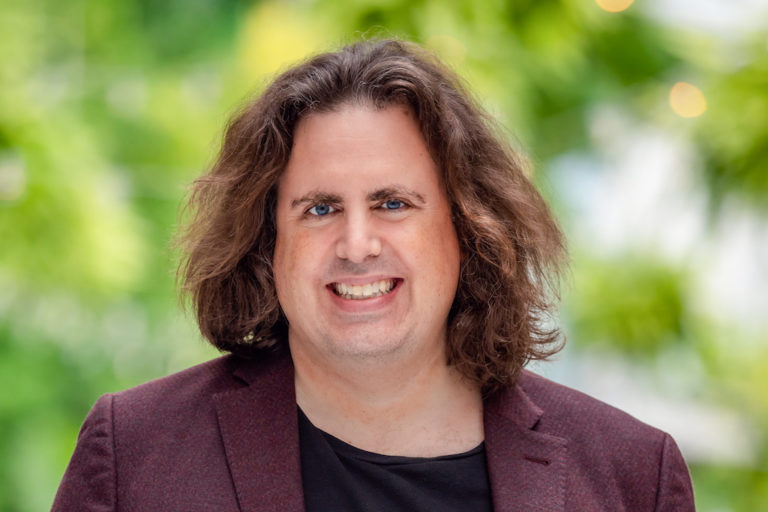

“All of these channels broadcast Russian state propaganda, disinformation and misinformation, much of which is intended to incite hate towards Ukrainians, whether they’re living in Ukraine or elsewhere, including here in Canada,” said researcher and Russia critic Marcus Kolga. By providing access to the channels, Kolga says, eTVnet and Kartina risk radicalizing members of Canada’s Russian-speaking community, and are both undermining support for Ukraine and aiding the erosion of trust in democratic institutions in Canada and elsewhere.
Alla Kadysh, a Toronto-based Russian-language radio and podcast host, estimates that roughly a third of Canada’s Russian community watch eTVnet and Kartina.
Gennady Beyn is Kartina’s director, according to business registry documents. An email to the company requesting comment went unanswered. Vadim Sloutsky, Kartina’s general manager, didn’t answer a LinkedIn message requesting comment.
By providing access to the channels, Russia critic Marcus Kolga says, eTVnet and Kartina risk radicalizing members of Canada’s Russian-speaking community.
Online Ethnic TV Services, Kartina’s primary shareholder, is a Toronto-based app producer. Its Russian TV app, available on Apple’s App Store, also provides access to Russian TV stations sanctioned by the Canadian government, among other governments.
ETVnet is owned by Matvil, a Toronto-based “content provider for Pay TV systems in European hotels.” Michael Gayster, whom a business directory lists as Matvil’s general manager, declined to comment, saying repeatedly that he is not, in fact, Matvil’s general manager. “I am retired,” Gayster said when reached by phone, before suggesting The Logic contact eTVnet. An email to eTVnet’s general mailbox went unanswered.
Described as one of the “faces of Kremlin propaganda” by the U.S. government, Solovyov is a large cog in Russia’s propaganda machine. Given to Nehru jackets and long diatribes, the 60-year-old is unfailingly supportive of Putin and the invasion of Ukraine, which Solovyov suggested was a reaction to NATO attacking Russia. He called Ukraine President Volodymyr Zelenskyy “the devil” and Ukranians “ugly devils” who kill their own citizens to frame Russia. Though Jewish himself, he is prone to antisemitic comments, and once praised Adolf Hitler’s bravery.
Solovyov’s guests almost always hold a similar worldview. During his most recent Sunday broadcast, Margarita Simonyan, editor-in-chief of the Russian state-controlled broadcaster RT, blamed Navalny for her failed pregnancy. She then criticized Yulia Navalnaya, Navalny’s widow, for wearing makeup and smiling at a press conference following her husband’s death. “This woman didn’t really love her husband,” Simonyan said.
Kadysh said she has seen the effects of the propaganda in Canada’s Russian expat community. “Part of the Russian population kind of got crazy,” Kadysh said. “You can’t really talk to them. It’s dangerous to mental health.”



Loading...
Thanks for sharing!
You have shared 5 articles this month and reached the maximum amount of shares available.
CloseThis account has reached its share limit.
If you would like to purchase a sharing license please contact The Logic support at [email protected].
CloseGift the full article!
You have gifted 0 article(s) this month and have 5 remaining.
Recipients will be able to read the full text of the article after submitting their email address. They will not have access to other articles or subscriber benefits.
Photo: Getty Images/Contributor
A panel on “Evening with Vladimir Solovyov.”
Most Popular This Week




In-depth, agenda-setting reporting
Great journalism delivered straight to your inbox.
News
Tech firms want AI models to create better versions of themselves
Briefing
Lightspeed cuts 250 jobs through layoffs and attrition
Oil tycoon Adam Waterous aims to build new Canadian energy player with US$1B fund
Data centre infrastructure firms 3C and Datalec merge, plan Calgary expansion
Best business newsletter in Canada
Get up to speed in minutes with insights and analysis on the most important stories of the day, every weekday.
Exclusive events
See the bigger picture with reporters and industry experts in subscriber-exclusive events.
Membership in The Logic Council
Membership provides access to our popular Slack channel, participation in subscriber surveys and invitations to exclusive events with our journalists and special guests.