Skip to content


News
Smaller VCs face $1.6B fundraising gap as capital gets stuck at the top
Five venture funds captured 80 per cent of all fundraising in Canada last year, according to RBCx data, making it harder for emerging managers and the startups they back to raise capital
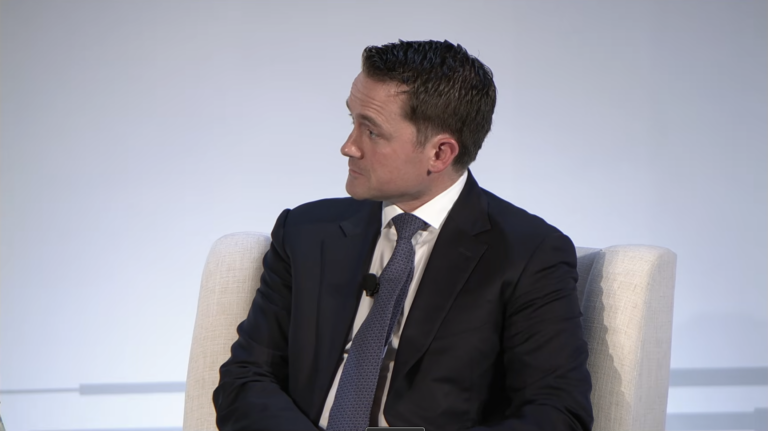
In the first quarter of 2026, the number of early-stage companies raising venture capital and the amount of money they raised fell roughly 40 per cent compared to the same period a year earlier. Photo: Laura Proctor for The Logic
Canadian startups are finding it harder to raise money as venture capital becomes more concentrated in a handful of large firms, according to new data from RBCx.
Just five venture capital funds accounted for nearly 80 per cent of all fundraising in Canada’s VC market last year, according to RBCx data. That’s up from about 66 per cent in 2024 and 46 per cent the year before. Emerging managers—defined as firms raising their first three funds—raised about $2.8 billion in 2025, 36 per cent less than anticipated, based on historical trends, leaving a gap of about $1.6 billion.
Talking Points
- Venture capital is becoming increasingly concentrated in a handful of funds in Canada, leaving emerging managers with less money to back first-time founders and early-stage startups
- The findings arrive as venture investors and startup groups debate where Canada’s biggest investment gaps lie and where government support would be most valuable
The drop in fundraising has left many startups starved for capital. RBCx, the innovation banking and investment arm of Royal Bank of Canada, tracked fundraising activity among more than 700 Canadian pre-seed and seed-stage companies and found a sustained decline beginning in early 2025. In the first quarter of 2026, the number of early-stage companies raising venture capital and the amount of money they raised both fell roughly 40 per cent compared to the same period a year earlier.
RBCx head of banking Tony Barkett said the drop in VC fundraising is linked to the slow IPO market. Without those public offerings, investors don’t have cash returns to back new venture funds. Any cash they do have, he said, will go into more established venture funds, rather than emerging managers, that tend to make less risky bets on more mature companies.
Barkett said that the situation has led to fewer early-stage startups and first-time founders, who normally rely on people taking risks on them, being able to raise capital.
Related Articles


Matt Roberts, managing director of venture coverage at RBCx, said advances in AI may explain some of the decline in early-stage deal-making, as the technology lets more founders start and grow their businesses quickly and on a small budget. But, he added, those cases seem to be outliers. “I don’t think it’s pronounced enough to make up for the numbers that we’re seeing here,” he said.
Barkett said startups aren’t necessarily choosing to delay or forego fundraising, but that investors have become more selective as AI raises their expectations. “The bar is higher,” he said, adding that startups that could have easily raised money several years ago on little more than an idea may now be expected to show customer traction and usage data, for example.
The findings arrive as venture investors and startup groups debate where Canada’s biggest investment gaps lie. Industry organizations have spent months lobbying Ottawa over how to deploy $750 million earmarked in last year’s federal budget to support early-growth-stage startups.
The Canadian Venture Capital and Private Equity Association (CVCA) has argued the money should go toward scaling companies raising large financing rounds. The National Angel Capital Organization (NACO) suggested the money should go to companies raising their first cheques, as well as operational expenses for early-stage investment organizations, including those like NACO itself. And the Canadian Startup Capital Association thinks most of the money should go to growth-stage companies, with up to $150 million of the pool reserved for angel and early-stage investment and programming.
While the RBCx report focuses on early-stage fundraising, Roberts said there are weaknesses across the venture capital industry. Fundraising by the top five funds in Canada declined by 50 per cent from the pandemic-era high of $3.5 billion in 2021 to $1.7 billion last year, the bank’s report shows. A recent analysis by CVCA also found that growth-stage deals nearly dried up in the first quarter of 2026.
Proponents of prioritizing later-stage fundraising argue that’s where economic stakes are highest. Without enough growth capital, they argue, Canada’s most promising startups will increasingly rely on U.S. investors to fund their expansion, leaving foreign firms with a larger share of the upside when those companies succeed. Roberts said larger Canadian growth funds would help keep more of those returns in Canada, where they could be recycled into the next generation of startups and venture funds.
Editor’s note: This article has been updated to clarify what kinds of organizations would be eligible for funding under NACO’s recommendations for the federal government’s plans to fill early-growth-stage funding gaps.



Loading...
Thanks for sharing!
You have shared 5 articles this month and reached the maximum amount of shares available.
CloseThis account has reached its share limit.
If you would like to purchase a sharing license please contact The Logic support at [email protected].
CloseGift the full article!
You have gifted 0 article(s) this month and have 5 remaining.
Recipients will be able to read the full text of the article after submitting their email address. They will not have access to other articles or subscriber benefits.
Photo: Laura Proctor for The Logic
Most Popular This Week



In-depth, agenda-setting reporting
Great journalism delivered straight to your inbox.
News
Ottawa is softening its ban on stablecoin yield
Briefing
Rio Tinto gets nearly $165M in additional federal funds for Quebec aluminum
U.S. to lift tariffs on some Canadian products crucial to Maine: Collins
Carney warns of tech dependence after Starlink disruptions in Ukraine
Best business newsletter in Canada
Get up to speed in minutes with insights and analysis on the most important stories of the day, every weekday.
Exclusive events
See the bigger picture with reporters and industry experts in subscriber-exclusive events.
Membership in The Logic Council
Membership provides access to our popular Slack channel, participation in subscriber surveys and invitations to exclusive events with our journalists and special guests.






