Listen Now
0:00
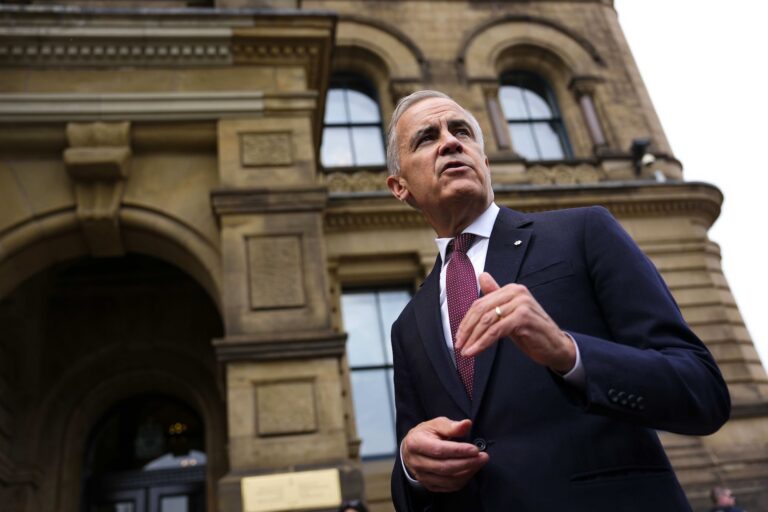
OTTAWA — Prime Minister Mark Carney says U.S. President Donald Trump’s latest tariff threats won’t convince Canada to agree to piecemeal trade talks, despite the White House’s clear intention to target specific industries.
Carney said on Tuesday that he spoke with Trump earlier in the day and agreed to immediately intensify their trade negotiations.
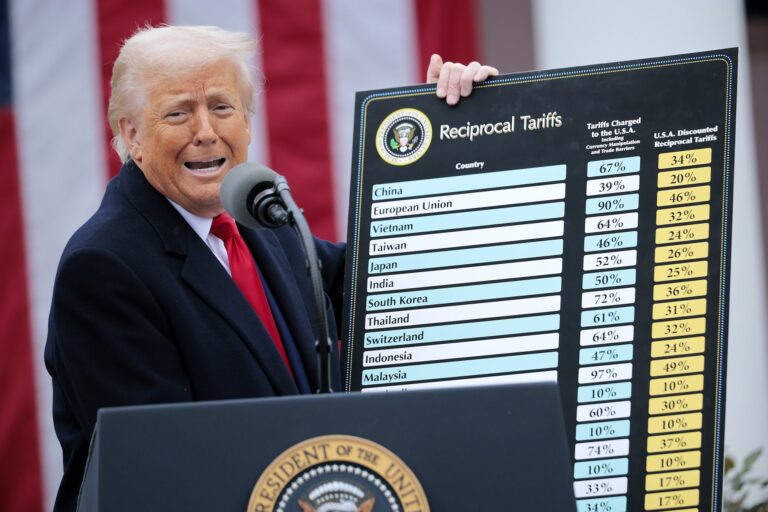
The call happened less than 24 hours after the president signed orders to impose 50 per cent tariffs on a wide swath of Canadian exports, from alcohol to hockey equipment and agricultural products. The new tariffs take aim at the White House’s long-standing irritants, including supply-managed dairy, the auto sector and provincial bans on the sale of U.S. liquor. If the countries don’t negotiate a deal, they are to take effect in 30 days from when the order was signed.
Related Articles
Carney said he understands why the U.S. is keen to negotiate sector by sector, but Canada is only interested in a comprehensive deal to modernize the Canada-United States-Mexico Agreement on trade (CUSMA).
“We don’t want a partial agreement. We want something that addresses those sectors as well, so that it’s a viable approach going forward,” he told reporters outside his office in Ottawa.
Hitting back: That means not putting American booze back on Canadian shelves until a deal is reached, Carney said.
“The decision to change that, first and foremost, will be taken by provinces themselves,” he said, “and should only be taken as part of an overall agreement.”
The U.S. trade representative’s office has said the new raft of tariffs was partly retaliation for provinces that have halted sales of American alcohol. Carney said provinces only took U.S. products off their markets in response to U.S. tariffs and threats to Canada’s sovereignty.
Carney said he would meet virtually with the premiers Tuesday afternoon to discuss whether to retaliate further once the new tariffs come into effect. He is also expected to meet with them in person in Charlottetown later this week.
“We will look at all options in terms of how we would respond,” the prime minister said.
Provincial pushback: The premiers are meeting in Charlottetown on their own, before Carney joins them in person. Trade with the U.S. is very much on the agenda, said the host, Prince Edward Island Premier Rob Lantz.
“This topic was going to be a large part of the discussion regardless,” he said before the day’s session.
Most of the premiers who spoke to reporters set out to stiffen Carney’s spine.
“Supply management is non-negotiable,” said Quebec Premier Christine Fréchette. “That will stay, to the end.”
Ontario’s Doug Ford said it’s time for Canada to go on offence against the Trump administration.
“I’m tired of the bully trying to take our lunch money,” he said.
Ford said he’d prefer a deal, for everyone’s benefit. But if Trump’s threatened tariffs kick in next month, he said, Canada should use every trade weapon it has.
“We are an energy powerhouse. We could dismantle the U.S., if we wanted to, if we all work together,” he said. “No matter if it’s the electricity… the potash, the oil—we’re their No. 1 customer in the world. They need to feel the pain rather than us constantly feeling the pain.”
“There is not a chance in hell that U.S. alcohol is going back on the shelves in British Columbia,” said B.C. Premier David Eby. Paradoxically, he said, he’s prouder than ever to be Canadian—united, standing strong and building new relationships internationally.
“I feel sorry for Americans. If you can’t be friends with Canada, then you almost certainly do not have a friend anywhere in the world,” he said.
Eby, a New Democrat, said he’s with Ford, a Progressive Conservative, on how to deal with Trump: “The one way to embolden a bully is to capitulate.”
Economic impact: Unlike Trump’s Liberation Day tariffs, which the White House gradually walked back, this latest round appears more targeted, said Andrew Hencic, senior economist with TD Bank Group.
“The new batch looks to affect the Canadian economy with minimal impact on U.S. industry and consumers,” he said in a note.
This latest blow will further dent Canadian businesses, which have been operating with uncertainty since Trump’s re-election, but it’s unlikely to cause the kind of shock the president’s 2025 tariff threats inspired, Hencic said.
Still, he anticipates that the tariffs would take 0.3 to 0.6 percentage points off Canada’s GDP growth over the next year, if they go ahead.
Derek Nighbor, CEO of the Forest Products Association of Canada and the Canadian Wood Council, challenged the idea that the tariffs wouldn’t hurt Americans very badly. The U.S. Congress just passed legislation meant to make new homes easier to build, and now the president is planning to tariff more Canadian wood used in housing, he pointed out.
“Tariffs on the very materials used to build homes, renovate properties and support North American construction supply chains will only make housing more expensive for American families. These actions will increase costs on our American neighbours, full stop,” Nighbor said in a statement.
The U.S. homebuilders’ association agrees, having called for tariff exemptions on housing materials from the beginning.
Eby acknowledged that the levies “will hurt our economy in British Columbia,” hitting people connected to the wood and alcohol industries especially hard. “There is no reason to believe this is the bottom,” he said.
In a letter to shareholders Tuesday, General Motors CEO Mary Barra said the automaker planned to move more of its manufacturing and sourcing to the U.S. to avoid tariff exposure.
CUSMA soft spots: The U.S. has already decided against renewing CUSMA wholesale, though the deal remains in place for the next 10 years while the countries continue to negotiate.
Carney said Canada has tabled several “comprehensive proposals” to solve some of Trump’s issues with the deal. The U.S. trade representative, meanwhile, has published a long list of irritants it wants to resolve, including aspects of Canada’s internet regulations, its sovereign cloud initiatives and its supply-managed dairy sector.
Jamieson Greer told U.S. news network CNBC that Canada’s proposals amount to “promises to discuss these issues,” but not to make actual changes.
Still, Trump’s new tariff announcement reveals some of his weaknesses, said Unifor national president Lana Payne, head of Canada’s largest private sector union. A fact sheet published with the president’s tariff proclamation noted exemptions for Canadian energy exports, potash and critical minerals.
“He knows that, despite his bluster, the U.S. does need things from Canada, and without them the U.S. economy and workers will suffer,” Payne said.
Brace for more pain: The latest threat may only be the first volley of Trump’s renewed tariff strategy, said Barry Appleton, co-director of the New York Law School’s Center for International Law.
“This is the great Canadian summer of our discontent,” warned Appleton in an interview from Toronto, where he has a law practice specializing in international economic and trade law.
The 10 per cent tariffs Trump imposed in February on all U.S. imports are set to expire this week and can only be renewed by Congress. The Financial Times reported that U.S. officials are preparing a new round of tariffs to replace those that are due to end.
When asked about the report, Greer said: “We expect to see more action soon.” He is preparing a round of tariffs aimed at 60 countries that either allow the import of goods made with forced labour or, as the U.S. contends is the case with Canada, “failed to effectively enforce” a ban on them. Canada is expected to face 10 per cent levies, though the White House previously said it would exempt goods covered by CUSMA.
This next phase of Trump’s tariff war spells bad news for Canada, especially as the president puts more pressure on Carney to make concessions ahead of CUSMA negotiations, said Appleton.
Another key question: whether Trump’s unprecedented use of a section of the Tariff Act of 1930 to justify the newly announced tariffs will stand up to legal challenge.
U.S. economist Paul Krugman, who won the Nobel Prize in economics for his work on trade, called Trump’s latest tariff threats “almost surely illegal,” and a violation of the trade pact among Canada, the U.S. and Mexico.
Appleton differs, saying one of the reasons the obscure, 96-year-old law likely appeals to Trump is that it will be difficult to challenge. Unlike other legal mechanisms, Section 338 of the act doesn’t require a hearing or investigation by a federal agency.
Noting that CUSMA includes exemptions for U.S. trade law, Appleton said: “We can go to court, but we’ll lose.”
Canada’s friends(?) to the south: Reaction in the United States was muted.
Chris Swonger, president of the Distilled Spirits Council of the United States, said in a statement that he’s glad to see the industry’s pain recognized.
“We had hoped, however, that this issue could be resolved without further escalation,” he went on. “Imposing a 50 per cent tariff on imported spirits from Canada deepens trade tensions and raises the risk of further retaliation.”
John Thune, the leader of the Republican majority in the Senate, said he’s generally not a fan of tariffs but was just learning about Trump’s new plans on Tuesday and was curious to learn more about the president’s rationale.
The Senate has taken close (and ineffectual) votes against some of Trump’s previous tariffs, though Thune didn’t join a handful of Republican rebels in voting against the president at the time.
Democratic Sen. Adam Schiff of California earlier this month called for American alcohol to be restored to Canadian shelves. He lamented that “Trump’s return to a trade war with Canada further imperils American businesses and industries—like California wine—that rely on Canadian markets.”
Editor’s note: This story was updated to add details, reaction and comment.