Skip to content

News
What makes a nuclear reactor Canadian? Billions of dollars ride on the answer
Cameco’s Grant Isaac says the U.S.-designed, Canadian-owned Westinghouse reactor should be Canada’s pick over the feds’ favoured Candu
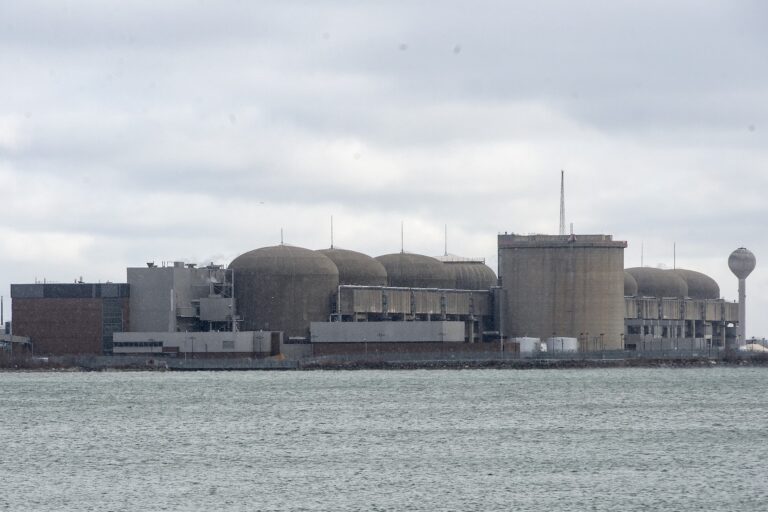
The federal government is backing Canadian-made Candu reactors as part of its nuclear energy strategy, but the Canadian owners of U.S. competitor Westinghouse say their reactors are better investments. Photo: Photo by Pallava Bagla/Corbis via Getty Images
OTTAWA — The federal government’s new nuclear energy strategy is full of praise for the Candu reactors that currently produce all of Canada’s atomic power, but the makers of its key competitor see a chance to bury them.
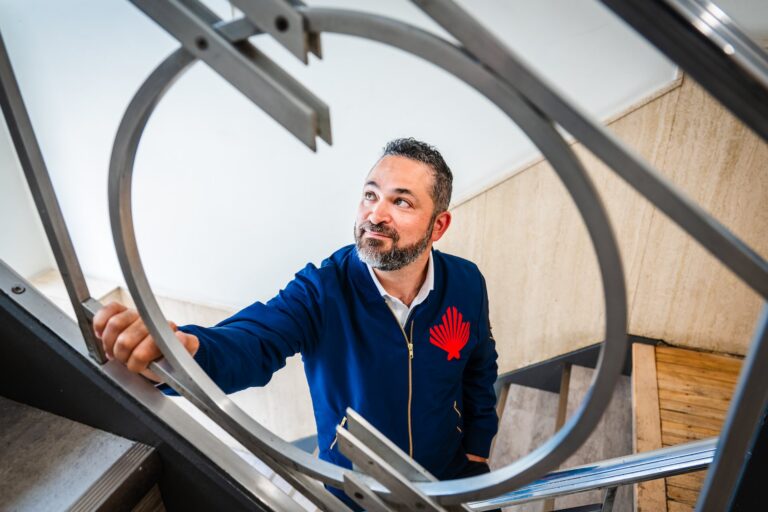
“I think the realization that it’s not the federal government’s choice, that it’s provinces who decide what the most appropriate technology is, is important,” said Grant Isaac, president and chief operating officer of Saskatchewan uranium mining company Cameco, in an interview with The Logic.
Talking Points
- The federal government’s nuclear energy strategy focuses on building up support for the Canadian-made Candu reactor technology, but the Canadian owners of U.S.-born competitor Westinghouse say their reactors are better investments
- Billions are at stake in Canada and abroad, with hard questions about sovereignty and economic growth in the mix as well
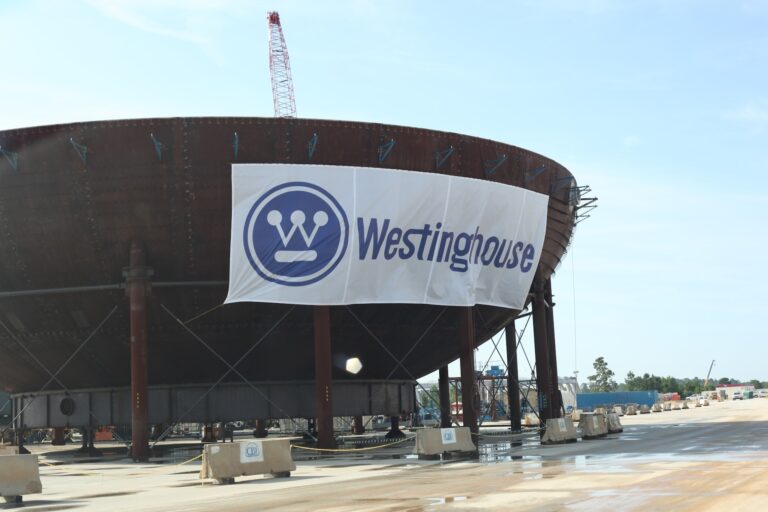
In partnership with Brookfield, Cameco has owned the U.S.-born nuclear company Westinghouse since 2022. It’s pitching the company’s AP1000 reactors for large nuclear-power projects in Canada and around the world over the Candu Monark, the government-owned technology currently licensed to Canadian engineering giant AtkinsRéalis.
Many billions of dollars are at stake as governments electrify their economies. Both Westinghouse and AtkinsRéalis want to capture the Canadian market for new reactors, partly for its own sake and partly to show off their success to other potential customers.
Related Articles
The competition between the two raises philosophical questions about what makes a company Canadian.
The plan that Energy and Natural Resources Minister Tim Hodgson released Monday acknowledges that Westinghouse’s reactors are part of Canada’s “technology base,” but it tilts profoundly toward the Candu.
The strategy talks about finishing the next-generation Candu design (behind which Canada has put hundreds of millions of dollars already) by 2030 and finding up to 10 new countries to buy it, and touts Ontario’s recent successes in refurbishing existing units. Candu technology, in particular, “delivers genuine energy sovereignty to partner nations,” the document says.
In all, “Candu” appears 42 times in the strategy; “Westinghouse” three times. AtkinsRéalis welcomed that emphasis enthusiastically in a news release.
Isaac shrugged it off as pride in the Candu heritage, not a meaningful gauge of what’s to come. “If you didn’t have Candu featured in Canada’s nuclear strategy, it was not going to exist in anybody else’s globally,” he said.
That might not be quite true: Seventeen Candu reactors are the backbone of Canadian nuclear power, but Romania has two older Candu reactors and is planning to buy two new ones. It operates no other kind. Older Candu reactors are in service in South Korea, China, India and Argentina as well.
Six of Westinghouse’s current-generation AP1000s are in use today, while AtkinsRéalis’s answer, the Monark, is still on the drawing board. A “first of a kind” nuclear power plant, such as the Monark, is a hard sell, Isaac said.
“Having a design-ready, already licensed, already regulated, already deployed reactor—that, by the way, is owned by Canadian companies—is a pretty powerful example of Canada’s nuclear energy strategy,” he said.
Brookfield—whose parent company is based in Toronto, though its main subsidiary Brookfield Asset Management officially moved its head office to New York in 2024—owns 51 per cent of Westinghouse. Cameco owns the other 49 per cent.
Canadian-owned though Westinghouse is, its headquarters is in Pennsylvania. Canada explicitly sees Candu reactors as instruments of foreign policy; the United States sees Westinghouse’s products the same way. Cameco and Brookfield even struck a deal with the U.S. government last fall that could see it take a 20 per cent ownership share of the company if Westinghouse sells a lot of reactors there.
The Trump administration is helping it do so, as part of the government’s “energy dominance” goal, with a conditional US$17.5-billion loan commitment announced Tuesday. Last fall, Cameco advertised the extent of Westinghouse’s American workforce and supply chains.
Build a Westinghouse reactor in Canada, Isaac said, and “it’s probably going to have the same level of localization as a Candu reactor would.” Indeed, as Westinghouse has geared up to fight for Canadian business, it has announced agreements with potential Canadian suppliers, such as Seaspan.
“The Canadian supply chain could see opportunities in the United States if Canada gets out in front of new builds of the AP1000,” Isaac argued. “It could also position Canada very well for supply-chain opportunities in countries like Poland, Bulgaria, Slovakia—the other countries that are considering the AP1000 technology.”
Loading...
Thanks for sharing!
You have shared 5 articles this month and reached the maximum amount of shares available.
CloseThis account has reached its share limit.
If you would like to purchase a sharing license please contact The Logic support at [email protected].
CloseGift the full article!
You have gifted 0 article(s) this month and have 5 remaining.
Recipients will be able to read the full text of the article after submitting their email address. They will not have access to other articles or subscriber benefits.
Photo: Photo by Pallava Bagla/Corbis via Getty Images
Most Popular This Week

In-depth, agenda-setting reporting
Great journalism delivered straight to your inbox.
News
What makes a nuclear reactor Canadian? Billions of dollars ride on the answer
Briefing
Trump administration tries to speed up quantum development, defences
Shopify to ban vapes from U.S. shops
Ballard to buy U.K.’s GeoPura for US$400M
Best business newsletter in Canada
Get up to speed in minutes with insights and analysis on the most important stories of the day, every weekday.
Exclusive events
See the bigger picture with reporters and industry experts in subscriber-exclusive events.
Membership in The Logic Council
Membership provides access to our popular Slack channel, participation in subscriber surveys and invitations to exclusive events with our journalists and special guests.