Listen Now
0:00
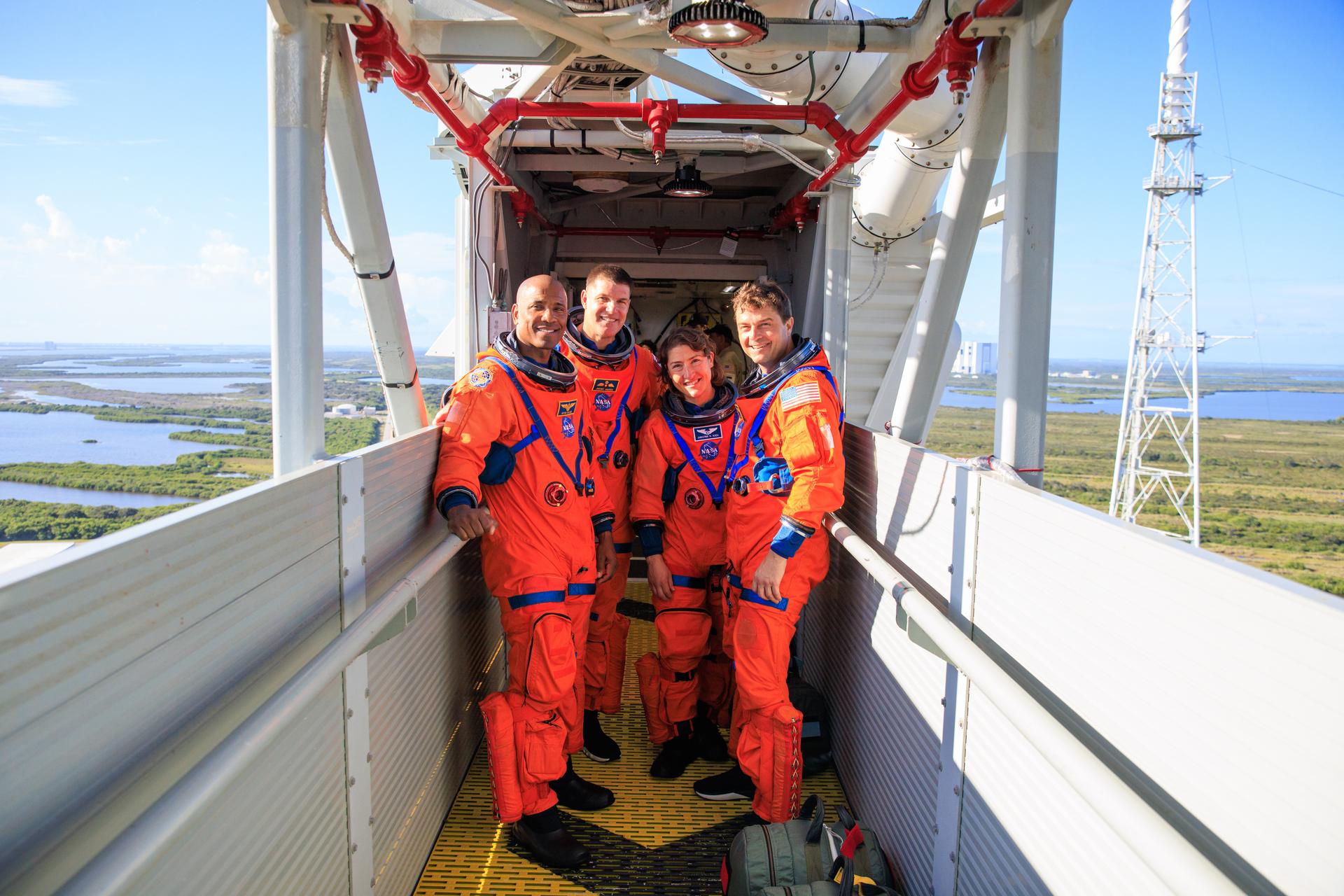
The Artemis II mission is scheduled to blast off from Florida’s Kennedy Space Center at 6:24 p.m. eastern time Wednesday, headed toward the moon with Canadian astronaut Jeremy Hansen aboard.
Hansen’s place on the four-person crew is a testament to both Canada’s historical contributions to space science and its current capabilities—and a symbol of what’s to come, said Mike Greenley, CEO of MDA Space.
“This is the beginning of opening up a new economy in the Earth-to-moon economic zone,” he told The Logic from Cocoa Beach, Fla., just south of the launch site at Cape Canaveral.
Related Articles
On Wednesday morning, Greenley was getting ready to join a delegation of Canadians watching the launch—numerous space-industry types, government and military representatives, astronauts and families.
The Canadian Space Agency promises to webcast the launch on its YouTube channel.
The first Artemis mission in 2022 sent an uncrewed spacecraft around the moon and brought it back safely. This one has been scrubbed before as NASA dealt with a helium-flow problem in February, which saw engineers take the rocket off the launchpad and trundle it back into the Kennedy Space Center’s vehicle-assembly building for a fix.
If the launch needs to be postponed again, daily windows are available until April 6.
Hansen, 50, is an air force colonel who has flown CF-18 fighter jets and was chosen to be a Canadian astronaut in 2009. The other astronaut in his “class,” David Saint-Jacques, spent 204 days aboard the International Space Station in 2018 and 2019.
Hansen’s mission is to last 10 days, but he’ll travel much, much farther from Earth. The ISS orbits Earth at an average distance of about 400 kilometres; if the launch goes as scheduled, the Artemis II mission will go about 400,000 kilometres away, breaking the record set by the Apollo 13 astronauts for the farthest anybody has gone from Earth.
Though it won’t land on the lunar surface, the Orion spacecraft is to take humans closer to the moon than any has been since the end of the Apollo program, practising for a landing tentatively planned for 2028.
This is all just prologue, said Greenley.
“We’re in just the very early days of a large burst in communication satellites,” Greenley said. Commercial space stations are in the works. Orbital power plants and factories. Lunar bases, Space mining. “There’s a lot of things to come while we now, through [the Artemis] program, focus on living and working on the moon, on the way to living and working on Mars.”