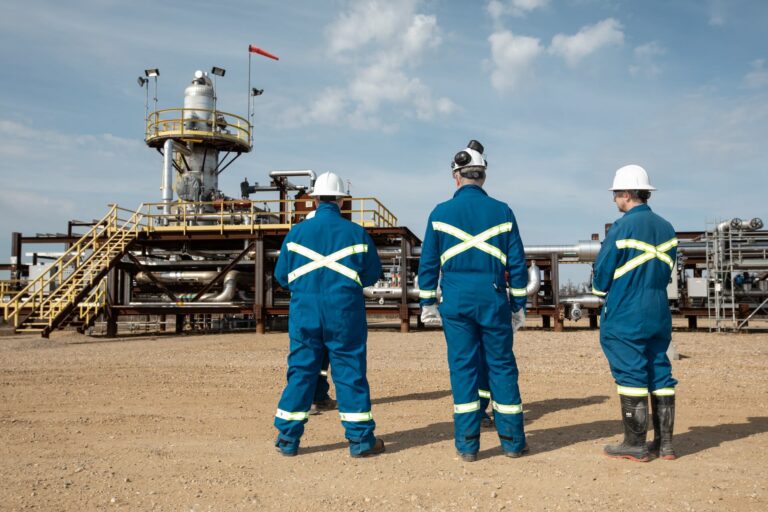
The demand for critical minerals is “growing at a pace that no one alive has ever seen,” Benchmark Mineral Intelligence’s Simon Moores told a House of Commons committee earlier this year. It was one of six recent meetings on the topic for the Standing Committee on Natural Resources, which last month released its recommendations to overhaul Canada’s critical mineral strategy.
Skip to content


Analysis
Canada looks to avoid branch-plant status amid geopolitical jockeying on critical minerals
E3 Metals mineral permit area. Photo: Chris Doornbos, CEO of E3 Metals Corp.
The demand for critical minerals is “growing at a pace that no one alive has ever seen,” Benchmark Mineral Intelligence’s Simon Moores told a House of Commons committee earlier this year. It was one of six recent meetings on the topic for the Standing Committee on Natural Resources, which last month released its recommendations to overhaul Canada’s critical mineral strategy.
The committee’s report is another in a growing number of announcements about the sector: an alliance with the EU, new national security reviews for investments, an interactive map to help encourage exploration, and a revised list of minerals Ottawa considers essential for Canada’s security and for the fate of key industries like electric-vehicle manufacturing, both domestically and for “our partners.”
Talking Point
Canada says it has a wealth of minerals needed for electric-vehicle batteries, solar panels and defence technology. But as long as they remain stuck in the ground, Canada is behind rivals like China, and risks falling behind allies like Australia, too. That has Canadian companies and officials considering sharing these critical resources with the U.S. to line up buyers for burgeoning miners.
Amid the renewed attention, companies that mine these critical minerals told The Logic that stakes are high for Canada to find trustworthy partners in ally nations. The right ones could help Canadian firms compete in an industry dominated by China by investing to fill Canada’s supply-chain gaps—without relegating Canada to a branch-plant vendor for other global superpowers.
The federal government identifies 31 minerals it considers critical “for the sustainable economic success of Canada and our allies” and vital to sectors from aerospace and defence to medicine. They include magnesium, tin and uranium, as well as tellurium, used in solar-panel cells; gallium, which could be used in semiconductors; and lithium, used in electric-vehicle batteries.
The intensifying focus on these minerals reflects the last several years of trade troubles with China, supply chain challenges exacerbated by the COVID-19 pandemic, and growing anxiety over losing a chunk of Canada’s economy as demand for petroleum wavers, said Chris Doornbos, CEO of E3 Metals and a board member of the Battery Metals Association of Canada.
“In the fall of last year, it was like dominoes, in terms of the automobile manufacturers committing to electric vehicles. Everyone was talking about ‘maybe now,’ and then out of the blue, everybody was in,” Doornbos told The Logic.
The opportunity in the electric-vehicle industry alone has huge potential: new EVs are projected to go from 2.7 per cent of sales to 58 per cent by 2040, Electric Mobility Canada told the committee. By Natural Resources Canada’s assessment, the country is “the only nation in the Western hemisphere with all the minerals and metals needed to produce advanced batteries for electric vehicles.”
But as of 2019, China was among the top three nations that dominated the market for copper, lithium, nickel, cobalt and rare-earth elements by processing volume, according to the International Energy Agency. The IEA’s projections for some of the top minerals suggest that by 2025, China will remain a major producer, while Canada is on track to be a major producer only of nickel.
As recently as February, China was reportedly considering an export ban over security concerns. “The reality is critical minerals do not operate in a market economy. China, in particular, will control [these] minerals, by stockpiling them … dumping them strategically on the market to depress certain prices and kill off competition, especially from Western mining companies,” said Alexandre Meterissian, vice-president of government affairs at BlackRock Metals, in an interview with The Logic.
Canada has stores of some critical minerals—ranking sixth as a supplier of nickel and cobalt, fourth in aluminum and third in graphite, according to Clean Energy Canada—but few of its deposits are being mined. Getting a mineral from the discovery stage to production can take well over 15 years, the IEA estimated. There’s still time to catch up, and that’s where alliances come in, said Meterissian. “We’re going to have to work with the European Union; we’re going to have to work with the Americans; to work with the Australians.”
The desire to make up for lost time has Canadian lawmakers and industry alike considering what they dub the “continental” approach, which would include the United States in its supply chain. It’s a move experts said would help Canada with training, research and waste recovery.
The White House has released an aggressive plan to secure its own critical-mineral supply chains, and the U.S. Department of Energy has published its own nine-year plan for a lithium-ion battery supply chain. Despite goals to create U.S.-based jobs and manufacturing, the U.S. battery plan also extends its 2030 goals to its “partners,” and its supply chain report highlights at least two existing alliances with Canada.
Ottawa is also working on other partnerships. After Canada announced its alliance with the EU, Ian Cameron, senior communications advisor for the Office of the Minister of Natural Resources, told The Logic that Canada is “positioned to be a leading global supplier of the critical minerals needed for clean technologies,” calling the alliance “another concrete step towards securing the international supply chain.”
Any foreign customers for Canada’s critical minerals would presumably add to the government support for burgeoning miners. April’s federal budget pledged $9.6 million over three years for a Critical Battery Minerals Centre of Excellence at Natural Resources Canada, which would also help implement the Canada-U.S. Joint Action Plan.
Queen’s University assistant professor Anne Johnson, who teaches both policy and mining, said the government will need to negotiate with First Nations, incentivize consumers to buy EVs, and promote research into transport and power for remote mining sites.
“There is a need for some level of government intervention and strategic investment,” said Mitchell Smith, CEO of Energy Metals Corporation, noting that Canada is competing with Chinese suppliers that are subsidized or state-run.
The committee report identifies missing links in Canada’s domestic supply chain for batteries, including intermediate mineral processing and manufacturing. Donald Bubar, CEO of Avalon Advanced Materials, said it should be a “real priority” to fill these links domestically, in addition to working with allies to meet their needs.
“There’s huge opportunities in the value-added parts of the supply chain, and in Canada, we’ve never done that in the mining industry,” Bubar said. “The culture of the industry historically is to produce the basic commodities and ship them somewhere else.”
In industries like the auto sector, an “export-oriented” approach to critical minerals would also come after years of what some call a branch-plant mentality: where Canadian workers get work from big multinationals, but are subject to the whims of the headquarters abroad. It’s important Canada avoid that approach this time around, said Meterissian.
“Sway and power, that’s only going to come through money.… If we don’t make those investments—private investments or public investments or both—then yes, we will, in part, become a branch.”
Bubar said creating domestic demand will sustain the supply chains over the long term, and actually may ultimately give Canada some advantages in serving international markets. The government could create a strategic stockpile of critical minerals, signalling to aspiring new manufacturers that they could find a buyer in the Canadian government, he said.
“More vehicles are sold in the U.S. by an order of magnitude than in Canada. If you want to participate in the supply chain in a meaningful way, you would not limit yourself to a Canadian market,” said Doornbos. “That doesn’t mean to say you take away from a Canada-focused ecosystem.”



Loading...
Thanks for sharing!
You have shared 5 articles this month and reached the maximum amount of shares available.
CloseThis account has reached its share limit.
If you would like to purchase a sharing license please contact The Logic support at [email protected].
CloseGift the full article!
You have gifted 0 article(s) this month and have 5 remaining.
Recipients will be able to read the full text of the article after submitting their email address. They will not have access to other articles or subscriber benefits.
Photo: Chris Doornbos, CEO of E3 Metals Corp.
Most Popular This Week


In-depth, agenda-setting reporting
Great journalism delivered straight to your inbox.
News
A tech firm born from post-Brexit trade chaos sets its sights on Canada
Briefing
Czech defence conglomerate CSG buys 9.5% stake in MDA Space
Dominion Dynamics strikes preliminary deal to produce ground drones with Ukraine’s Tencore
Aritzia shares pop after earnings rise 204%
Best business newsletter in Canada
Get up to speed in minutes with insights and analysis on the most important stories of the day, every weekday.
Exclusive events
See the bigger picture with reporters and industry experts in subscriber-exclusive events.
Membership in The Logic Council
Membership provides access to our popular Slack channel, participation in subscriber surveys and invitations to exclusive events with our journalists and special guests.