An overwhelming majority of respondents (94 per cent) to The Logic’s January survey said more needs to be done to protect young people online, while roughly 97 per cent said they are either concerned or very concerned about social media’s impact on teen mental health.
Skip to content



Subscriber Survey
‘More than an addiction’: 97% of subscribers worry social media is hurting kids
Results from The Logic’s latest subscriber survey come as firms like Meta and TikTok face increasing scrutiny
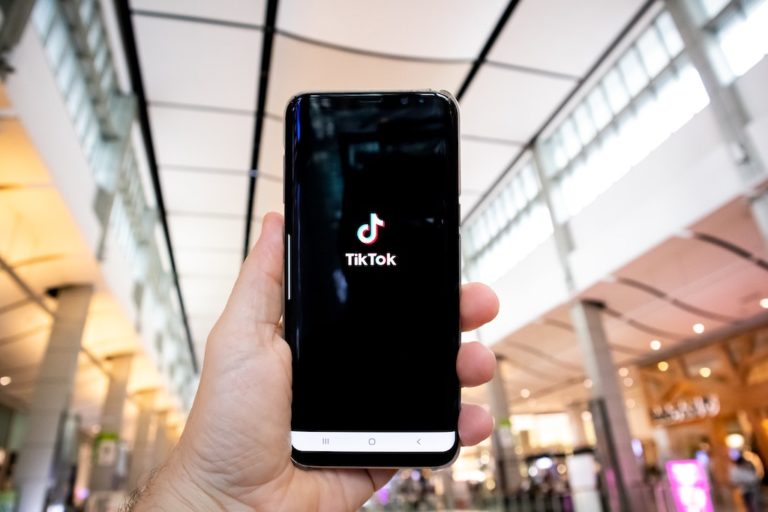
Nearly 40 per cent of subscribers believe internet addiction is the most dangerous online threat to children and teens, The Logic’s subscriber survey found. Photo: Getty Images/Matt Cardy
An overwhelming majority of respondents (94 per cent) to The Logic’s January survey said more needs to be done to protect young people online, while roughly 97 per cent said they are either concerned or very concerned about social media’s impact on teen mental health.
Only three per cent of subscribers said they were not concerned or not at all concerned.
The results come as social media firms face increasing scrutiny over youth online safety and as regulators attempt to catch up with fast-paced developments sparked by artificial intelligence. For example, explicit AI-generated content that mostly harms children and women—as seen recently with graphic AI images of Taylor Swift going viral—has increased online at a startling rate.
Related Articles

And last year the U.S. surgeon general issued a health advisory on social media’s “profound risk of harm to the mental health and well-being” of young people. Whistleblowers, lawmakers and child advocacy groups have called for greater regulation of those firms.
“I worry about screen time with my kids,” one respondent to The Logic’s survey wrote. “We can’t always monitor and worry about what we don’t know.”
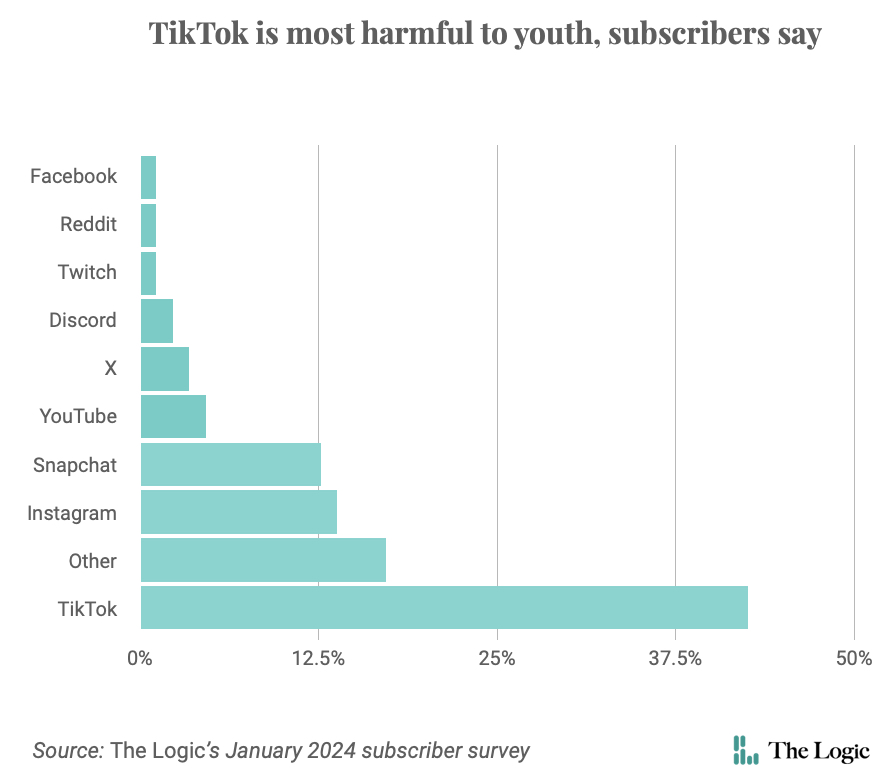
Most respondents—more than 40 per cent—said TikTok was the most harmful platform to youth, while a few mentioned that cumulative use of a variety of online platforms is the most damaging.
“All of the above platforms enable ‘doomscrolling’ which can cause mental harm. TikTok is strongly oriented to influencer-marketed products and overexposes youth to advertising,” wrote one subscriber.
“Facebook properties are the worst offenders—and they know it,” said another.
This week, Meta announced teen users will not be able to receive messages from users who don’t follow them on Instagram or aren’t either friends with them or in their phone contacts on Facebook Messenger. It also recently started rolling out app updates to automatically restrict what teens see on Facebook and Instagram, including content related to self-harm and eating disorders.
The Logic’s survey suggests that respondents aren’t sure this is an adequate solution alone.
A third said they neither agreed or disagreed that content restrictions would ensure social media safety for teens. Twenty-one percent said they agreed it would and 29 per cent said it wouldn’t.
Many said they believed teens would bypass restrictions and that algorithms are a larger issue. “Safety comes from being taught safe usage, not by having a ‘Big Brother’ content monitor,” one respondent said.
Meta faces lawsuits from 33 U.S. states, claiming it “knew of the harmful impacts” of its platforms and created features to hook younger users.
In Canada, Parliament is currently considering Bill C-27, the Liberal government’s legislation on privacy and AI. The proposed law would treat minors’ information as sensitive information, giving it higher standards for protection. It would also offer minors the right to ask companies to delete their data, sometimes known as the right to be forgotten.
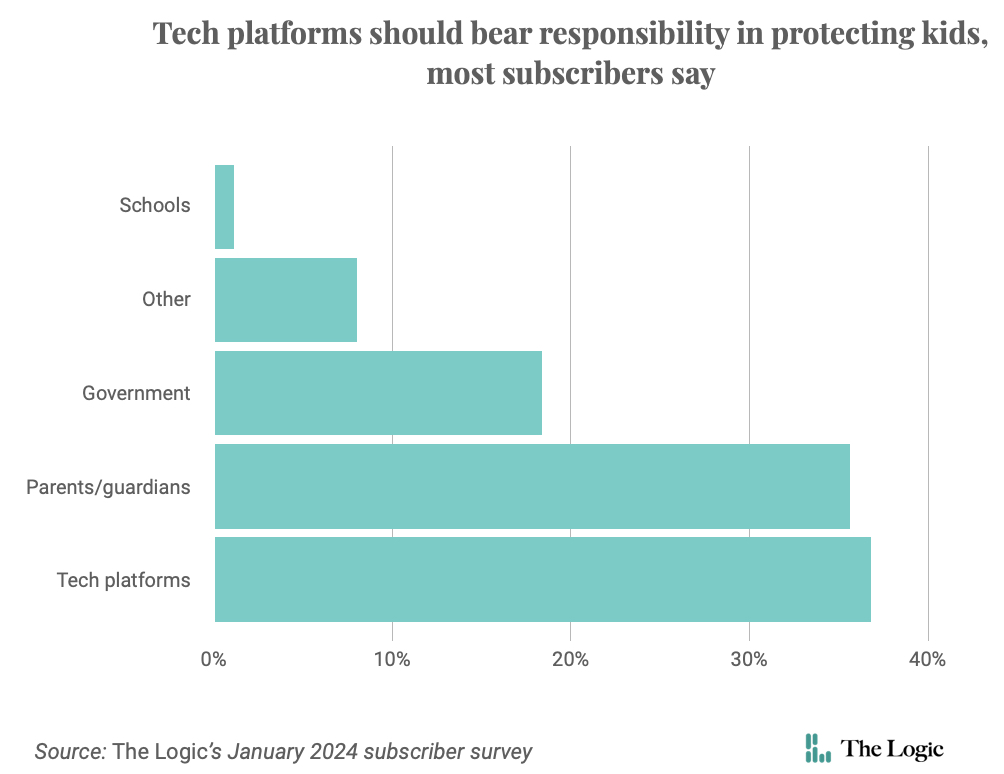
Most respondents (37 per cent) said tech companies should bear most of the responsibility of protecting children and teens from their platforms’ potentially harmful effects. Parents and guardians were a close second (36 per cent), the survey found.
Nearly a fifth of respondents (18 per cent) said governments should bear most of the responsibility to protect young people online.
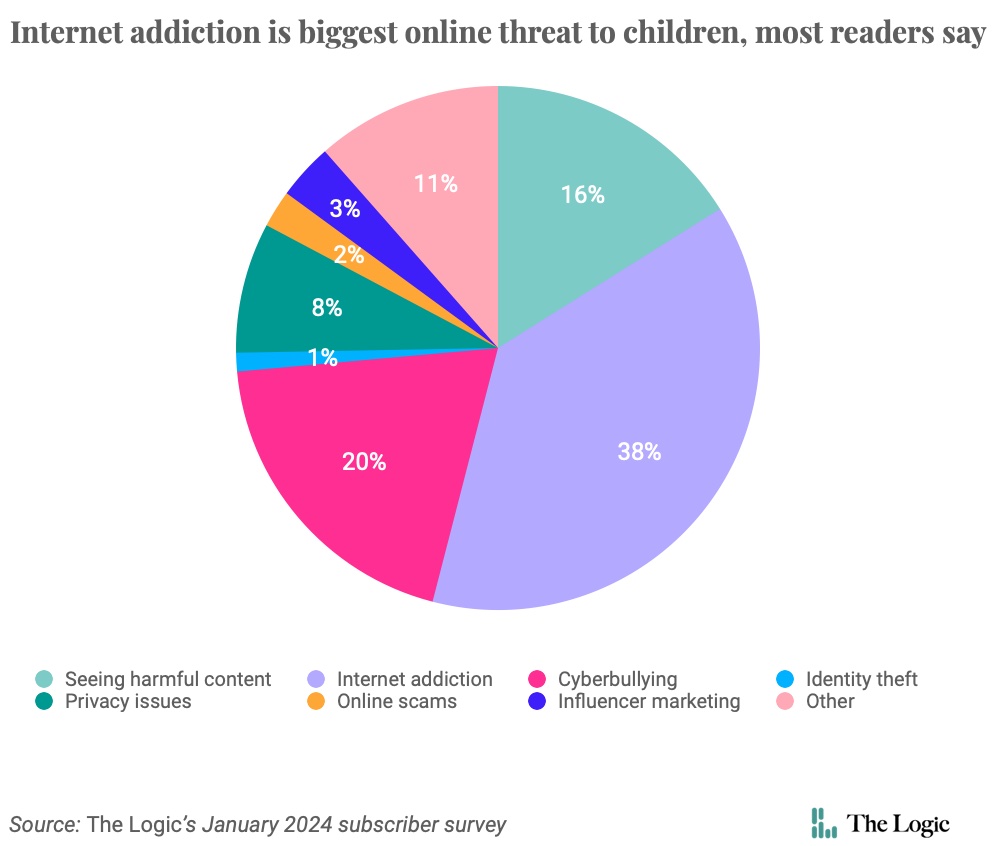
Subscribers identified internet addiction (38 per cent), cyberbullying (20 per cent) and exposure to harmful content that is sexual, violent or promotes self-harm (16 per cent) as the top three online threats to children.
Less than 10 per cent said the most dangerous threat is privacy issues, while nearly 12 per cent selected other, with several respondents saying misinformation and disinformation are also threats to children’s online safety.
“It’s more than an addiction,” one subscriber wrote. “It’s about psychological harms that are caused by exposure at a formative time for children.”
Methodology
The Logic emailed subscribers a private link to an online survey on Jan. 15 and the survey closed Jan. 18. Respondents’ identities were kept anonymous. Subscribers were first asked, “How concerned are you that social media is causing mental health issues among teenagers?” and could answer, “Very concerned,” “Concerned,” “Not concerned” or “Not at all concerned.” They were then asked, “Does more need to be done to protect kids and teens online?,” and could select “Yes” or “No.” Next, they were asked, “Who should bear most of the responsibility in protecting children and teens from online platforms’ potentially harmful effects?” and could choose “Technology platforms,” “Government,” “Parents or guardians,” “Schools” or “Other.” They were also asked, “How strongly do you agree with the following statement: “Content restrictions would ensure teens’ safety on social media” and could select: “Strongly agree,” “Agree,” “Neither agree nor disagree,” “Disagree” or “Strongly disagree.” Finally, respondents were asked, “What do you think is the most dangerous online threat to children?” and could select “Seeing harmful content (i.e. sexual, violent or content that promotes self-harm),” “Developing internet addiction,” “Cyberbullying,” “Identity theft,” “Privacy issues,” “Online scams,” “Influencer marketing” or “Other.”



Loading...
Thanks for sharing!
You have shared 5 articles this month and reached the maximum amount of shares available.
CloseThis account has reached its share limit.
If you would like to purchase a sharing license please contact The Logic support at [email protected].
CloseGift the full article!
You have gifted 0 article(s) this month and have 5 remaining.
Recipients will be able to read the full text of the article after submitting their email address. They will not have access to other articles or subscriber benefits.
Photo: Getty Images/Matt Cardy
Most Popular This Week




In-depth, agenda-setting reporting
Great journalism delivered straight to your inbox.
Commentary
Carmichael: Canadian ignorance about India is a strategic weakness
Briefing
Aritzia shares pop after earnings rise 204%
First Nation in Alberta goes to court over fast-tracked oil pipeline
Chinese EV maker Geely Auto Group to launch in Canadian market in 2027
Best business newsletter in Canada
Get up to speed in minutes with insights and analysis on the most important stories of the day, every weekday.
Exclusive events
See the bigger picture with reporters and industry experts in subscriber-exclusive events.
Membership in The Logic Council
Membership provides access to our popular Slack channel, participation in subscriber surveys and invitations to exclusive events with our journalists and special guests.





