Listen Now
0:00
MONTREAL — It was early 2017, and Quebec businessman Andrew Lutfy was pitching a shopping centre in Montreal to the private equity firm partly owned by Bernard Arnault, CEO of LVMH and one of the world’s richest people.
The project wasn’t without its risks, not the least of which was the retail apocalypse gripping malls at the time. Lutfy’s vision of a high-end, midtown establishment was nonetheless intriguing to L Catterton, which has US$37 billion under management and in which Arnault, who is worth an estimated US$170 billion owns a 40 per cent stake.
Related Articles
As Lutfy tells it, there was one huge, made-in-Quebec risk for L Catterton’s board. Namely, was the province going to remain part of Canada for the foreseeable future? “For nine months, they needed to get comfortable that the political risk of referendum and separation was eternally behind them,” Lutfy, CEO of clothing company Groupe Dynamite, told me.
Lutfy said as much from Le Fou Fou, a gastronomic linchpin of Royalmount, the 824,000-sq. ft. “luxury district” overlooking Montreal’s Décarie expressway. L Catterton ultimately invested in the project in 2018—in large part, Lutfy said, because the separatist Parti Québécois was in apparent death throes. Back then, hugely popular politician François Legault was promising an economy-first, referendum-never government in Quebec. It won him the election later that year.
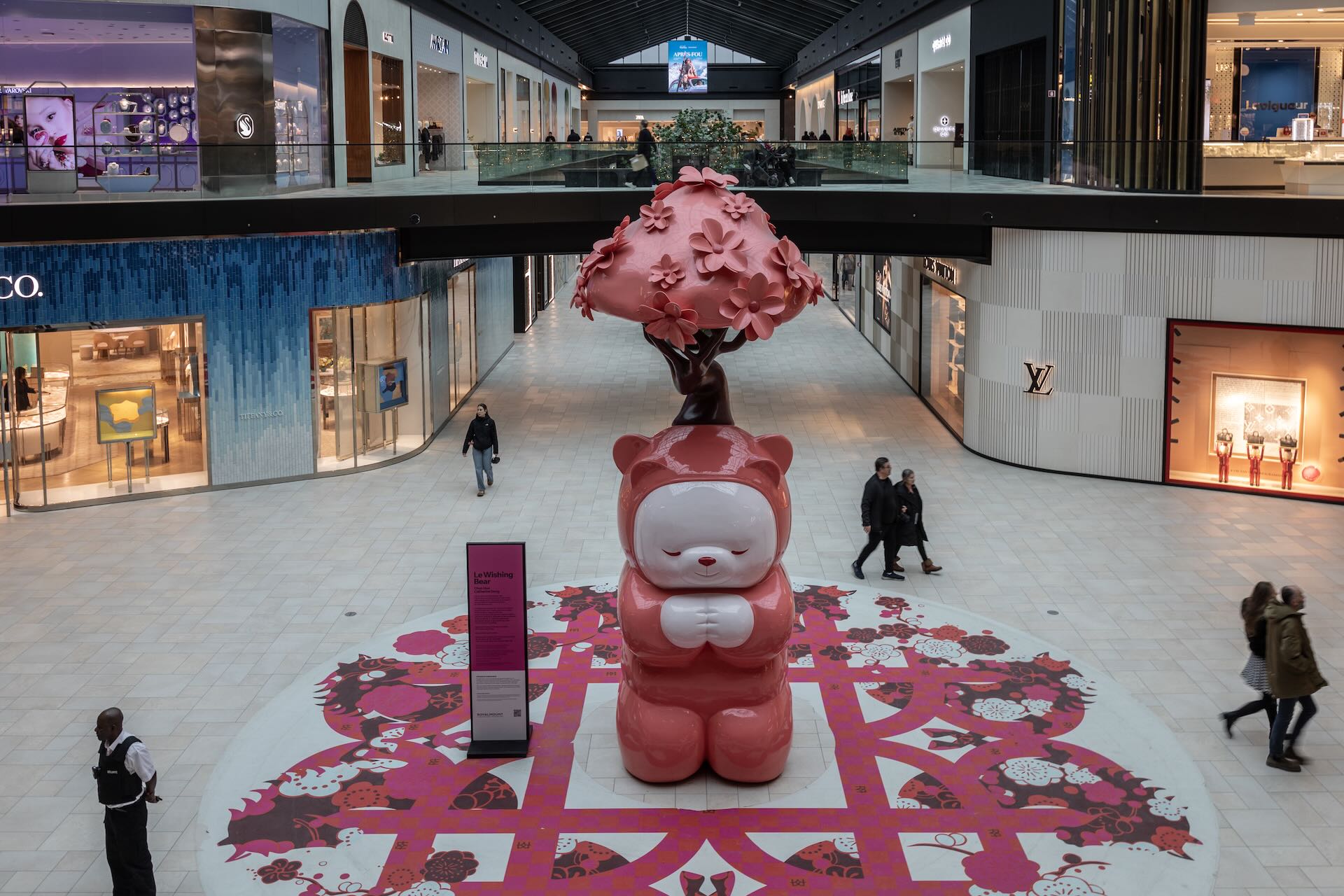
Eight years on, Lutfy has plans to fill the remaining 10 million square feet of highway-hemmed wasteland surrounding Royalmount with housing and retail. Inside, the mall gleams with luxury brands from LVMH’s prodigious roster—Louis Vuitton, Tiffany & Co. and Balenciaga, to name a few.
Yet Lutfy said he won’t bother pitching L Catterton again. The money men, he claims, probably wouldn’t invest in Quebec right now. “Personally, I wouldn’t even put money in. I’m investing in various real estate projects in Florida. I’m not investing in Quebec anymore,” Lutfy said.
The sentiment is an indictment of present-day Quebec politics. Having served seven years, Legault is limping off the stage as the least popular premier in the country, according to one recent poll. Parti Québécois leader Paul St-Pierre Plamondon has risen in his stead, promising to hold another referendum should his party win the next election. It’s worth spelling it out, if only to properly fathom the sheer tragedy of the thing: a significant piece of Canada may well vote to go at it alone just as the country as a whole faces what is arguably the biggest economic attack in its existence from its nearest neighbour.
This is doubly tragic when you consider how far Quebec has come since it last voted in a referendum on independence. The province has changed mightily since 1995. Its economy has grown at a faster rate than the rest of the country, while Quebecers themselves tend to live longer and be more prosperous than in the mid-1990s.
Montreal, a victim of vacancies, plummeting real estate values and flights of capital leading up to and in the wake of the referendum, has become a prosperous, vibrant yet comparatively inexpensive place to live. The city is also a globally important research and development hub for AI, and attracts some of the brightest minds and biggest companies to live and work in Quebec.
Legault’s troubled premiership, though, has riled Lutfy who has recently entered into a public war of words with outgoing provincial leader. In November, Legault accused Lutfy of wanting to import low-paying jobs into the province, and said the businessman didn’t care about the survival of the French language. In December, Lutfy responded with an open letter, accusing the premier of scapegoating immigrants and otherwise crippling Montreal, Quebec’s economic engine, if only to appease his party’s nationalist base.
Written in French, in which Lutfy is fluent, the letter is a harsh thing—he notably uses tu (you) instead of the more formal vous to refer to Legault, as though he were yelling at the premier from an open car window. Lutfy told me he’s spoken to several government ministers, who he claimed quietly agree with many of his views on the current provincial government’s direction. “I had a couple exchanges with him,” Lutfy told me, referring to Legault. “I’ll tell you he hates immigrants and he hates blue collar immigrants.”
Legault’s office didn’t respond to my request for comment. Yet watching the premier and one of the province’s few billionaires go at it in public was a reminder of how difficult it is to write about Quebec business without writing about Quebec politics. The province’s enduring interventionist model means the government often serves as a funding source and backstop for many private businesses—though not, Lutfy points out, his own.
It also means all businesses are that much more captive to governmental whims and failures, which is one of the reasons why Eric Bourget is hopping mad about another potential referendum. Bourget is the CEO of HalfSerious, a Montreal-based AI firm.
Though his firm’s client base is about 70 per cent U.S.-based, Bourget said he wants more Canadian firms on the books. It’s a slog—Canadian companies are smaller and have less appetite for risk, he points out—but says the current iteration of the federal government is at least aware of the task at hand.
“Whenever I talk to anyone at the federal government about AI, I talk to someone who’s been educated and brought up to speed. Whenever I talk to anyone from the government of Quebec, it’s like they’ve never heard of it. They have no fucking idea,” Bourget said. “There’s no plan, there’s nothing.”
Sure, another referendum worries Bourget. More worrisome for him, though, is the prospect of being an AI company dealing with a provincial government that doesn’t understand the technology—and which would be otherwise occupied with the machinations of forming an independent state. “We’re going to spend four years arguing who the Champlain Bridge belongs to,” he told me, joking but also half-serious.
Martin Patriquin is The Logic’s Quebec correspondent. He joined in 2019 after 10 years as Quebec bureau chief for Maclean’s. A National Magazine Award and SABEW winner, he has written for The New York Times, The Guardian, The Walrus, Vice, BuzzFeed and The Globe and Mail, among others. He is also a panellist on CBC’s “Power & Politics.”