Bay Street finally got a look at Canada’s most popular politician earlier this month. The country’s business elite probably liked much of what they heard, once they got over the shock of a Conservative leader characterizing them as out-of-touch aristocrats—to their faces.
Skip to content
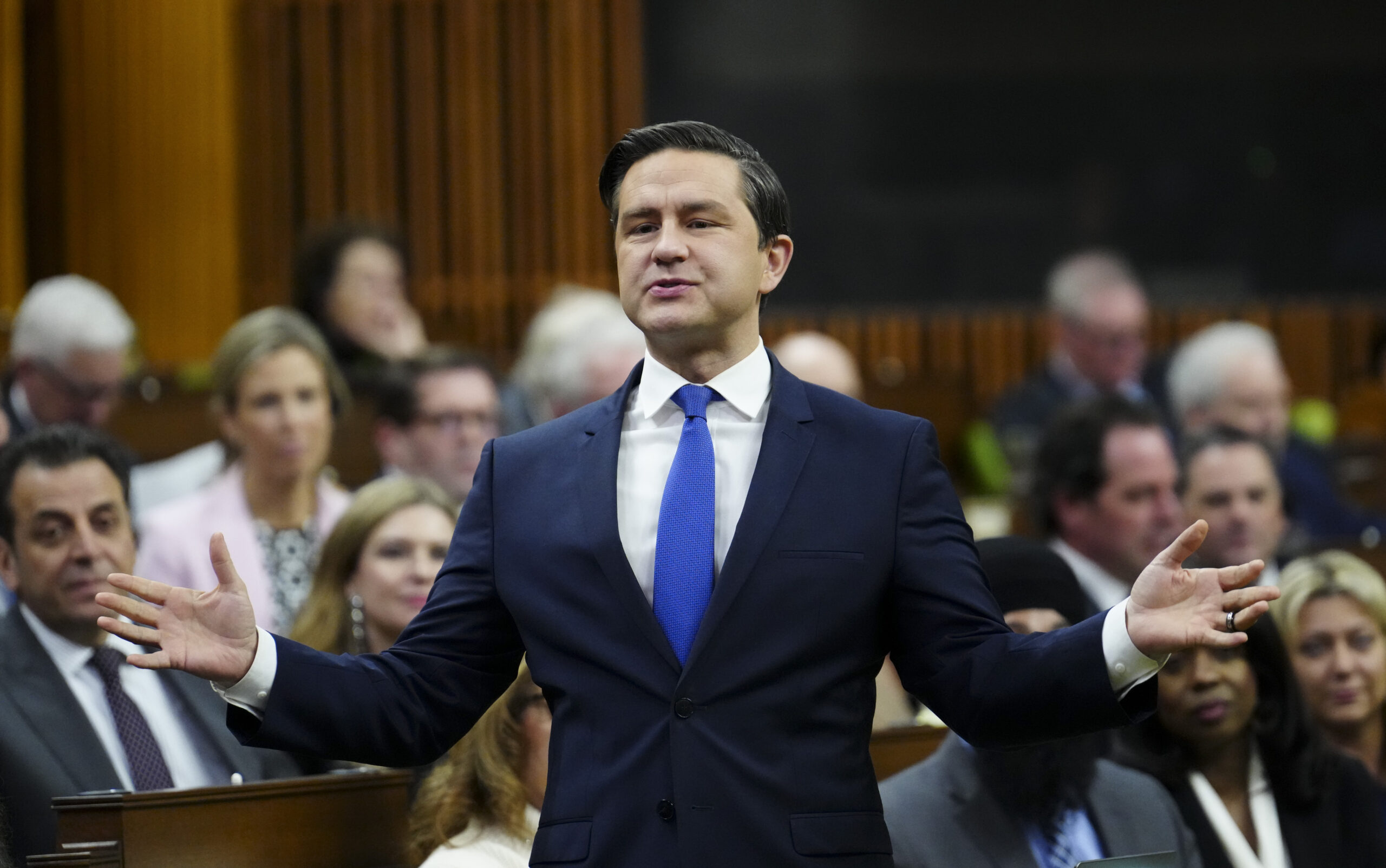
 Conservative Leader Pierre Poilievre giving a speech at the C.D. Howe Institute in December 2023. Photo: Screenshot/Youtube
Commentary
Carmichael: Poilievre makes the business of governing sound easy
A glimpse into a Conservative government’s economic agenda
Conservative Leader Pierre Poilievre at the House of Commons on Parliament Hill in Ottawa, in December 2023. Photo: The Canadian Press/Sean Kilpatrick
Bay Street finally got a look at Canada’s most popular politician earlier this month. The country’s business elite probably liked much of what they heard, once they got over the shock of a Conservative leader characterizing them as out-of-touch aristocrats—to their faces.
“I almost never speak to crowds in downtown Toronto or anywhere close to Bay Street,” Pierre Poilievre said in a speech hosted by the C.D. Howe Institute.
Here’s what Prime Minister Poilievre will do if he gets the chance: scrap the carbon tax; balance the budget and require the Bank of Canada to focus on “sound” money; stop work on a central-bank digital currency; implement measures to “make work pay” and end the “war on work,” which he said would include a “blue seal” that would give skilled immigrants a chance to qualify to work in their profession within 60 days of arrival.
Related Articles

Also, he would: replace the government’s new environmental assessment legislation with a law that would put a greater emphasis on approvals; enact a law that would allow businesses developing resources to divert a portion of their corporate income taxes to local Indigenous communities; approve the construction of liquified natural gas plants, which he said would allow Canada to displace coal with cleaner LNG; and enact measures to accelerate the home construction, including a measure that would link federal funding to the number of homes a municipality actually built.
There are some good ideas on that list. The “blue-seal” idea makes so much sense that it’s surprising to hear such a program doesn’t already exist, suggesting the provincially regulated professions are very good at protecting their turf. Poilievre said he would use the public purse to get it done. The Liberals would do well to steal the idea before he gets the chance. Housing Minister Sean Fraser already is attaching conditions to money from the federal government’s Housing Accelerator Fund, so smart policy still occasionally crosses party lines.
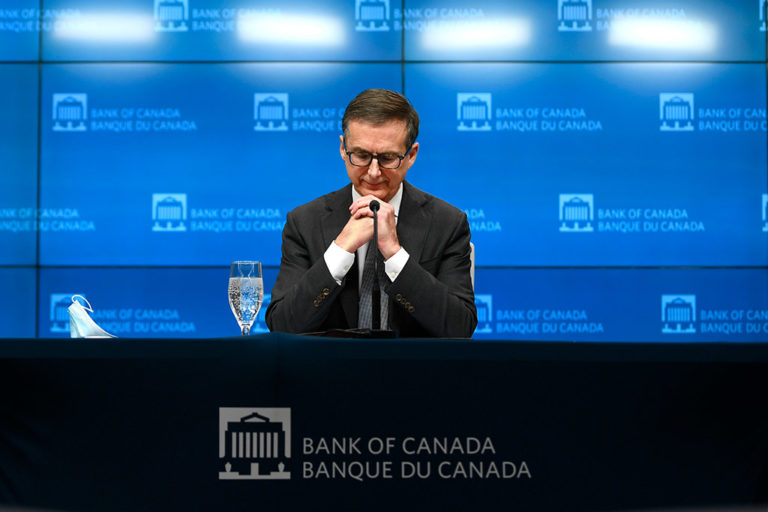
Absent from Poilievre’s list: a reiteration of his pledge to fire Bank of Canada governor Tiff Macklem, although he suggested he would curb the central bank’s unique power to create money to buy financial assets.
Nor did the Opposition leader have anything to say about artificial intelligence. He steered clear of the debate over the extent to which Canada’s elevated levels of immigration are responsible for the housing crisis. He also opted against confronting Canada’s woeful productivity directly, although a desire to expedite approvals would be good for investment.
But the most problematic part of Poilievre’s agenda is his approach to fiscal policy. He said he’d balance the budget by going through Ottawa’s balance sheet line by line, scrapping suboptimal policies until he got to a surplus. No minister would get a green light for new spending unless they found existing cuts to match, he said.
All that’s fine in theory. We’ve entered a period of what Canadian Tire chief executive Greg Hicks calls “structural uncertainty.” Creating resiliency by eliminating the deficit and reducing debt might be the right thing to do. The sudden loss of various federal subsidies could even spark some creative destruction by killing off zombie companies and forcing other firms to get more innovative.
But Poilievre makes it sound too easy. If Canada intends to matter in a world defined by geopolitical rivalry, it will need to invest in its navy to help protect trade routes. Future prime ministers must also be ready to pay tens of billions of dollars to Indigenous people, as the courts have made clear that the federal government must make good on treaty obligations that were never honoured. The fall economic statement said the government recorded $26 billion to cover reconciliation claims in the 2022–23 fiscal year, and the deficit would otherwise have been a mere 0.3 per cent of gross domestic product.
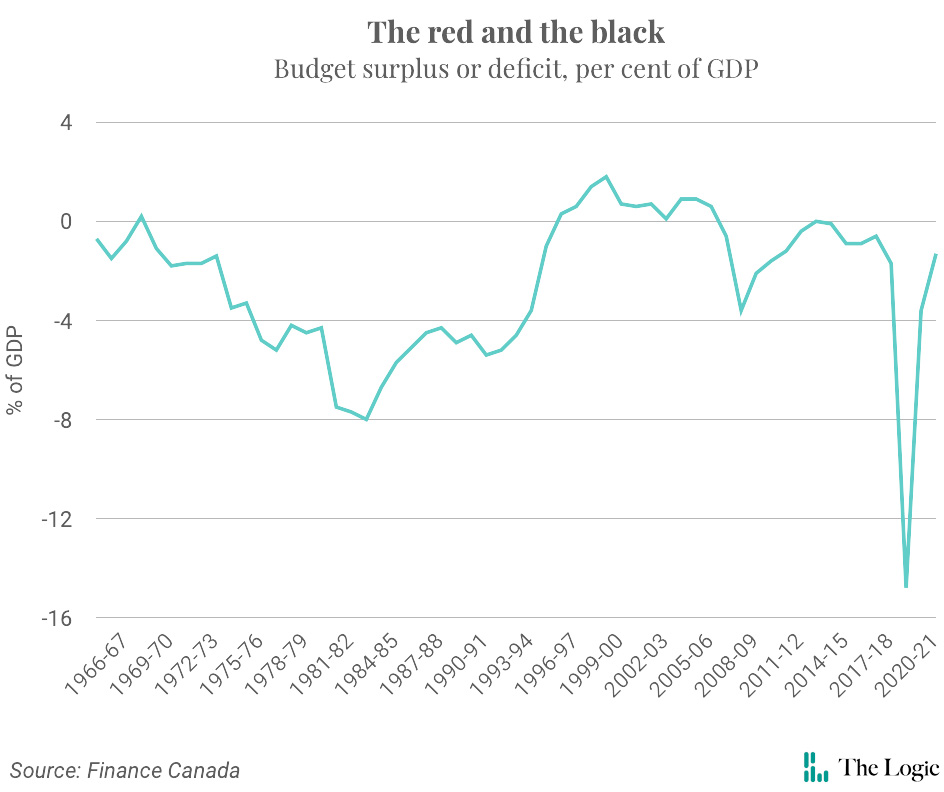
There was something else about Poilievre’s speech that suggests he’s wearing his ideological blinders a little too tight. He accused Prime Minister Justin Trudeau of breaking the “common-sense Liberal and Conservative consensus that gave us 25 years of prosperity.” Poilievre said the good times started in 1984, when Brian Mulroney’s Progressive Conservatives won a landslide victory, to 2015, when Trudeau beat Stephen Harper’s Conservatives.
It’s true that Canada had a good run over much of that period. But Mulroney was mostly talk when it came to fiscal discipline; it was Liberal Jean Chrétien’s government that made the hard decisions. Mulroney did enact the GST, which simplified Canada’s tax regime by replacing a hidden manufacturers’ sales tax. The GST became such an important source of revenue that Chrétien broke a campaign pledge to scrap it.
Poilievre’s promise to scrap the carbon tax is the opposite of what Mulroney did to give Chrétien and former finance minister Paul Martin a chance to turn around the country’s finances. If Trudeau is guilty of wrecking Canada’s policy consensus, it’s not obvious that Poilievre would be the one who stitches it back together.
Clinging to a causal link between balanced budgets and the prosperity of the 1990s and 2000s also ignores that growth in those years had more to do with boomers entering their prime spending years and China’s inclusion in the World Trade Organization.
Austerity was the right policy at the beginning of the 1990s, but it’s unclear if that’s true today. There would be an opportunity cost to removing public investment from the economy for the sake of it. Poilievre has some elements of a viable economic plan, but he might want to check his priors.
Kevin Carmichael is The Logic’s economics columnist and editor-at-large. He has spent more than two decades covering economics, business and finance for outlets including Bloomberg News, The Globe and Mail and the Financial Post, where he also served as editor-in-chief.



Loading...
Thanks for sharing!
You have shared 5 articles this month and reached the maximum amount of shares available.
CloseThis account has reached its share limit.
If you would like to purchase a sharing license please contact The Logic support at [email protected].
CloseGift the full article!
You have gifted 0 article(s) this month and have 5 remaining.
Recipients will be able to read the full text of the article after submitting their email address. They will not have access to other articles or subscriber benefits.
Photo: The Canadian Press/Sean Kilpatrick
Conservative Leader Pierre Poilievre giving a speech at the C.D. Howe Institute in December 2023.
Most Popular This Week

In-depth, agenda-setting reporting
Great journalism delivered straight to your inbox.
News
Canada’s investment problem isn’t a lack of money, investors say at Milken Institute event
Briefing
Cohere’s Gomez says Silicon Valley giants shouldn’t get to set the rules for AI
TD pledges $150B in new financing and support in key Canadian sectors
Scotiabank commits more than $100B to fund Canadian businesses
Best business newsletter in Canada
Get up to speed in minutes with insights and analysis on the most important stories of the day, every weekday.
Exclusive events
See the bigger picture with reporters and industry experts in subscriber-exclusive events.
Membership in The Logic Council
Membership provides access to our popular Slack channel, participation in subscriber surveys and invitations to exclusive events with our journalists and special guests.