There’s a tendency to think about a trade war with Donald Trump’s America in one of two ways.
One warns that David-and-Goliath stories are best left to Bible study.
There’s a tendency to think about a trade war with Donald Trump’s America in one of two ways.
One warns that David-and-Goliath stories are best left to Bible study.
Canada will need both fighters and philosophers to survive the next four years
There’s a tendency to think about a trade war with Donald Trump’s America in one of two ways.
One warns that David-and-Goliath stories are best left to Bible study.
“When we retaliated during the steel and aluminum dispute with the United States, the evidence is crystal clear that import prices rose, rather than export prices falling,” University of Calgary economist Trevor Tombe said during a virtual event hosted by the Global Risk Institute this week. “To retaliate broadly is nearly to tax Canadians and to disrupt our own ability to produce.”
The other also comes with a warning: ignore the economists and their notions of efficiency. In the real world, if you show weakness, the bully will keep coming back for more.
“Clearly we have to retaliate,” Steve Verheul, Canada’s lead negotiator during the overhaul of the North American Free Trade Agreement during Trump’s first presidency, said at an event hosted by the Empire Club of Canada in Toronto on Jan. 21. “If we don’t retaliate, we’ll just keep paying and paying concessions and we’ll never know where the end point is.”
There’s something philosophical about the contrasting views. I reread David Adams Richards’s Mercy Among the Children over the holidays. It’s a meditation on how to cope with unprovoked violence. For Richards, the answer is to endure, but it’s hard not to notice that the book’s most virtuous characters die before they’re rewarded for their constancy.
When it comes to a trade war, the choice of tactic needn’t be binary. Indeed, Tombe acknowledges that some retaliation could be helpful for “non-economic” reasons, and Verheul agrees with Tombe that Canada should put considerable effort into making the domestic economy stronger. Ensuring the marriage of their ideas could be the key to surviving what’s to come.
When Trump last threatened to end the North American Free Trade Agreement, Prime Minister Justin Trudeau and the premiers threw everything they had at preserving their privileged access to the U.S. market.

None of that political energy was used to make the Canadian economy more resilient to such threats. They preserved a version of NAFTA, but dispersed without doing anything about Canada’s domestic vulnerabilities. The housing, immigration and productivity crises are testaments to the complacency that took hold with the country’s belief that the new trade agreement with the U.S. and Mexico would ensure our prosperity.
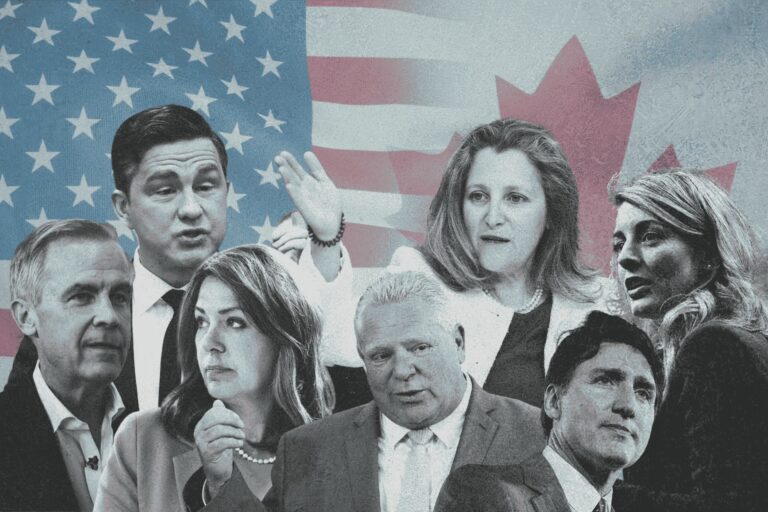
The debate about whether Canada will retaliate when Trump next applies tariffs appears to be over. Trudeau supports the principle of dollar-for-dollar retaliation, and Ontario Premier Doug Ford has mused publicly about restricting electricity exports and removing American liquor and wine from the shelves of the provincially owned liquor monopoly.
But there are also signs that Canada’s leaders are working on a broader strategy to bolster the home front. Whatever the reason, there appears to be a newfound understanding that Canada’s vulnerability is rooted in economic weakness. The most vivid example is productivity—while U.S. output per hour worked has soared over the past couple of years, Canada’s has declined almost every quarter for three years running. The power imbalance between Washington and Ottawa has probably never been greater.
The biggest surprise of recent weeks might be that Ottawa and the provinces and territories have stopped taking economic growth for granted. They appear poised to accelerate talks on erasing interprovincial trade barriers that cost the country billions in lost gross domestic product. “There is no question in my mind that reducing internal barriers to trade is beneficial for the Canadian economy, and it’s also beneficial in terms of our negotiations on tariffs,” Anita Anand, the internal trade minister, told The Logic this week.
To be sure, there is consternation in Alberta about reports that Ottawa might be willing to curtail oil exports in any retaliatory strike. That could jeopardize the unity necessary to expand Canada’s internal trade agreement and other domestic initiatives. Writing for The Hub, Tombe said restricting oil and gas exports would be “unwise,” as U.S. sales of those commodities represent a disproportionate amount of national wealth and jobs.
Tombe, one of the country’s most prolific and respected thinkers about economic policy, noted at the Global Risk Institute event that there’s precedent for Canada turning the other cheek when met with U.S. aggression.
“In 1971, for example, we did not retaliate,” when then-president Richard Nixon abruptly introduced a tariff of 10 per cent on imports, Tombe said. “We engaged to the extent that we [could].”
The Nixon presidency is a good point of comparison for Trump. But the U.S. and Canada didn’t have a comprehensive trade agreement in place in 1971. A formal trade agreement with the U.S. was supposed to protect Canada and Mexico from such arbitrary swipes. The Canadian desire to retaliate might seem emotional, but in the current context, it’s really about trying to preserve the sanctity of trade law.
Making it harder for American companies to pad their profit margins by shipping excess production north is probably the only way to get Trump’s attention. The U.S. is self-sufficient in oil and doesn’t really need us to make cars and trucks. Still, imports of pharmaceuticals, various metal ores and concentrates, and miscellaneous consumer goods all spiked in November amid the tariff threats. That’s evidence of stockpiling, and shows that at least some Americans recognize what they have in Canada.
Kevin Carmichael is The Logic’s economics columnist and editor-at-large. He has spent more than two decades covering economics, business and finance for outlets including Bloomberg News, The Globe and Mail and the Financial Post, where he also served as editor-in-chief.
Loading...
You have shared 5 articles this month and reached the maximum amount of shares available.
CloseIf you would like to purchase a sharing license please contact The Logic support at [email protected].
CloseYou have gifted 0 article(s) this month and have 5 remaining.
Recipients will be able to read the full text of the article after submitting their email address. They will not have access to other articles or subscriber benefits.
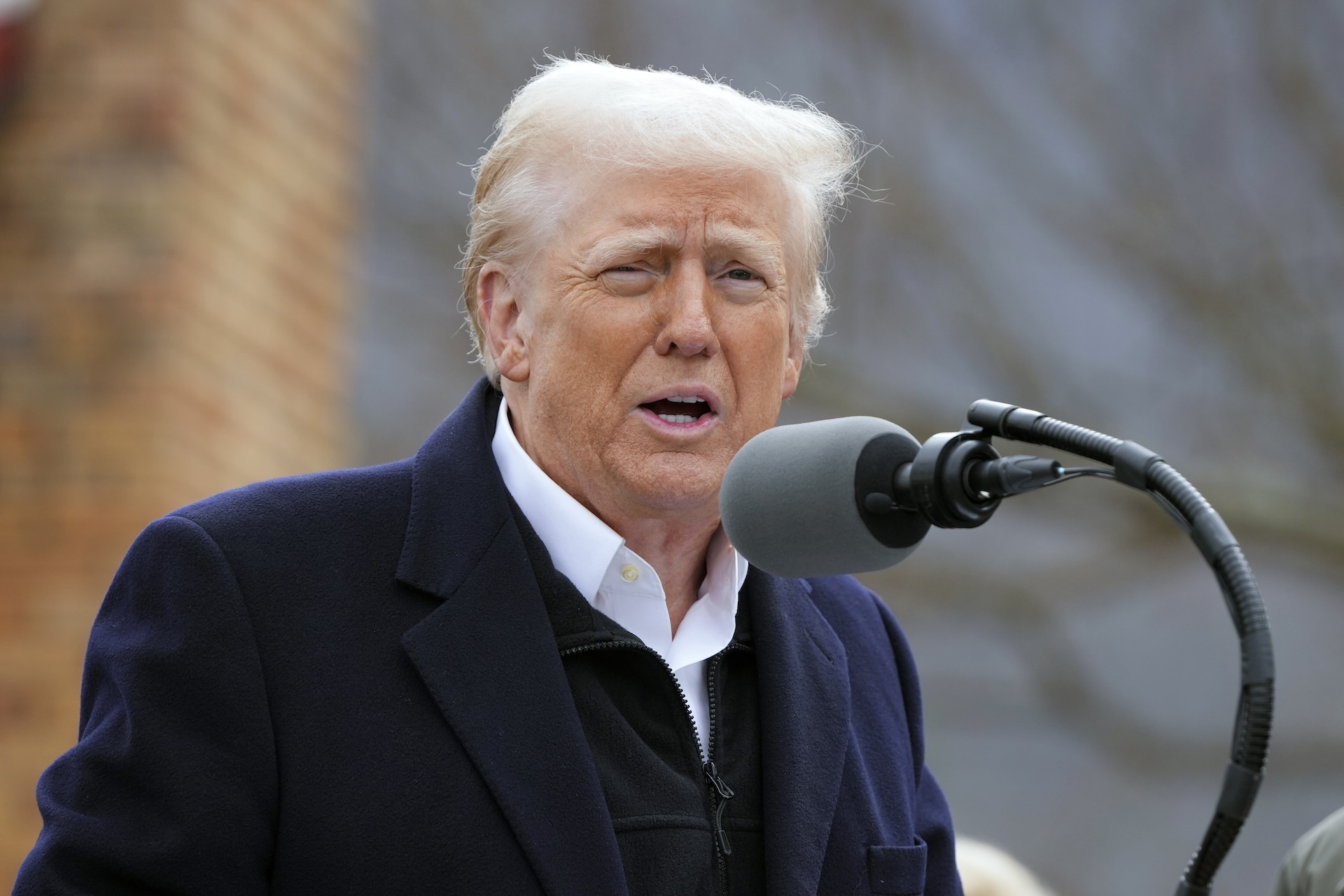
Photo: AP Photo/Mark Schiefelbein
The Logic’s Kevin Carmichael, RBC chief economist Frances Donald and Steve Verheul, Canada’s former chief trade negotiator, at a Jan. 21 Empire Club event in Toronto.
Great journalism delivered straight to your inbox.

Get up to speed in minutes with insights and analysis on the most important stories of the day, every weekday.
See the bigger picture with reporters and industry experts in subscriber-exclusive events.
Membership provides access to our popular Slack channel, participation in subscriber surveys and invitations to exclusive events with our journalists and special guests.