OTTAWA — Mid-terms are coming and second-year political science student Rick Shah is at the University of Ottawa library.
He is playing Valorant, a team-based online shooter game, in the library’s gaming hub.
OTTAWA — Mid-terms are coming and second-year political science student Rick Shah is at the University of Ottawa library.
He is playing Valorant, a team-based online shooter game, in the library’s gaming hub.
Privacy, addiction and online hate under microscope as students do battle in League of Legends
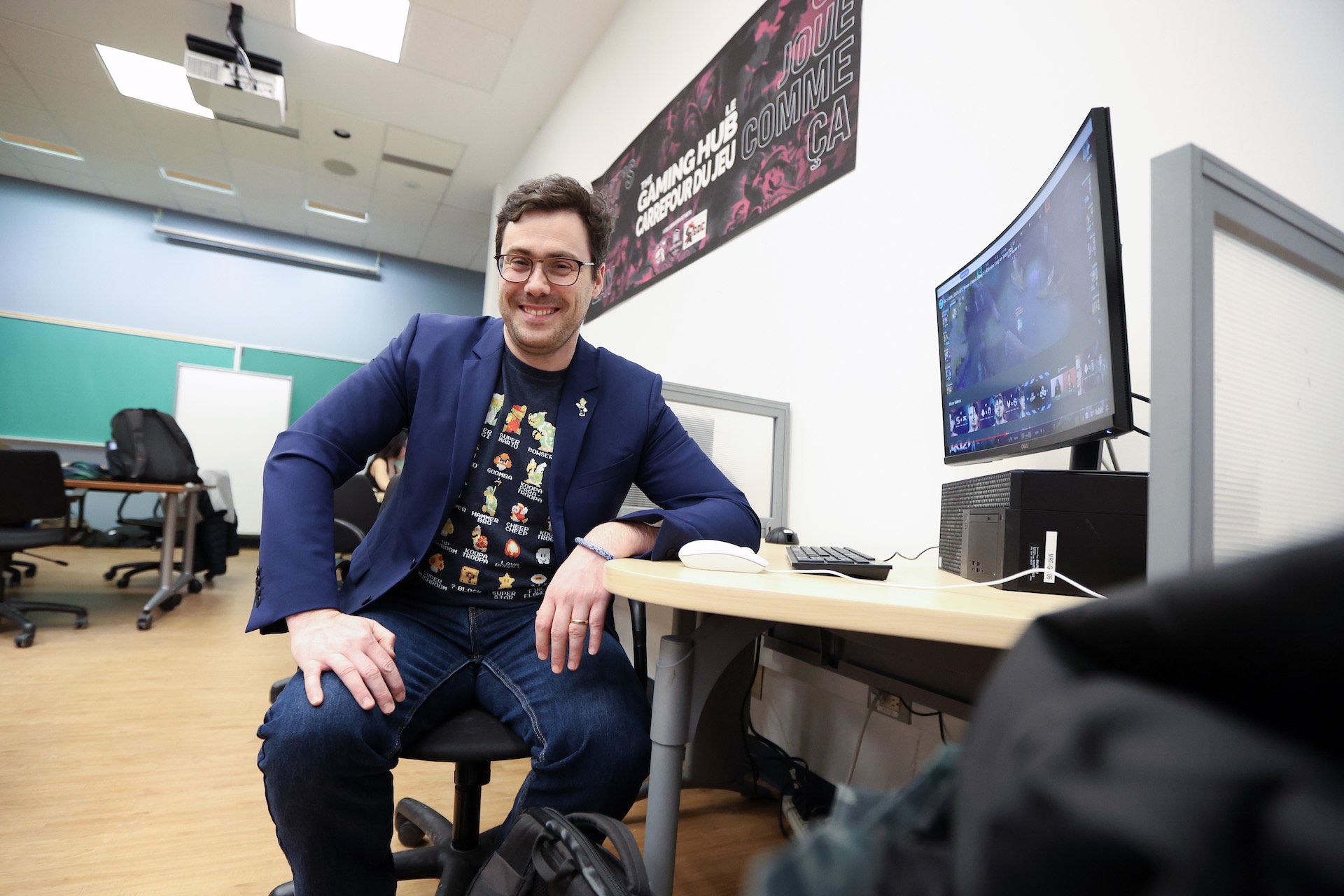
OTTAWA — Mid-terms are coming and second-year political science student Rick Shah is at the University of Ottawa library.
He is playing Valorant, a team-based online shooter game, in the library’s gaming hub.
Talking Points
“The place I’m at, the internet’s not good,” Shah explains between rounds. The bandwidth and technology are better on campus and the display on the curved monitor sharp.
The facility, new this academic year, isn’t a tricked-out den lit by neon-coloured LEDs and gaming recliners at each station. Even calling it a “facility” is a stretch. Without the banners on the walls for the university’s esports and game development clubs, it would look pretty much like any computer room in any library.
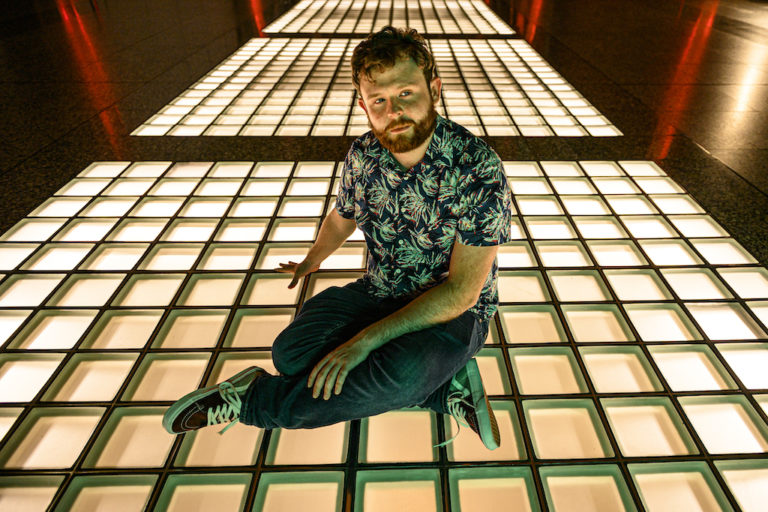
Law professor Thomas Burelli is very proud of it. He teaches what he believes to be one of only two courses in video game law in Canada (the other is at the University of British Columbia) and is the gaming hub’s champion on faculty, working with the student groups whose banners are on the wall.
After a one-week experiment last year, the gaming hub is getting a full-year trial. The space is borrowed and the computers are cast-offs, but online games tend to be less demanding of hardware. Lower computing requirements mean more players, and you need players for online games to thrive.
“It cost us zero dollars,” Burelli says. “We showed you can use bad computers or old computers, and you can still have fun.”
Lots of universities and colleges have gaming clubs and venues where they meet, play and compete. Toronto Metropolitan University, for instance, has fancier facilities sponsored by Red Bull. Many also have esports squads. At heart, these are typically campus amenities (akin to a pool) used by recreational groups, or they’re associated with game design programs.
The University of Ottawa doesn’t have a game design program. It has a law school, a business school, a medical school. So when Burelli hangs out in the university gaming hub, students like Shah and their experiences fuel his legal research.
“It’s great to have a space, because they gather here. We meet, we talk about potential projects, we learn about problems that they have,” he says.
On paper, Burelli’s specialty is environmental law, but he’s increasingly focused on the laws around video games.
“My drive is always about injustice and about things that make me angry,” Burelli says. There’s no shortage of that in the gaming sector, he finds. Questions about privacy and data protection; consumer rights; design tricks that can trigger addictive responses; and hate and abuse in virtual worlds.
The university’s gaming community could be a built-in army of research assistants over time, gathering examples of viciousness they encounter in virtual worlds and tracking them in an orderly way.
“Research is the hardest to do and the longest to develop,” Burelli laments. “You need time to design a project, to get the funding, to get people on board.”
There are international dimensions, too. Valorant, like the even more popular League of Legends, is a product ultimately of Chinese conglomerate Tencent, thanks to its purchase of California-based Riot Games in 2011.
The university’s gaming community could become a built-in army of research assistants, gathering examples of viciousness they encounter in virtual worlds.
“There’s so much research to do, and so few people doing it in law,” he says. Environmental law is overcrowded in comparison.
Burelli hankers for a nicer location that could be a venue for spectator esports competitions (and envies his university’s IBM-sponsored cybersecurity range), but one thing at a time. An advantage of the current room is how accessible it is, just off a first-floor lounge-like part of the library that holds shelves of DVDs and a collection of graphic novels.
Canada’s video game sector contributed $5.1 billion to the economy in 2024, according to the industry. (For some scale, the Canadian film and TV sector said its work was worth just over $11 billion in a 12-month span ending in March last year.) That doesn’t consider what Canadians spent on the much larger supply of foreign-made games, or how much time we invested in them.
On the same Tuesday evening Shah was in the gaming hub, Burelli and a graduate student gave a seminar in another room about end-user licence agreements and privacy policies, the legalese most people agree to with a click when they install new software. Burelli and Gabriel Cadieux read dozens of them, turning up clauses that, for instance, require complaints against publishers to be resolved by arbitration, in person—sometimes in exotic places like the Seychelles.
Canada’s Supreme Court ruled one such arbitration clause invalid, in a 2020 decision against Uber. The terms were so imbalanced against Uber drivers—including filing fees in the thousands of dollars and a requirement to have the arbitrations in the Netherlands—as to be “unconscionable.”
“When you look at some of the clauses in these privacy policies, they’re quite similar,” Cadieux told about two dozen participants in the event, part of a series associated with the hub.
Studying licence agreements just takes gathering copies of them, which a professor can do from a desk. Online abuse in games is different and particularly hard to do academic work on, Burelli says. Unlike social media posts, which linger, in games the slurs and threats fly through voice channels and in chat windows that go poof at the end of a match.
The gaming companies might have access to them afterward—just read their terms of service—but the target of a verbal attack rarely does.
“I really want the clubs to feed me examples of toxicity, and to disclose it online, like #MeToo, so the [game] company is forced to react,” Burelli says.
Loading...
You have shared 5 articles this month and reached the maximum amount of shares available.
CloseIf you would like to purchase a sharing license please contact The Logic support at [email protected].
CloseYou have gifted 0 article(s) this month and have 5 remaining.
Recipients will be able to read the full text of the article after submitting their email address. They will not have access to other articles or subscriber benefits.
Photo: David Kawai for The Logic
Great journalism delivered straight to your inbox.

Get up to speed in minutes with insights and analysis on the most important stories of the day, every weekday.
See the bigger picture with reporters and industry experts in subscriber-exclusive events.
Membership provides access to our popular Slack channel, participation in subscriber surveys and invitations to exclusive events with our journalists and special guests.