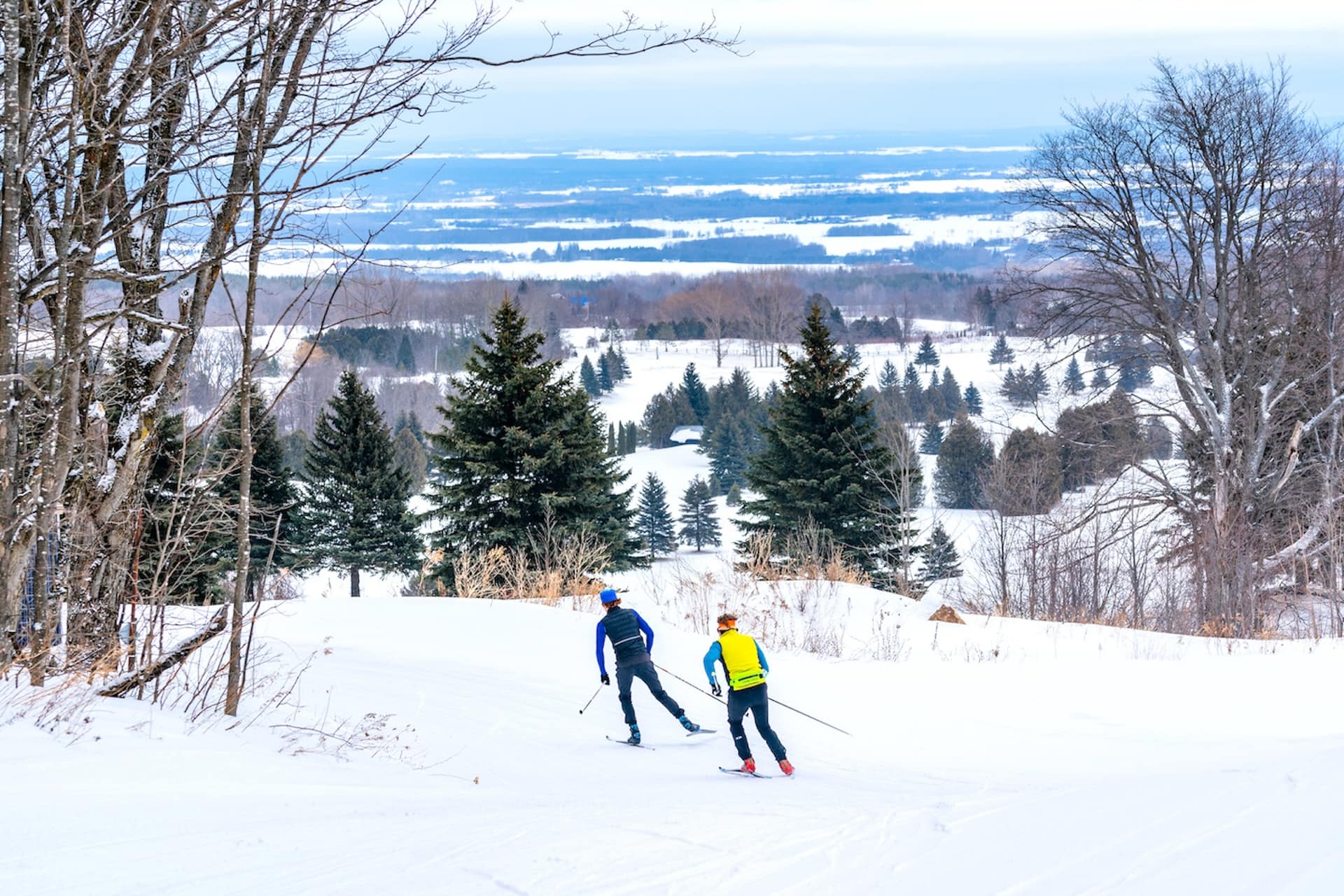
Skiers at Kelly Sinclair’s cross-country resort, Highlands Nordic, used to rely on natural snow to cover 30 kilometres of tree-speckled trails. Now they’re skiing in circles.
“We kind of feel like hamsters on a wheel, sometimes going around an 800 metre loop,” Sinclair said. But it’s all the resort can afford to make snow for, the 35-year old resort manager added
Warmer winters have reduced the number of days the resort in Duntroon, Ont.—15 minutes from the province’s largest ski town in Collingwood—can accommodate.
Talking Points
- Canadian ski resorts, especially east of the Rockies, have been hit with an onslaught of new costs associated with climate change
- Insurance costs are increasing as the frequency and severity of catastrophic events increase, while warmer temperatures mean snowmaking is in high gear
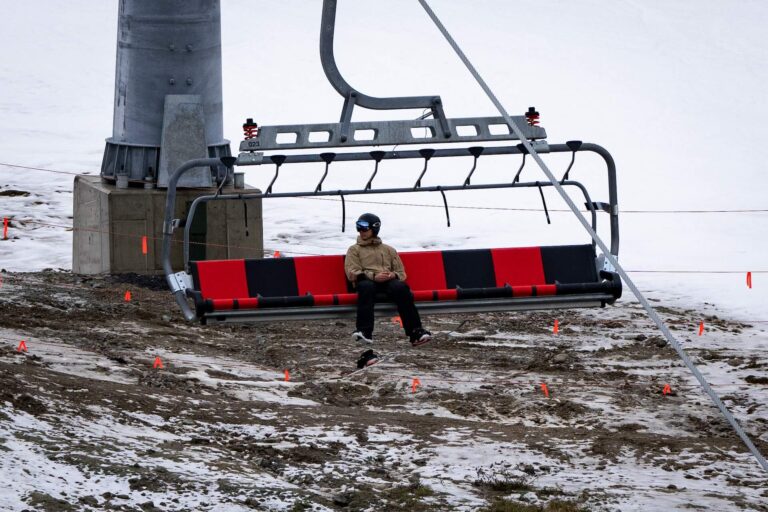
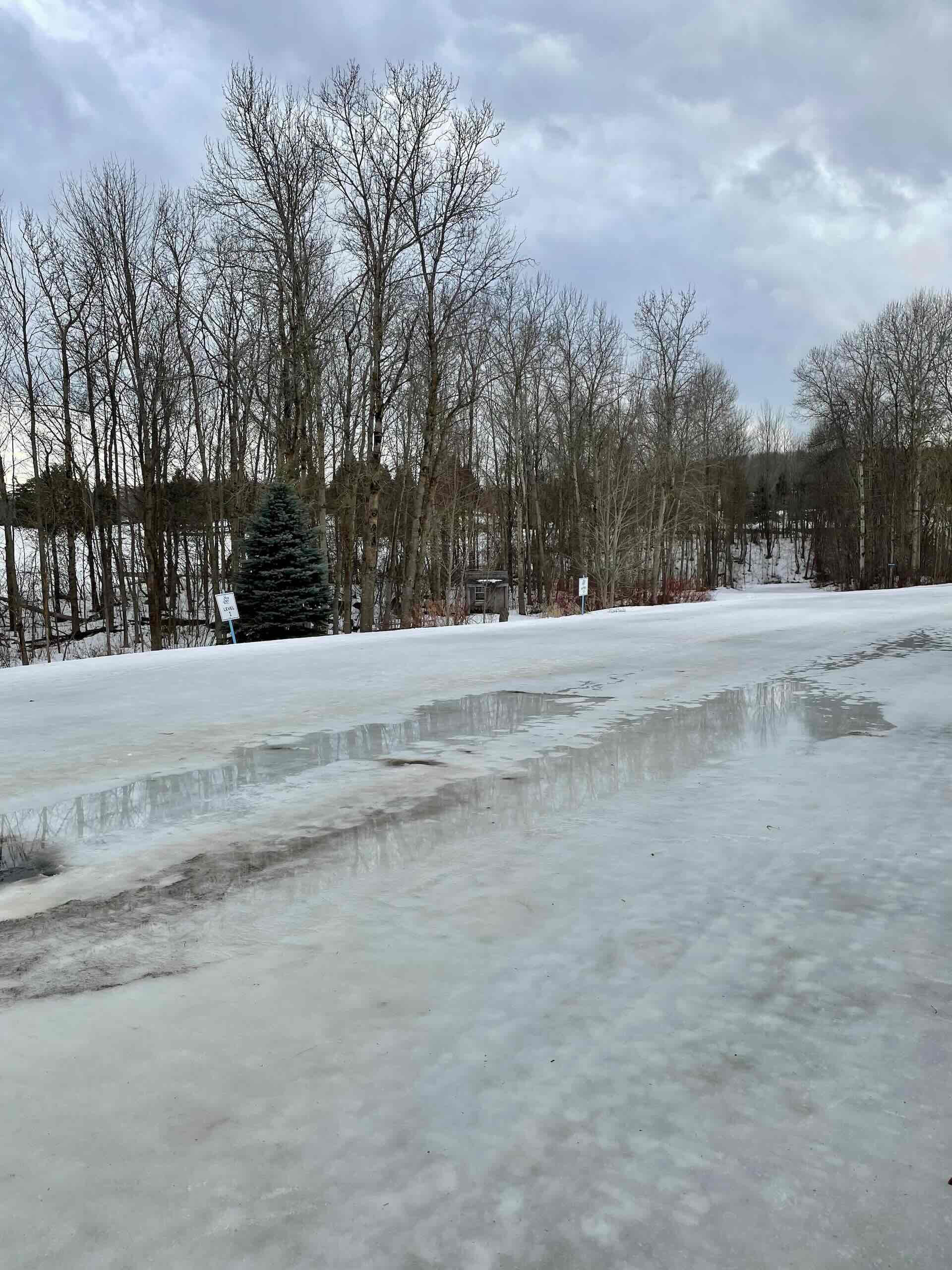
Muddy slopes have replaced ski days, putting pressure on revenue. Catastrophic events are occurring more frequently and forcefully, pushing up insurance premiums. And there’s an onslaught of costs related to increased snowmaking.
Highlands Nordic isn’t the only small Canadian ski resort that’s felt climate change cut into its bottom line, but being a cross-country resort instead of a downhill destination hits the business harder. Cross-country skiing is especially difficult to make and maintain snow for, as the trails are thinner, longer and weave through trees. So when the resort does make snow, it usually only has the budget to cover a small portion of its trails, Sinclair said.
Most ski resorts east of the Rockies struggled to open by Christmas last year, Daniel Scott, a professor at the University of Waterloo, said. This year, it’s looking up with almost every resort in Canada open by time of publication. But not everything is fully open—Collingwood’s Blue Mountain was operating 23 out of its 43 trails on Dec. 23, and that’s with snowmaking in gear. Mont Tremblant in Quebec was faring similarly: 51 of its 102 trails were open.
“That’s a huge revenue point for most ski areas—some 20, 25, 30 per cent of their annual revenue can come in that week or two weeks,” Scott said.
Hundreds of millions of dollars invested in snowmaking counteracted warming temperatures and extended ski seasons during the 1980s to 2000s, according to Scott’s research on the U.S. ski industry. But by the 2020s the average season length began to decline “despite the extensive snowmaking capacity available,” Scott wrote in an email. Trends in Canada are similar, but there isn’t enough data to back it up, he added.
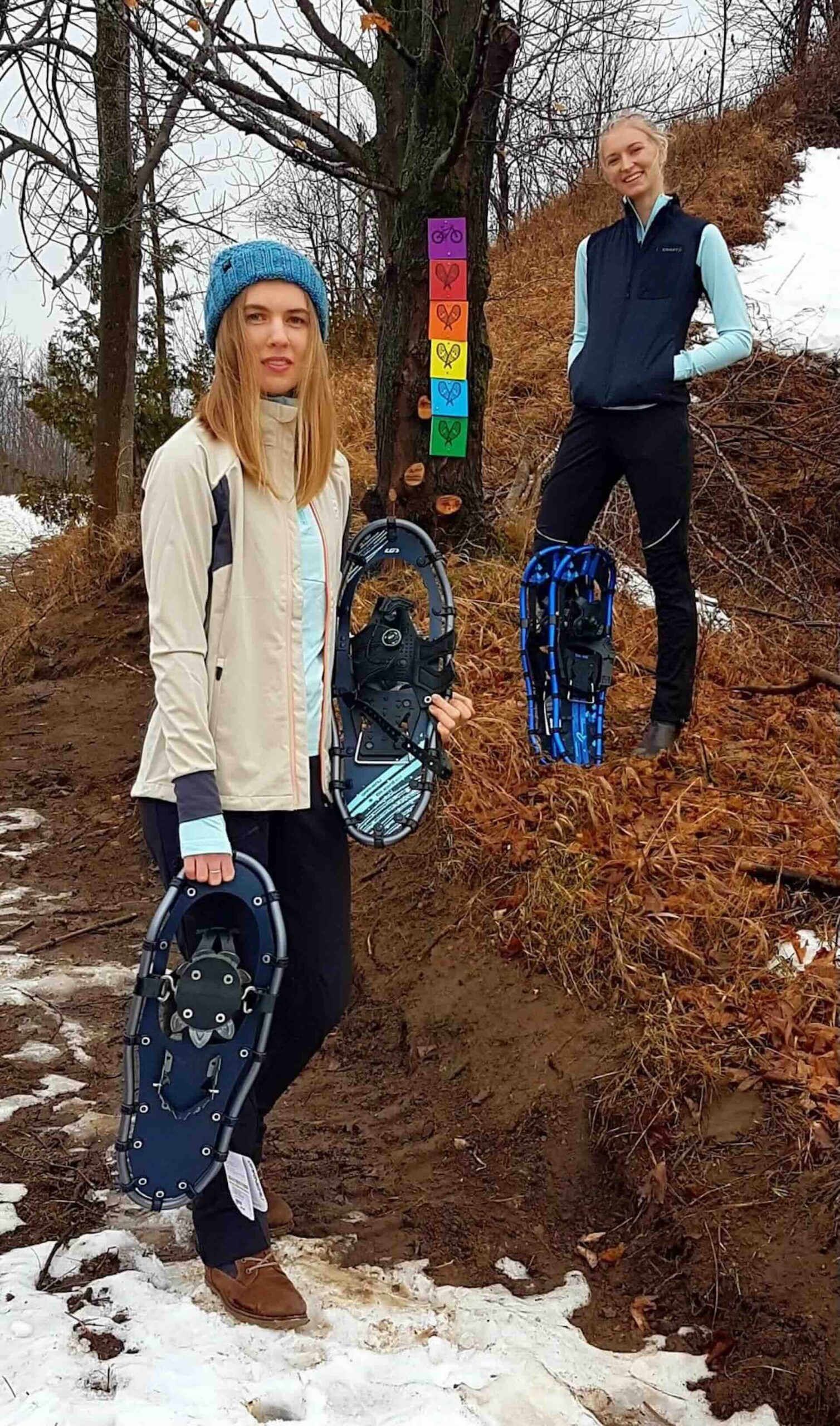
Family members of Highlands Nordic staff at the ski resort. The Ontario venue has been grappling with higher insurance expenses over the past several years. Photo: Handout/Highlands Nordic
Even with more advanced snowmaking capacity, climate change cost the U.S. ski industry US$5 billion in revenues from 2000 to 2020, according to Scott.
Ski areas have always had to deal with seasonal variabilities in weather, but this shift is different, said Paul Pinchbeck, president and CEO of the Canadian Ski Council.
“There’s no doubt that some of the smaller ski areas in Canada have had greater challenges,” Pinchbeck said. Some ski resorts in the northern areas of Ontario and Quebec were closed for the whole season, or had “very reduced number of days,” Pinchbeck added.
The last two years have been particularly challenging, Sinclair said. Though Highlands Nordic is still getting snow, it’s not the same amount as before. The pessimism is also trickling into other aspects of its business. Even at the resort’s Pro Shop, which serves the community too, sales are down.
“Unless there’s snow, people are not in the mood to even consider getting their skis tuned up for the season, getting their skis waxed.”
“Unless there’s snow, people are not in the mood to even consider getting their skis tuned up for the season, getting their skis waxed,” Sinclair said. It’s also difficult to figure out how much inventory to order for the year ahead, when the amount of snow is uncertain.
That unpredictable customer demand, coupled with rising fixed costs—like insurance—is squeezing margins.
Insurance expenses for Highlands Nordic have been steadily rising over the past several years, Sinclair said. While it rose only five per cent this year, between 2020 and 2025 the ski resort’s premiums have doubled.
With warmer temperatures, muddy slopes have replaced ski days, putting pressure on Canadian ski resorts’ revenues. Photo: Handout/Highlands Nordic
Cross-country skiing is typically less risky than downhill skiing in terms of injuries, and the resort hasn’t faced any liability claims—so Highlands Nordic’s insurance costs haven’t been “as bad as others in the industry,” according to Sinclair. Property insurance has been the main driver, she added.
Ski resorts typically get insurance to guard against injury liability claims, property damage, or other threats like cyberattacks, said Brian Edwards, president and CEO of Edwards Insurance.
But climate change is putting “upwards pressure on property insurance premiums” across the country, Edwards wrote in an email. There’s been an increase in claims related to catastrophic weather events like flooding and wildfires, he added.
“The once-in-100-year events are happening much more often,” Edwards wrote.
“The once-in-100-year events are happening much more often.”
Still, Nick Holmes-Smith, who owns cat skiing resort Mustang Powder, said the Monashee Mountains operations near Revelstoke, B.C., might actually benefit from warmer temperatures.
Mustang Powder’s track record of deep snow means they’ve been pretty resilient to milder weather. Holmes-Smith said when temperatures are warmer elsewhere and there isn’t enough snow, it drives skiers to visit notoriously cold interior B.C.
“Because we get so much snow—if you get slightly less, it’s really not that different,” Holmes-Smith said.
And in Ontario, resorts and ski industry representatives remain hopeful that the resurgence in snow for some parts of the province so far this season will be a welcome reprieve to struggling resorts.
“We recognize the challenge—or the perceived demise of skiing,” Kevin Nichol, president of Ontario Snow Resorts Association, said. “We might have tighter windows of opportunity.”