MONTREAL — In August 2014, Jeremy Bresnen noticed runners were sharing images of themselves on Instagram wearing a cap of his design. The hat in question, the GOCap Standard, retailed for $45, a considerable price for something most runners considered an accessory, but one that took into account its knitted (not woven) material and UPF protection, among other built-in tech. One selfie showed a runner wearing the GOCap in the Swiss Alps, a rainbow in the background.
Skip to content

 Jeremy Bresnen, co-founder of Ciele Athletics, working on designs. Photo: Handout/Ciele Athletics

Commentary: Quebec Ink
How to get a head in athletic apparel
Montreal-based Ciele Athletics took on the foot-obsessed giants of running wear by aiming a little higher
Ciele's five-panel hats are made of knitted material and offer UPF protection. Photo: The Running Company/Facebook
MONTREAL — In August 2014, Jeremy Bresnen noticed runners were sharing images of themselves on Instagram wearing a cap of his design. The hat in question, the GOCap Standard, retailed for $45, a considerable price for something most runners considered an accessory, but one that took into account its knitted (not woven) material and UPF protection, among other built-in tech. One selfie showed a runner wearing the GOCap in the Swiss Alps, a rainbow in the background.
At the same time, Bresnen noticed how many people were also posting pictures of themselves in the hat as they lounged, drank, skateboarded, commuted and otherwise didn’t run, validating his view of the GOCap’s appeal: he designed it for running, but also for not running. “It was the plan, or at least the hope,” Bresnen, 50, told me recently. “It’s like, ‘Nice cap. Oh, I can run in it? Rad!’”
Bresnen’s whimsy has paid off. Ciele Athletics, the Montreal company he co-founded with Mike Giles, has sold over a million hats since the company’s launch in 2014. The company offers about 200 variations of its hats at more than 900 locations around the world, including its flagship store on Montreal’s Notre-Dame West. It has collaborated with Puma and Salomon, among others. In an industry that focuses almost exclusively on the lower extremities, this small firm of about 23 employees now dominates what is arguably more valuable advertising real estate: the often-furrowed, always-sweaty brow of a jogger in mid-stride.
Related Articles

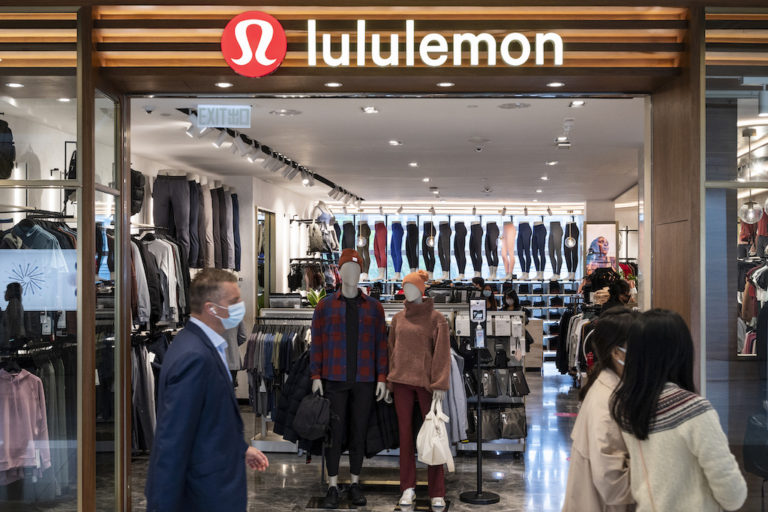
Astonishing, really, that the space was still up for grabs. Running, the industry catering to the sometimes torturous act of rapidly putting one foot in front of another, is dominated by the likes of Nike and Adidas, among other multinationals. A longtime designer for the Quebec-based outerwear company Orage, Bresnen started a clothing company in the early 90s; then Alena.Mtl, a skate shop in Montreal’s west end, in the early aughts; and Thaylor.com, described as a “online shopping-editorial hybrid” that went under in 2010.
When Giles approached him to start a new project in 2013, Bresnen recalled, “starting things and failing miserably over and over again” had given him a touch of PTSD. A lifelong skateboarder and snowboarder, he fell into running in 2010, as he drifted towards middle age. “I’m apt to turn my hobbies into business ideas,” he said.
At a Salt Lake City trade show in February 2014, he met a hat manufacturer with low minimum order requirements. He sketched out an early design for GOCap on the plane ride back to Montreal. Ciele—a vaguely European-sounding riff on the French word for sky—was born a few weeks later.
Ciele’s immediate success exploited the running industry’s near-fanatical focus on shoes and shoe tech. To be fair, it’s a boffo business model, blessed with impressive profit margins and a clientele that tends to re-up every four to six months. Yet it means other running accessories become less important as one travels north from the ankles, with headwear often relegated to giveaway status. “Hats were just an afterthought,” Bresnen told me. “Nobody was doing anything interesting with them.”
Ciele’s hats, which remain comparatively expensive (anywhere from $45 to $110), are meant to be washed and used over and over. They’re comfortable in that you barely feel them on your head. Their five-panel construction and flat bills were born from 90s-era skateboarding, when ‘boarders had an aversion to the baseball cap and its sporty pretensions. “The cap was made for people of our era that want a five-panel performance and don’t want to look like a dumb jock,” Scott Gravatt, Ciele’s head of U.S. and Canada sales, told me recently. “You won’t fucking catch me dead in a baseball cap.”
Gravatt came to Ciele last November after 15 years at Nike, including six years at the company’s running division. I asked him why Nike never thought to slap its swoosh logo onto a comfortable, durable, decent-looking hat. “None of the big running brands approach running as a culture; they approach it as a sport and an activity,” he said. “Nike is a $50-billion company that wants to be a $100-billion company. And performance athletics is not the way to add another $50 billion.” Until Ciele came around, Nike’s idea of a running hat was a moisture-wicking baseball cap with a softer brim, he said.
Of course, Nike now makes a variety of familiar-looking five-panel, flat-brimmed caps. So do Adidas, Reebok, New Balance and Asics. At Ciele’s flagship store, where a few pairs of running shoes are the only explicit indications of the company’s raison d’être, I wondered how this tiny brand could survive all this imitation and flattery from some of the world’s biggest corporations.
Bresnen shrugged. Ciele is in its tenth year. He said it takes 20 years to build a lasting brand. On Instagram, runners are still seen running—and not running—in Ciele caps. “It’s a bit of hoping for the best. You understand that you’re first to market, that my selection is way better than everybody else’s,” he said. “Right now, you can’t go to Nike and get one that fits you. You can come to us and get one that fits you.”
Martin Patriquin is The Logic’s Quebec correspondent. He joined in 2019 after 10 years as Quebec bureau chief for Maclean’s. A National Magazine Award and SABEW winner, he has written for The New York Times, The Guardian, The Walrus, Vice, BuzzFeed and The Globe and Mail, among others. He is also a panelist on CBC’s “Power & Politics.”



Loading...
Thanks for sharing!
You have shared 5 articles this month and reached the maximum amount of shares available.
CloseThis account has reached its share limit.
If you would like to purchase a sharing license please contact The Logic support at [email protected].
CloseGift the full article!
You have gifted 0 article(s) this month and have 5 remaining.
Recipients will be able to read the full text of the article after submitting their email address. They will not have access to other articles or subscriber benefits.
Photo: The Running Company/Facebook
Jeremy Bresnen, co-founder of Ciele Athletics, working on designs.
Most Popular This Week




In-depth, agenda-setting reporting
Great journalism delivered straight to your inbox.
News
Adam Waterous proposes massive crude exports to Asia by rail through northern B.C.
Briefing
Banks should be forced to tell customers how much they’re paying in fees, watchdog says
Zymeworks strikes deal with Roche to work on cancer treatment, with US$55M up-front payment
Bombardier to expand its U.S. footprint with US$270M in infrastructure investments
Best business newsletter in Canada
Get up to speed in minutes with insights and analysis on the most important stories of the day, every weekday.
Exclusive events
See the bigger picture with reporters and industry experts in subscriber-exclusive events.
Membership in The Logic Council
Membership provides access to our popular Slack channel, participation in subscriber surveys and invitations to exclusive events with our journalists and special guests.






