Skip to content

Canada's Business and Tech Newsroom

  • Professional Subscription
  • Partnerships & Advertising
  • Licensing & Syndication
Log In Subscribe
Welcome,
  • My Account
  • Log Out
  • Business
  • Tech
  • National
  • The Big Read
  • Briefings
  • Commentary
Search
Log In Subscribe
Welcome,
  • My Account
  • Log Out
Commentary

Carmichael: Is Freeland serious about taming inflation? She can prove it in her fall economic statement

Let’s start this edition of the inflation diaries by replaying a clip from December 2021. 

“Today’s renewal of Canada’s monetary-policy framework is fundamental to Canada’s economic success,” Finance Minister Chrystia Freeland said at a joint press conference with Bank of Canada governor Tiff Macklem. “This is about continuity and about continuing to do what we know works.”

Commentary

Carmichael: Is Freeland serious about taming inflation? She can prove it in her fall economic statement

The finance minister will play a key role in determining where interest rates go from here

By Kevin Carmichael
Chrystia Freeland is seen pushing her hair out of her face. There are two Canadian flags in the background.
Deputy Prime Minister and Finance Minister Chrystia Freeland in a news conference in Ottawa in November 2023. Photo: The Canadian Press/Adrian Wyld
Nov 15, 2023
A A
A Small A Medium A Large
Share

Gift

Share

Let’s start this edition of the inflation diaries by replaying a clip from December 2021. 

“Today’s renewal of Canada’s monetary-policy framework is fundamental to Canada’s economic success,” Finance Minister Chrystia Freeland said at a joint press conference with Bank of Canada governor Tiff Macklem. “This is about continuity and about continuing to do what we know works.”

Twice a decade, the finance minister, with input from the central bank, sets out how monetary policy should be conducted. Then, the government leaves the Bank of Canada alone to execute its mission. The idea is to separate the decision on when to raise and lower interest rates from electoral considerations, and there’s been lots of evidence lately of why that’s important. 

It’s worth revisiting the mandate renewal because Freeland acknowledged that she, too, had a role to play in controlling inflation. Her fall economic statement on Nov. 21 will show if she was serious. 

By “continuity,” Freeland meant the Bank of Canada’s primary mission would remain keeping inflation at around two per cent, as measured by year-over-year changes in the consumer price index.

Related Articles

Bank of Canada governor Tiff Macklem in front of a Canadian flag.

Carmichael: Tiff Macklem is tired of being a political punching bag

By Kevin Carmichael

Carmichael: If this is the new normal, our monetary policy needs a rethink

By Kevin Carmichael

Carmichael: If Canada is to avoid recession, politicians must make tough choices

By Kevin Carmichael

The “operating manual” Freeland gave the central bank in 2021 wasn’t like the previous one, however. It included new language that said when inflation was calm, the central bank would give greater consideration to employment. It also directed the bank to take into account inclusion and climate change—again, as long as policymakers were satisfied that doing so wouldn’t jeopardize price stability. 

Macklem said the central bank already took those things into account, so no problem—the only change was that implicit considerations were now explicit. In that spirit of transparency, Freeland put on paper something that technocrats understood, but that had never been declared official policy, by stating that the government also had a role to play in keeping inflation under control. The central bank’s new mandate concluded with this paragraph: “Finally, recognizing the limits of monetary policy, the government and the bank also acknowledge their joint responsibility for achieving the inflation target and promoting maximum sustainable employment.” 

The idea that fiscal and monetary policy should work in concert was well established. Paul Martin, the former Liberal finance minister and prime minister, recounts in his political memoir that Paul Volcker, the former Federal Reserve chair best known for ending double-digit inflation in the early 1980s, told him in 1994 that “fiscal and monetary policy were at odds with each other.” Martin said that notion informed his decision to replace John Crow, the former Bank of Canada governor who insisted on keeping interest rates high in order to get inflation near zero, and to do his part by balancing the budget and reducing debt. 

“I really believed in the virtuous circle,” Martin wrote. “My experience in business was that what made an economy go or not go was interest rates more than taxation.” 

Stephen Poloz, Macklem’s predecessor, showed in a lecture at the University of Ottawa in 2016 that the combination of “easy” monetary policy and “tight” fiscal policy in the years that followed the Great Recession caused private debt to surge to record levels. The recovery was weak, but Stephen Harper’s Conservative government of the day was determined to reduce spending, so the Bank of Canada was forced to keep interest rates low to stave off deflation. More government spending would have contributed to economic growth, which would have allowed the Bank of Canada to get out of the lower-for-longer trap. And more spending might have let the central bank tighten the reins on runaway housing prices. 

“As for the desirability of one policy mix over another, hindsight is always 20/20 and such a discussion would have little meaning here,” Poloz said in the lecture. “We will refrain from the pros and cons of alternative policy mixes.”

Poloz, who was appointed by Harper’s finance minister, the late Jim Flaherty, would have crossed a line if he had passed judgment on the decisions of an elected government. But his lecture was an important articulation of what Martin had recognized in the mid-’90s—the beginning of a period that Poloz described as “neutral/neutral” fiscal and monetary policy. The decision to add that to the mandate allowed for a more sophisticated understanding of how the interplay between the Finance Department and the Bank of Canada should work. 

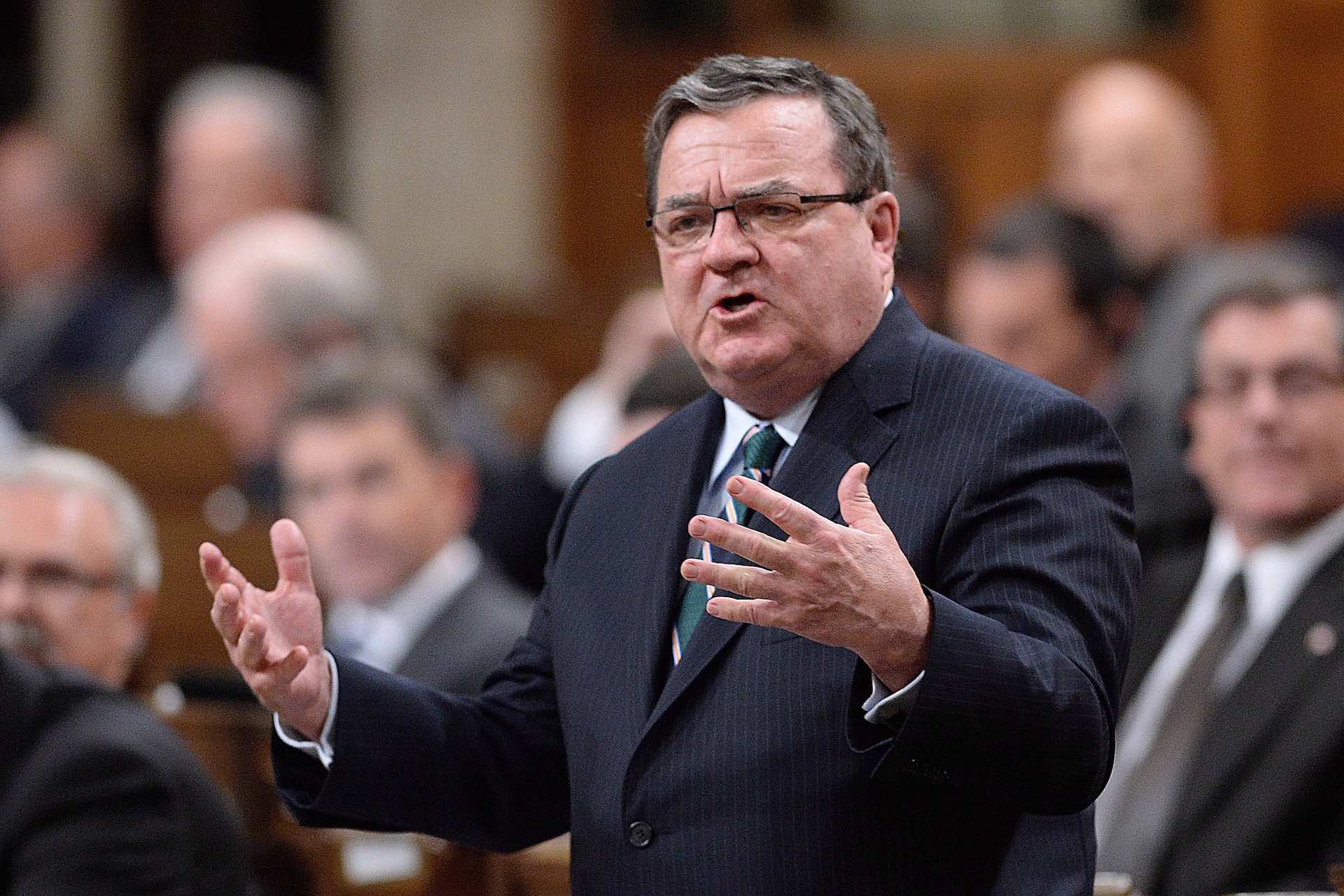
The late Jim Flaherty is pictured here, as finance minister, with his arms outstretched in the House of Commons.
The late Jim Flaherty as finance minister in February 2014. Photo: The Canadian Press/Sean Kilpatrick

“Fiscal policy and monetary policy are two big levers when it comes to steering the Canadian economy,” Freeland said in 2021. “We’ve seen fiscal and monetary policy working together as this unprecedented global pandemic hit Canada. Fiscal and monetary policy are going to continue to need to work together as we get through this current stage of the economic recovery.” 

Fiscal and monetary policy aren’t working together at the moment. Macklem has said repeatedly in recent weeks that federal and provincial spending is on track to grow at a rate that will stoke inflation and force him to keep interest rates high. Governments in Ontario and British Columbia said this fall that deficits will be wider than forecast, suggesting Macklem will be getting little help from the provinces. 

Gift the full article

That means Freeland will have an outsized role in the trajectory of interest rates. If she makes a concerted attempt to restrain spending growth, it will ease the Bank of Canada’s concerns about getting inflation all the way back to target. She also would strengthen the credibility of the monetary-policy mandate by living up to her end of the bargain. 

If those aren’t reasons enough to cut spending, there’s another way to think about it: Freeland could be more like Martin or more like Harper. Her choice. 

Kevin Carmichael is The Logic’s economics columnist and editor-at-large. He has spent more than two decades covering economics, business and finance for outlets including Bloomberg News, The Globe and Mail and the Financial Post, where he also served as editor-in-chief. 

#Bank of Canada #Chrystia Freeland #commentary #economy #fall economic statement 2023 #Stephen Poloz #Tiff Macklem

Loading...

Thanks for sharing!

You have shared 5 articles this month and reached the maximum amount of shares available.

Close
This account has reached its share limit.

If you would like to purchase a sharing license please contact The Logic support at [email protected].

Close
Want to share this article?

Upgrade to all-access now

Close
Gift the full article!

You have gifted 0 article(s) this month and have 5 remaining.

Copy link and gift
Copy Link
Email to a friend
Send Email
Gift on Social Media

Recipients will be able to read the full text of the article after submitting their email address. They will not have access to other articles or subscriber benefits.

Chrystia Freeland is seen pushing her hair out of her face. There are two Canadian flags in the background.

Photo: The Canadian Press/Adrian Wyld

The late Jim Flaherty is pictured here, as finance minister, with his arms outstretched in the House of Commons.

The late Jim Flaherty as finance minister in February 2014.

Most Popular This Week

A shot of a placard on a table reading "Let Alberta Decide." There is a person out of focus in the foreground wearing a cowboy hat.
The Big Read

What Alberta’s corporate heavyweights really think about separation

By Meghan Potkins
Carney and Trump at a photo op in Sharm El-Sheikh, Egypt, against a white backdrop that features a peace-themed logo for the gathering. Carney is leaning toward a scowling Trump and pointing his index finger at the U.S. president.
News

The U.S. has chosen not to extend CUSMA. Here’s what happens next

By Joanna Smith
A person in glasses and a blue top is sitting and typing on a laptop in an office. A desktop screen next to the laptop displays some blurred-out coding work.
News

A niche white-collar role is becoming the AI industry’s hot new job

By Anita Balakrishnan
A logo that reads AI in blue lettering against a light yellow background.
News

What happened when a VC firm let AI do almost everything

By Catherine McIntyre

In-depth, agenda-setting reporting

Great journalism delivered straight to your inbox.

An aerial-style rendering of a massive data centre on a prairie landscape of farm fields and trees.
News

Meta to spend $13B on sprawling Alberta data-centre complex

By Meghan Potkins

Briefing

MDA Space to buy control of French Earth-observation company for $920M

By David Reevely   |   Jul 8, 2026 | 5:58 PM ET

Meta officially unveils a $13B data-centre facility in Alberta

By Meghan Potkins   |   Jul 8, 2026 | 4:17 PM ET

U of T and McMaster are anchoring a $40M life-sciences fund

By Catherine McIntyre   |   Jul 8, 2026 | 4:06 PM ET

Best business newsletter in Canada

Get up to speed in minutes with insights and analysis on the most important stories of the day, every weekday.

Exclusive events

See the bigger picture with reporters and industry experts in subscriber-exclusive events.

Membership in The Logic Council

Membership provides access to our popular Slack channel, participation in subscriber surveys and invitations to exclusive events with our journalists and special guests.

Recent Popular Stories

The Big Read

What Alberta’s corporate heavyweights really think about separation

By Meghan Potkins   |   Jul 2, 2026
A shot of a placard on a table reading "Let Alberta Decide." There is a person out of focus in the foreground wearing a cowboy hat.
News

A niche white-collar role is becoming the AI industry’s hot new job

By Anita Balakrishnan   |   Jun 30, 2026
A person in glasses and a blue top is sitting and typing on a laptop in an office. A desktop screen next to the laptop displays some blurred-out coding work.
News

What happened when a VC firm let AI do almost everything

By Catherine McIntyre   |   Jun 29, 2026
A logo that reads AI in blue lettering against a light yellow background.
News

Carney’s new deal for B.C. paves way for West Coast pipeline

By David Reevely and Meghan Potkins   |   Jul 2, 2026
Workers position pipe during construction of the Trans Mountain pipeline expansion in Abbotsford, B.C., in May 2023.
Analysis

Canada’s ETF industry is almost a trillion-dollar business

By Chaimae Chouiekh   |   Jul 3, 2026
Despite a down year a sign board displays the TSX's upbeat close on the final day of the year, in Toronto's financial district on Monday, Dec. 31, 2018.
Analysis

It turns out Trump does need something from Canada—aluminum

By Joanna Smith   |   Jun 25, 2026
A close-up of a made-in-Canada stamp on the end of a cylindrical piece of raw aluminum.

Canada's most influential executives and policymakers are reading The Logic

  • CPP Investments
  • Sun Life Financial
  • C100
  • Amazon
  • Telus
  • Mastercard
  • bdc
  • Shopify
  • Rogers
  • RBC
  • General Motors
  • MaRS
  • Government of Canada
  • Uber
  • Loblaw Companies Limited
logic-logo

Canada's Business and Tech Newsroom

100% human-crafted journalism

Newsroom

  • News Tips
  • AI Policy
  • Editorial Disclosures
  • Story Pitches

Company

  • About Us
  • Terms of Service
  • Privacy Statement
  • Corporate Information

Contact

  • Contact Us
  • Advertise
  • FAQs
  • Work at The Logic

© 2026 The Logic Inc. All Rights Reserved.

Trusted by leaders

Error

Account creation failed.

Please email us at [email protected].

Create Account

[wppb-register form_name=”cozmo-registration-form-for-modal”]

I do have an account
Login
or

[wppb-login]

I don’t have an account