Skip to content

Canada's Business and Tech Newsroom

  • Professional Subscription
  • Partnerships & Advertising
  • Licensing & Syndication
Log In Subscribe
Welcome,
  • My Account
  • Log Out
  • Business
  • Tech
  • National
  • The Big Read
  • Briefings
  • Commentary
Search
Log In Subscribe
Welcome,
  • My Account
  • Log Out
Shift newsletter

Gaps in U.S. rules targeting China may hurt Canadian EV firms, some warn

Washington’s curbs on China’s battery industry may not go far enough, some Canadian companies are arguing.

The plan: The U.S. Internal Revenue Service is consulting on changes it plans to make to the country’s tax code to reflect tax credits the Biden administration is offering EV buyers under the Inflation Reduction Act. The proposed changes also attempt to limit the role that so-called foreign entities of concern (FEOC)—companies based in countries like China, Russia, Iran and North Korea—play in the North American battery supply chain.

The problem: The likes of Nano One and Novonix, as well as the Quebec government, are warning the proposed rules contain loopholes that could limit their effectiveness—and make it harder for Canadian players to compete.

“Quebec is worried,” says the province’s submission to the IRS consultations. It warns the tax agency’s proposal could actually encourage “over-subsidized operations by state-owned enterprises” in countries of concern, with the potential to “increase unfair trade practices, contributing to an uneven playing field and the resultant harmful effects on world markets.”

Shift newsletter

Gaps in U.S. rules targeting China may hurt Canadian EV firms, some warn

With tensions high, local players worry loopholes could favour foreign companies

By Anita Balakrishnan
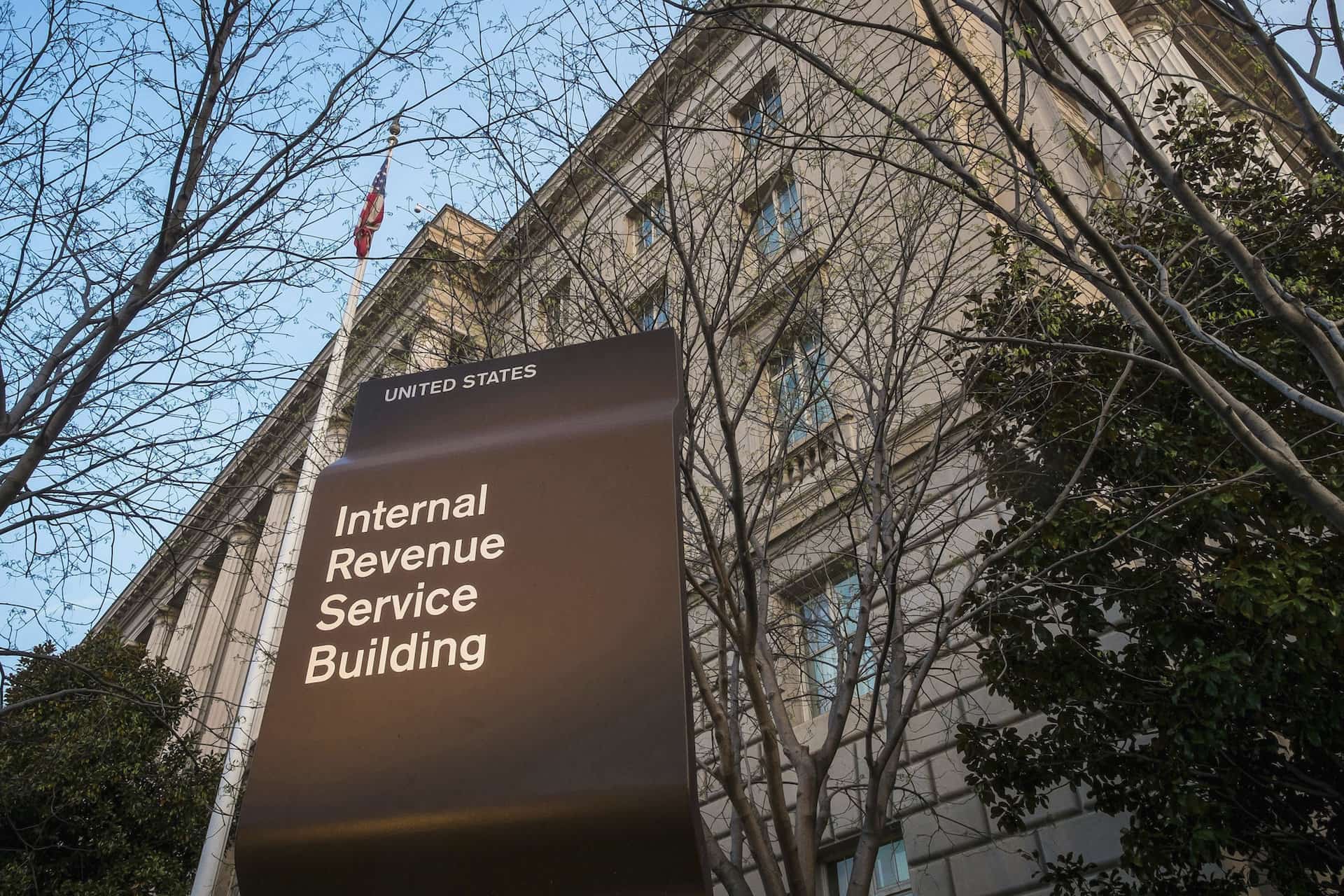
The Internal Revenue Service headquarters building in Washington in April 2014. Photo: AP Photo/J. David Ake
Jul 27, 2023
A A
A Small A Medium A Large
Share

Share

Washington’s curbs on China’s battery industry may not go far enough, some Canadian companies are arguing.

The plan: The U.S. Internal Revenue Service is consulting on changes it plans to make to the country’s tax code to reflect tax credits the Biden administration is offering EV buyers under the Inflation Reduction Act. The proposed changes also attempt to limit the role that so-called foreign entities of concern (FEOC)—companies based in countries like China, Russia, Iran and North Korea—play in the North American battery supply chain.

The problem: The likes of Nano One and Novonix, as well as the Quebec government, are warning the proposed rules contain loopholes that could limit their effectiveness—and make it harder for Canadian players to compete.

“Quebec is worried,” says the province’s submission to the IRS consultations. It warns the tax agency’s proposal could actually encourage “over-subsidized operations by state-owned enterprises” in countries of concern, with the potential to “increase unfair trade practices, contributing to an uneven playing field and the resultant harmful effects on world markets.”

Related Articles

EVs spice up Canada’s long love affair with pickups

By Anita Balakrishnan

How Canada’s EV charging progress stacks up

By Anita Balakrishnan

The backdrop: Concern about China’s role in North America’s battery supply chain is nearing a boiling point. This week, two U.S. House committees asked Ford to provide more detailed information on its plans to partner with CATL to build a gigafactory in Michigan that could employ workers from China, amid allegations about the Chinese battery giant’s past ties to forced labour.

“The overall political climate in the U.S. is increasingly aligned toward a hawkish perspective on China,” said Milo McBride, a Eurasia Group analyst who co-leads the firm’s critical-mineral practice. “That’s something that Canadian counterparts are demonstrating in their own ways.” 

The details—and the debate: The Inflation Reduction Act’s EV tax credits currently exclude vehicles with batteries for which FEOCs have assembled components or extracted, processed or recycled the critical minerals used in them. 

B.C.-based battery company Nano One argued in its submission that the IRS’s proposals do little to protect key materials like battery-grade iron or phosphorus, and appear to let FEOCs participate in the EV supply chain “by either extracting OR processing the critical mineral, so long as they don’t do both.” 

Nano One CEO Dan Blondal said in an interview that companies like Ford are welcome to work with CATL, but he doesn’t think taxpayers should underwrite such partnerships.

“We have a cleaner, greener, faster way of making [battery materials]. … We can do it cost-competitively against China, even on North American soil,” said Blondal. “The risk is … it becomes harder for the newer players, the newer entrants in critical minerals, or midstream like ourselves, to build the business. They don’t have the protections to gain a foothold, and flourish and ultimately become cost-competitive.” 

Not everyone agrees. Volkswagen’s submissions argue that without access to certain FEOCs, the market for new clean vehicles could “collapse.” 

Novonix, a Nova Scotia-founded battery company, argued China’s control of the key battery ingredient graphite is “the biggest risk to the industry.” Lack of clarity about how the IRA’s battery tax credit will treat the battery mineral is hampering the firm’s ability to close deals at a “critical time for domestic industry.” 

The takeaway: “Essentially doing everything in China is cheaper,” said Novonix CEO Chris Burns in an interview. “But from an environmental standpoint, at its simplest, you cannot copy a plant out of China and put it in the United States. 

“We know it, we live and breathe it. … That’s one of the reasons that the U.S. and the Canadian government need to understand how they can support companies.” 

Read Shift—The Logic’s authoritative weekly newsletter on automotive technology industry news—for more; and if you know someone who should be reading it, they can sign up here.
#CATL #electric vehicles #Ford #Inflation Reduction Act #Nano One #Novonix #Quebec #The Logic's Shift #Volkswagen

Loading...

Thanks for sharing!

You have shared 5 articles this month and reached the maximum amount of shares available.

Close
This account has reached its share limit.

If you would like to purchase a sharing license please contact The Logic support at [email protected].

Close
Want to share this article?

Upgrade to all-access now

Close
Gift the full article!

You have gifted 0 article(s) this month and have 5 remaining.

Copy link and gift
Copy Link
Email to a friend
Send Email
Gift on Social Media

Recipients will be able to read the full text of the article after submitting their email address. They will not have access to other articles or subscriber benefits.

Photo: AP Photo/J. David Ake

Most Popular This Week

A yellow ambulance is pictured outside of a hospital in Montreal. A red sign in the foreground reads, “Urgence / Emergency.”
Commentary: Quebec Ink

Quebec just found out what not having digital sovereignty really means

By Martin Patriquin
An image of Mark Carney standing in front of a red podium with the words "AI for All / L'IA pour tous." He is wearing a suit and tie. In the background, people wearing scrubs and white coats are visible.
Special Report

Canada’s new AI strategy sets lofty goals for adoption and growth

By Murad Hemmadi and Laura Osman
Exclusive

Canada’s new AI strategy includes $500M fund to back key firms

By Murad Hemmadi and Catherine McIntyre
The Big Read

Canada’s AI boom is about to collide with a major labour shortage

By Catherine McIntyre

In-depth, agenda-setting reporting

Great journalism delivered straight to your inbox.

A diptych showing Mark Carney on the left, and CIBC CEO Harry Culham on the right.
News

Diversifying trade requires banks to take bigger risks, official advised Carney before CIBC meeting

By Joanna Smith

Briefing

Kneat.com to leave TSX in $650M Thoma Bravo takeover

By Chaimae Chouiekh   |   Jun 9, 2026 | 4:06 PM ET

Teachers’-backed Databricks in fundraising talks that could lift its valuation above US$165B

By Catherine McIntyre   |   Jun 9, 2026 | 3:40 PM ET

New Windsor-Detroit bridge to ‘open at the end of the week,’ Carney says

By Joanna Smith   |   Jun 9, 2026 | 3:04 PM ET

Best business newsletter in Canada

Get up to speed in minutes with insights and analysis on the most important stories of the day, every weekday.

Exclusive events

See the bigger picture with reporters and industry experts in subscriber-exclusive events.

Membership in The Logic Council

Membership provides access to our popular Slack channel, participation in subscriber surveys and invitations to exclusive events with our journalists and special guests.

Recent Popular Stories

News

Canada’s surprise plan to buy Saab command jets leaves competitors seeking answers

By David Reevely   |   May 29, 2026
A closeup of a scale model of a jet covered in pixellated camouflage, with sensor equipment attached to the top of its fuselage. There are civilians and uniformed military personnel milling in the background.
Commentary: Quebec Ink

Quebec just found out what not having digital sovereignty really means

By Martin Patriquin   |   Jun 8, 2026
A yellow ambulance is pictured outside of a hospital in Montreal. A red sign in the foreground reads, “Urgence / Emergency.”
Exclusive

Canada’s new AI strategy includes $500M fund to back key firms

By Murad Hemmadi and Catherine McIntyre   |   Jun 3, 2026
Analysis

Why Canada’s wait-and-see approach to U.S. trade talks just might work

By Joanna Smith   |   Jun 2, 2026
A low-angle shot of a truck carrying vehicles across the bridge at the Canada-U.S. border in Sarnia, Ont. The U.S. and Canadian flags are flying in the foreground.
The Big Read

ApplyBoard faces a reckoning as Canada’s immigration boom turns into a bust

By Claire Brownell and David Reevely   |   May 27, 2026
The Big Read

We found every data centre in Canada

By Murad Hemmadi, David Reevely, Aleksandra Sagan, Chaimae Chouiekh, Martin Patriquin and Catherine McIntyre   |   Apr 8, 2026
Four vertical slices of aerial view photos. From left, a building in downtown Toronto housing several data centres, a picture of the Albertan wilderness where the proposed Wonder Valley data centre would go, a lit-up QScale data centre in Quebec, and a data centre at a Hydro-Quebec dam.

Canada's most influential executives and policymakers are reading The Logic

  • CPP Investments
  • Sun Life Financial
  • C100
  • Amazon
  • Telus
  • Mastercard
  • bdc
  • Shopify
  • Rogers
  • RBC
  • General Motors
  • MaRS
  • Government of Canada
  • Uber
  • Loblaw Companies Limited
logic-logo

Canada's Business and Tech Newsroom

100% human-crafted journalism

Newsroom

  • News Tips
  • AI Policy
  • Editorial Disclosures
  • Story Pitches

Company

  • About Us
  • Terms of Service
  • Privacy Statement
  • Corporate Information

Contact

  • Contact Us
  • Advertise
  • FAQs
  • Work at The Logic

© 2026 The Logic Inc. All Rights Reserved.

Trusted by leaders

Error

Account creation failed.

Please email us at [email protected].

Create Account

[wppb-register form_name=”cozmo-registration-form-for-modal”]

I do have an account
Login
or

[wppb-login]

I don’t have an account