Listen Now
0:00
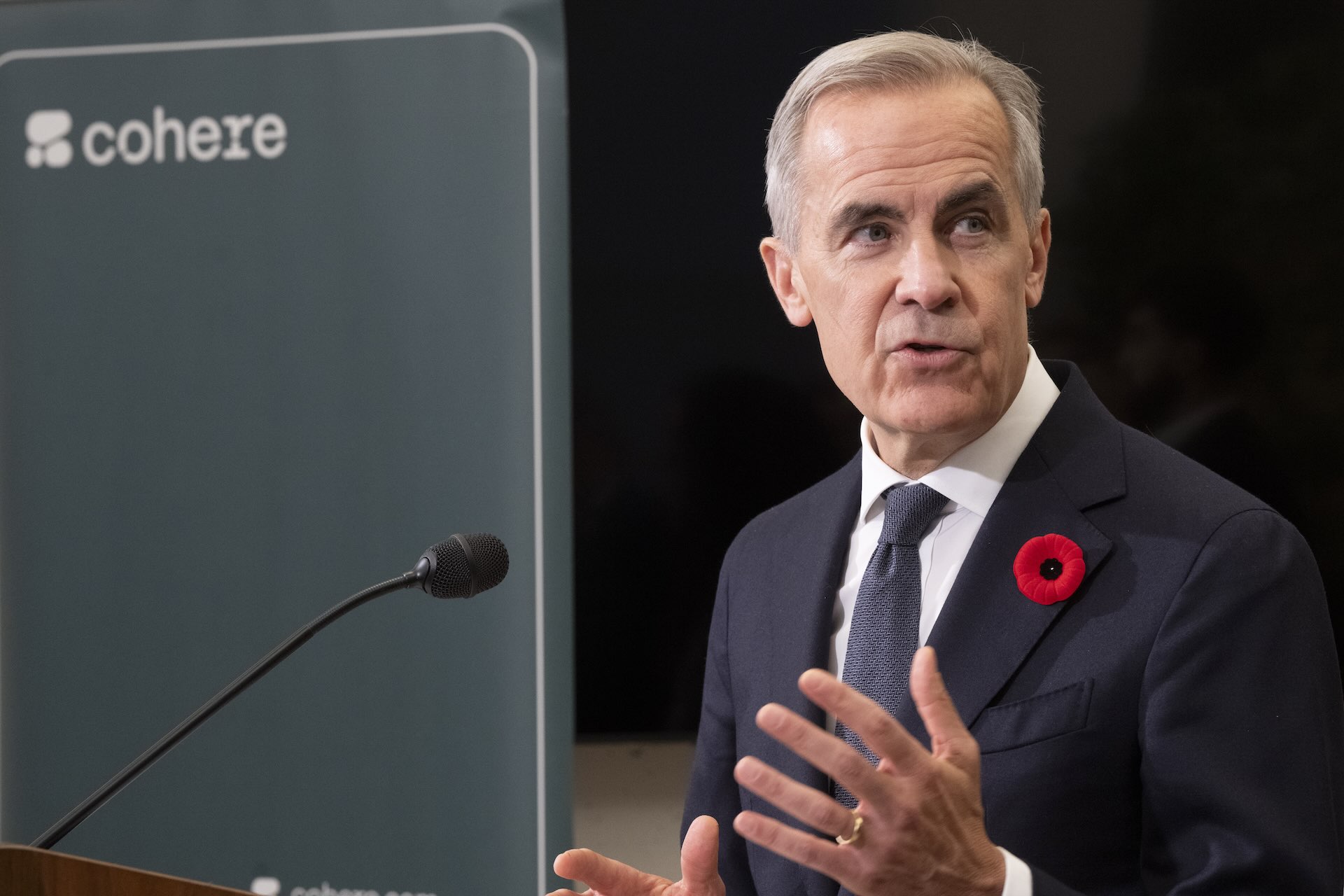
The federal government’s planned $1.6 billion investment in AI company Cohere is drawing questions about why a company attracting billions in private capital needs taxpayer financing—and what Canadians will get in return.
Conservative MPs are calling for the government to disclose the deal’s terms, including the ownership stake, the influence it will receive and the guarantees attached to Cohere’s Canadian commitments.
Talking Points
- Conservative MPs are calling for the government to disclose the terms of Ottawa’s investment of up to $1.6 billion in Cohere, including the ownership stake, the influence it will receive and the guarantees attached to the AI firm’s Canadian commitments
- Canada Development Investment Corporation, which negotiated the deal for the government, declined to disclose terms the government agreed to
The government announced last week that it would invest up to $1.6 billion in Cohere as part of the company’s Series E financing targeting $7 billion at a $35.7-billion valuation. Schwarz Group, a major investor in Aleph Alpha, the AI firm that recently merged with Cohere, is leading the round, alongside investors including Nvidia, Bell Ventures and Inovia Capital.
Adam Chambers, a Conservative MP for Simcoe North, Ont., said that the investment was good news for Cohere and welcomed the company’s growth, but questioned Ottawa’s motivation for buying in. “I don’t know why the government has to be on the cap table of Cohere for them to be a successful company,” he told The Logic.
Chambers said he is withholding judgment on whether the investment is a good deal for taxpayers until Ottawa provides more information. He wants to know what the money would secure for the government. He said if there were strong terms for investors, that should have attracted enough private-sector capital. “We have very large pension plans in this country. We have a very large investor appetite in the technology ecosystem,” he said. “So what’s the gap the government was trying to fill in this case?” Without such details, he added, it wasn’t clear if the deal was good for taxpayers or not.
Related Articles

Leslyn Lewis, the Conservative critic for AI and digital government, raised similar questions in a statement on X, asking how much of Cohere Canadians would own, what say they would have in the company’s direction and guarantees it would keep its technology and operations in Canada. She also questioned what would happen if the company were sold or failed to meet its commitments. “Conservatives will be pressing for clear terms, measurable benefits and accountability for every taxpayer dollar,” she wrote.
Ottawa has framed the investment as a way to secure Canadian AI capabilities while giving taxpayers a share of Cohere’s growth. The Toronto-based firm markets itself as a sovereign AI provider, offering technology that businesses and governments can run on their own systems while retaining control over sensitive data.
As part of the investment, Cohere has committed to maintaining its Canadian incorporation and headquarters, creating at least 1,000 Canadian technical jobs and investing at least $1.7 billion in additional Canadian computing infrastructure by 2030. The government says payments will come in stages, with regular reporting on those commitments.
The Canada Development Investment Corporation (CDEV) led the deal for the government and is responsible for and managing its investment. Spokesperson Anick Losier told The Logic that CDEV had “negotiated a robust package of commercial terms, governance arrangements and investor protections that reflect Canada’s position as an important strategic investor and existing customer of Cohere.” Losier declined to disclose specific terms of the deal, “including those in respect of governance and investor rights,” adding that negotiations “final arrangements” were ongoing.
That prospect of government influence has also drawn scrutiny beyond the opposition party. In a post on X, Build Canada CEO Lucy Hargreaves questioned what control Ottawa intended to exercise and argued the investment reflected a broader shift in industrial policy. “Ottawa is becoming the owner, the funder, the customer and the regulator of the same companies,” she wrote. “Canada wins when markets reward builders, not when ministers pick them.”
Economist Charles Lammam argued that the government should focus on competitive taxes and reducing regulatory barriers, rather than investing in a company already attracting major private backers.
Chambers also questioned whether Ottawa could feel compelled to provide further support if Cohere ran into trouble. He argued that becoming a customer was already a significant way for the government to help the company compete globally.
Ottawa has also supported Cohere with up to $240 million toward a $725-million project to buy compute at a Cambridge, Ont., data centre being built by New Jersey-based CoreWeave where Cohere is the anchor tenant. Federal Crown corporations BDC Capital and Export Development Canada have also invested in Cohere.
Ottawa is preparing to take stakes in other tech companies through the forthcoming $500-million Canadian Tech Growth Fund announced in June, which will be able to make equity investments in small- and medium-sized businesses.
“I think we do run the risk of Ottawa and the Prime Minister’s Office operating like an investment bank and not a policy shop,” said Chambers. “I’m not sure that’s the economy we would like to build.”