Skip to content

Canada's Business and Tech Newsroom

  • Professional Subscription
  • Partnerships & Advertising
  • Licensing & Syndication
Log In Subscribe
Welcome,
  • My Account
  • Log Out
  • Business
  • Tech
  • National
  • The Big Read
  • Briefings
  • Commentary
Search
Log In Subscribe
Welcome,
  • My Account
  • Log Out
Commentary

Carmichael: Canada’s Nobel-winning economist thinks Carney is on the right track

Listen Now
0:00
Commentary

Carmichael: Canada’s Nobel-winning economist thinks Carney is on the right track

But the PM should borrow even more from Peter Howitt and the principles of creative destruction

By Kevin Carmichael
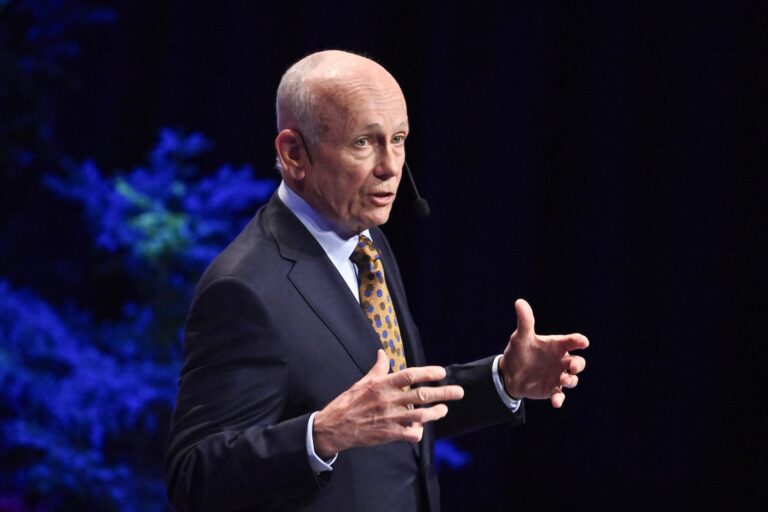
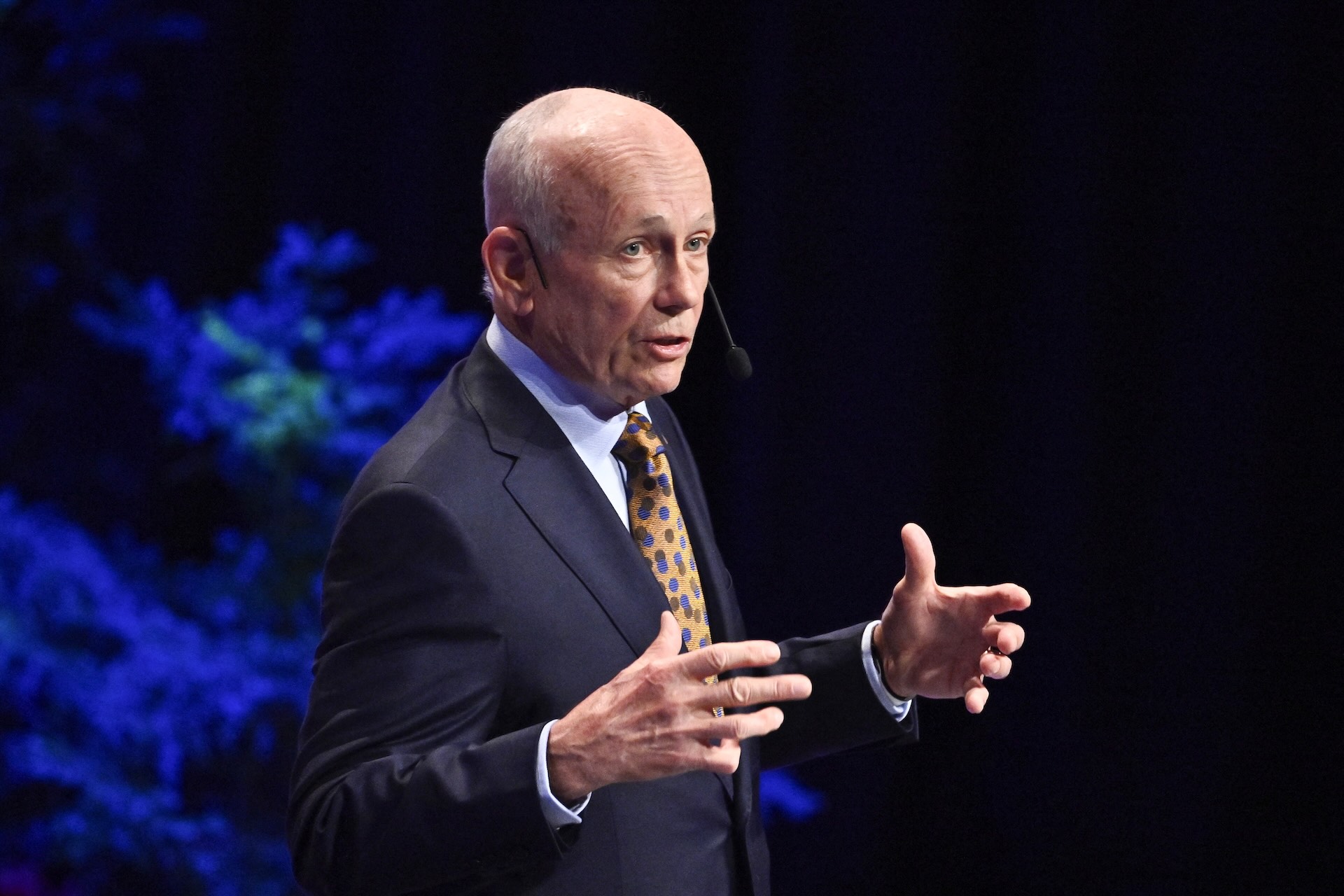
A man wearing a dark suit jacket, blue button-down shirt and spotted brown-and-blue tie stands in front of a black and blue background, gesturing and speaking into a microphone.
Nobel Prize-winning Canadian economist Peter Howitt gives a lecture at Sweden’s Stockholm University in December 2025. Photo: TT News Agency/AFP/Christine Olsson
Oct 31, 2026 | 7:00 AM ET
A A
A Small A Medium A Large
Share

Gift

Share

Listen Now
0:00

When I interviewed Peter Howitt a year ago, a few weeks after the Canadian economist shared the 2025 Nobel Prize with Philippe Aghion and Joel Mokyr, he didn’t have much to say about his native country. He’d been away too long. Howitt left Western University for Ohio State University in 1996, and then shifted to Brown University in Rhode Island in 2000. Rather than weigh in on Canada’s productivity crisis, he demurred. “I really couldn’t comment on that,” he said. “I’m just not following it enough.”  

Howitt has a little more to say now, if only because the Canadian universities at which he became a master of the dismal science keep inviting him home for speaking engagements. Last week, Howitt gave this year’s Beatty Lecture at McGill University in Montreal. He used the first part of his speech to sketch his theory of economic growth, which differs from other approaches by putting an emphasis on innovation rather than simply taking it for granted. 

Related Articles
An image of the Canadian flag against two tall buildings with glass windows in the background.

Carmichael: Canada’s biggest companies aren’t wired for growth. That’s a problem for us all

By Kevin Carmichael

What’s worrying Canada’s Nobel Prize-winning economist

By Kevin Carmichael

You can appreciate why an economist who believes economies advance by having the courage to embrace change would feel at home in the U.S., for so long a beacon of the things that Howitt’s research showed were necessary to propel societies forward. The list includes free trade and immigration. That means Howitt now finds himself a witness to a movement that would undermine everything he thinks made the American economy great. It has him looking north again.   

“All of this, of course, is under attack in the United States,” Howitt told his audience. “How do we deal with this? Well, I think most of what I’d have to say is actually already underway in Canada. I’m very proud to see that Canada is being very active and trying to reduce its dependence on the United States.”

High praise for Prime Minister Mark Carney’s policies from the heights of economic thought. Howitt is a macroeconomist, and a mostly retired one, so forgive him if you’ve spotted things closer to the ground that cause you to temper your own optimism about the federal government’s agenda. He is also a world-class thinker and researcher who devoted much of his career to making economic growth less of an abstraction. Since economic growth is Canada’s central challenge, Howitt’s observation is a notable outside opinion that we’re headed in the right direction.

With Carney’s second budget less than a week away, it’s also a good time to reflect on what it takes to generate lasting wealth. If Carney’s mission is sovereignty, he’ll need to reorient the economy so that it can run on its own rather than being solely dependent on exports to the U.S., government spending and inflated housing valuations. As it happens, one of our best and brightest figured out how to do just that some three decades ago. 

Howitt won the Nobel for his work on creative destruction, the idea that sustainable economic growth depends on new technologies and methods replacing old ones. Joseph Schumpeter came up with the theory in the early 1940s, but it still hadn’t penetrated mainstream economics in 1988, when Howitt spent a year at the Massachusetts Institute of Technology as a visiting professor. “I wasn’t particularly interested in growth theory at the time,” Howitt told his audience at McGill. Then he met Aghion, a recent graduate of Harvard University. 

“He said, ‘When I was taking courses at Harvard, I learned about Schumpeter’s idea of creative destruction, and that seems like what economic growth is all about. Why isn’t that in the models that we use and that we teach students?’ That [sounded] like a good question,” Howitt recalled. “Yeah, why isn’t it? It should be.” 

Their research led to some general truths about what motivates entrepreneurs to drive economies forward. One is that growth doesn’t happen without disruption. “That conflict is really essential to the whole growth process of a country,” Howitt said. “How it’s resolved goes a long way to explaining how successfully countries can incorporate and invent new technologies.” 

You can conjure economic growth with government spending, tax cuts and lower interest rates. Keeping it going once the sugar rush fades is more complex. Aghion and Howitt used game theory to show that needle-moving firms are motivated by the possibility of monopoly profits. A successful economy channels such striving. Patents make the hard work of discovery worthwhile, so you grant them. Ambitious firms require scale, so you embrace free trade. They also require funding, so you open the door to foreign direct investment. Human creativity is the one essential ingredient, so you better your odds of success by using immigration policy to create a deep pool of talent. 

I’ve been writing about economics in Canada since the turn of the millennium. Schumpeter rarely comes up in conversation. I think that’s because we’re a country that puts an emphasis on avoiding destruction, rather than stimulating creativity. It’s an emphasis that suits legacy companies and industry associations just fine. “Those who don’t benefit [from creative destruction] are often people who, at one time, were responsible for the creative destruction of previous generations and they don’t want to be destroyed by the next wave of innovations,” Howitt said. 

Gift the full article

Schumpeter was actually OK with monopolies. He assumed too much competition would deter investment by reducing profit margins. This is where Aghion and Howitt parted ways with their spiritual mentor. Once they had figured out how to model creative destruction, they were able to test Schumpeter’s assumption about monopoly behaviour and found that he was wrong. Their empirical research showed that it was the threat of losing market share that spurred executives to keep spending money on innovation. “Make the market more competitive, and those firms will become more innovative,” Howitt said.  

There are competitive nudges in many of Carney’s policies. But the slow pace of internal free trade and open banking are just two reminders that nudging might not be enough. A successful mission will require accepting casualties.  

Kevin Carmichael is The Logic’s economics columnist and editor-at-large. He has spent more than two decades covering economics, business and finance for outlets including Bloomberg News, The Globe and Mail and the Financial Post, where he also served as editor-in-chief. 

#commentary #creative destruction #economy #industrial policy #Peter Howitt

Sponsored Content

The road to risk-smart regulation

By Deborah Aarts

Why cybersecurity needs to match pace with AI

By Jessica Aftimus Rosa

How to shift your workforce from AI experimentation to adoption

By Jessica Aftimus Rosa
Paid promotional content

Loading...

Thanks for sharing!

You have shared 5 articles this month and reached the maximum amount of shares available.

Close
This account has reached its share limit.

If you would like to purchase a sharing license please contact The Logic support at [email protected].

Close
Want to share this article?

Upgrade to all-access now

Close
Gift the full article!

You have gifted 0 article(s) this month and have 5 remaining.

Copy link and gift
Copy Link
Email to a friend
Send Email
Gift on Social Media

Recipients will be able to read the full text of the article after submitting their email address. They will not have access to other articles or subscriber benefits.

A man wearing a dark suit jacket, blue button-down shirt and spotted brown-and-blue tie stands in front of a black and blue background, gesturing and speaking into a microphone.

Photo: TT News Agency/AFP/Christine Olsson

Most Popular This Week

A man wearing a headset microphone sits on a stage. He is speaking and gesturing with his hands. The background is dark blue.
News

Ottawa will invest up to $1.6B in Cohere as firm’s valuation hits $35.7B

By Catherine McIntyre
Prime Minister Mark Carney and the rest of the Liberal front bench stand applauding Finance Minister François-Philippe Champagne in the House of Commons. Champagne is in the middle of the frame, with his hands on a desk lectern.
Special Report

What business wants from the 2026 federal budget

By David Reevely, Joanna Smith, Anita Balakrishnan, Claire Brownell, Chaimae Chouiekh, Murad Hemmadi and Meghan Potkins
The Bay Street Financial District is shown with the Canadian flag in Toronto on Friday, August 5, 2022. THE CANADIAN PRESS/Nathan Denette
News

An obscure data standard is the latest open banking holdup—and an unlikely political hot potato

By Claire Brownell
A shot across an expanse of low forest of a rocket launching into blue skies.
News

Canada faces a satellite-launch crunch as SpaceX retires its workhorse rocket

By David Reevely

In-depth, agenda-setting reporting

Great journalism delivered straight to your inbox.

A man wearing a dark suit jacket, blue button-down shirt and spotted brown-and-blue tie stands in front of a black and blue background, gesturing and speaking into a microphone.
Commentary

Carmichael: Canada’s Nobel-winning economist thinks Carney is on the right track

By Kevin Carmichael

Briefing

Canadian investors can’t let foreign capital crowd them out of infrastructure deals, Weston says

By Anita Balakrishnan   |   Oct 30, 2026 | 4:06 PM ET

Cohere outlines plans to spend $4B on R&D and AI infrastructure in Canada

By Catherine McIntyre   |   Oct 30, 2026 | 3:39 PM ET

Binance starts recovering frozen assets following US$6.3B hack

By Claire Brownell   |   Oct 30, 2026

Best business newsletter in Canada

Get up to speed in minutes with insights and analysis on the most important stories of the day, every weekday.

Exclusive events

See the bigger picture with reporters and industry experts in subscriber-exclusive events.

Membership in The Logic Council

Membership provides access to our popular Slack channel, participation in subscriber surveys and invitations to exclusive events with our journalists and special guests.

Recent Popular Stories

News

RBC’s AI chief sounds the alarm over AI agents

By Chaimae Chouiekh   |   Oct 22, 2026
Analysis

Why a midterm sweep for the Democrats won’t end Canada’s trade nightmare

By Joanna Smith   |   Oct 29, 2026
News

Bank of Canada raises key interest rate amid soaring energy costs

By Kevin Carmichael   |   Oct 28, 2026
Bank of Canada Governor Tiff Macklem in a suit, speaking and gesturing with his right hand.
News

Brookfield’s new CEO flexes the firm’s soft power with its $50B Canadian bet

By Anita Balakrishnan   |   Oct 21, 2026
News

An obscure data standard is the latest open banking holdup—and an unlikely political hot potato

By Claire Brownell   |   Oct 27, 2026
The Bay Street Financial District is shown with the Canadian flag in Toronto on Friday, August 5, 2022. THE CANADIAN PRESS/Nathan Denette
Special Report

What business wants from the 2026 federal budget

By David Reevely, Joanna Smith, Anita Balakrishnan, Claire Brownell, Chaimae Chouiekh, Murad Hemmadi and Meghan Potkins   |   Oct 28, 2026
Prime Minister Mark Carney and the rest of the Liberal front bench stand applauding Finance Minister François-Philippe Champagne in the House of Commons. Champagne is in the middle of the frame, with his hands on a desk lectern.

Canada's most influential executives and policymakers are reading The Logic

  • CPP Investments
  • Sun Life Financial
  • C100
  • Amazon
  • Telus
  • Mastercard
  • bdc
  • Shopify
  • Rogers
  • RBC
  • General Motors
  • MaRS
  • Government of Canada
  • Uber
  • Loblaw Companies Limited
logic-logo

Canada's Business and Tech Newsroom

100% human-crafted journalism

Newsroom

  • News Tips
  • AI Policy
  • Editorial Disclosures
  • Story Pitches

Company

  • About Us
  • Terms of Service
  • Privacy Statement
  • Corporate Information

Contact

  • Contact Us
  • Advertise
  • FAQs
  • Work at The Logic

© 2026 The Logic Inc. All Rights Reserved.

Trusted by leaders

Error

Account creation failed.

Please email us at [email protected].

Create Account

[wppb-register form_name=”cozmo-registration-form-for-modal”]

I do have an account
Login
or

[wppb-login]

I don’t have an account