Skip to content

Canada's Business and Tech Newsroom

  • Professional Subscription
  • Partnerships & Advertising
  • Licensing & Syndication
Log In Subscribe
Welcome,
  • My Account
  • Log Out
  • Business
  • Tech
  • National
  • The Big Read
  • Briefings
  • Commentary
Search
Log In Subscribe
Welcome,
  • My Account
  • Log Out
News

AI could help invent new materials. First, firms must figure out how to make them

Listen Now
0:00
News

AI could help invent new materials. First, firms must figure out how to make them

Startups like Periodic Labs, Meissner and FL01 combine AI models for physics and chemistry with increasingly automated labs to come up with new substances

By Murad Hemmadi
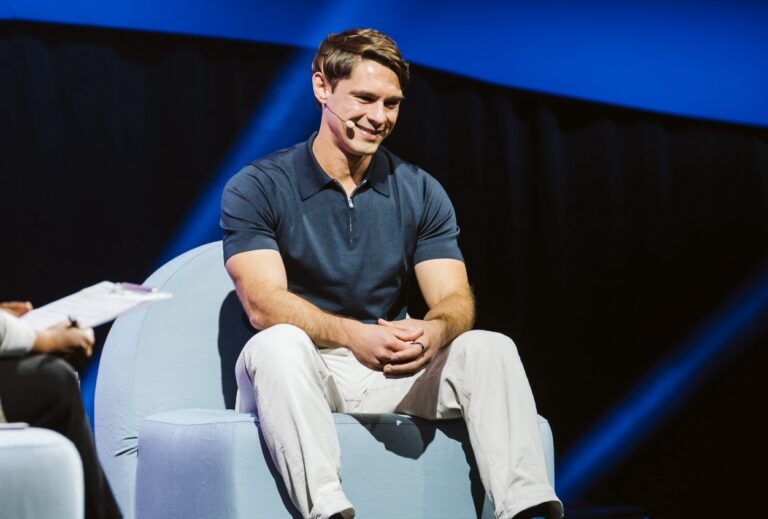
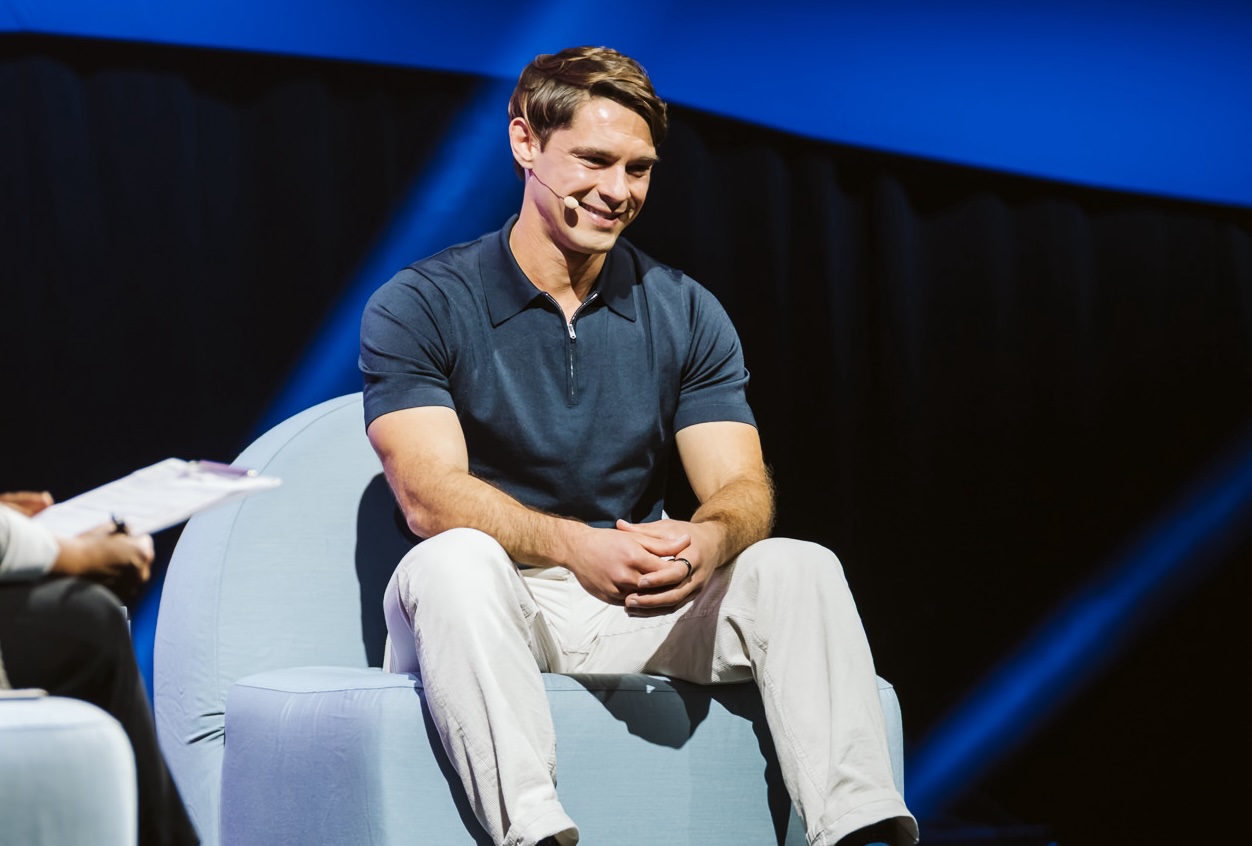
An image of a man wearing light pants and a blue collared shirt, sitting on a stage while wearing a microphone. He is smiling and looking at the ground.
Periodic Labs CEO Liam Fedus at the All In conference in Montreal in September. The startup is developing AI and automated labs to create new materials and manufacturing processes. Photo: Mélanie Olmstead, All In/Handout
Oct 7, 2026 | 5:45 AM ET
A A
A Small A Medium A Large
Share

Gift

Share

Listen Now
0:00

MONTREAL — A new batch of tech firms is applying AI to the physical world, seeking to develop materials that perform better, cost less and fill critical industrial needs, as well as the manufacturing processes to practically produce them.

Startups are training AI models on scientific literature and the results of their own experiments to simulate chemical and physical properties. Some firms have built so-called self-driving labs, which can autonomously make and test new formulations. Their early target markets include tech-heavy sectors like data centres, quantum computing and nuclear fusion.

Talking Points

  • Startups are developing AI models and autonomous labs to help come up with and synthesize new materials for applications like data-centre compute and cooling, quantum computing and nuclear fusion
  • Firms must ensure that the substances their systems suggest can actually be produced in the real world, either by relying on common ingredients and processes or by re-engineering manufacturing

Periodic Labs is building “a system that can do the scientific method and has a deeper understanding of different areas of materials engineering,” CEO Liam Fedus told The Logic, resulting in a technology that “we think will be very foundational.” 

Launched in September 2025, the San Francisco-based firm aims eventually to generate completely new materials. Still, it can take years to engineer such substances so they can be manufactured and used at scale, Fedus said on the sidelines of the All In conference in Montreal last month. Periodic is also working with clients that want to use its AI tools to improve their products and processes, or conduct joint research and development projects with the startup. The firm is starting out with materials for magnets, semiconductors and superconductors, all widely used in high-tech industries. 

Periodic has an office in Montreal that leads the development of its machine learning systems. The firm’s Canadian outpost has drawn founding researchers from Google DeepMind, Meta and ServiceNow who have previously made significant AI breakthroughs. Fedus, who was raised in Maine, got his doctorate at Université de Montréal under Yoshua Bengio and Hugo Larochelle, the AI pioneer’s successor as scientific director at the Mila AI institute. 

Related Articles
Meissner gets big-name backing to use AI in hunt for new superconductors

By Murad Hemmadi
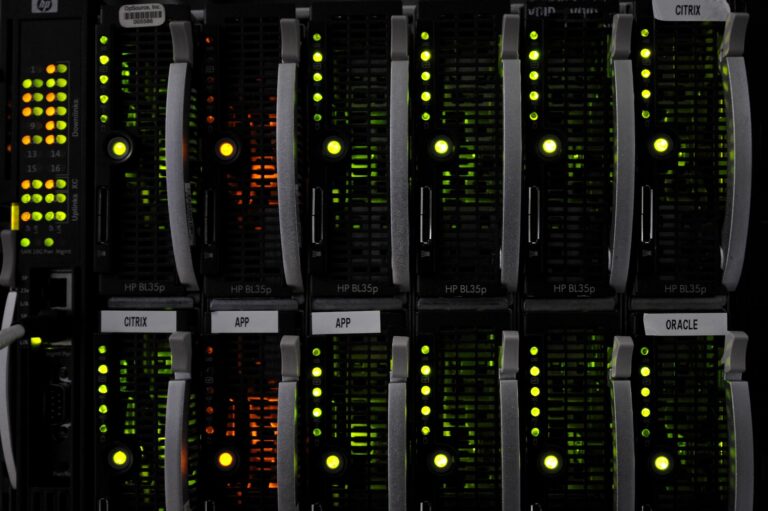
Black electronic devices with green blinking lights, stacked in two rows and six columns.

Transformer Lab has built an entire world of AI scientists to automate research

By Catherine McIntyre

The large language models powering ChatGPT and other generative AI tools were initially trained on the internet’s worth of text data. Academic literature alone isn’t enough to create similar foundation systems for chemistry and physics, according to Fedus—authors tend to obfuscate key details, leave out failed experiments and reframe accidental discoveries as brilliant predictions. “There’s this fictionalized view of the scientific method in papers,” he said.

So Periodic is using its autonomous labs to fill in the data gaps for its AI model. Together, they create a feedback loop in which digital simulation and analysis bookend real-world experimentation. Periodic charges clients to use its software. It could also split revenues from the intellectual property created during joint R&D. In October 2025, the firm raised a US$300-million seed round from backers including Toronto-based Radical Ventures and prominent Silicon Valley investors Accel, Andreessen Horowitz and Khosla Ventures. 

Toronto-based FL01 is also betting on its experimental hardware and the data it generates. The startup’s technology develops and tests coolants. The current industrial process for evaluating thermal fluids is manual and time-consuming, according to CEO Mohammad Zargartalebi. FL01 has built “a robotic scientist who makes the formulations itself [and] analyzes them in a matter of minutes,” he said.

Zargartalebi began developing the firm’s sensors during a fellowship at the University of Toronto, after being approached by Castrol’s parent company, the oil and gas multinational BP. He co-founded FL01 in November 2025. Working with partners like BP, the startup has identified about 30 potential formulations of thermal fluids that can be used in the cooling equipment for data centres. Three passed all the tests for stability, corrosion and other key properties, and are now ready to commercialize. 

FL01 has now added an AI model that identifies coolant candidates and can direct the self-driving lab to test them. Building the testing hardware first meant the firm had the right data to train its system, said Zargartalebi. “The properties of coolants are not easily predicted.” 

Zargartalebi claimed that gives his four-person firm an advantage over potential competitors like Periodic and Lila Sciences, which are much bigger and better-funded but have a wider focus. FL01 recently graduated from Toronto’s Creative Destruction Lab (CDL) accelerator, but has not raised venture capital. The firm sells testing services to clients, and could one day license or manufacture the coolants that it invents.

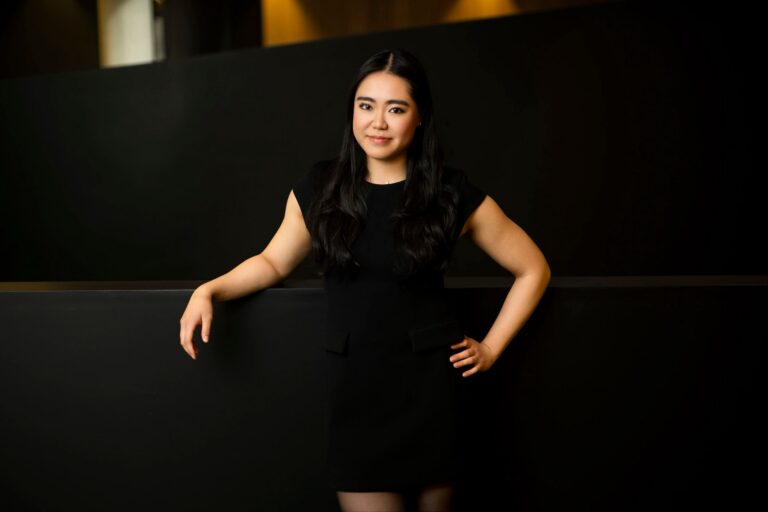
Meissner, which graduated from CDL at the same time as FL01, is similarly applying AI to create new superconductors for quantum computing, nuclear fusion and other disruptive applications. The Toronto-based startup is trying to develop devices that can move electricity without heat or loss, but don’t need to be chilled as much as current products. Meissner’s area of focus is an advantage, according to CEO Olivia Leng. “If you’re building a generalized materials discovery platform, it can’t necessarily be applied—effectively, at least—to finding new superconductors,” she said. “They’re such an exotic, unconventional material class to work with.” 

Meissner is focusing on developing superconductors for which the raw ingredients are easy to procure and that can be made using existing processes. Last month, the startup announced a $3.6-million pre-seed round from BDC Capital and several well-known deep-tech executives. 

Firms applying AI to materials science must screen for practicality; otherwise, their models might come up with substances that are perfect in theory but impossible to manufacture in the real world, or require rare elements. 

Gift the full article

Periodic generally tries to work with clients’ existing manufacturing infrastructure. “People need to deliver on their products and goods,” Fedus said. “They don’t have time to re-engineer the floor plan.” Still, it’s trying to ensure promising new materials do get made by applying its AI and labs to solve the physical and engineering challenges that might otherwise prevent the production of tons of the stuff.

Fedus previously worked at OpenAI, where he helped develop ChatGPT. These days, he’s trying to connect the digital world to physical engineering. “You’re not going to think your way to a new high-temp superconductor,” he said. To make material improvements, Fedus added, firms like Periodic must recognize that “the sciences are this experimental, iterative field.”


#artificial intelligence #Tech

Sponsored Content

How to shift your workforce from AI experimentation to adoption

By Jessica Aftimus Rosa

The real-world economic offshoots of sovereign AI

By Deborah Aarts
Illustration of a plane flying above a mailbox

Increasing healthcare access across Canada

By Deborah Aarts
Paid promotional content

Loading...

Thanks for sharing!

You have shared 5 articles this month and reached the maximum amount of shares available.

Close
This account has reached its share limit.

If you would like to purchase a sharing license please contact The Logic support at [email protected].

Close
Want to share this article?

Upgrade to all-access now

Close
Gift the full article!

You have gifted 0 article(s) this month and have 5 remaining.

Copy link and gift
Copy Link
Email to a friend
Send Email
Gift on Social Media

Recipients will be able to read the full text of the article after submitting their email address. They will not have access to other articles or subscriber benefits.

An image of a man wearing light pants and a blue collared shirt, sitting on a stage while wearing a microphone. He is smiling and looking at the ground.

Photo: Mélanie Olmstead, All In/Handout

Most Popular This Week

An image of Mark Carney standing in front of a red podium with the words "AI for All / L'IA pour tous." He is wearing a suit and tie. In the background, people wearing scrubs and white coats are visible.
News

Carney picks big-name researchers and investors for new AI advisory council

By Murad Hemmadi
A shot of Dominic Barton taken from behind, with his face in profile as he looks to his right. He is in a hearing room with two large video-projection screens on the wall before him.
News

Dominic Barton’s next big job for Canada? Bringing home the money

By Joanna Smith
A man stands at a chalkboard while looking at the camera. He has apparently written "It's not rocket science; it's quantum chromodynamics."
The Big Read

The professor trying to make Canada a supercomputer superpower

By Murad Hemmadi
Two individuals stand facing each other inside a lit-up installation inside a bust room. Both people are holding smartphones.
News

The Maple 8’s Canadian pledges may do little for startups and scaleups

By Catherine McIntyre

In-depth, agenda-setting reporting

Great journalism delivered straight to your inbox.

An image of a man wearing light pants and a blue collared shirt, sitting on a stage while wearing a microphone. He is smiling and looking at the ground.
News

AI could help invent new materials. First, firms must figure out how to make them

By Murad Hemmadi

Briefing

Defence Investment Agency to be a Crown corporation so it can get deeper into Canada’s military industry

By David Reevely   |   Oct 6, 2026

Mark Carney says he’ll work with Quebec separatist premier-to-be on housing, infrastructure, big projects

By David Reevely   |   Oct 6, 2026

Mistral claims its new AI model closes the gap with leading Chinese developers

By Murad Hemmadi   |   Oct 6, 2026

Best business newsletter in Canada

Get up to speed in minutes with insights and analysis on the most important stories of the day, every weekday.

Exclusive events

See the bigger picture with reporters and industry experts in subscriber-exclusive events.

Membership in The Logic Council

Membership provides access to our popular Slack channel, participation in subscriber surveys and invitations to exclusive events with our journalists and special guests.

Recent Popular Stories

News

Carney picks big-name researchers and investors for new AI advisory council

By Murad Hemmadi   |   Oct 2, 2026
An image of Mark Carney standing in front of a red podium with the words "AI for All / L'IA pour tous." He is wearing a suit and tie. In the background, people wearing scrubs and white coats are visible.
The Big Read

Cameco’s high-stakes bid to be Canada’s next nuclear champion

By Joanna Smith   |   Sep 23, 2026
A shot looking down the length of a tunnel with conduits along its sides and railroad-style tracks on its floor. There are two workers in the distance wearing hardhats and headlights and walking toward the camera.
The Big Read

The professor trying to make Canada a supercomputer superpower

By Murad Hemmadi   |   Sep 30, 2026
A man stands at a chalkboard while looking at the camera. He has apparently written "It's not rocket science; it's quantum chromodynamics."
News

The Maple 8’s Canadian pledges may do little for startups and scaleups

By Catherine McIntyre   |   Sep 29, 2026
Two individuals stand facing each other inside a lit-up installation inside a bust room. Both people are holding smartphones.
News

Canada dodged the money-laundering ‘grey list’—but banks remain a weak spot

By Claire Brownell   |   Sep 29, 2026
A silhouetted person walks amid a row of buildings.
News

Dominic Barton’s next big job for Canada? Bringing home the money

By Joanna Smith   |   Oct 1, 2026
A shot of Dominic Barton taken from behind, with his face in profile as he looks to his right. He is in a hearing room with two large video-projection screens on the wall before him.

Canada's most influential executives and policymakers are reading The Logic

  • CPP Investments
  • Sun Life Financial
  • C100
  • Amazon
  • Telus
  • Mastercard
  • bdc
  • Shopify
  • Rogers
  • RBC
  • General Motors
  • MaRS
  • Government of Canada
  • Uber
  • Loblaw Companies Limited
logic-logo

Canada's Business and Tech Newsroom

100% human-crafted journalism

Newsroom

  • News Tips
  • AI Policy
  • Editorial Disclosures
  • Story Pitches

Company

  • About Us
  • Terms of Service
  • Privacy Statement
  • Corporate Information

Contact

  • Contact Us
  • Advertise
  • FAQs
  • Work at The Logic

© 2026 The Logic Inc. All Rights Reserved.

Trusted by leaders

Error

Account creation failed.

Please email us at [email protected].

Create Account

[wppb-register form_name=”cozmo-registration-form-for-modal”]

I do have an account
Login
or

[wppb-login]

I don’t have an account