Listen Now
0:00
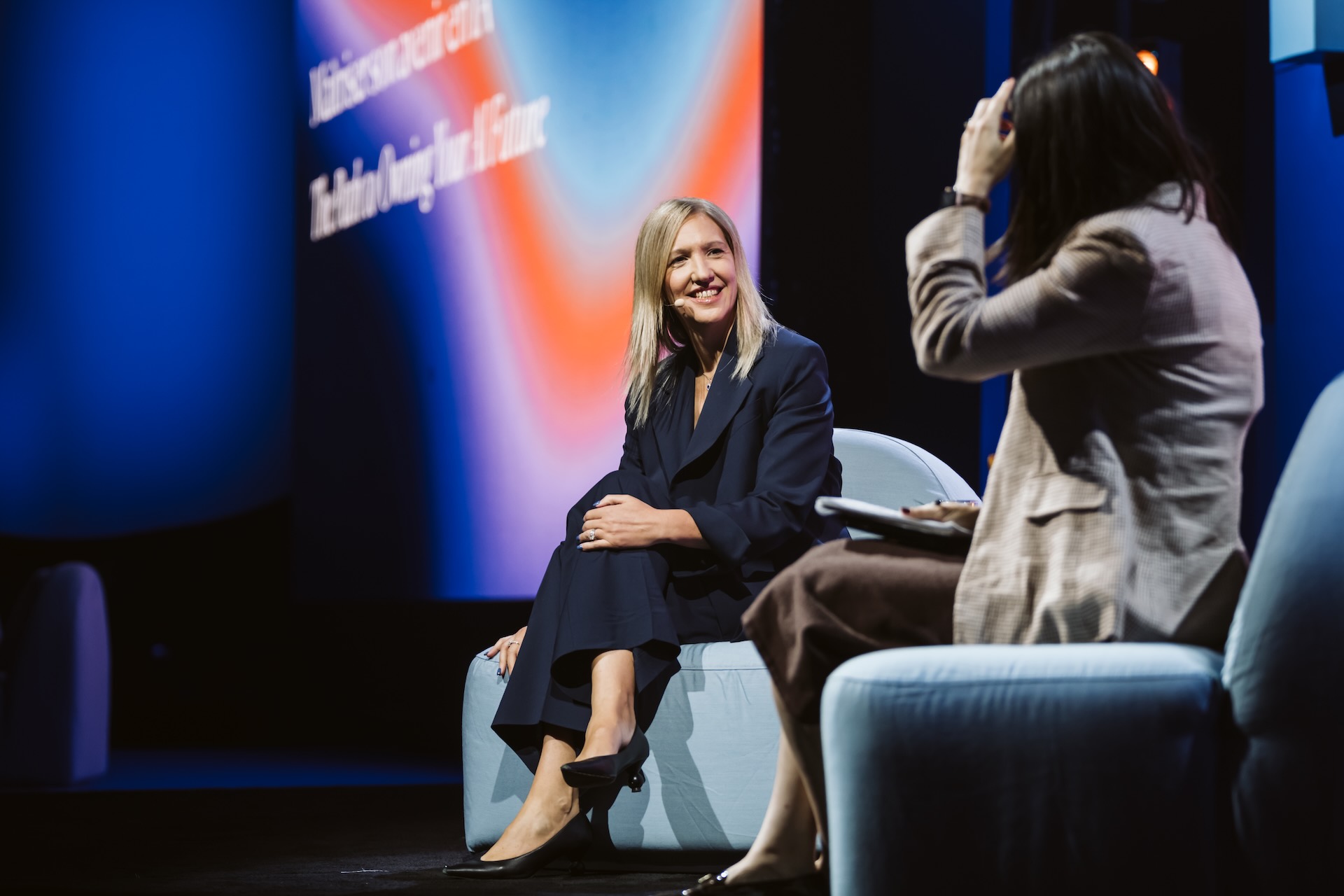
MONTREAL — French firm Mistral is growing its business in Canada as the public and private sectors try to integrate AI into more of their core functions, and seek greater control over the technology they use.
The company is signing up clients in financial services, energy, manufacturing and the public sector, chief revenue officer Marjorie Janiewicz told The Logic. Mistral plans to set up offices in Montreal and Toronto. It’s recruiting researchers and developers to advance its technology, and so-called forward-deployed engineers (FDEs) to help install and customize it for customers.
Talking Points
- Mistral is growing its Canadian clientele and hiring both technical and sales staff in the country as more businesses look to deploy AI they can control
- The French firm has signed a deal with the Quebec government to explore the use of its technology for public services, and is also attracting interest from firms in financial services, energy and manufacturing, according to chief revenue officer Marjorie Janiewicz
“A lot of Canadian companies are really starting to see the limits of general-purpose AI chatbots,” Janiewicz said, speaking on the sidelines of the All In conference in Montreal earlier this month. Mistral is instead selling “enterprise software transformation,” she claimed.
For financial services clients, that might mean automating and improving the accuracy of mandatory know-your-customer verification procedures. In manufacturing or energy, it could mean customizing the technology to give the customer an edge. “Some of these companies have so much differentiated IP and data that if you start inserting that into [a model], you’re really setting yourself apart on the global market,” Janiewicz said.
The firm has only announced one Canadian engagement so far, with the Quebec government. In June, Digital Affairs Minister France-Élaine Duranceau announced a non-binding agreement with the firm to explore ways departments and agencies could use AI to improve service delivery and internal efficiency. Janiewicz said the two sides are close to finalizing applications for Mistral’s technology, but declined to identify any.
Related Articles

The firm sells clients a combination of its open source models, tools to help them integrate their own data into the systems, and ready-made agents to which staff can delegate routine work. Mistral’s embedded staff help ensure clients are “not going to get stuck in a proof-of-concent purgatory,” Janiewicz said.
Last year, a MIT Media Lab study found that most generative-AI test runs produced no measurable impact on businesses’ bottom lines. Janiewicz said she’s still hearing similar concerns from potential clients. “Any use cases that our customers should be focused on when they start have to be iconic,” she said, creating either big cost savings or large revenue opportunities.
Mistral’s fees for such work tend to start in the low six figures, but can scale significantly—the firm recently won a €100-million contract with French resource giant TotalEnergies.
All the major model makers use the FDE model. Amazon, Anthropic, Google, OpenAI and Meta have all set up or spun out AI services units to work with enterprise clients on deploying their technology. Janiewicz claims Mistral differentiates itself by going deeper into customers’ businesses. It typically places FDEs—hired for both their AI skills and expertise in target sectors—with customers’ internal teams so they can build applications that reflect how they work.
Mistral’s business has recently been boosted by growing concerns about relying on proprietary U.S. technology.
In June, the Trump administration imposed export controls on Anthropic’s latest model. While the service interruption was brief, the incident made real long-standing warnings from firms that sell sovereignty, like Mistral and Canadian rival Cohere, that the U.S. could switch off technology access to countries and companies.
Organizations are also increasingly counting the cost of all their AI applications, and are concerned that their data is helping improve models to the benefit of firms like OpenAI and Anthropic. Many large firms are switching to open source systems, often from Chinese developers, to contain expenses and maintain ownership of their technology.
The two trends validate Mistral’s long-standing message that organizations must have control over their AI, according to Janiewicz. “We are leading the sovereign AI category and responding to a very specific set of problems.”
Toronto-headquartered Cohere sells similar technology to many of the same target industries. The firm recently agreed terms on a merger with German company Aleph Alpha, designed to create a Canadian-European AI champion. Both Cohere and Mistral are now racing to secure compute and scale their AI models so they can close the performance gaps between themselves and Anthropic and OpenAI. Earlier this month, Mistral closed a €3 billion (US$3.4 billion) Series D round at a €21-billion valuation. Cohere is reportedly raising a Series E financing of up to US$3 billion, valuing it at US$20 billion.
Mistral is planning data centres that can generate one gigawatt of processing power by 2030. “Customers are struggling to progress their advance in AI because they do not have access to compute,” Janiewicz said, adding that Mistral can help by vertically integrating AI infrastructure, models and tools.
The firm would consider developing compute capacity in Canada to serve local customers if there’s enough demand for it, senior vice-president of global affairs Audrey Herblin-Stoop told The Logic in June, though she added such a move would be “premature at this stage.”