Listen Now
0:00
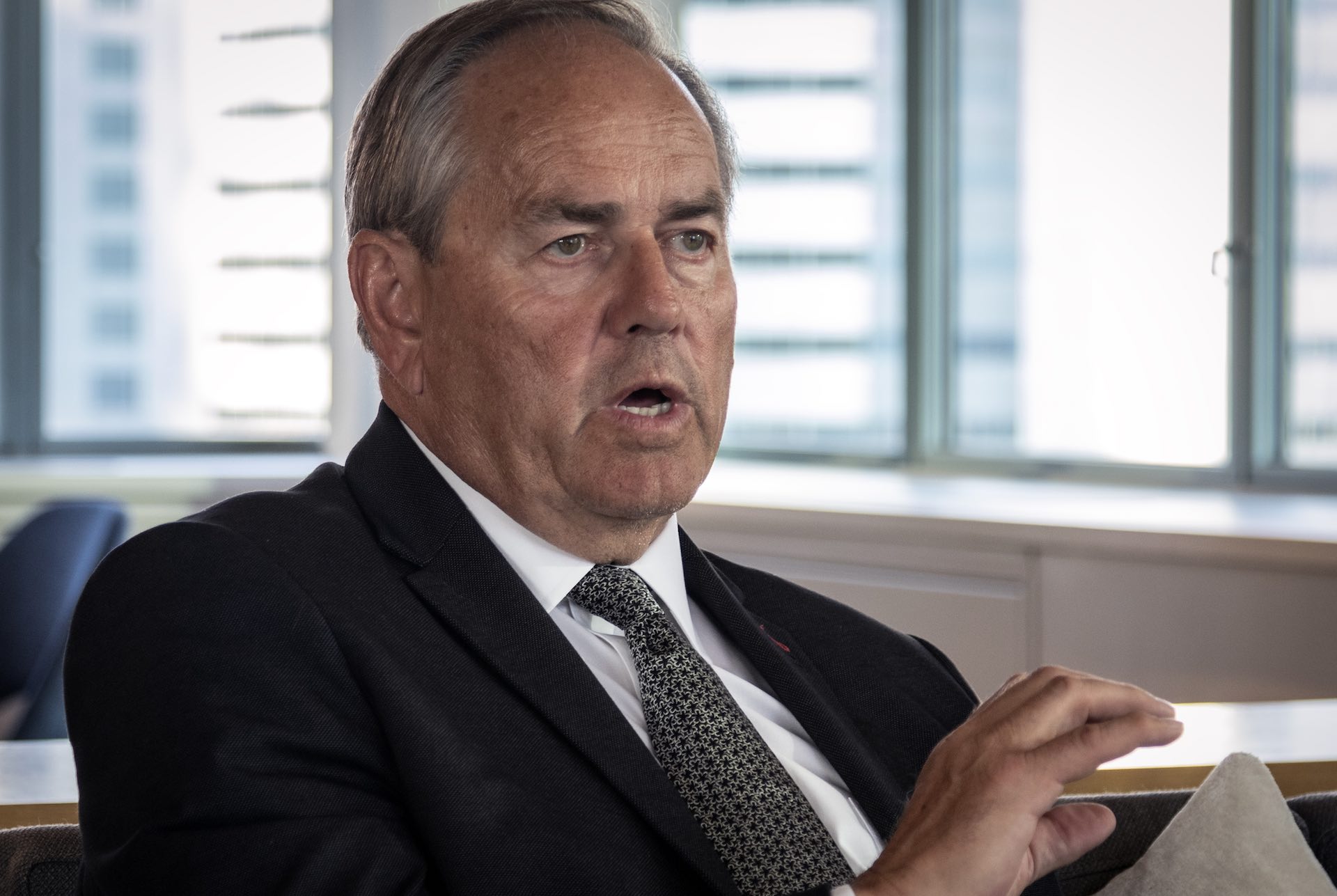
MONTREAL — Tim Gitzel, 64, leans forward as he names mining companies Canada has lost. “Inco, Falconbridge, Noranda,” he says, counting off his fingers. “I can keep going. People say, ‘Oh wow, that’s too bad,’” says the chief executive of Cameco. Yet when the Saskatoon-based uranium giant flipped the script, acquiring 49 per cent of Westinghouse Electric, a legacy U.S. nuclear giant with plans to build the firm’s technology north of the border, the reaction was oddly cold, he says. “Now we hear, ‘Well, you know, it’s American technology. You shouldn’t build it in Canada.’” He adds, “I think that’s garbage, personally.”
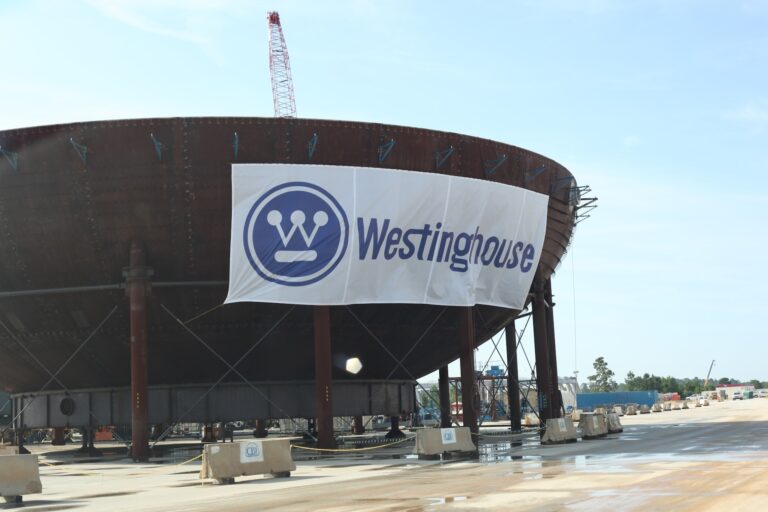
Now a powerhouse player in President Donald Trump’s push for U.S. global dominance in artificial intelligence, Westinghouse went bankrupt in 2017 amid cost overruns for the earliest builds of its flagship pressurized water reactor, the AP1000. The company headquartered in Cranberry Township, Pa., first came under Canadian ownership in 2018, when Toronto-based private equity firm Brookfield bought it from Toshiba. In 2023, it was jointly acquired for US$8.2 billion by Cameco and Brookfield Renewable Partners, which holds the other 51 per cent stake.
Talking Points
- CEO Tim Gitzel says Cameco wants to help Canada become a “nuclear superpower” through its co-ownership of Westinghouse Electric, a U.S. nuclear technology powerhouse the Trump administration views as a strategic asset for its own AI ambitions
- In an exclusive interview alongside Gerald Grandey and Bernard Michel, who both preceded him in the top job, Gitzel says Canadian-owned Westinghouse’s AP1000 reactor should be given a level playing field to compete with the homegrown Candu Monark
The consortium has big plans for Westinghouse, although Gitzel says securities regulations prevent him from being able to say much about the biggest one. In late July, Cameco and Brookfield announced that Westinghouse had filed a draft registration to the U.S. Securities and Exchange Commission for a potential initial public offering. Neither the number of shares nor the price range are set, but Gitzel said Westinghouse has as many as 91 reactor units at various stages of development in its global pipeline, as the world gets ready to give nuclear energy another chance.
“We got the right company at the right time,” he says.
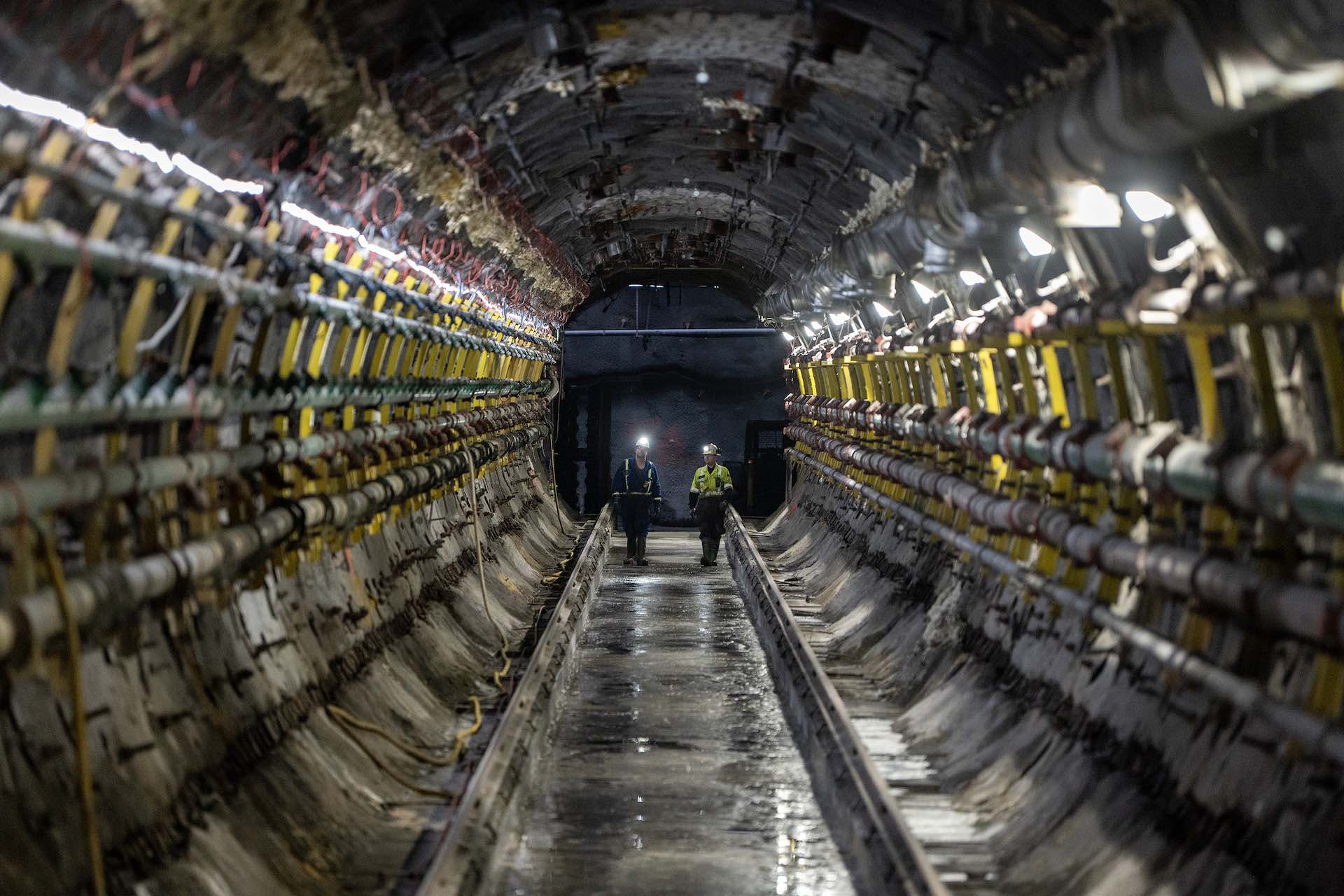
It is the latest in a long series of step changes for Cameco, which was founded in 1988 through the merger of two Crown corporations that were among Canada’s earliest players in nuclear fuel. Then known as the Canadian Mining and Energy Corp., it now operates uranium mines in Canada and Kazakhstan and has interests in exploration sites in Australia. It owns a uranium refinery in Blind River, Ont., a conversion plant in Port Hope, Ont., and fuel manufacturing facilities both there and in nearby Coburg, Ont. In addition to its stake in Westinghouse, Cameco holds a 49 per cent stake in Global Laser Enrichment, which is the exclusive licensee of a proprietary third-generation uranium enrichment technology.
Related Articles
The company has come a long way since being jointly owned by the Saskatchewan and federal governments. With a self-styled “ground-to-grid” presence in the global nuclear supply chain, Cameco now has a market capitalization of about $58 billion. The distance it has travelled came into view during a rare gathering in Montreal in early August. Gitzel was joined for his interview with The Logic by the only two others who have led Cameco since it went public in 1991: former CEOs Gerald Grandey, 80; and Bernard Michel, 88. Together, they represent 35 years of consecutive leadership at Cameco.
“Often CEOs come and go, but there’s a long history among all of us—between us and among us,” Gitzel says while seated with his predecessors in a spacious window-lined business suite on the top floor of Fairmont The Queen Elizabeth, a stately hotel above the train station. Gitzel and Grandey, an American who splits his time between Denver, Colo., and Saskatchewan, arrived together via chartered yet. They see each other once or twice a year. Neither had seen Michel, a Montrealer originally from France, in about a decade.

There is obvious warmth between the three as they trade news of old colleagues and stories of fishing for walleye. In 1979, Gitzel was a 17-year-old summer student at the Cluff Lake uranium mine when he was sent to the local airport to pick up Michel, then CEO of the local subsidiary of the French nuclear company that owned the mine, and show him around. “Every day I go to work, I still feel a responsibility to these two,” Gitzel says. “We often say, ‘What would Jerry do here? What would Bernard have done here?’” Michel’s two successors say his focus on integrity, safety, succession planning and Indigenous employment are now core company values. Listening to them talk about his legacy, Michel is touched. “There is probably something left, from what I hear, of what I believe I created, and I’m very happy with this,” he says. Grandey cuts in: “I would say more than something. Absolutely more than something.”
Their collective wisdom may prove useful, as the company now occupies a unique position in its industry—and on the fractured landscape of Canada-U.S. relations. With its long-held status as a major employer in Saskatchewan, Cameco is now simultaneously promoting itself as a Canadian champion in a strategically important industry while owning a sizeable stake in a nuclear giant the Trump administration considers “a key U.S. strategic asset.” The AP1000, a conventional reactor Westinghouse markets around the world, is under U.S. regulatory control. So are the firm’s smaller-scale reactors.
Cameco’s balancing act gets trickier by the day. Decisions about what Canada decides to buy, from where, can be hard to separate from emotional questions of national identity and sovereignty—as well as strategic moves to reduce economic reliance on the superpower south of the border. And the biggest rival to the AP1000 reactor in Canada is the homegrown Candu Monark, a next-generation heavy-water reactor currently being assessed by the Canadian Nuclear Safety Commission. The intellectual property is owned by the federal government through Atomic Energy of Canada Ltd. Montreal-based engineering firm AtkinsRéalis, formerly known as SNC Lavallin, is the exclusive licensee of the technology.
While Cameco plays a big role in the Canadian nuclear supply chain through its uranium mines in Saskatchewan and nuclear fuel manufacturing operations in Ontario, its stake in Westinghouse puts it in indirect competition with AtkinsRéalis. The U.S. technology is starting from behind in Canada, despite the fact the AP1000 has proven itself elsewhere. The Candu Monark is not yet ready to run, but its name is well known on this side of the border. The national nuclear energy strategy Ottawa released in June, for example, mentions Westinghouse only three times—always in relation to Candu, which is named 42 times throughout the document.
“We’re not anti-Candu,” Gitzel says. In fact, Cameco’s major clients include companies that operate Candu reactors, such as Bruce Power, which Cameco partly owned before selling its 31.6 per cent stake in 2014, and Ontario Power Generation. “We supply all of the fuel.” In other words, it is not the Candu itself that Gitzel thinks is “garbage” but the assumption it’s a more natural fit for Canada. “We just want a level playing field. That’s all we ask for. We will compete—whether it’s Candu or the French, or the whoever—we’ll compete, and let’s just let the utilities decide what technology. They’re the experts. Not the government.” Michel, who was CEO from 1991 to 2003, agrees. “The technologies have to win on their own merits, not on politics,” he says. “This is a big problem in Canada, historically speaking.”

American politics are nonetheless helping to boost the fortunes of Westinghouse—and its Canadian owners. In May 2025, Trump issued four executive orders aimed at revitalizing the U.S. nuclear industry, including by speeding up licensing, with the goal of having 10 new large-scale reactors under construction by 2030. “The United States originally pioneered nuclear energy technology during a time of great peril,” Trump wrote. “We now face a new set of challenges, including a global race to dominate in artificial intelligence, a growing need for energy independence, and access to uninterruptible power supplies for national security.”
Last October, with AI boosting demand for electricity in the U.S. at a pace unseen since the early 2000s, Cameco and Brookfield announced the U.S. government had agreed to arrange the financing and permits to build at least US$80 billion worth of AP1000 and small modular reactors (SMRs) that would power U.S. data centres. It is part of a trade deal that would see US$550 billion Japanese investment in American energy infrastructure, critical minerals, grid modernization and more.
If the Trump administration holds up its end of the deal, the U.S. government would get 20 per cent of Westinghouse’s future profits, after the company pays out the first US$17.5 billion to its current owners. If Westinghouse is worth at least US$30 billion by January 2029, Washington can force it to go public and convert the government’s share of the profits into an equity stake worth up to 20 per cent in a company that is now—as Gitzel repeatedly stresses to The Logic—owned by Canadians.
Cameco has been on the defensive about its ties to U.S. ambition before. About a week after announcing the US$80-billion investment, Gitzel told analysts on a Cameco earnings call that he needed to clear up some “misinformation” that the deal would lead to White House interference in Cameco’s core business. “The partnership strengthens our footprint to create meaningful value for our stakeholders, but the participation interest by the U.S. government is only focused on the Westinghouse business,” he said.
On that same call, chief operating officer Grant Isaac suggested Westinghouse could be spun into an independent company as Cameco considers how to get the most out of the AI investment boom for its shareholders. “There is definitely a unique interest in investing just in Westinghouse, and Cameco is a funny proxy for that. Brookfield’s probably an even funnier proxy to invest in just Westinghouse,” Isaac said. “So, we’re always mindful that the last thing we want to have is trapped value within this family of assets that we’ve put together to benefit shareholders.” Having filed the first paperwork for an IPO with the securities regulator, Gitzel says he cannot comment on whether the offering would involve governance changes at Westinghouse.
Still, Gitzel says he has no trouble balancing the interests of policymakers in Ottawa and Regina with those in Washington, D.C. “We’re excited that both countries are interested in our product,” he tells The Logic. That interest increased in June, when the U.S. Department of Energy announced US$17.5 billion in up to five conditional loans for energy firms and utilities, each of which would support the purchase of two 1.1-gigawatt Westinghouse reactors per project site.
Notwithstanding his call for governments to get out of the way and let utilities choose, Gitzel applauds the loans as a way to “kickstart” that decision-making process. “All the utilities want to build new reactors,” he says. “None of them wants to be the first one.” That’s because being first means also building, and paying for, a supply chain and workforce, Gitzel says, adding: “Everyone wants to be third.” Yet the U.S. is watching what is happening around the world, he notes, including in China, which has 64 reactors in operation and is building another 38, as well as India and Russia. “They said, ‘We’re losing the battle here.’”
Cameco has lived through periods of hype around nuclear energy before.
Grandey draws a graph in the air with his index finger to illustrate the roller-coaster trajectory of interest in the technology during his own turn as chief executive, which began in 2003. Low-carbon nuclear energy was starting to gain attention as one way to reduce greenhouse gas emissions. Then on March 11, 2011, less than four months before Grandey was set to retire, a 9.0-magnitude earthquake off the coast of Japan sparked a tsunami and three core reactor meltdowns at the nuclear power station in Fukushima. It was the worst nuclear disaster since Chernobyl. The global nuclear industry contracted, and with it, the demand for uranium dropped.
The next decade was a tough time for Cameco, says Gitzel, who took over as CEO when Grandey retired. The price of uranium, which had been over US$70 per pound the month before Fukushima, kept dropping. “We barely survived,” he says. “We learned to be very prudent.” Gitzel turns to face Michel on the other side of the sectional sofa. “I remember you said one time, ‘Every dime that goes out of this company, I’m accountable for.’ I never forgot that, and so we lived very conservatively, very frugally.”
In 2016, sagging prices led Cameco to suspend production at Rabbit Lake, which was the longest-running uranium mine in North America, and curtail operations at its two U.S. mines, in Nebraska and Wyoming. In 2018, Cameco suspended operations at McArthur River, the largest uranium mine in the world, and its mill at Key Lake, both in the Athabasca Basin in northeast Saskatchewan. (Both reopened in 2022.) By 2019, the company had cut its pre-Fukushima Saskatchewan workforce of about 2,100 people in half, devastating northern communities. Gitzel says that discipline ultimately helped Cameco prepare for the current moment, when demand is outpacing supply—and prices have rebounded.
Interest in nuclear power began recovering amid concerns over a looming climate catastrophe, and global commitments to reach net-zero emissions. “Five years ago, that’s all we talked about. How are we going to get there?” There are concerns about reliability when it comes to wind and solar power, Gitzel says. Enter nuclear, which got a lift from the Biden administration’s Inflation Reduction Act, but also from Russia’s full-scale invasion of Ukraine in February 2022. Russia had supplied a lot of uranium to the U.S. and Europe, as well as other nuclear products. It had also been Europe’s main supplier of crude oil and natural gas and the disruption sparked an energy crisis that pushed the continent to speed up its energy transition and secure alternative supplies. Then came the power-hungry data centres producing compute capacity for AI. “You can see the momentum now for nuclear,” he says. “It’s back and I think it’s sustainable.”
Earlier periods of nuclear resurgence were driven by the industry promoting itself to help with gas shortages or climate change, says Grandey. “It really has been driven by the industry promises that appeared OK but I think were completely unreasonable in terms of cost and deliverability.” This time is different, he says, because digital giants like Amazon, Meta and Google are clamouring for nuclear energy. In a nod to Gitzel, he refers to them as “Tim’s hyperscalers,” noting they and governments have “tried everything else”in their quest for energy security.
The challenge for Cameco now is seizing the moment. “We’ve been talking a big game,” says Gitzel. “The demand is there for our products and services. Now we have to deliver. We have to get supply chains back up and running. We’re going to have to find a workforce that’s going to do all of this build-up, which isn’t going to be easy because we’re competing with everyone else… We’ve done it before. We’ll do it again, but I can tell you, the first of a kind will be complicated and then we’ll get better.”
Despite not joining the arms race after the Second World War, Canada chose to develop its own nuclear technology, the original Candu reactor, which uses unenriched uranium mined in Saskatchewan, home to one of the largest deposits in the world. That helped Canada “be a player on the international stage with the other weapons states,” developing industry expertise that, as Grandey tells it, once helped save the civil nuclear energy industry from collapse.

As a senior vice-president of marketing and corporate development at Cameco in the 1990s, Grandey played a role in shaping the outcome of the Megatons to Megawatts program, which grew out of a deal that the U.S., under then-president Bill Clinton, reached with Russia in 1993. Russia agreed to convert 500 tonnes of weapons-grade uranium, which was enough for 20,000 nuclear warheads, into low-enriched uranium. The U.S. agreed to buy it for its commercial nuclear power plants. The problem, Grandey recalls, was that the Soviet Union had been dumping uranium into the U.S. since the 1980s, suppressing prices. Grandey, who was named as a member of the Order of Canada last fall, says he and Michel, then CEO, feared the program would further flood the market. Cameco had just begun to develop its mines at McArthur River and Cigar Lake and could not afford to absorb a steeper price drop.
“We and the rest of the industry in the world really probably would have disappeared, gone bankrupt,” he says. Russia, meanwhile, would not have received its desired level of compensation for participating in the program, which risked scuttling the entire effort. The U.S. had not considered those implications, Grandey says, but ultimately listened to Canada. So did the Russians. Over several years, Grandey helped negotiate terms that controlled the entry of uranium into the market, which stabilized global prices and gave Russia the money it wanted.
The influx of so much Russian low-enriched uranium over the course of two decades, however, meant that the U.S. no longer needed an enrichment plant. While most of the U.S. uranium industry disappeared, Cameco survived because it had “extraordinarily low-cost operations,” Grandey says. The industry shrank in the West, while increasing its dependence on Russia. Two years after President Vladimir Putin began Russia’s all-out invasion of Ukraine, the Biden administration banned imports of low-enriched uranium from Russia, but granted waivers to utilities unable to find alternative sources. Those waivers will all end no later than Jan. 1, 2028.
“A day of reckoning is coming,” says Grandey. The U.S. produced about 2.1 million pounds of uranium in 2025, but it consumed almost 47 million pounds that year. “But they don’t need us for anything, right?” Grandey says, referring to Trump’s rhetoric about Canada. “There’s nothing we have that they need.” Gitzel cuts in with a smile: “Easy, Jerry. Easy.” Grandey laughs, then says: “Good luck!”
Given the company’s need to work with Canada and the U.S., whose governments are both claiming to lead energy superpowers, The Logic asked Gitzel whether he believes Cameco bears any special responsibility toward Canada’s national energy security. “The answer is yes, sure we do. We want to be a big player. That’s why we put our chips in the middle and spent a lot of money so we could help Canada be a nuclear superpower. We’ve got everything you need. We’ve got the uranium. We’ve got the fuel services and now we’ve got the technology,” he says, even if Cameco is not the only one with something to offer on that front. “Let us compete and then Canada can go out into the world and sell that product.”