Listen Now
0:00
The Business Development Bank of Canada (BDC) says not enough startups in the country are growing into large companies, and the ones that do remain too dependent on foreign capital.
The warnings form part of the bank’s report on the 2025 venture capital market, released Tuesday. Investments in Canadian companies declined six per cent last year, to $8 billion, according to BDC Capital, the Crown corporation’s investment arm. In large deals worth $50 million and more, between 80 per cent and 90 per cent of capital came from foreign investors.
BDC said that outsized foreign capital fuelling Canadian startups risks pushing ownership, intellectual property and decision-making out of the country.
Related Articles


Canadian startups have long raised a substantial share of their funding from foreign, often U.S.-based investors. Last year, BDC found Canadian investors contributed just 22 per cent of capital in growth-stage deals. Recently, however, investor and startup associations have begun raising concerns about the long-term risks of that dependence, as Canada grapples with a more volatile relationship with the U.S. and pushes to strengthen economic sovereignty in sectors such as AI and defence.
BDC—which is Canada’s most active VC investor by deal count—said Canada does not have a startup creation problem. The main challenge, rather, is getting companies to scale after hitting early technical and commercial milestones. The bank found that early-stage investing remained relatively strong, with pre-seed and seed rounds accounting for more than 66 per cent of all VC deals in 2025. That’s up from about 62 per cent in 2024 and 2023, and 54 per cent in 2022. Overall dollars invested at these stages declined over that period, however, amid the broader drop in VC investing.
Just beyond the earliest stages, Series A rounds have declined sharply since 2022, with BDC finding that more money is flowing to a handful of big “winners.” Overall, its latest report found that a small number of companies “absorb a large share of available later-stage capital.”
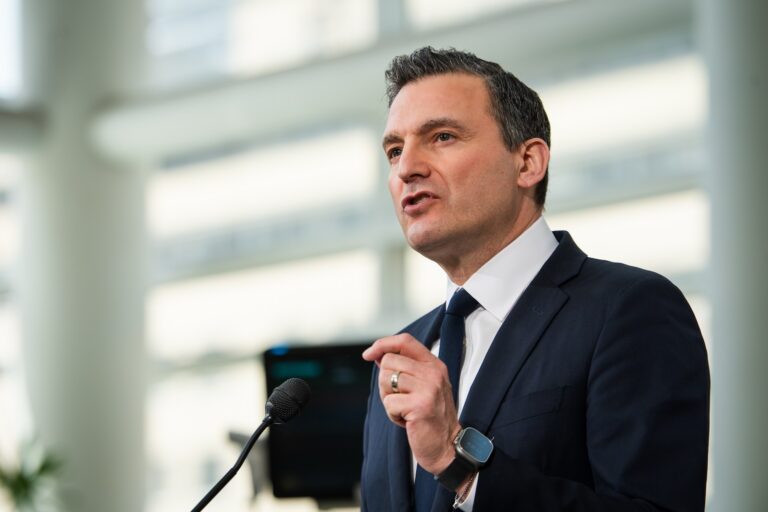
BDC Capital executive vice-president Geneviève Bouthillier told The Logic that Canadian investors need to take larger positions in big funding rounds if the country wants to retain more value as startups mature. “The companies will go for financing where there’s financing available,” she said.
The findings land as Ottawa decides how to deploy $750 million earmarked in last year’s federal budget to support startups. Investor groups have spent months debating whether the funding should target earlier-stage startups or larger companies trying to scale. Bouthillier said the money could help address Canada’s shortage of later-stage domestic capital, though she stressed the ecosystem faces multiple funding gaps at once.
She also pointed to weak exit markets as part of the problem. Canadian VC funds’ 10-year returns fell to 8.6 per cent last year, down from 10 per cent in 2024, while venture-backed mergers and acquisitions dropped to their lowest level in more than a decade. No Canadian VC-backed companies have gone public in the last two years.
BDC warned that weak exits are making it harder for funds to return cash to investors and raise new capital, further limiting the pool of domestic money available to help startups scale. Canadian VC funds raised just $1.8 billion across 11 funds in 2025, down from $3 billion across 23 funds in 2024. The 2025 figure is the lowest recorded since at least 2020.