TORONTO — Raquel Urtasun wants to fix what she says are shortcomings in the autonomous-vehicle industry. The leading AI researcher and founder and CEO of Waabi has been a leader in the self-driving car industry, dating back to her role as chief scientist and head of R&D at Uber’s Advanced Technologies Group in Toronto. Now she’s out on her own, taking the Toronto-based AV startup out of stealth mode last year and recently unveiling its first major product, a self-driving-truck simulator called Waabi World.
Skip to content

The Interview
Raquel Urtasun on the challenge of getting self-driving cars road-ready
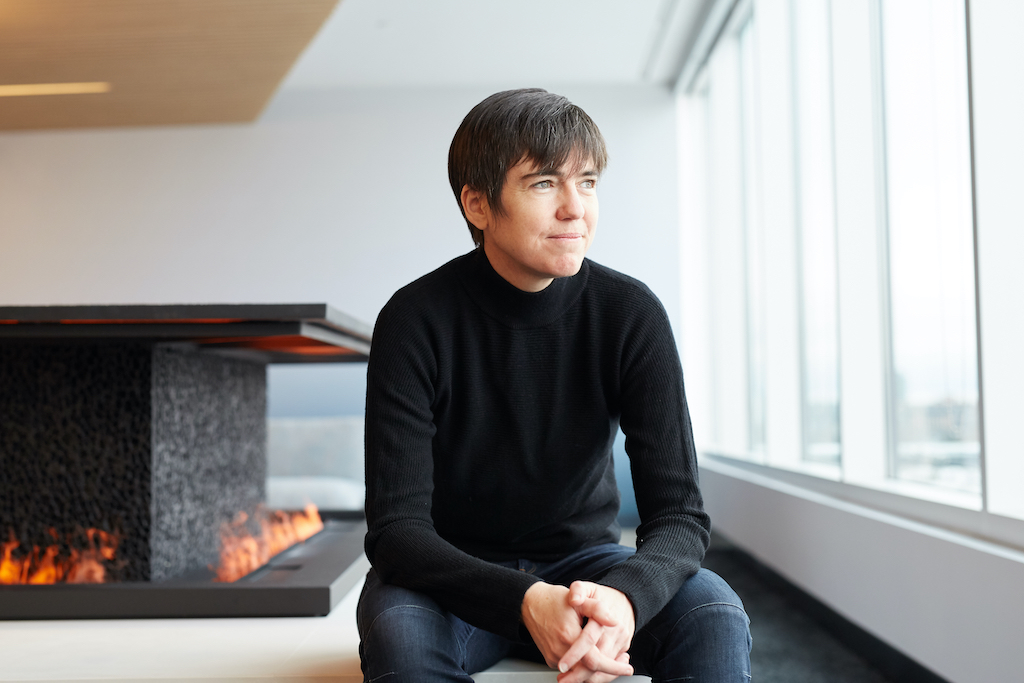
Raquel Urtasun in May 2021. Photo: Waabi | Handout
TORONTO — Raquel Urtasun wants to fix what she says are shortcomings in the autonomous-vehicle industry. The leading AI researcher and founder and CEO of Waabi has been a leader in the self-driving car industry, dating back to her role as chief scientist and head of R&D at Uber’s Advanced Technologies Group in Toronto. Now she’s out on her own, taking the Toronto-based AV startup out of stealth mode last year and recently unveiling its first major product, a self-driving-truck simulator called Waabi World.
Talking Point
There’s no shortage of skepticism about autonomous vehicles. Computer scientist and artificial intelligence researcher Urtasun isn’t shy to say where industry and governments are falling short, and how safety checks should work as self-driving cars hit the road.
In a conversation with The Logic, Urtasun revealed her thoughts on what regulators are missing about AVs, why self-driving cars can be safe but may never be perfect, and where Canadian talent outshines Silicon Valley.
This interview has been edited and condensed for clarity.
Now that Waabi World is out in the world, you’ve suggested this type of simulation might be useful for regulators. What would that potentially look like?
Regulators today really do not have the appropriate tools to make a very informed decision, in terms of understanding what the technology is for the different competitors. Instead, they have to rely a lot on what the competitors say, versus a really objective way to assess progress and performance. One of the key pieces to showcase safety is simulation, but the current technology out there in the industry falls short. They are also tailored to very specific systems.
It’s not something that we have a contract with the government or anything like that, but I’m happy to put it out in the open that I think this is a key piece for ensuring safety.
You said some of the existing AV simulation technology falls short. How so?
Many fronts. What you will see in the industry is typically the companies have multiple simulators, not just one canonical big simulator. It’s not able to really have the ability to replace real-world driving, because it doesn’t scale. You don’t see how your reactions, how your driving affects everything. You need the whole thing in order to really mimic how the world works.
The Waabi World announcement explained the technology as a sort of school for AVs, or a video game where the computer can anticipate your moves and make harder levels every time. So when is the vehicle ready to graduate? What’s the final boss of this video game?
We can run a parallel world, the real and the virtual, and then see whether our system does the same thing. We have the metrics of how realistic it is. Then, you can make a very informed decision that the system is ready for on-road testing and then later on, for removing the driver.
When you deploy or test your technology in the real world, you’re not going to deploy everywhere at once. Depending on the type of roads, when you’re driving in the city vs. not, certain things will never happen and certain things will happen. You can have all those things in your simulator, so you’re matching the statistics of the real world to the statistics of the simulator. Based on that performance, you have a notion of, “What is the risk of putting this technology in the real world?”
Urtasun weighs in
On Canadian tech talent: Waabi’s expanding. There’s a lot of talent here; we are also tapping the U.S. market since we have offices in the Bay Area. This gives us a very nice set of complementary skills. Folks over here are great in AI, which is at the core of everything we do, and we also see great software engineers. In the Bay Area, we see a lot of people that have a lot of self-driving expertise, in particular.
On sports: I’m a sports-crazy person. I love both playing and watching. People that really love to push themselves to the limits—I love that concept. I was a basketball player early in my career. It taught me to push myself, drive, to focus on improving every day. And also the team aspect.
On education: I love math. Math is a language we utilize to communicate. My brain works much better and talks much better in math than English, I guess. I think it’s something that we should reinforce for our amazing kids, AI scientists-to-be. Math is a cool thing, it’s not just for the nerds.
In a recent webinar, you said that you envisioned starting testing in U.S. markets because self-driving trucks can’t circulate on Canadian roads—but that you’d want to start in Ontario, if you could. What would the government need to do to allow you to test here?
This is a question to ask the government, as well. But they have, for example, a pilot program, or they used to have one, that is for convoys. Convoys are trucks that follow each other, and the first one is human-driven. This is not a type of technology that really is going to deploy. Many years ago, people thought that this makes sense at some level, but it’s not the case. So we will need a pilot program for self-driving trucks on Canadian highways or Ontario highways, but right now it’s not possible to test or operate on Ontario roads.
I’m curious what common fears that people have about AV testing are warranted fears? Which ones are the same kind of thing that would happen if a human was driving?
I’m obviously not going to comment on [other companies’] individual episodes. But right now, when you want to test self-driving technology in the real world, it’s very important that you have a safety driver, you have a backup system, and it’s very important that you have the proper safety assessments prior to that moment. Any company in this domain should be doing that.
This [AV] technology has the ability to save many, many of those lives [lost each year]. The question is, does it need to go to zero before deployment? There is maybe a situation where a crash is the only option, regardless of whether you’re the best human driver in the world or a self-driving vehicle.
People typically expect perfection from machines, but sometimes perfection is not possible. It doesn’t mean they’re not useful or safer. It’s not like I can say, “That accident didn’t happen, and therefore it’s good,” because that accident is not there in the first place.
If you look at other ways of automation that have happened, whether it is trains or planes, people are always at the beginning a bit skeptical. Then you forget.
The other thing that oftentimes, maybe, confuses people is that the errors of machines are different than the errors of humans.
And sometimes these errors by machines might look dummy to a human because a human can do it. But maybe what they’re not thinking is that something that they cannot do, maybe the machines are doing really well.



Loading...
Thanks for sharing!
You have shared 5 articles this month and reached the maximum amount of shares available.
CloseThis account has reached its share limit.
If you would like to purchase a sharing license please contact The Logic support at [email protected].
CloseGift the full article!
You have gifted 0 article(s) this month and have 5 remaining.
Recipients will be able to read the full text of the article after submitting their email address. They will not have access to other articles or subscriber benefits.
Photo: Waabi | Handout
Most Popular This Week


In-depth, agenda-setting reporting
Great journalism delivered straight to your inbox.
Commentary
Carmichael: What Finland can teach Canada about sleeping next to an elephant
Briefing
Financing instability is slowing down Ottawa’s housing agency, CEO says
Cleveland-Cliffs CEO says federal lawsuit would be a bad business decision for Canada
BoC shows off its new forecasting model, Prima
Best business newsletter in Canada
Get up to speed in minutes with insights and analysis on the most important stories of the day, every weekday.
Exclusive events
See the bigger picture with reporters and industry experts in subscriber-exclusive events.
Membership in The Logic Council
Membership provides access to our popular Slack channel, participation in subscriber surveys and invitations to exclusive events with our journalists and special guests.