The billions of dollars the Liberals earmarked in the federal budget will help the country’s innovation economy grow, according to a majority of respondents in The Logic’s subscriber survey.
Sixty-seven per cent of respondents agreed that the planned spending will adequately support the sector. Forty-seven per cent somewhat agreed, and 20 per cent strongly agreed. One-quarter of subscribers disagreed.
“[The National Research Council’s Industrial Research Assistance Program] got a much needed increase to their annual budget. That will help innovative SMEs that were able to survive the pandemic. There was a real risk of losing an entire ‘generation’ of innovative Canadian SMEs,” one subscriber wrote.
IRAP, which provides advice and funding to startups developing their technology, will receive $75 million over three years, one of several large cash injections set aside for existing Innovation, Science and Economic Development Canada programs intended to boost startup and scale-up R&D and expansion. The Liberals’ flagship Strategic Innovation Fund (SIF) will receive $7.2 billion over seven years.
Methodology
The Logic emailed subscribers a private link to an online survey on April 20, and the survey closed April 22. Respondents’ identities were kept anonymous and duplicates were removed as needed. Subscribers were asked: “How satisfied are you with the spending outlined in the Liberals’ 2021 budget?” Their choices were: “Very dissatisfied,” “Somewhat dissatisfied,” “Neither dissatisfied nor satisfied,” “Somewhat satisfied,” “Very satisfied,” “I don’t know.” They were also asked whether they agree with the following statement: “The spending outlined in the Liberals’ 2021 budget adequately supports the growth of Canada’s innovation economy.” Their choices were: “Strongly disagree,” “Somewhat disagree,” “Neither disagree nor agree,” “Somewhat agree,” “Strongly agree,” “I don’t know.” Finally, they were asked whether they agree or disagree with the following statement: “The spending outlined in the Liberals’ 2021 budget is currently more important to the health of the economy than traditional measures of fiscal responsibility.” Their choices were: “Strongly disagree,” “Somewhat disagree,” “Neither disagree nor agree,” “Somewhat agree,” “Strongly agree,” “I don’t know.”
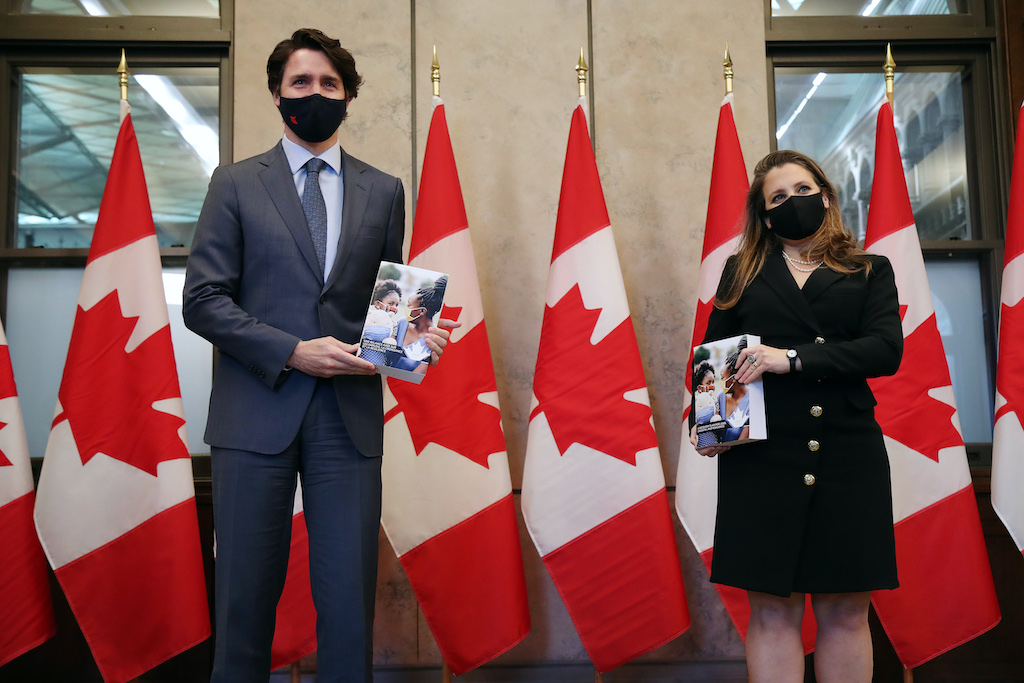
The first budget in two years laid out unprecedented spending: $101 billion over three years, including programs designed to encourage employers to hire marginalized workers, major expansions of innovation programs and cleantech incentives, and billions of dollars in long-term spending on a national child-care program. The Logic broke down the budget in detail and gathered reactions from industry leaders.
Subscribers were generally in favour of the $60 million allocated over two years toward the supercluster initiative, as well as new spending targeting artificial intelligence, quantum technology, genomics and the life-science sectors.
However, several subscribers wrote that spending was too heavily focused on existing programs—including the SIF and superclusters initiative, which has been criticized for its slow progress so far. “Very little bold innovation spending; just more of the same,” one subscriber said. Other subscribers believed the government was unable to successfully “pick winners and losers” in the private sector. “Their track record in doing this is zero,” one wrote.
Another said that the budget was “directionally good, however the details are missing and implementation is where the impacts will be made.”
The Logic also asked subscribers how satisfied they were with the budget overall. Although 55 per cent of respondents supported it, many respondents had sticker shock.
“Lots of great ideas but afraid of the price tag,” one wrote.
“It is irresponsible to continue spending money we do not have, and it is clearly a broad based plan to get re-elected,” another said.
Several subscribers said they supported the budget’s broad vision, including programs to address “critical shortcomings in Canadian social policies and economic structures and incentives” including child care, climate change, racism, and reconciliation with First Nations, Inuit and Métis.
“Despite the pandemic, our economy is strong and spending is the right decision in my opinion. The pandemic also shone a light on many inequities in our society and I believe it’s time to address these,” one wrote.
Finally, The Logic asked subscribers whether the budget’s spending plan was currently more important to the health of the economy than traditional measures of fiscal responsibility. Sixty per cent of subscribers agreed, and 33 per cent disagreed.
“The pandemic has thrown out the traditional rulebook,” one said.