The Bank of Canada executive who will soon oversee the country’s roughly 2,500 retail payment-service providers (PSPs) has signalled a willingness to tweak the proposed rules for the sector in response to worries that smaller companies will face too heavy a regulatory burden.
Skip to content
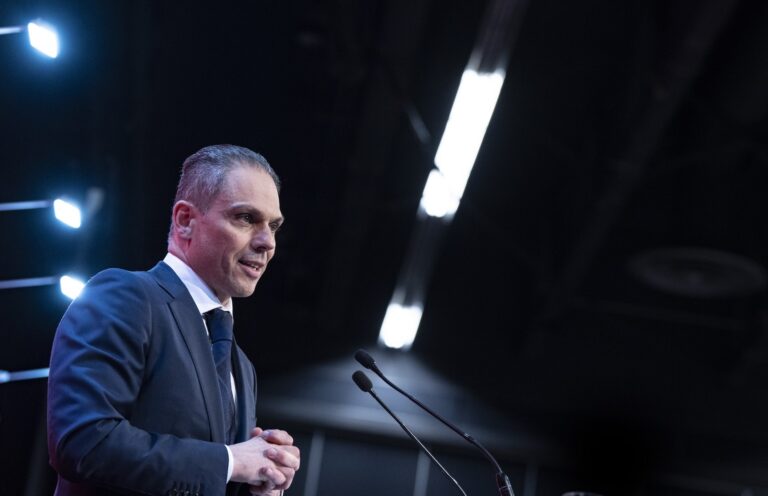
 Ron Morrow, executive director of supervision at the Bank of Canada. Photo: Bank of Canada/Handout
News
Payments regulations may be revised over concerns from fintechs, Bank of Canada’s Morrow says
Consultations on new rules revealed worries about overburdening small companies, stifling innovation
Ron Morrow, executive director of supervision at the Bank of Canada. Photo: Bank of Canada/Handout
The Bank of Canada executive who will soon oversee the country’s roughly 2,500 retail payment-service providers (PSPs) has signalled a willingness to tweak the proposed rules for the sector in response to worries that smaller companies will face too heavy a regulatory burden.
“We’ve heard the feedback loud and clear,” said Ron Morrow, the central bank’s executive director of supervision, in an interview with The Logic Thursday. “The teams are having this top of mind as they think through how to adjust the regime.”
Talking Points
- The Bank of Canada’s Ron Morrow said in an interview Thursday there could be changes to proposed regulations that will govern the country’s payments sector
- Consultations on the proposal revealed widely held concern about the burden the rules could place on small PSPs, and that they could stifle innovation
The bank and Finance Canada recently wrapped up consultations on the proposed regulations under the Retail Payment Activities Act, legislation the government passed in 2021 to establish rules for Canada’s burgeoning payments sector. The bank has been advising the finance department, which has led the development of the regulations, and will ultimately finalize them.
Speaking at the Payments Canada Summit in Toronto earlier on Thursday, Morrow told an audience that the biggest concern in those consultations was the burden the new rules would impose.
The Logic reported in March that some members of Canada’s fintech and payments sector worried the government’s proposed approach was too prescriptive and would stifle innovation by making regulatory demands—imposing strict and costly reporting requirements, for example—that small startups, in particular, would struggle to meet.
In the interview Thursday, Morrow said that while it was too soon to disclose what tweaks might be made to the proposed regulations, he does “believe there is scope for some changes to be made. But on the other hand, yes, there is going to be some burden associated with this regime.”
The RPAA is intended to make sure Canadians’ trust in PSPs is well founded, Morrow said. Operational risk needs to be managed well so that Canadians can rely on the PSPs that move their money. Likewise, it’s important to have rules in place to make sure that funds are safe, so that if a PSP becomes insolvent, Canadians can get their money back, he said.
Related Articles


The bank will need to have confidence that PSPs are doing a good job, and that means requiring even the smaller among them to report some information. However, Morrow said, “we’re very conscious of trying to strike the right balance.”
About a year ago, Morrow said, he and his team spoke to a number of “very, very small PSPs,” that were two- or three-person shops. He cited as an example a small startup moving money between Canada and several countries in Africa.
While a company like that may face a greater burden under the forthcoming rules, in that they’ll have to begin documenting its processes—like what it would do if its cloud-service provider fails—“we’re not looking for a three-inch-thick, board-approved risk binder from them,” he said.
“We walked away from that thinking it was something that was manageable,” he said.
Morrow emphasized that the regulations are not meant to be a one-size-fits-all regime.
The rules will impose some minimum requirements on every PSP, but large global payment-service providers will have to do more work to show compliance, because they have more complex operations and more users.
“We expect [the work] to be much lower for a smaller PSP.”
As The Logic previously reported, the central bank expects the finance department to publish the final regulations later this year. The bank will then release guidelines to give the industry more insight on the bank’s expectations of it. PSPs must begin registering with the bank in 2024; in 2025, the bank will start supervising PSP’s compliance with the regime, which will ultimately let PSPs join the forthcoming Real-Time Rail, the new technology platform that will underpin the country’s payments system of the future.



Loading...
Thanks for sharing!
You have shared 5 articles this month and reached the maximum amount of shares available.
CloseThis account has reached its share limit.
If you would like to purchase a sharing license please contact The Logic support at [email protected].
CloseGift the full article!
You have gifted 0 article(s) this month and have 5 remaining.
Recipients will be able to read the full text of the article after submitting their email address. They will not have access to other articles or subscriber benefits.
Photo: Bank of Canada/Handout
Most Popular This Week




In-depth, agenda-setting reporting
Great journalism delivered straight to your inbox.
News
National Bank CEO warns AI alone won’t give banks a lasting edge
Briefing
Canada and Ontario commit over $5B to support tariff-hit steel sector
Hackers will see cars as major targets in next 3 years, 83% of car-tech workers say
EA shutting down Edmonton studio BioWare
Best business newsletter in Canada
Get up to speed in minutes with insights and analysis on the most important stories of the day, every weekday.
Exclusive events
See the bigger picture with reporters and industry experts in subscriber-exclusive events.
Membership in The Logic Council
Membership provides access to our popular Slack channel, participation in subscriber surveys and invitations to exclusive events with our journalists and special guests.





