Skip to content

Canada's Business and Tech Newsroom

  • Professional Subscription
  • Partnerships & Advertising
  • Licensing & Syndication
Log In Subscribe
Welcome,
  • My Account
  • Log Out
  • Business
  • Tech
  • National
  • The Big Read
  • Briefings
  • Commentary
Search
Log In Subscribe
Welcome,
  • My Account
  • Log Out
News

Canada is struggling to collect $311M in duties for fraudulently labelled U.S. chicken

Listen Now
0:00
News

Canada is struggling to collect $311M in duties for fraudulently labelled U.S. chicken

A crackdown on mislabelled “spent fowl” uncovered rampant tariff evasion. The hard part is recouping the cash.

By Joanna Smith
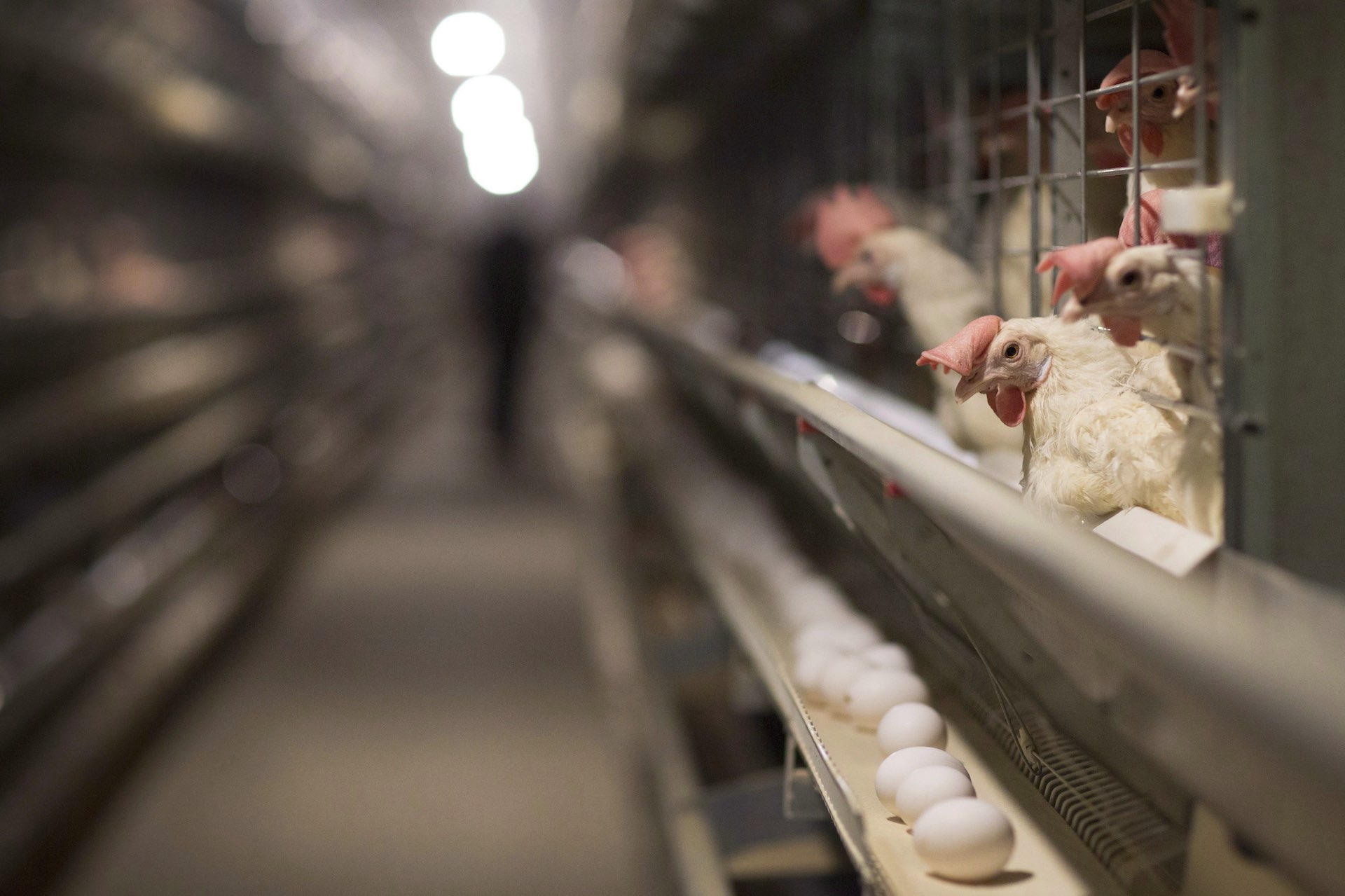
A shot of white chickens with their heads sticking out of cages in a large egg barn. A trough below the cages contains eggs laid by the chickens.
Chickens that no longer lay eggs are sold for meat categorized as “spent fowl.” Photo: The Canadian Press/Peter Power
Jun 5, 2026 | 5:45 AM ET
A A
A Small A Medium A Large
Share

Gift

Share

Listen Now
0:00

OTTAWA — Canada’s border services agency has been cracking down on chicken meat from the United States that was mislabelled to evade duties and taxes, yet newly released figures show it is struggling to get those caught slipping fraudulent fowl across the border to pay up.

According to data provided to the House of Commons in response to an order paper question by Conservative MP Philip Lawrence, the Canada Border Services Agency (CBSA) has assessed nearly $311 million in duties, interest and penalties linked to imports of misclassified spent fowl since 2017. Of that amount, it has collected just under $3.15 million—about one per cent of the total.

Talking Points

  • The Canada Border Services Agency (CBSA) assessed nearly $311 million in duties and penalties linked to imports of chicken meat deliberately mislabelled to evade tariffs
  • Newly released figures suggest the CBSA is struggling to make these importers pay the consequences; the government has collected only about one per cent of the total amount since 2017

“Imagine a tax system where the government only collected one per cent of the taxes they assessed,” Lawrence said in an interview. “How rigidly would people be obeying those rules?”

Canada imported more than 113 million kilograms of chicken meat categorized as “spent fowl” from the U.S. last year. It is what the agricultural industry calls hens that are done laying eggs, and are butchered for meat used in products such as chicken nuggets and soup.

Under the Canada-United States-Mexico Agreement (CUSMA), Canada does not place import quotas or tariffs on spent fowl from North America. That is not the case for the higher-quality meat from broiler chickens, which fall under the protection of Canada’s supply management system.

The volume of spent fowl that Canada imported from the U.S. last year far exceeded the amount the U.S. could actually produce, raising suspicion among domestic producers. The Chicken Farmers of Canada has argued that anything above 60 million kilograms from the U.S. per year is likely to actually be broiler chicken meat deliberately misclassified as spent fowl to get around the rules.

Related Articles
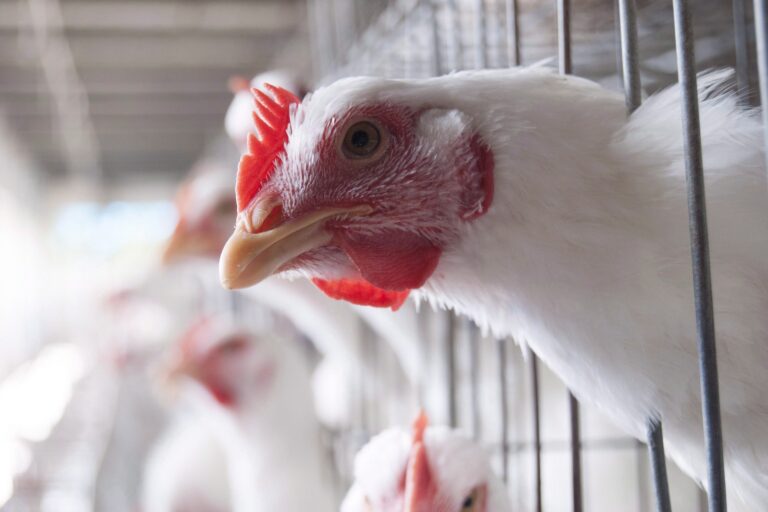
A close-up of a white chicken sticking its head through the wires of its cage.

Fraudulently labelled American chicken is flooding into Canada, farmers charge

By Joanna Smith
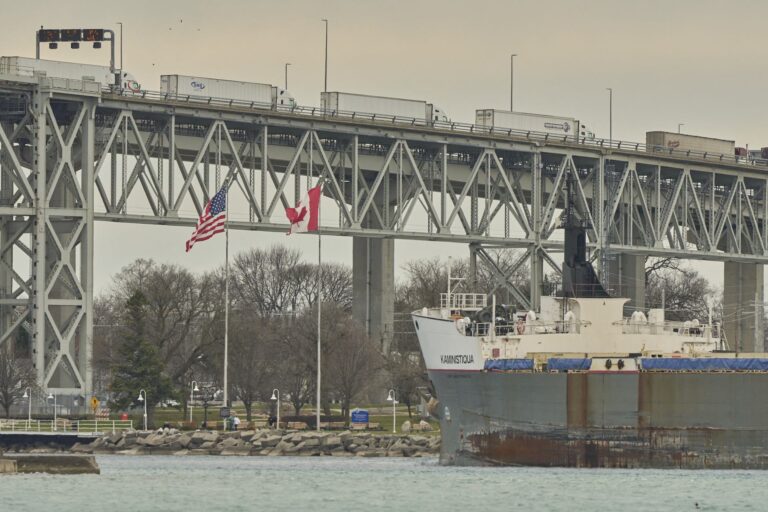
A row of trucks pulling white freight trailers lined up on a bridge. The Canadian and U.S. flags stand on the river shore below the bridge, and the prow of a ship is visible on the right side of the frame.

Canada’s new online customs system is plagued by glitches

By Joanna Smith

The CBSA has stepped up its enforcement since 2017, including by making spent fowl one of its priorities for verification. The CBSA told The Logic earlier this year that its latest round of extra scrutiny appeared to be working because the rate of non-compliance had dropped compared to previous attempts.

Collecting what is owed for the mislabelled meat has been much harder. The government’s response to Lawrence’s question shows nearly $240 million remains outstanding, while the CBSA wrote off almost $68 million in money owed.

“Fraudulent mislabelling of spent fowl has been a long-standing issue, and when assessed duties aren’t fully recovered, it undermines the integrity of the import controls that Canadian chicken farmers rely on,” Lauren Kennedy, a spokesperson for the Chicken Farmers of Canada, said in a statement. “We expect strong enforcement of the rules and full accountability to ensure a fair marketplace and to protect Canadian farmers from ongoing circumvention.” 

CBSA spokesperson Karine Martel said border agents have up to four years to verify commercial imports and adjust duties as needed. It sends outstanding amounts not paid within 30 days to the Canada Revenue Agency (CRA) for collection. The revenue agency’s officers “make every effort to hold non-compliant importers financially accountable, but in some cases, the importer may be unable to pay for reasons such as bankruptcy or the age of the debt may have exceeded the collections limitation period,” Martel wrote in a statement. Once the CRA has “exhausted all available avenues” to recover the debt, it might recommend the CBSA write it off.

The CBSA wrote off about $40 million in assessed duties for spent fowl in the last fiscal year alone, but Martel said that is related to the agency switching over to a new online customs system. Before it launched that system in October 2024, Martel said, the agency paused making decisions on importer accounts that had already been deemed insolvent until the new system was in place. When it picked up that work again, “there had been an accumulation of insolvent accounts to consider for debt write-off,” which led to a much higher amount than usual being written off in fiscal 2025-26.

The issue of how to better detect fraudulently labelled spent fowl came up during Ottawa’s consultations on the CUSMA review, but the Chicken Farmers of Canada does not consider it to be a trade irritant because the practice is illegal on both sides of the border. 

Gift the full article

Tom Super, a spokesperson for the National Chicken Council in the U.S., declined to comment on what he described as “import practices in Canada,” but said the council’s members have followed the rules. The U.S. Embassy in Ottawa referred The Logic to Canadian border authorities.

Lawrence stressed the flood of misclassified chicken is still hurting Canada’s poultry sector, where farmers have tight margins. “We certainly owe it to our farmers to enforce our border and enforce our rules to make sure that they have a fair and competitive marketplace.”


#agriculture #Canada-U.S. trade #economy #National #USMCA

Loading...

Thanks for sharing!

You have shared 5 articles this month and reached the maximum amount of shares available.

Close
This account has reached its share limit.

If you would like to purchase a sharing license please contact The Logic support at [email protected].

Close
Want to share this article?

Upgrade to all-access now

Close
Gift the full article!

You have gifted 0 article(s) this month and have 5 remaining.

Copy link and gift
Copy Link
Email to a friend
Send Email
Gift on Social Media

Recipients will be able to read the full text of the article after submitting their email address. They will not have access to other articles or subscriber benefits.

A shot of white chickens with their heads sticking out of cages in a large egg barn. A trough below the cages contains eggs laid by the chickens.

Photo: The Canadian Press/Peter Power

Most Popular This Week

Andrew Forde, wearing a beige tweed blazer, black slacks and a white sweater, speaks on a stage at the Elevate conference in Toronto with three large blue screens in the backdrop. One screen displays the session topic, AI, another displays the logos for sponsors KPMG and Google, and a third screen depicts a photo of a stop sign covered in stickers. The stop-sign photo is labelled, “Stickers that beat supercomputers.”
News

KPMG’s AI whisperer says some Bay Street firms are falling into a productivity trap

By Anita Balakrishnan
The Big Read

ApplyBoard faces a reckoning as Canada’s immigration boom turns into a bust

By Claire Brownell and David Reevely
A shot of Anthony Hu in a semi-dark office, with his face illuminated by two computer screens.
The Big Read

Anthropic’s Mythos cracked software open like an egg. It’s just the beginning

By David Reevely
Susan Hawkins, chief executive officer of Payments Canada gestures with her hands as she speaks on stage in front of black screen at the Payments Canada Summit in Toronto.
Exclusive

Not all banks and fintechs will get access to the Real-Time Rail at launch

By Claire Brownell

In-depth, agenda-setting reporting

Great journalism delivered straight to your inbox.

News

Canada’s new AI strategy aims to boost firms selling overseas

By Murad Hemmadi

Briefing

Anthropic says world needs option to slow AI development, as models learn to self-improve

By Murad Hemmadi   |   Jun 5, 2026 | 3:37 PM ET

Ottawa taps the brakes on efforts to speed up project permitting

By Laura Osman   |   Jun 5, 2026 | 2:52 PM ET

Kevin O’Leary scales back Wonder Valley Utah plans after objections from a key state legislator

By David Reevely   |   Jun 5, 2026 | 1:42 PM ET

Best business newsletter in Canada

Get up to speed in minutes with insights and analysis on the most important stories of the day, every weekday.

Exclusive events

See the bigger picture with reporters and industry experts in subscriber-exclusive events.

Membership in The Logic Council

Membership provides access to our popular Slack channel, participation in subscriber surveys and invitations to exclusive events with our journalists and special guests.

Recent Popular Stories

News

Canada’s surprise plan to buy Saab command jets leaves competitors seeking answers

By David Reevely   |   May 29, 2026
A closeup of a scale model of a jet covered in pixellated camouflage, with sensor equipment attached to the top of its fuselage. There are civilians and uniformed military personnel milling in the background.
Exclusive

Canada awards Ford $464M to make F-Series trucks in Ontario

By Murad Hemmadi, Anita Balakrishnan and Joanna Smith   |   May 7, 2026
Blurred red, white and black cars zoom down a street in front of Ford’s Oakville, Ont., assembly plant on Friday April 5, 2024.
News

European and Asian firms want a stake in Canada’s photonics factory, Joly says

By Murad Hemmadi   |   May 7, 2026
The Big Read

ApplyBoard faces a reckoning as Canada’s immigration boom turns into a bust

By Claire Brownell and David Reevely   |   May 27, 2026
Exclusive

RBC Insurance chief to depart in shakeup of key strategic role

By Chaimae Chouiekh and Anita Balakrishnan   |   May 27, 2026
Low-angle view of an RBC logo sign in front of a tall glass-and-concrete office tower, with surrounding skyscrapers visible in the background.
Exclusive

Shopify makes cuts to its operations team in latest round of layoffs

By Aleksandra Sagan   |   May 4, 2026
Tobias Lutke in a black shirt and grey jeans sitting on a couch, gesturing with both hands pinching the air as he speaks

Canada's most influential executives and policymakers are reading The Logic

  • CPP Investments
  • Sun Life Financial
  • C100
  • Amazon
  • Telus
  • Mastercard
  • bdc
  • Shopify
  • Rogers
  • RBC
  • General Motors
  • MaRS
  • Government of Canada
  • Uber
  • Loblaw Companies Limited
logic-logo

Canada's Business and Tech Newsroom

100% human-crafted journalism

Newsroom

  • News Tips
  • AI Policy
  • Editorial Disclosures
  • Story Pitches

Company

  • About Us
  • Terms of Service
  • Privacy Statement
  • Corporate Information

Contact

  • Contact Us
  • Advertise
  • FAQs
  • Work at The Logic

© 2026 The Logic Inc. All Rights Reserved.

Trusted by leaders

Error

Account creation failed.

Please email us at [email protected].

Create Account

[wppb-register form_name=”cozmo-registration-form-for-modal”]

I do have an account
Login
or

[wppb-login]

I don’t have an account