Silicon Valley tech veteran Michael Buhr is taking the reins at the C100, the prominent network connecting Canadian founders to Silicon Valley, as the non-profit organization turns its focus from supporting startups to helping larger Canadian companies scale.
Skip to content

News
C100 names Bay Area entrepreneur Michael Buhr to top job
Canadian founder network’s third leader in two years takes over as focus shifts to larger companies
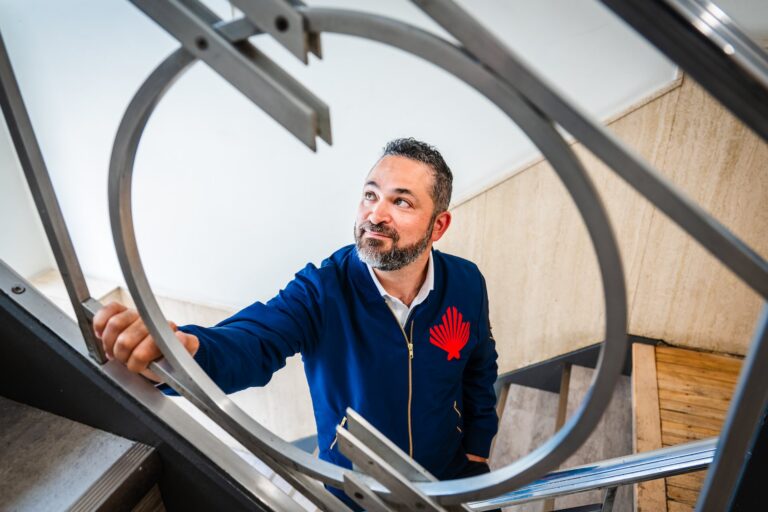
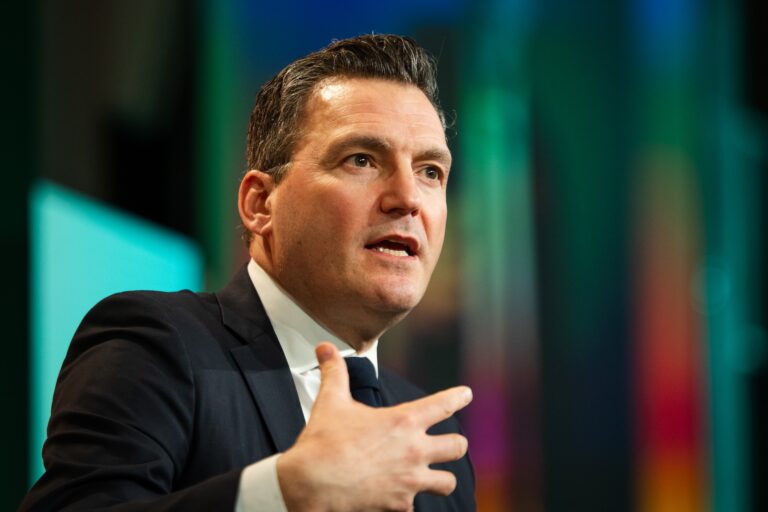
Michael Buhr is the new executive director of tech networking group C100. Photo: C100/Handout
Silicon Valley tech veteran Michael Buhr is taking the reins at the C100, the prominent network connecting Canadian founders to Silicon Valley, as the non-profit organization turns its focus from supporting startups to helping larger Canadian companies scale.
Buhr is C100’s third leader in two years. Laura Buhler stepped down as CEO in 2022, after about five and a half years in the role. Her successor, Ray Newal, filled the post from August 2022 until Buhr replaced him late last month.
Talking Points
- Michael Buhr is taking over as head of the C100 as the tech networking group shifts its focus from connecting Canadian startups to Silicon Valley to scaling growth-stage firms
- The leadership change comes as C100 experiments with its mandate, including expanding its member network to help Canadian founders access more resources globally
Over that period, the organization has experimented with its mandate, abandoning what had been a strict focus on Silicon Valley. In 2021 and 2022, it set up new chapters in New York, London and Los Angeles, while also increasing its global membership of Canadians working in tech. While C100 still has a significant presence in the Bay Area, about 70 per cent of its 500 members are now based elsewhere.
The changes attempt to address the dual realities of Canada’s growing tech ecosystem: while the number of startups and the amount of capital available to Canadian companies has grown substantially since C100 launched in 2009, there aren’t as many companies generating $100-million-plus in annual revenue as Buhr would like.
Related Articles

“If you look at the ecosystem in Canada today, [it’s] way different than it was 15 years ago,” said Buhr, a Queen’s University alumnus who moved from Ontario to California for a job at Apple in the 1990s. He believes expanding the network globally will help Canadian founders and companies reach their next milestones. “The opportunity that we’re looking at now is to take the great energy and passion that the C100 has had for the last 15 years and now make that even broader to include growth companies.”
Buhr has been in California since his stint at Apple. He’s held leadership positions at Adobe and eBay and senior roles at several startups in the Valley, including Palm Pilot maker Palm and travel-focused retail platform Travelport.
Buhr first got involved with C100 shortly after it launched as an informal group of entrepreneurial Canadian expats in the Valley who sought comradery and mentorship. At the time, the Bay Area was the unchallenged go-to destination for international founders looking to launch or grow their business. While its preeminence continues, markets beyond California—including in Canada—have since established themselves as bustling innovation centres with access to peer support and funding. The shift to remote work brought on by the COVID-19 pandemic further challenged the notion that tech companies and entrepreneurs ought to move to the Bay Area to succeed.
Buhr said he believes Silicon Valley remains the “centre of the tech universe.” The area still ranked first in 2022 for most venture capital invested in the U.S., according to PitchBook. The difference today, he said, is that Canadian founders can choose where to run their company and where to raise money.
“If you look at the ecosystem in Canada today, [it’s] way different than it was 15 years ago.”
While C100’s membership is growing globally, co-chair Janet Bannister said the organization is staying focused on Silicon Valley—a retrenchment after the recent push to establish hubs in other cities. “There is a very dense concentration in the Valley of people who have scaled companies,” she said. “It’s important that we can tap into those networks.”
Bannister, who runs Toronto-based venture capital fund Staircase Ventures—she first met Buhr at eBay, where she was product director—said C100 will likely move away from the city chapter model it launched in 2021-2022. “Like any good startup, we’ve tested different things and learned,” Bannister said. “It’s hard to maintain really specific chapters… We’ll still have local events in different cities. But it is going to be more focused on one global network.”
“The real focus of the C100 is Canadians helping Canadians,” said Buhr. That holds true whether they’re based in Silicon Valley, Toronto or Singapore, he said.
Buhr, who’s going by the title executive director rather than CEO, said he plans to work more closely than past leaders have with C100’s board chairs—both of whom are based in Canada for the first time in the organization’s history. “Mike [Wessinger, the co-founder and former CEO of healthtech PointClickCare and Bannister’s co-chair] and Janet and others are really tied very closely to both the Canadian and U.S. ecosystem at an executive level,” he said. “They have very strong relationships. One of the things we figured out is that we weren’t really leveraging those relationships.”
Better connecting C100’s increasingly sprawling network is one of Buhr’s top priorities. “Our membership is so broad,” he said. “The C100 … has turned into a powerful organization with its ability to help other Canadians, and we just need to leverage that better than we have.”
Loading...
Thanks for sharing!
You have shared 5 articles this month and reached the maximum amount of shares available.
CloseThis account has reached its share limit.
If you would like to purchase a sharing license please contact The Logic support at [email protected].
CloseGift the full article!
You have gifted 0 article(s) this month and have 5 remaining.
Recipients will be able to read the full text of the article after submitting their email address. They will not have access to other articles or subscriber benefits.
Photo: C100/Handout
Most Popular This Week



In-depth, agenda-setting reporting
Great journalism delivered straight to your inbox.
Exclusive
Ssense has laid off photo and make-up teams and says AI will do much of their work
Briefing
VCs are pouring billions of dollars into defence tech
Union head says ‘it’s too risky to wait’ for CUSMA review to start labour talks with Ford Motor
New federal nuclear energy strategy focuses on Candu reactors at home and abroad
Best business newsletter in Canada
Get up to speed in minutes with insights and analysis on the most important stories of the day, every weekday.
Exclusive events
See the bigger picture with reporters and industry experts in subscriber-exclusive events.
Membership in The Logic Council
Membership provides access to our popular Slack channel, participation in subscriber surveys and invitations to exclusive events with our journalists and special guests.