Skip to content

Canada's Business and Tech Newsroom

  • Professional Subscription
  • Partnerships & Advertising
  • Licensing & Syndication
Log In Subscribe
Welcome,
  • My Account
  • Log Out
  • Business
  • Tech
  • National
  • The Big Read
  • Briefings
  • Commentary
Search
Log In Subscribe
Welcome,
  • My Account
  • Log Out
Commentary

Carmichael: How to solve the housing crisis

The Great Demographic Reversal is one of those books that shows that the past isn’t prologue. Authors Charles Goodhart and Manoj Pradhan argue that we can’t assume the prosperity that followed the end of the Second World War will last because it was based on a glut of workers—at first the boomers, then Asia’s armies of cheap labour joined thanks to globalization. 

Those demographic tailwinds are now headwinds. The global labour pool is shrinking as boomers retire. There are still lots of underemployed workers out there, but Goodhart and Pradhan doubt that immigration is a solution because countries tend to dislike making room for newcomers. 

Commentary

Carmichael: How to solve the housing crisis

It would be a shame to shut the immigration gates, writes Kevin Carmichael

By Kevin Carmichael
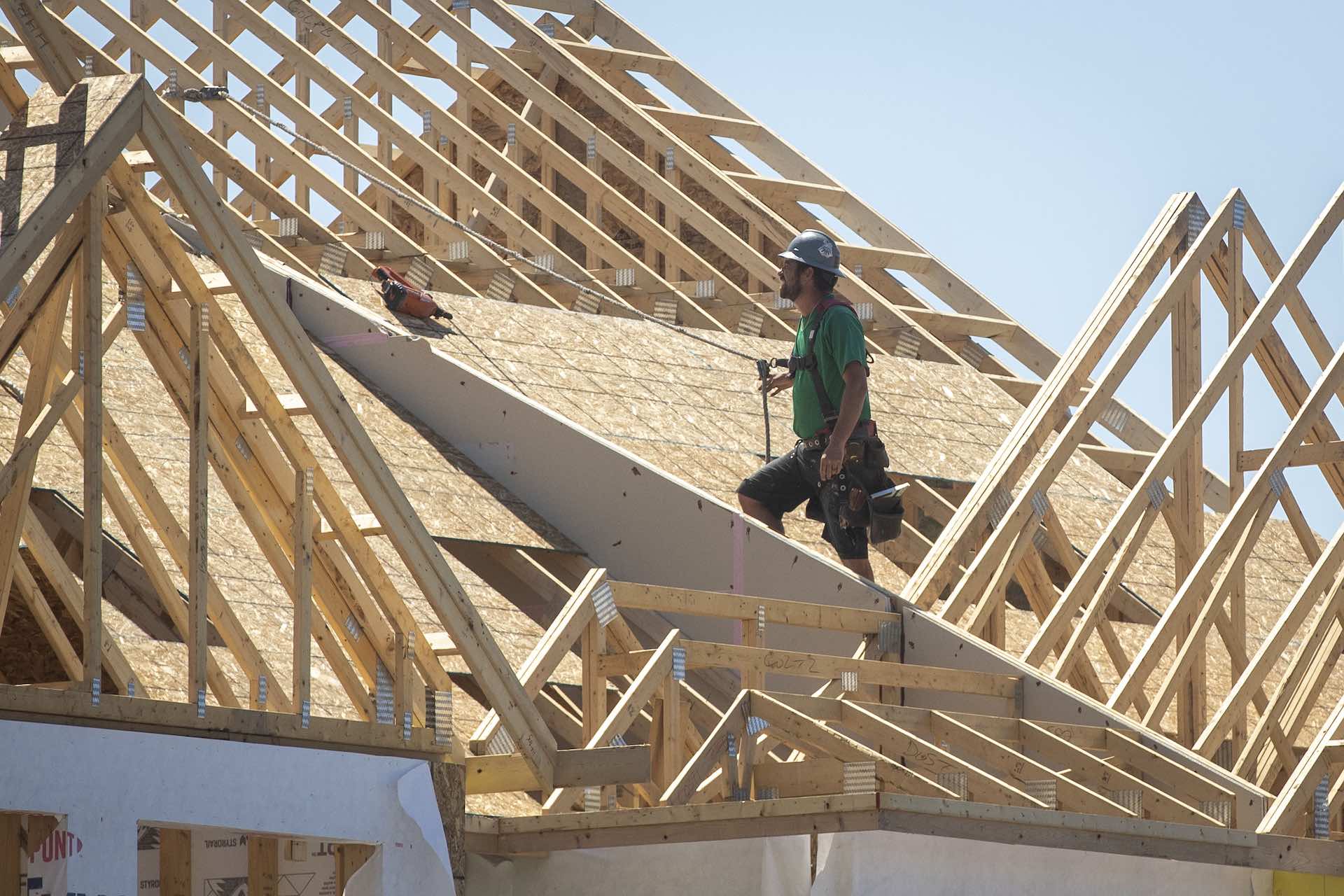
A construction stands on the roof of a house being built out of wood. He wears a green t-shirt and a grey hard hat.
A carpenter works on the roof of a house being constructed in Kingston, Ont. in June 2023. Photo: The Canadian Press/Lars Hagberg
Dec 9, 2023
A A
A Small A Medium A Large
Share

Share

The Great Demographic Reversal is one of those books that shows that the past isn’t prologue. Authors Charles Goodhart and Manoj Pradhan argue that we can’t assume the prosperity that followed the end of the Second World War will last because it was based on a glut of workers—at first the boomers, then Asia’s armies of cheap labour joined thanks to globalization. 

Those demographic tailwinds are now headwinds. The global labour pool is shrinking as boomers retire. There are still lots of underemployed workers out there, but Goodhart and Pradhan doubt that immigration is a solution because countries tend to dislike making room for newcomers. 

Canada looked like an exception. The population increased by more than one million people between July 2022 and July 2023, almost entirely because of immigration. An ability to add talent at a rate like that could be a powerful advantage, yet it looks like the political class might have ruined it by taking the housing crisis for granted for too long. 

The immigration crisis didn’t come up once during Finance Minister Chrystia Freeland’s testimony on housing affordability at the finance committee on Thursday. Maybe that’s good, but it amounts to avoidance. Bitterness about foreign investors bidding up housing prices has spread to frustration over competition from international students and permanent residents. An Abacus Data poll in November found that almost 70 per cent of respondents thought that immigration levels were “too high,” an opinion shared by a majority of partisans of all the major political parties. 

Related Articles

Bank of Canada governor Tiff Macklem in Ottawa in December 2021.

Carmichael: For Tiff Macklem, the hard part is just beginning

By Kevin Carmichael
Bank of Canada governor Tiff Macklem in front of a Canadian flag.

Carmichael: Tiff Macklem is tired of being a political punching bag

By Kevin Carmichael

In reality, it’s probably the cost of shelter that people think is “too high,” and a frustrated nation is looking for someone (or something) to blame. A story took hold over the summer that the housing crisis was proof that the federal government had opened the immigration gates too wide. You can feel the political pressure building to narrow them. 

That would be a shame. A team of Bank of Canada researchers published a detailed analysis of Canada’s recent experience with immigration this week. They found that newcomers were responsible for almost all of the growth in the labour supply in 2021 and 2022, as measured by hours worked—in fact, if not for that contribution, the labour supply would have shrunk. The paper estimates that those newly arrived workers increased “potential growth”—the rate at which the economy can grow without stoking inflation—by two to three percentage points. Inflation, which peaked at 8.1 per cent in June 2022, would have been worse if the government hadn’t flooded that economy with more workers. 

It’s not the Bank of Canada’s job to set immigration quotas, but it needs to understand what’s going on. Governor Tiff Macklem initially misjudged how broad and persistent inflation had become. And more recently, he and his deputies have had to adjust their thinking to accommodate a reality in which home prices, rent prices and mortgage costs all rise together. Real estate prices should have fallen. Instead, the Bank of Canada has been forced to defend itself against charges that it’s making the housing situation worse. 

Policymakers appear to now have a solid understanding of what happened.  

“Demographic demand,” which is a measure of new household formation, began pulling away from housing starts in 2016—and then demographic demand jumped off the charts in 2022 as pandemic restrictions receded and immigrants rushed in. Yet housing starts trundled along at roughly the same pace, creating an extreme mismatch between supply and demand. 

Ottawa probably should have seen that coming. In their defence, the economic literature broadly implied that immigration has little effect on housing costs. That’s mostly because in other countries, immigration tends to deepen the pool of construction workers. 

That didn’t happen here. The largest increases were in “professional, technical and scientific services,” the category that covers software engineers and other tech workers. A relatively miniscule number of immigrants got jobs in construction, odd because the industry has been lamenting a talent shortage for years. The Bank of Canada paper estimates that “a near tripling” of the number of non-permanent residents that currently work in construction would be required to match their share of employment in the industry to that of the general population. 

Bottom line: It would take 10 months of housing starts to balance supply and demand, compared with about two and a half months in 2019, the researchers said. 

Ottawa recently figured out that their overall approach to immigration—a points-based system that prioritizes newcomers who can immediately go to work in high-paying jobs—might be part of the problem. The Canadian approach is admired elsewhere, but an unintended consequence appears to have been short-changing some industries. In August, Immigration Minister Marc Miller said applicants with experience in 10 trades, including carpenters, plumbers and contractors, would be eligible for express entry. 

It could be more complicated than that. The construction industry is dominated by smaller companies that either lack the capacity to navigate the immigration system or have little interest in doing so. “It’s easier for larger businesses to access the system,” Parisa Mahboubi, a senior policy analyst at the C.D. Howe Institute who studies immigration, said in an interview.  

Evidence that Ottawa is adjusting its policy as it learns is positive. It’s just a shame that it took a crisis for it to happen. Housing markets might eventually rebalance, but not before without exhausting our tolerance for elevated levels of immigration. Our longer-term prospects will suffer as a result.  

Kevin Carmichael is The Logic’s economics columnist and editor-at-large. He has spent more than two decades covering economics, business and finance for outlets including Bloomberg News, The Globe and Mail and the Financial Post, where he also served as editor-in-chief. 

Editor’s note: The story has been updated to clarify that immigration’s contribution to shelter costs wasn’t discussed at the House finance committee’s hearing on housing affordability. 
#commentary #economy #housing #immigration

Sponsored Content

How to shift your workforce from AI experimentation to adoption

By Jessica Aftimus Rosa

The real-world economic offshoots of sovereign AI

By Deborah Aarts
Illustration of a plane flying above a mailbox

Increasing healthcare access across Canada

By Deborah Aarts
Paid promotional content

Loading...

Thanks for sharing!

You have shared 5 articles this month and reached the maximum amount of shares available.

Close
This account has reached its share limit.

If you would like to purchase a sharing license please contact The Logic support at [email protected].

Close
Want to share this article?

Upgrade to all-access now

Close
Gift the full article!

You have gifted 0 article(s) this month and have 5 remaining.

Copy link and gift
Copy Link
Email to a friend
Send Email
Gift on Social Media

Recipients will be able to read the full text of the article after submitting their email address. They will not have access to other articles or subscriber benefits.

A construction stands on the roof of a house being built out of wood. He wears a green t-shirt and a grey hard hat.

Photo: The Canadian Press/Lars Hagberg

Most Popular This Week

Close up of Mark Carney in a black suit against a black backdrop, looking over his shoulder with an eyebrow raised.
News

Ottawa tries to deliver on Carney’s promise to build faster

By David Reevely
Prime Minister Mark Carney, wearing a dark suit and tie, stands at a wooden podium in a dark room. The silhouettes of audience members are visible in the foreground. In the background, there is a backdrop depicting a cloudy sky and mountains.
News

Carney wants $1T to flow into Canada. Small projects are still struggling to get financing

By Chaimae Chouiekh
A shot looking down the length of a tunnel with conduits along its sides and railroad-style tracks on its floor. There are two workers in the distance wearing hardhats and headlights and walking toward the camera.
The Big Read

Cameco’s high-stakes bid to be Canada’s next nuclear champion

By Joanna Smith
A group shot of people, many wearing branding black winter jackets, posed in front of an armoured vehicle. Several are sitting on the vehicle, in front of its gun turret.
News

MaRS joins forces with accelerator Vimy Forge to help defence startups

By David Reevely

In-depth, agenda-setting reporting

Great journalism delivered straight to your inbox.

Two individuals stand facing each other inside a lit-up installation inside a bust room. Both people are holding smartphones.
News

The Maple 8’s Canadian pledges may do little for startups and scaleups

By Catherine McIntyre

Briefing

Trade remains greatest ‘downside risk’ to Canada’s economic growth: Deloitte

By Joanna Smith   |   Sep 29, 2026 | 6:00 AM ET

AMD to acquire Radical Ventures-backed World Labs in US$8.2B deal

By Murad Hemmadi   |   Sep 28, 2026 | 5:22 PM ET

Stelco to idle part of Hamilton steel plant for firm’s ‘survival’ amid U.S. tariffs

By Joanna Smith   |   Sep 28, 2026 | 3:55 PM ET

Best business newsletter in Canada

Get up to speed in minutes with insights and analysis on the most important stories of the day, every weekday.

Exclusive events

See the bigger picture with reporters and industry experts in subscriber-exclusive events.

Membership in The Logic Council

Membership provides access to our popular Slack channel, participation in subscriber surveys and invitations to exclusive events with our journalists and special guests.

Recent Popular Stories

The Big Read

Cameco’s high-stakes bid to be Canada’s next nuclear champion

By Joanna Smith   |   Sep 23, 2026
A shot looking down the length of a tunnel with conduits along its sides and railroad-style tracks on its floor. There are two workers in the distance wearing hardhats and headlights and walking toward the camera.
News

MaRS joins forces with accelerator Vimy Forge to help defence startups

By David Reevely   |   Sep 22, 2026
A group shot of people, many wearing branding black winter jackets, posed in front of an armoured vehicle. Several are sitting on the vehicle, in front of its gun turret.
News

Ottawa tries to deliver on Carney’s promise to build faster

By David Reevely   |   Sep 28, 2026
Close up of Mark Carney in a black suit against a black backdrop, looking over his shoulder with an eyebrow raised.
News

Canada’s landmark ESG case heads to a final decision

By Anita Balakrishnan   |   Sep 25, 2026
News

Carney wants $1T to flow into Canada. Small projects are still struggling to get financing

By Chaimae Chouiekh   |   Sep 25, 2026
Prime Minister Mark Carney, wearing a dark suit and tie, stands at a wooden podium in a dark room. The silhouettes of audience members are visible in the foreground. In the background, there is a backdrop depicting a cloudy sky and mountains.
News

China and India offer major upside for Canada’s cultural exports, says federal analysis

By Joanna Smith   |   Sep 24, 2026
A shot of dozens framed video-game covers on a wall, with the label "World renowned games since 1997" inscribed above them. There are two passers-by blurred in the foreground.

Canada's most influential executives and policymakers are reading The Logic

  • CPP Investments
  • Sun Life Financial
  • C100
  • Amazon
  • Telus
  • Mastercard
  • bdc
  • Shopify
  • Rogers
  • RBC
  • General Motors
  • MaRS
  • Government of Canada
  • Uber
  • Loblaw Companies Limited
logic-logo

Canada's Business and Tech Newsroom

100% human-crafted journalism

Newsroom

  • News Tips
  • AI Policy
  • Editorial Disclosures
  • Story Pitches

Company

  • About Us
  • Terms of Service
  • Privacy Statement
  • Corporate Information

Contact

  • Contact Us
  • Advertise
  • FAQs
  • Work at The Logic

© 2026 The Logic Inc. All Rights Reserved.

Trusted by leaders

Error

Account creation failed.

Please email us at [email protected].

Create Account

[wppb-register form_name=”cozmo-registration-form-for-modal”]

I do have an account
Login

The username or email you provided does not exist. Please try again.

or

[wppb-login]

I don’t have an account