Listen Now
0:00
KINGSTON, Ont — Supercomputers help make the future.
They got NASA’s Space Shuttles back flying, revealed the impacts of climate change, and trained the models powering the generative AI age. If nuclear fusion some day powers the world or humanity steps foot on Mars, supercomputers are sure to be whirring away in the background.
Canada thinks of itself as a place where such scientific breakthroughs happen. The global ranking of supercomputers, though, suggests challenges ahead. China tops the list and the U.S. dominates it, while many middle powers in Europe and Asia have several world-leading systems. Canada’s most powerful public machine—Simon Fraser University’s $82-million cluster in Vancouver, known as Fir—doesn’t crack the top 100 fastest. Meanwhile, the country’s research compute capacity is running flat out as demand for access far outstrips supply.
Talking Points
- Queen’s University and Simon Fraser University want to build two new supercomputers, to significantly expand Canada’s research compute capacity and help tackle the largest scientific problems
- Ryan Grant is a key player in the effort, after helping to train a new generation of engineers and develop key technology for some of the world’s fastest machines
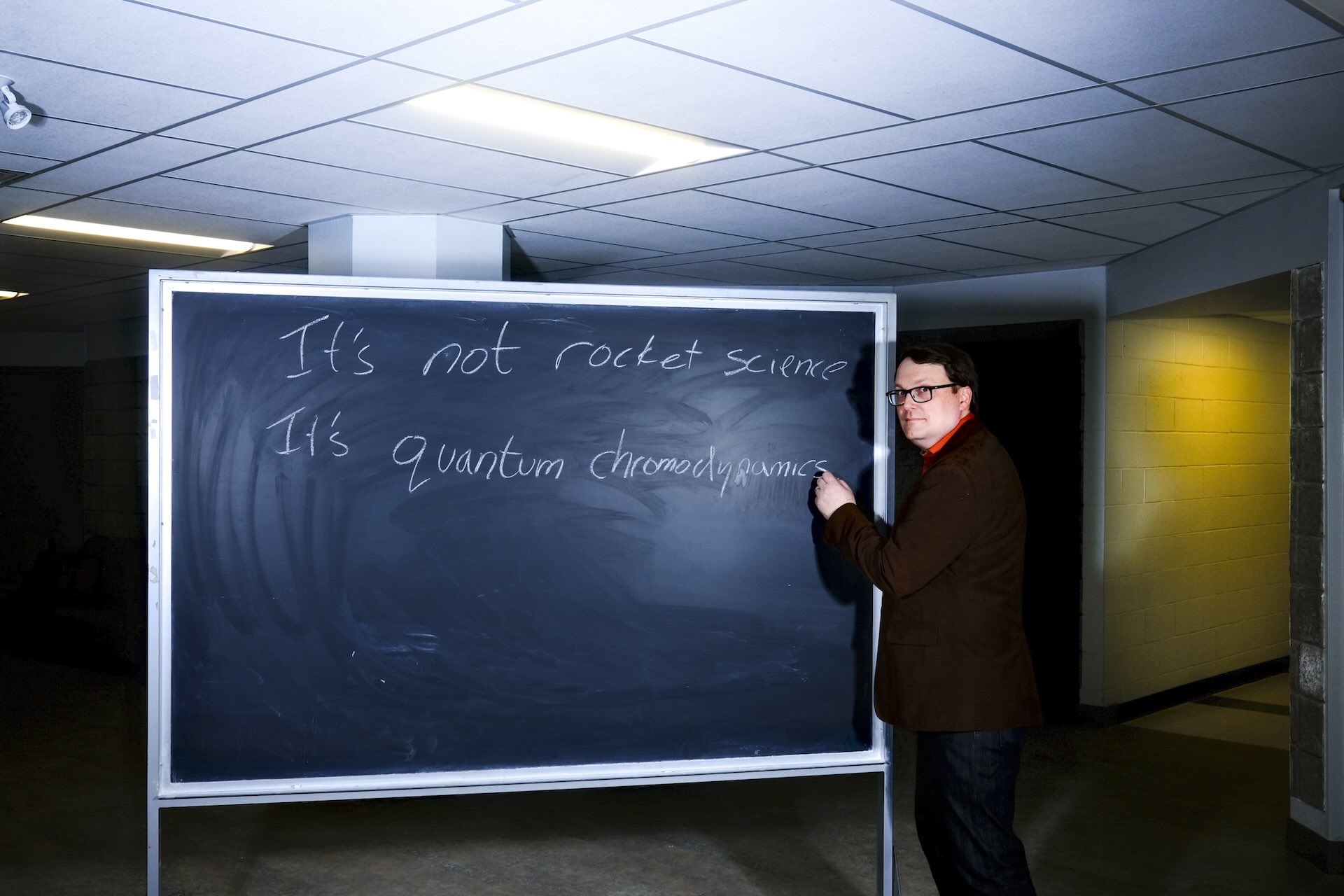
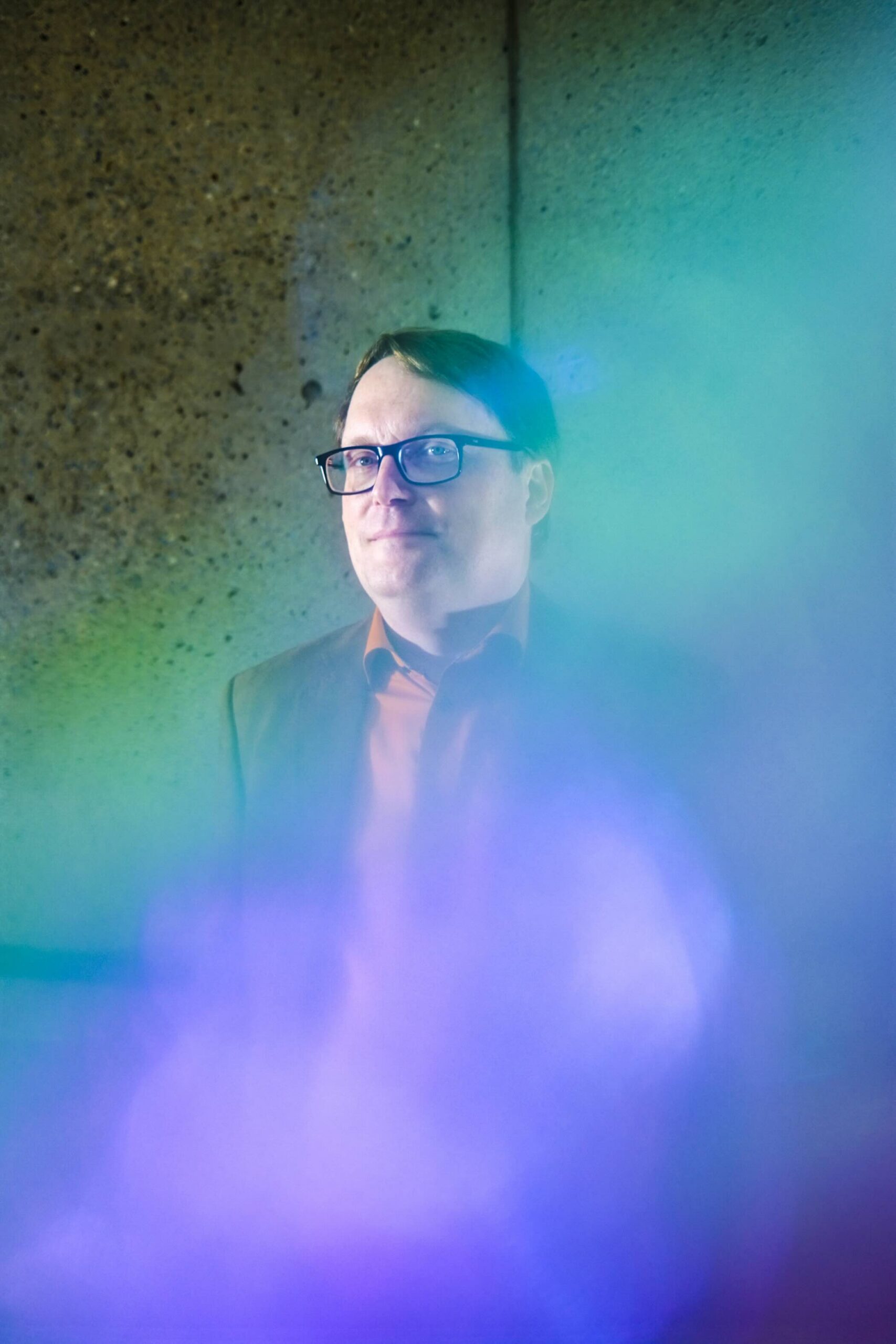
From his lab at Queen’s University in Kingston, Ryan Grant is working on a plan to get Canada in the game.
Grant, a 45-year-old Canadian supercomputer savant, spent almost a decade in the U.S. working on crucial technology that makes modern supercomputing possible. Five years ago, he returned to Canada with a plan to solve what he saw as a looming supercomputer talent crisis.
Then AI went supernova, and technological progress took on geopolitical importance rarely seen since the space race. What started as a mission to train the next generation of supercomputer builders in Canada has evolved into an audacious bid to transform the country’s technological fortunes by building supercomputers here.
Related Articles


Together, Queen’s and Simon Fraser want to massively expand Canada’s public compute capacity. Their flagship supercomputer, which Grant hopes to build in Kingston, would be one of the most powerful in the world.
To fund it, the universities are bidding for $890 million in federal funding, a sum which forms part of Ottawa’s $2-billion plan to increase Canadian compute capacity. For Grant, the project is also a chance for Canada to claim its share of the technological future.
Supercomputers can become a whole new Canadian industry, and help the country finally reap the rewards of its role in AI’s history, he says. “This is a great opportunity for us to capitalize on tech that was invented here.”
Grant made his name in the scorching desert of Albuquerque, New Mexico at Sandia National Laboratories. Born out of the Manhattan Project, it’s a key research and development facility for the U.S. Department of Energy that works on nuclear weaponry, cybersecurity and disruptive technologies like quantum communication.
When Grant arrived at Sandia in 2012, the world’s fastest supercomputers were measured at petascale, doing about as many calculations each second as there are ants alive on Earth at any given moment. Researchers foresaw even quicker machines. Grant and his colleagues began working on the connectivity, reliability and energy challenges that would come when they reached so-called exascale, a thousand times faster than those petascale systems.
Grant was ultimately in charge of rewriting the rules for how data moves between the building blocks of these gigantic systems, which can only get bigger and faster if their underlying networks can keep up. The technical specification he helped develop was so effective that it inspired the connective tissue of the four most powerful supercomputers in the Western world today, all of which are exascale machines.
Grant’s time in the desert coincided with a surge in demand for tech talent. “Industry had gone out and hired everybody,” he says, creating a succession crisis in his field of hyper-specialized machine-builders. “Who’s going to make supercomputers work when we retire?” Grant wondered.
After working in the U.S. through the first Trump administration, Grant decided to develop the succession plan himself. Enticed by a Canadian research funding model that lets academics tap industry sponsorship to support more students, he returned to his alma mater in 2021 to launch the Computing at Extreme Scale Advanced Research (CAESAR) laboratory.
Grant’s family goes back four generations at Queen’s. His lab is a block away from where his great-grandfather started working as a janitor a century ago. Later, his grandmother was a maid in Queen’s student halls, and his mother studied geography there. Grant himself arrived as an engineering undergraduate in 2000, then stayed through his master’s and doctorate before heading south.
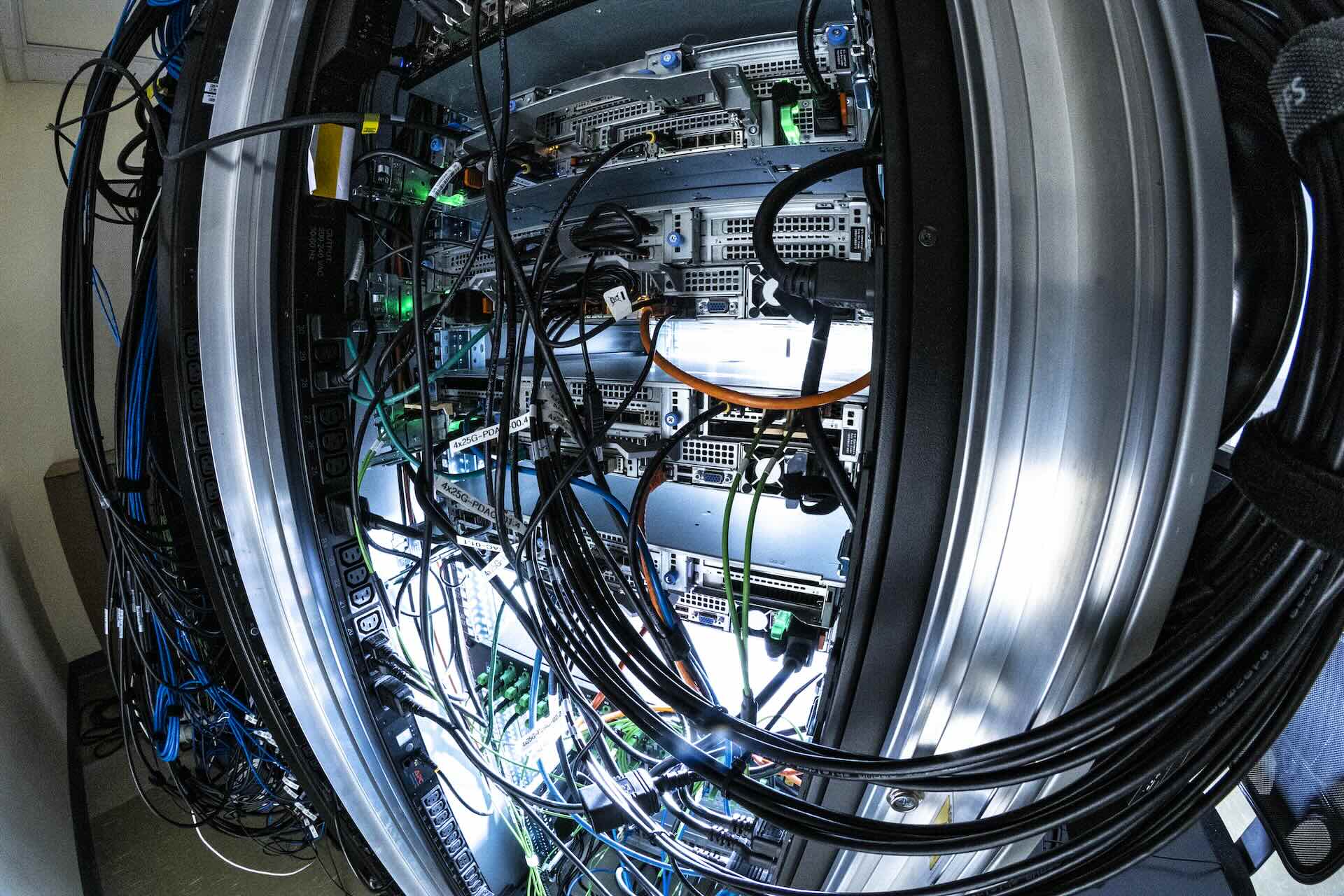
Today, some 26 professors, postdocs and students work at CAESAR to make supercomputers faster and more energy-efficient. If the technology they’re developing sounds sci-fi, the lab is much more down to Earth. It takes up much of the top-but-one floor of a slightly shabby 1980s Brutalist building that also houses a maker space. In an ante chamber off the main lab, the group is testing servers and other equipment, cooled by a portable air conditioner that funnels heat out a nearby window.
A supercomputer isn’t one computer, but rather many strung together; the lab works on the networking code and other software that ties it all into a single system. “We squeeze performance out of computing equipment, and we do exotic things to do that,” says Grant.
Last October, Queen’s landed another coup when it recruited star supercomputer engineer Ian Karlin away from Nvidia. Unlike Grant, Karlin had no ties to Canada, much less Queen’s.
The duo are now training the technical brains who they hope will make supercomputers work long into the future. Not everyone who comes to Kingston to learn from them will stay. Several alumni have already moved to firms specializing in robotics, chips and other hardware both inside and outside Canada. Lab graduates are in high demand from U.S. tech giants like Google, Meta and OpenAI, where Grant says newly minted PhDs can command starting salaries as high as half a million dollars a year.
One way Canada can retain more of that talent, and recruit more Karlins, is to give them something world-class on which to work. Grant hopes an audacious new supercomputer project can be a good start.
Canada’s need for more research processing power goes back years. A quarter-century ago, when astrophysicist Art McDonald led the universe-expanding work on subatomic particles down a nickel mine that earned the first Nobel Prize in Queen’s history, his team used a U.S. government supercomputer in Berkeley, Calif., to make crucial calculations.
Grant wants to ensure that the next generation can find the compute to make similar breakthroughs closer to home. The current public system, overseen by the non-profit Digital Research Alliance of Canada (DRAC), includes five federally funded compute clusters. The network’s star is Simon Fraser’s Fir, “the biggest, baddest supercomputer in the country,” says James Peltier, director of the university’s research computing group. Built at a cost of over $80 million, it came online last September at number 78 on the Top500 list of most powerful machines. It’s already dropped to 105th.
Fir and the other clusters run day and night, to serve 20,000-plus researchers. “We do everything from AI to zoology,” Peltier says. Increasingly, though, Fir is also handling the AI of zoology, and everything else. AI has spread across academic fields, Peltier says. “It’s not just computing, science and engineering—it’s humanities and social sciences.” The technology lets researchers analyze larger datasets, test out theories and run more experiments.
The existing system can’t keep up. When DRAC recently allotted the network’s annual capacity, it managed to fulfill 90 per cent of requests for traditional central processing units (CPUs). When it came to the graphics processing units (GPUs) that typically train and run AI models, it was only able to meet 23 per cent of demand. “The growth in the need for this kind of resource has been so fast and furious,” says Dugan O’Neil, vice-president of research and innovation at Simon Fraser.
Some research projects are so large and complex that they aren’t even possible on Canada’s public compute system. “Researchers haven’t really been able to think on a very large scale,” Grant says. The Queen’s-Simon Fraser consortium wants to build the kind of supercomputer that would give them the “virtually unlimited resources” to think much bigger.
The plan calls for two supercomputers. The first system, in the Vancouver area, would be built fast and take Fir’s place as Canada’s largest. It would significantly expand the country’s compute capacity, and tackle all but the biggest research challenges. Astrophysicists might use it to analyze data about distant galaxies, for example.
The second, in Kingston, would be an “extreme-scale system that handles the hero jobs,” says Grant. It’s for “big-question problems—Nobel Prize-type research.” Here, for example, those same astrophysicists could use the system to analyze many galaxies at once, exploring how they’re connected by black holes.
The two schools are touting their supercomputer track records, partners and personnel as selling points. Grant is one major asset, but the bench is deep. Just as it does now for Fir, Peltier’s group at Simon Fraser would provide the support and software that researchers need to design their experiments to run on supercomputers. That could include linking subject specialists like chemists, geographers and humanists with technical experts like computer and data scientists. There’s “a really heavy uplift” to get people who have never used a supercomputer before up to speed, Peltier says.
The consortium has also brought in private-sector partners to help build these large-scale systems, and will make room on them for business users. By outsourcing the costs of facilities, fibre and power, the universities can spend most of their budget on the chips and other hardware for the supercomputers themselves. Bell has signed deals with both Queen’s and Simon Fraser to set up and manage data centres to house the supercomputers should they be built. In the case of Queen’s, it’s planning a 40-megawatt facility, Bell CEO Mirko Bibic said on a March earnings call.
Companies will be able to rent time on the two new public supercomputers. Canadian firms can already rent capacity from U.S. cloud giants, but might prefer a public, homegrown source of processing power because of concerns about lock-in and data sovereignty, Grant says. It’s not the same kind of compute, either. “We’re not running a giant inference centre for people to log into and ask a chatbot to answer their questions,” says O’Neil. “It’s research and development.”
Commercial clients could include startups that are trying to turn their technology into sellable products, founded by professors and graduate students who are already using the supercomputers academically. AI firms could employ the machines to train new models. Companies in strategically important sectors like life sciences or critical minerals could use them to discover new drugs and mineral deposits. Once the research and development work is done, the universities can hand them off to private, Canadian compute providers.
The schools plan to reinvest revenue from commercial clients into maintaining and expanding the public compute system, creating “a more self-sustainable approach,” Peltier says. That’s better than the “feast-or-famine” environment in which Canada’s public compute sites currently operate, stretching their chips between federal funding cycles of up to a decade.
To stay on the cutting edge, the two mega-machines will need to use the best hardware available, and lots of it. That almost certainly means buying chips from U.S. firms such as AMD, Intel and Nvidia—each of the four exascale systems in the West is filled with processors from one of those companies. “Homogenous hardware” is much easier to use at scale, Grant says.
The Queen’s-Simon Fraser consortium also plans to launch a test centre for homegrown hardware. The program would aim to develop the sector by incubating Canadian companies, helping them develop their technology and by being their first buyer, says Grant. Canadian firms or multinationals’ local R&D centres already produce top-quality networking equipment, power systems, heat dissipation kit, server designs, and quantum computers.
“We want that Cancon crammed in there,” Grant says. Canadian hardware companies that prove themselves with the consortium could then sell abroad, he adds, ensuring the country exports more than just the supercomputer talent he’s training in Kingston.
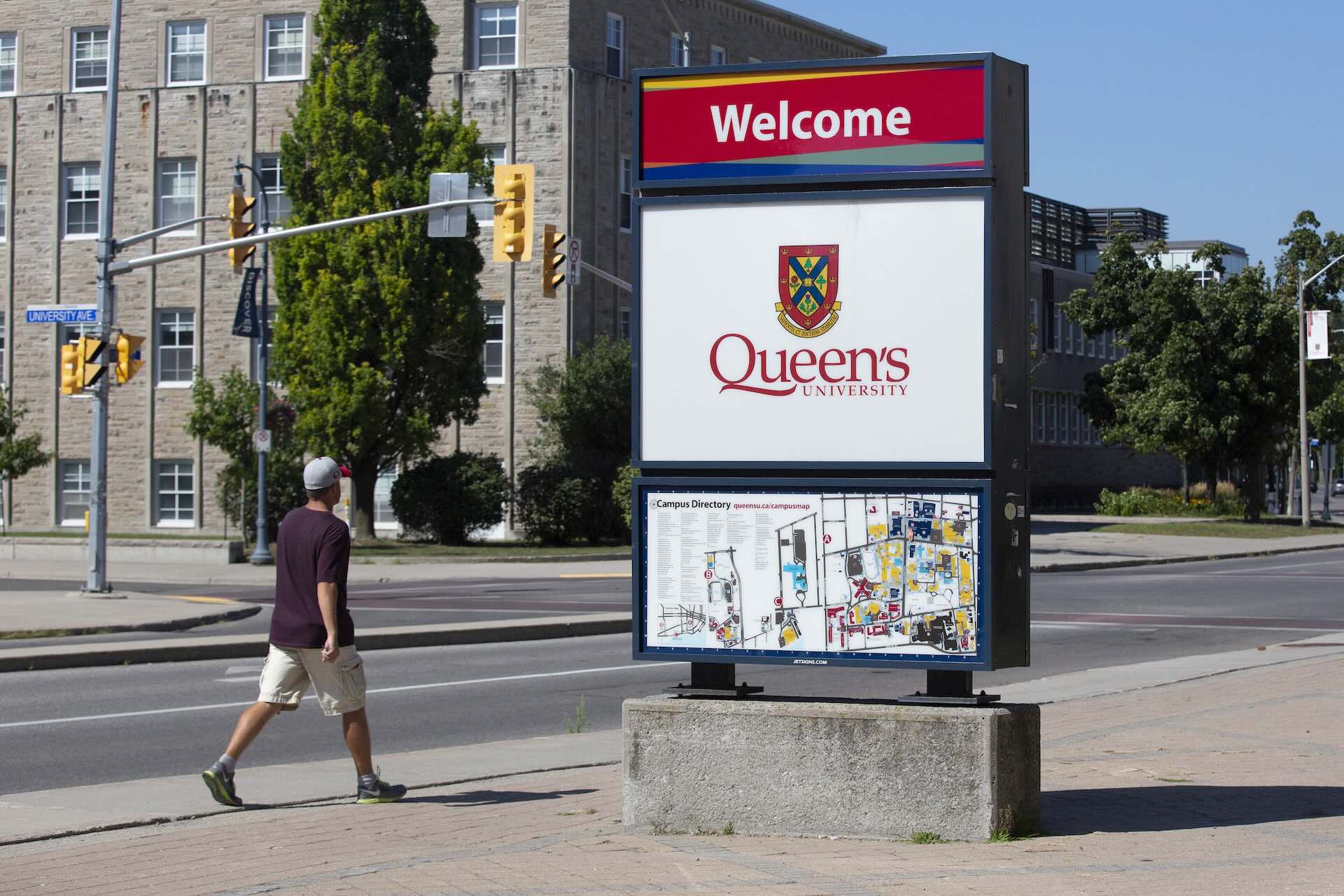
For the supercomputer plan to become a reality, Queen’s and Simon Fraser need money. And lots of it. The consortium is one of several bidders for the $890-million federal AI Sovereign Compute Infrastructure Program (SCIP). To get it, the winning applicant will need to have secured, or be able to get, the necessary power, shown that their designs are efficient and can scale, and be able to bring a significant chunk of the new compute capacity online within 18 months of getting the federal green light.
Competitors for the funding include DRAC, the orchestrator of the current research compute system, which is proposing a new cluster it will itself control in Hamilton, Ont. Its data centre proposal has faced significant local opposition over concerns about noise pollution and water use.
Some policy prognosticators question whether Ottawa needs to build a public supercomputer at all, especially when U.S. tech giants are set to spend US$1 trillion on data centres, including major projects within Canada. Grant and others in the consortium argue that the country’s scientists and startups shouldn’t be beholden to Silicon Valley for compute.
The new supercomputers would create more affordable capacity, while keeping the infrastructure and the data that flows through them under local control, Grant says. And unlike commercial cloud providers, there’s no chance that Queen’s and Simon Fraser turn into competitors for their compute clients.
Canada can build very powerful supercomputers for research for a lot less money than a commercial data centre, Grant says. “We don’t have to spend a trillion dollars here to get a lot of benefits out of it.” Ottawa’s $890-million budget “buys you an awful lot.”
Internal government memos prepared for AI Minister Evan Solomon suggest the stakes are high. While the SCIP marks “a substantial escalation” of Canada’s public digital infrastructure, according to one note, it implies more money may be required. “International peers continue to invest aggressively and repeatedly in compute,” it states. The Logic got the document via access to information request.
In the U.K, that push includes a £225-million ($417 million) supercomputer in Bristol that came online in July 2025, and a £750-million ($1.4 billion) system under construction in Edinburgh. The European Union’s first exascale system, located in Jülich, Germany, cost €500 million ($811 million) and launched last September. The U.S. Energy Department’s El Capitan—the current world No. 2 supercomputer—was built for US$600 million and came online in 2024.
When Grant came back to Queen’s five years ago, he didn’t expect he’d have a shot at building competing machines for Canada. Now, he wants to seize that chance.
It’s old news that Canada helped invent modern AI, then watched the U.S. and other countries capitalize on it. Canada’s new supercomputers can and should, Grant believes, seed a major industry here, and make it an AI player instead of a bystander. “We can build something awesome,” he says, “and it can be really beneficial for Canada.”